
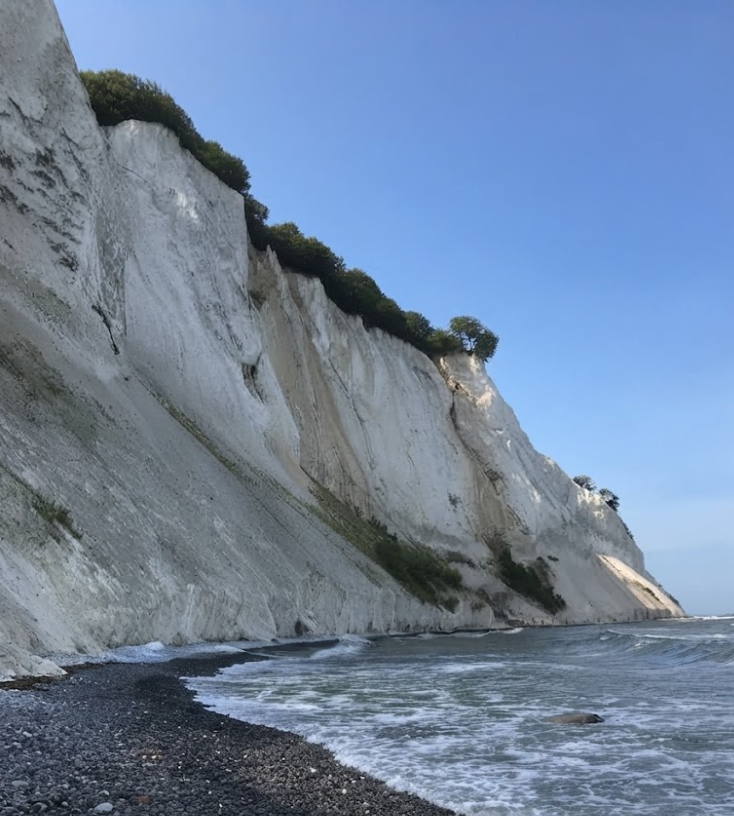
The eastern coast of Møn Island holds one of Denmark’s most extraordinary natural landmarks: the chalk cliffs of Møns Klint. Stretching for six kilometers and rising to 128 meters above the Baltic Sea, these cliffs are a striking fusion of white chalk and turquoise water. The journey to reach them is part of the experience.
From Copenhagen, the drive is about 140 kilometers, taking roughly two hours. From Funen Island, the route is longer, crossing the Great Belt Bridge and winding through rural lanes before narrowing into gravel roads near the GeoCenter. The anticipation builds as the forest canopy begins to thin and the sea glimmers through the trees.
🌳 Beech Forests and Cliff‑Top Views
The cliff tops are crowned with beech woods, their leaves glowing in fresh green during late spring. Every viewpoint along the trails offers a new composition of color — pale chalk, deep forest, and the endless blue of the Baltic. The contrast is most vivid when the foliage is young, creating a palette that feels almost painterly. Visitors often pause at each lookout, compelled to capture the shifting hues.
🦅 Peregrine Falcons
Møns Klint is not only a geological wonder but also a sanctuary for wildlife. Peregrine falcons nest here annually, with chicks hatching in early May and fledging by mid‑June. Ornithologist Niels Peter Andreasen has documented these birds extensively, and during one visit, he revealed a nest with three nearly fledged chicks. Observing these rare predators in their natural habitat underscores the cliffs’ ecological importance.
🏛️ GeoCenter and Fossil Hunts
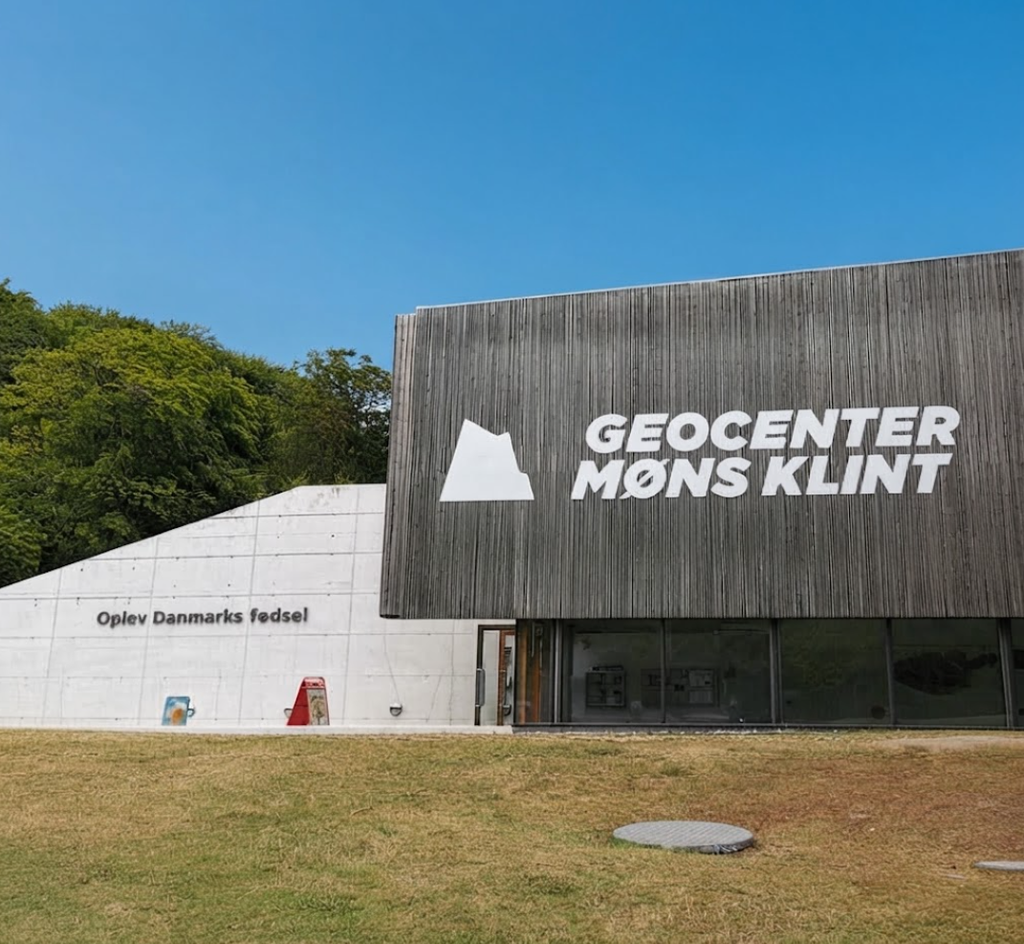
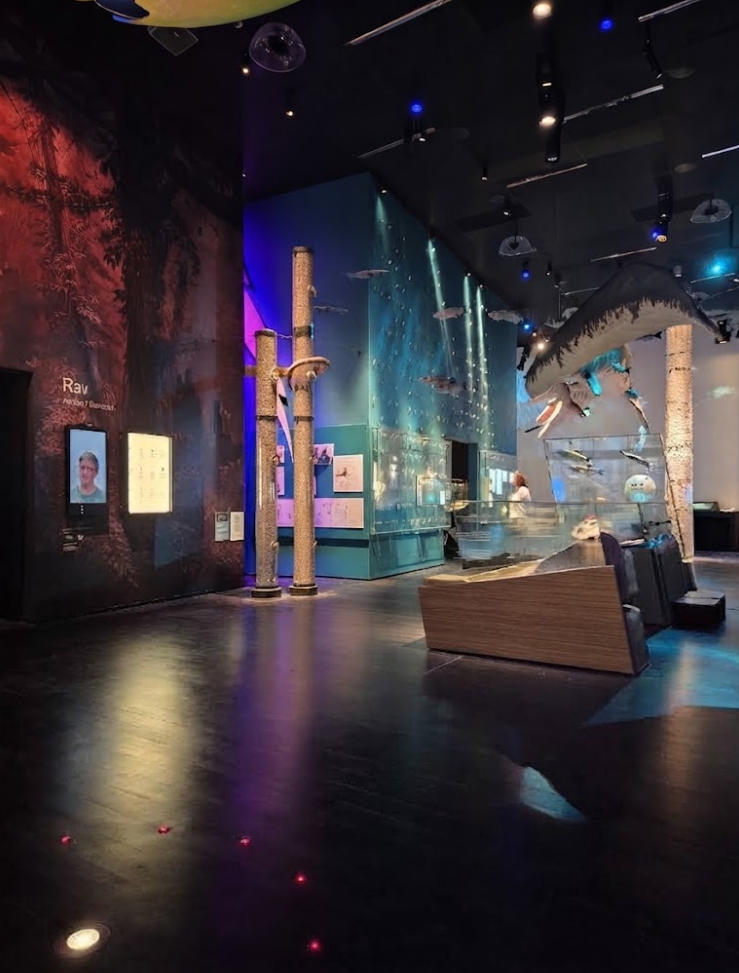
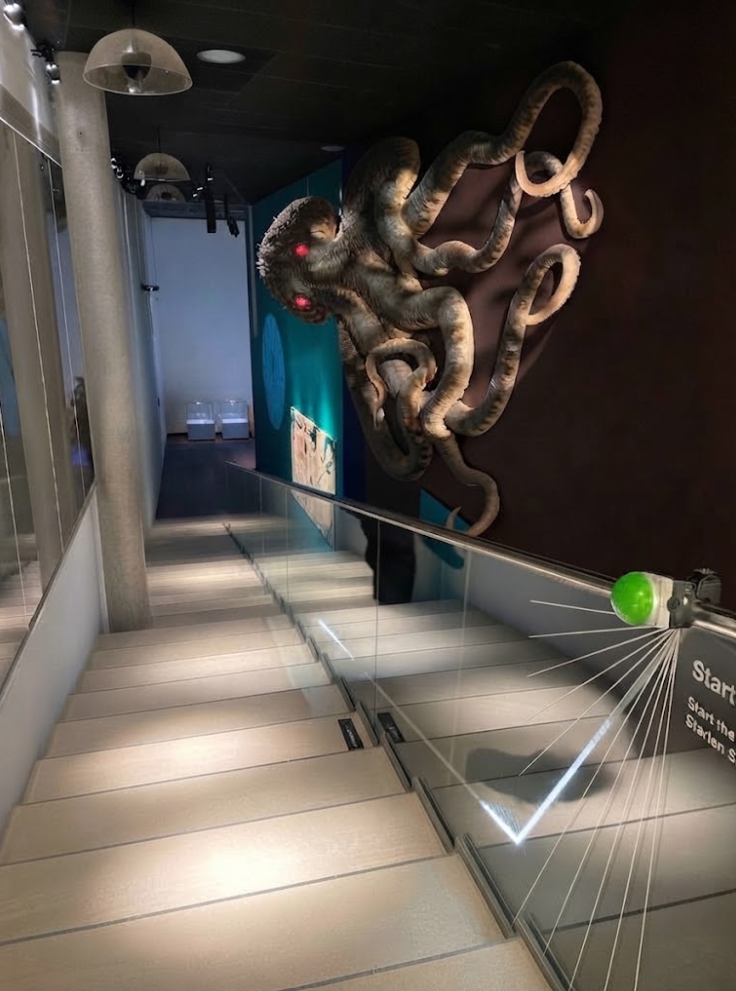
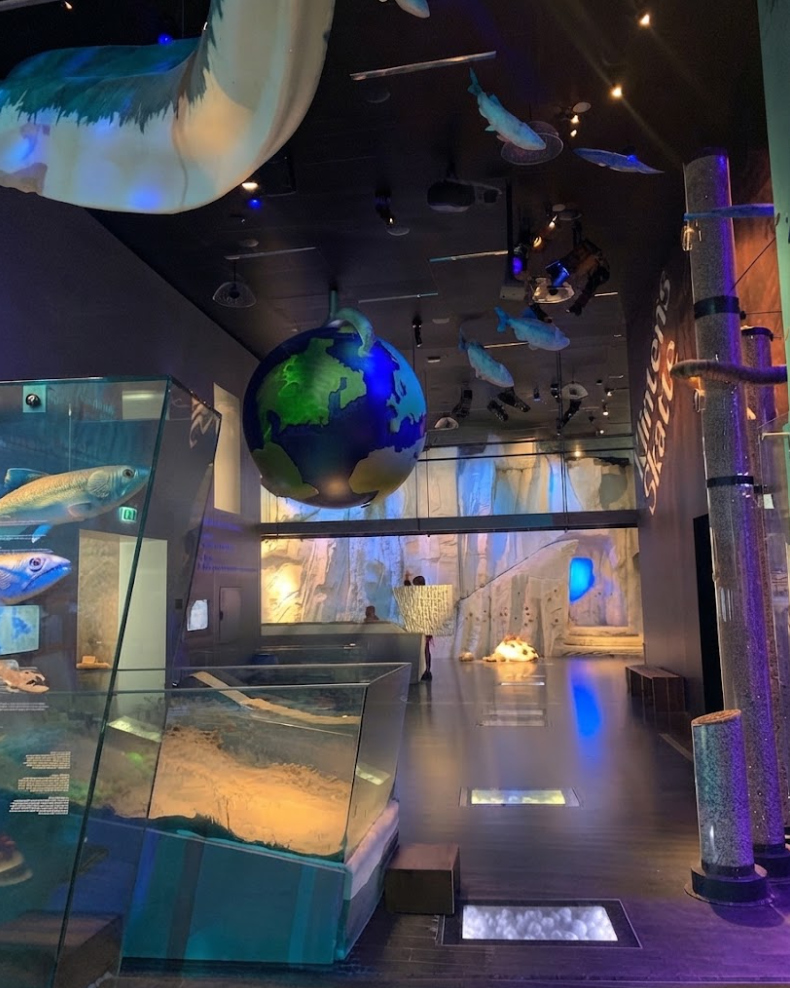
The GeoCenter, located at the heart of the cliffs, is a modern museum dedicated to geology and natural history. Exhibits explain how chalk formed 70 million years ago during the Late Cretaceous period, later shaped by glaciers into the cliffs seen today. Tickets are priced at 155 DKK per person, with a 10% discount available online.
The center also organizes fossil hunts at the beach, where participants search for preserved remains of prehistoric shells, plants, and fish. Even without a guide, the shoreline offers ample discoveries, with chalk and flint yielding tiny treasures for patient eyes.
🥾 Hiking Trails at Møns Klint
Seven marked trails weave through forest and cliff edge, each offering a different perspective. The Maglevand–Gråryg loop is among the most rewarding, combining sea‑level views with elevated vantage points.
- Maglevandstrappen: Denmark’s longest staircase, with 497 steps, descends through dense woodland to the beach. The descent is shaded, with glimpses of the Baltic appearing through the trees. At the base, a small viewing platform provides the first dramatic sight of the cliffs.
- Beach Walk: The shoreline is firm underfoot, chalk and limestone replacing sand. High tide occasionally submerges the lowest steps, but the walk remains manageable. Compared to sandy beaches in Jutland, this terrain feels solid and easy to traverse.
- Grårygtrappen: With 468 steps, this staircase climbs back to the cliff top. The ascent is more demanding, but the reward is a sweeping view of forest and sea.
🌍 Geological Significance
Møns Klint formed from thick layers of chalk created by microscopic marine organisms during the Late Cretaceous. Glacial movements during the Ice Age sculpted the cliffs into their current form. Today, erosion continues to reshape them, with landslides altering viewpoints and reminding visitors of their fragility. Unlike Ireland’s Cliffs of Moher or Giant’s Causeway, Møns Klint feels more intimate, softened by forest cover yet equally dramatic in its shifting scale.
🏞️ Comparisons with Other Cliffs
Denmark offers several cliff landscapes, including Bovbjerg and Rubjerg Knude in Jutland. While beautiful, they lack the stark contrast of chalk and turquoise that defines Møns Klint. The cliffs here are Denmark’s first UNESCO biosphere reserve and remain on the tentative list for full World Heritage status. Their uniqueness lies not only in geology but also in the interplay of forest, sea, and wildlife.
🚗 Road Trip
Reaching Møns Klint often forms part of a broader Denmark road trip. Routes from Germany pass through Jutland, Funen, and Zealand before arriving at Møn. Along the way, travelers encounter castles, fortresses, and neolithic sites. The journey itself is rich with history and landscape, culminating in the dramatic arrival at the cliffs.
🏰 Historical Stops En Route
Stops such as Nyborg Castle and Trelleborg Fortress add depth to the journey. Nyborg, once a royal stronghold, offers insight into medieval Denmark. Trelleborg, a Viking ring fortress, connects visitors to the country’s early history. These sites complement the natural spectacle of Møns Klint, weaving culture and geology into a single narrative.
🌿 Seasonal Variations
The cliffs change character with the seasons. Spring brings fresh foliage and vibrant contrasts. Summer offers long days and clear skies, though crowds are larger. Autumn cloaks the forest in gold and red, softening the starkness of the chalk. Winter, though harsher, reveals the cliffs in their most austere form, with bare trees and icy seas. Each season offers a distinct experience, making repeat visits worthwhile.
🧭 Practical Information
- Distance from Copenhagen: 140 km, about two hours by car.
- GeoCenter Hours: 10 AM to 6 PM in high season.
- Tickets: 155 DKK per adult, with online discounts.
- Fossil Hunts: 25 DKK per person, guided.
- Trails: Seven marked routes, ranging from short walks to longer loops.
- Staircases: Maglevandstrappen (497 steps) and Grårygtrappen (468 steps).
🌐 Erosion and Vulnerability
Recent storms have damaged staircases and viewpoints, with repairs ongoing. Landslides continue to reshape the cliffs, limiting access but emphasizing their dynamic nature. Visitors are reminded that Møns Klint is not static; it is a living landscape, constantly shifting under the forces of weather and sea.
🏞️ Final Impressions
Møns Klint offers a rare combination of natural beauty, geological history, and ecological significance. The cliffs are both intimate and immense, softened by forest yet dramatic against the sea. Wildlife, fossils, and trails enrich the experience, while historical sites nearby add cultural depth. For travelers seeking a perfect blend of nature and history, Møns Klint stands as one of Denmark’s most compelling destinations.