
A Park of Legends
At the northern tip of Vancouver’s downtown peninsula lies Stanley Park, a thousand acres of forest, shoreline, and memory. Surrounded by Burrard Inlet and English Bay, bordered by the West End and Coal Harbour, the park feels both part of the city and apart from it — a sanctuary where cedar and salt air weave together.
Created in 1886, the park rests on land long inhabited by the Coast Salish peoples. Their stories linger in the rocks and trees, in the carved poles that stand sentinel at Brockton Point. In 2013, Stanley Park was named the best park in the world, a recognition of its timeless magnetism.
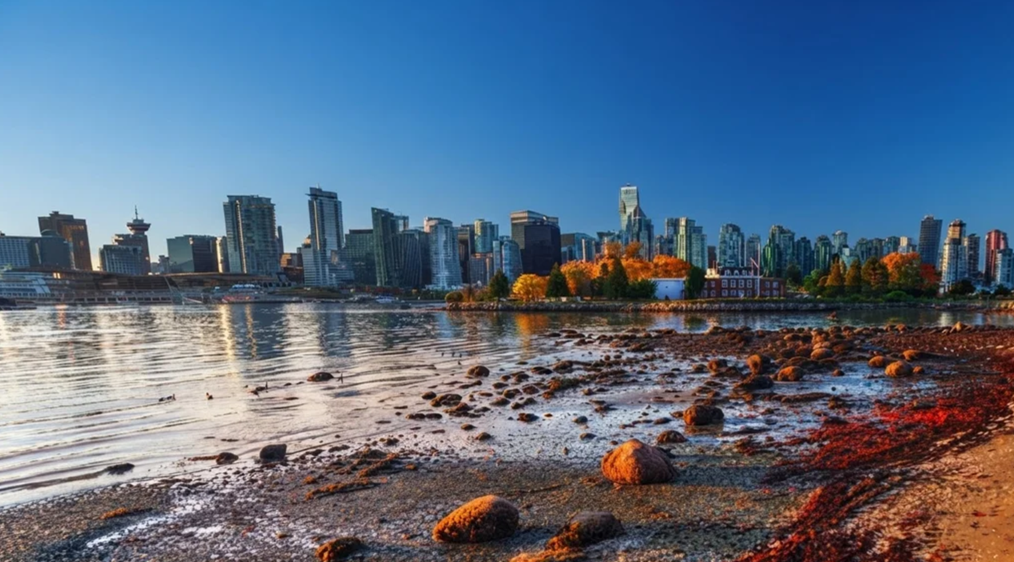
The Seawall Journey
The Seawall is the park’s great ribbon, a nine‑kilometer path that hugs the ocean’s edge. Walking or cycling along it reveals Vancouver’s soul: freighters anchored in Burrard Inlet, sailboats skimming English Bay, mountains rising like guardians beyond.
Cyclists glide past beaches where seals surface, walkers pause to let the tide lap at their shoes, and photographers capture the skyline framed by forest. The Seawall is not merely a path but a pilgrimage, a way of seeing the city from its most poetic vantage.
Totems and Gateways
At Brockton Point stand the totem poles, carved stories in cedar, each pole a vertical chronicle of lineage, spirit, and myth. The originals, dating back to the 1880s, now rest in museums, but replicas rise here, their colors vivid against the sky.
Beside them, the Coast Salish Welcome Gateways, carved by Susan Point, frame the horizon. They are thresholds, reminders that this land was once — and still is — a place of welcome.
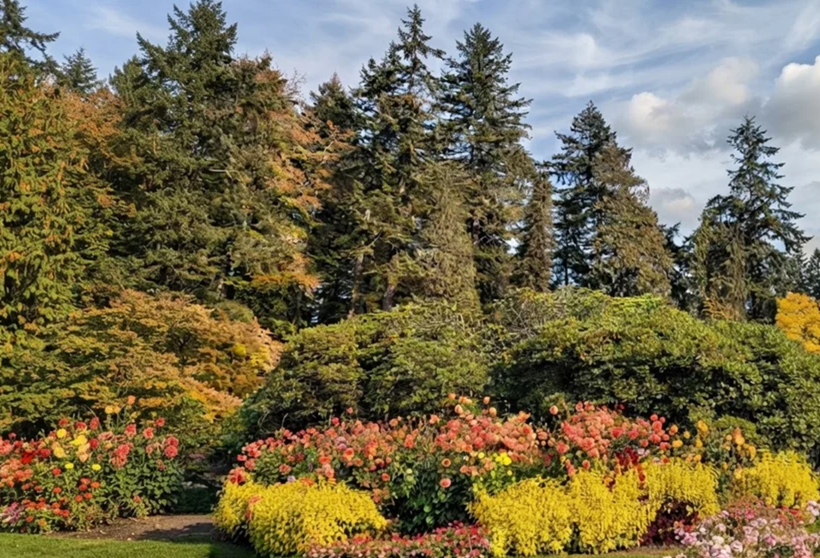
Brockton Point Lighthouse
The Brockton Point Lighthouse, built in 1914, carries a quiet dignity. Designed by William P. Anderson, it once guided ships through the First Narrows, its beam a promise of safe passage. Today, it shines only on special occasions, a decorative echo of its working past.
Standing here, the weight of history is palpable — the accidents that necessitated its light, the generations who looked to it as a beacon.
Lions Gate Bridge
The Lions Gate Bridge arcs across Burrard Inlet, its green steel a gateway to the North Shore. Officially the First Narrows Bridge, it earned its nickname from the twin peaks — “The Lions” — that rise behind it. Later, stone lions were placed at its southern entrance, guardians of the span.
Crossing it means leaving the city behind, chasing mountains and forests. Even from the park’s shoreline, the view of the bridge is unforgettable.
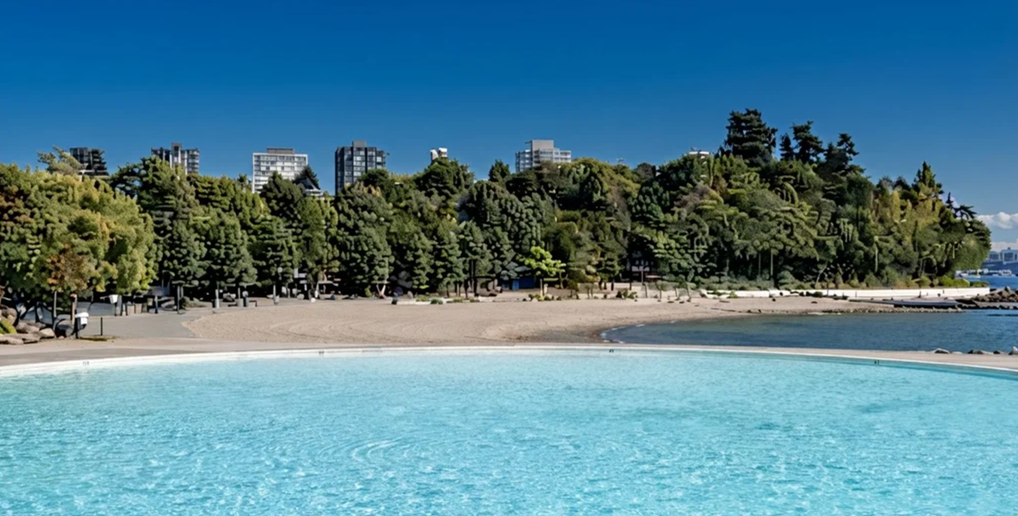
Siwash Rock
Out in the water stands Siwash Rock, an 18‑meter volcanic pillar crowned by a lone Douglas fir. According to Squamish legend, it is a man transformed as a reward for selflessness. The tree atop the rock died in the drought of 1965, but saplings survived, and a new fir rose in its place — resilience written in bark and stone.
It recalls the Lone Cypress on California’s coast, another solitary sentinel, another symbol of endurance.
Echoes of Film
Stanley Park is not only a sanctuary but a stage. Vancouver, often called “Hollywood North,” uses its forests and shorelines as backdrops for countless productions. Crews can often be spotted near the totem poles or along the docks, filming scenes for television and film. The park becomes a cinematic landscape, where fiction and reality blur.
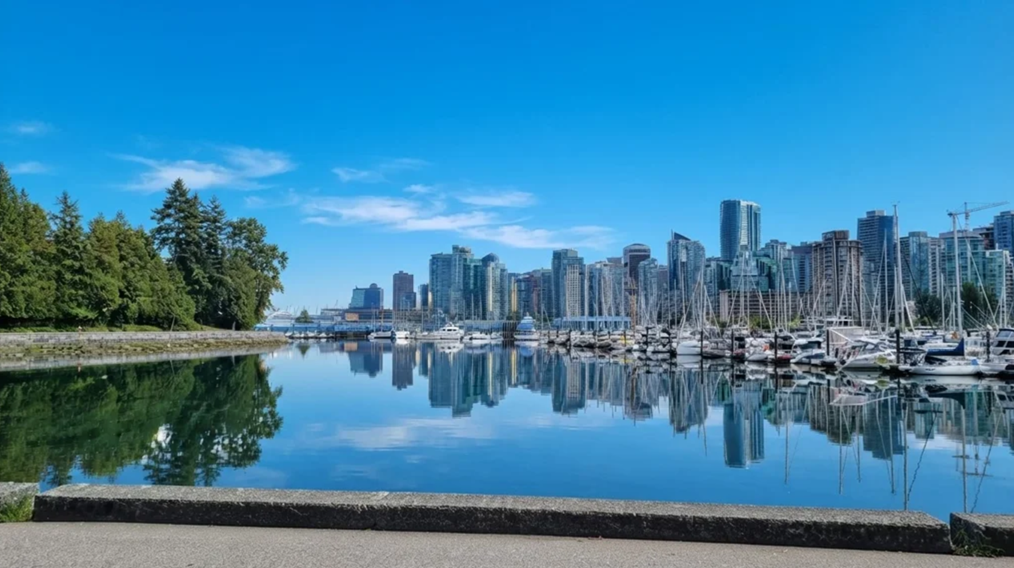
For Families and Play
Stanley Park is a wonderland for families. The Vancouver Aquarium, Canada’s largest, anchors the park with its marine marvels. Beaches and pools shimmer in summer, playgrounds scatter like hidden treasures, and the Mini‑Train chugs through the forest, a fifteen‑minute ride into whimsy.
Horse‑drawn carriages clip‑clop along shaded roads, offering a slower, storybook way to see the sights. Stanley Park is not just for solitude seekers; it is for laughter, discovery, and childhood memories waiting to be made.
Approaching the Park
Stanley Park is vast yet accessible.By car: Enter from West Georgia Street before the Lions Gate Bridge. Roads are one‑way, encouraging visitors to flow with the rhythm of the park. Parking is paid but transferable between lots.
By bus: City bus #19 runs directly into the park, its terminus nestled among the trees.
By bike: Rental shops cluster near Denman Street, and Vancouver’s Mobi bikeshare offers stations throughout the park.
On foot: From downtown, it is a 20‑minute walk, either along West Georgia or the Seawall beginning at Canada Place.
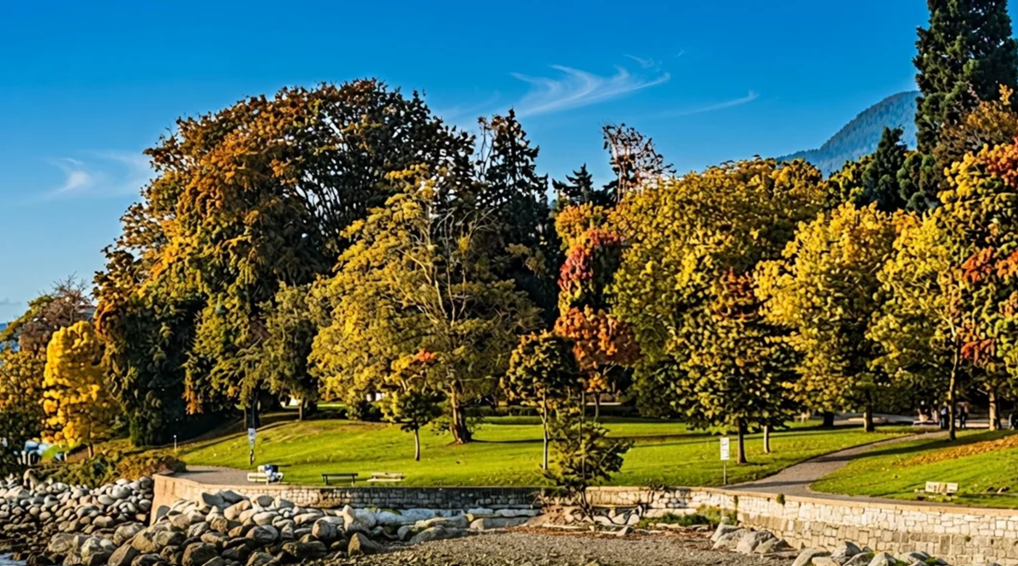
The park is open year‑round, from dawn to dusk, though coyotes sometimes wander its trails after dark. Each season paints it differently: cherry blossoms in spring, fiery leaves in autumn, snow‑dusted paths in winter, and sunlit beaches in summer.
Seasons of Wonder
Autumn brings thinning crowds and maples burning gold. Spring offers blossoms and renewal, while winter cloaks the trails in quiet beauty. Summer, though busy, is vibrant — marathons and city runs weaving through its roads, laughter echoing from beaches and pools.
Whatever the season, Stanley Park remains constant: a place where city and wilderness meet, where history and present intertwine.
Closing Reverie
Stanley Park is Vancouver’s soul. Legends and lighthouses, bridges and beaches, seals and cedar — all converge here. It is where the city exhales, where visitors find enchantment, where locals return again and again. Stanley Park is not simply a park. It is a story — one that continues to unfold with every tide, every season, every footstep along the Seawall.