
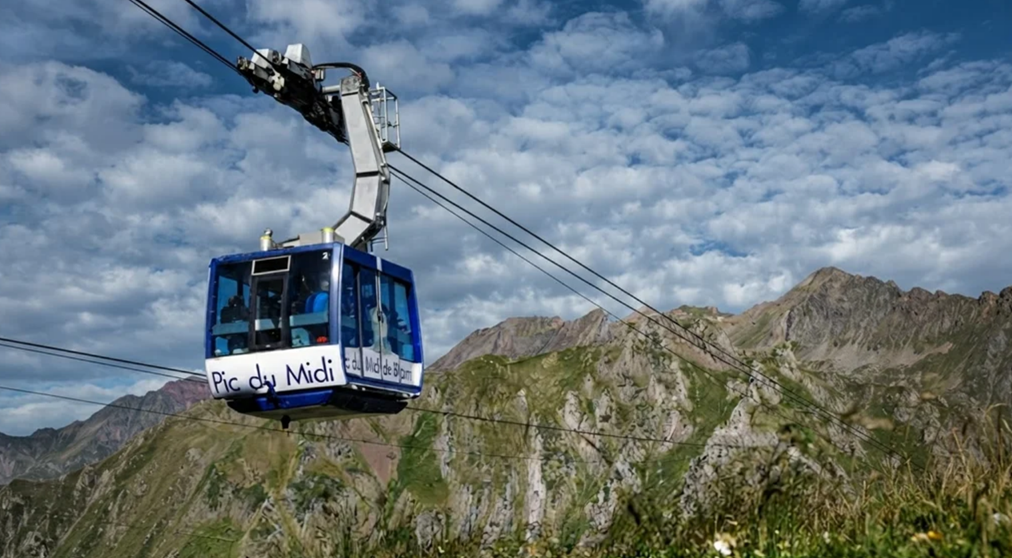
There is something uniquely theatrical about the ascent to the Pic du Midi de Bigorre. You begin in La Mongie, a ski station tucked into the folds of the Hautes-Pyrénées, where the cable car departs every fifteen minutes. The cabins are small, intimate spaces—glass bubbles suspended between earth and sky. As the doors close, you feel the hush of anticipation.
The ground falls away, the slopes shrink beneath you, and the horizon begins to expand. In just fifteen minutes, you rise a thousand metres, carried smoothly toward a summit that seems to hover in the clouds. The ride itself is a performance. The cables stretch taut against the sky, the pylons stand like sentinels, and the mountain air grows sharper with each passing minute.
Children press their noses to the glass, wide-eyed at the sensation of floating. Adults, too, find themselves silenced by the immensity of the view. The Pyrenees unfold in layers—valleys, ridges, peaks—until the fortress-like silhouette of the summit appears, crowned with observatory domes and a communications tower.
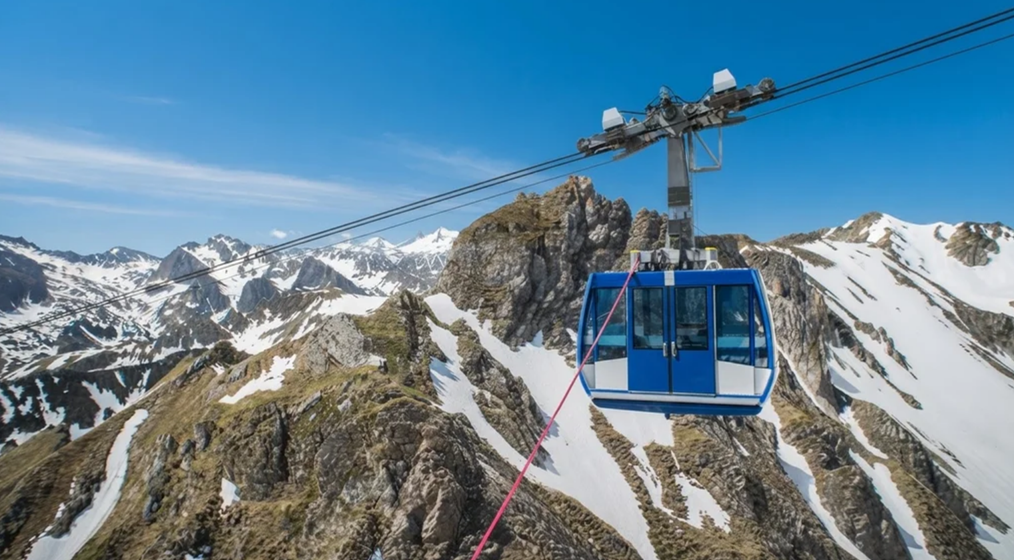
🌄 The Panorama at 2,877 Metres
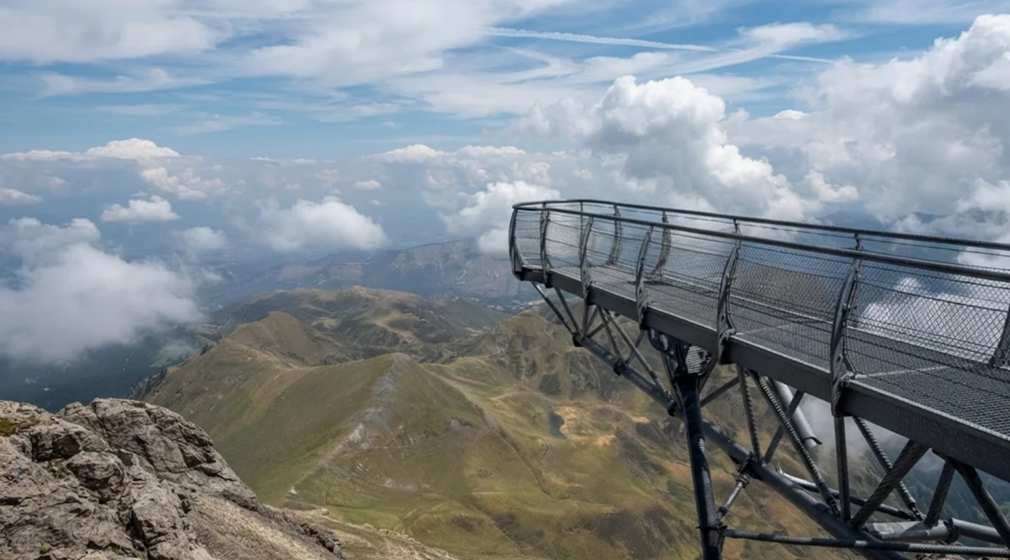
Stepping out of the cabin onto the terraces is like entering another world. Spread across 750 square metres, the lookout platforms offer a panorama that stretches 300 kilometres. To the west, the Atlantic glimmers faintly; to the east, the Mediterranean lies beyond serrated ridges.
The Pyrenees themselves dominate the horizon, their peaks rising in jagged procession. The clarity of the air is astonishing. Scientists chose this site precisely for its purity of light, and visitors reap the same reward. In winter, the landscape is a hush of whiteness, muffled and serene. In summer, the terraces blaze with sunlight, and the mountains shimmer in heat. Each season transforms the view, ensuring that no two ascents are ever the same.
🏔️ A Fortress of Science
The summit is more than a viewpoint. It is a citadel of knowledge, built stone by stone since the late 19th century. The first weather observatory was established here, followed by astronomical installations that continue to probe the mysteries of the universe. Today, Europe’s highest museum tells the story of those pioneers—porters, builders, scientists—who carried equipment up the mountain and braved storms to study the stars.
Visitors wander through observatories, exhibitions, and interactive displays. The hotel offers the rare chance to spend a night above the clouds. Rooms are limited, expensive, and often booked months in advance, but the experience—watching the stars from a mountaintop—is unforgettable.
🎟️ Practical Details
Departure times: Every 15 minutes from La Mongie
Journey duration: 15 minutes
Tickets: Adults €53, Children €42 (summer 2025 rates)
Seasonal hours: Winter (Dec–Apr), Summer (May–Nov), extended July–Aug
Restrictions: Not suitable for children under 3, pregnant women, or those with heart conditions.
Warm clothes are essential—even in summer. Sunglasses and sunscreen are recommended, for the light at altitude is fierce.
✨ The Magic of the Ride
The cable car is not simply transport; it is the overture to the mountain’s symphony. Suspended between earth and sky, you feel the Pyrenees unfolding beneath you, the summit drawing closer with every minute. By the time you step onto the terraces, you have already lived half the adventure.
The seasons add their own magic. In winter, the ascent is a hush of whiteness, the silence broken only by the creak of cables. In summer, the terraces blaze with sunlight, and the horizon shimmers in heat. Families ride together, children wide-eyed, parents quietly awed. Tourist linger on the terraces, watching the sun sink behind serrated ridges.
🌌 Nights at the Summit
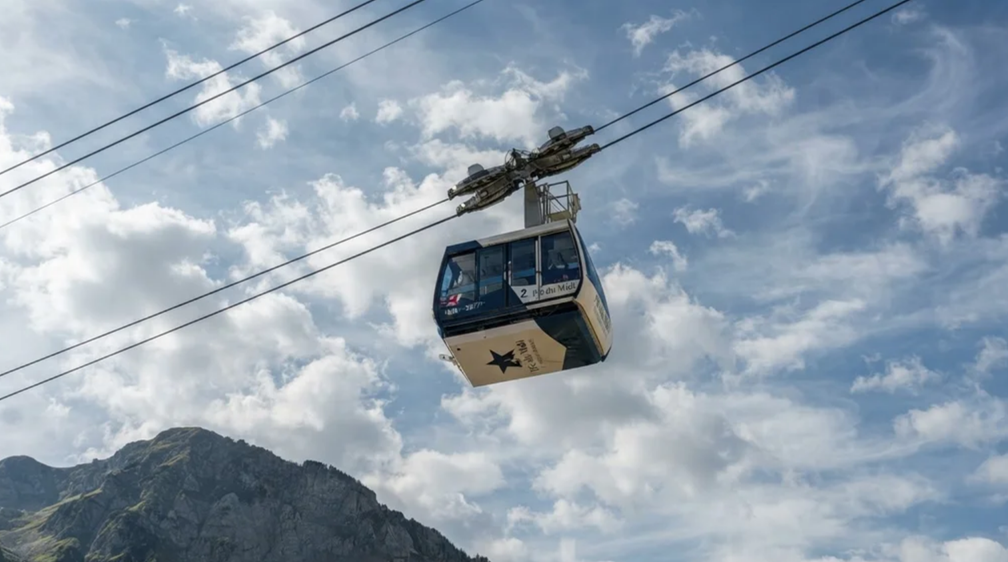
The Pic du Midi is not only a daytime spectacle. At night, the mountain becomes a theatre of stars. “Soirées Etoilées” (Starry Evenings) invite visitors to gaze through telescopes, guided by astronomers who reveal constellations and galaxies. “Nuits au Sommet” (Nights at the Summit) allow guests to stay overnight, sharing unforgettable hours beneath the Milky Way.
The cable car makes this possible. Without it, the summit would remain the preserve of scientists and mountaineers. With it, the mountain opens to everyone—families, couples, solo travellers—each discovering their own version of the magic.
🧭 Alternatives for Adventurers
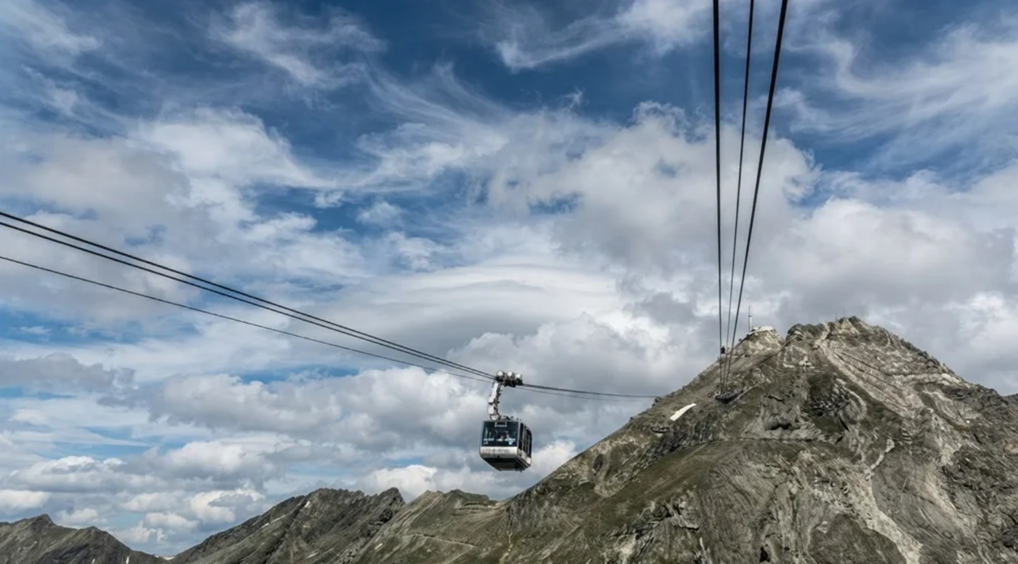
For those who prefer to earn the summit, there is another way. Drive to the Col du Tourmalet, legendary among cyclists, and hike to the peak. The path is demanding, the weather unpredictable, but the reward is immense. Standing at 2,877 metres after a climb, you feel the mountain in your bones.
Yet even for hikers, the cable car remains part of the story. It is the symbol of accessibility, the link between science and tourism, the thread that ties the summit to the valley.
🏞️ A Mountain of Many Midis
The Pic du Midi de Bigorre is only one of many “Midis” in the Pyrenees. Ossau, Arrens, Siguer, Génos—all bear the name, each defined by its position to the south. But Bigorre is the one most people mean when they ask, “Have you been up the Pic du Midi?” It is the mountain of the cable car, the fortress of science, the panorama of 300 kilometres.
The Pic du Midi cable car is more than a ride. It is a journey into the heart of the Pyrenees, a passage from valley to summit, from everyday life to extraordinary perspective. In fifteen minutes, you cross a threshold: from earthbound traveller to skyborne adventurer.
At 2,877 metres, the terraces await, offering views that stretch across France, stories that span centuries, and nights that shimmer with stars. Whether you come for the science, the scenery, or the sheer thrill of the ascent, the cable car is the key. It is the overture, the invitation, the promise of the mountain.