
Introduction
Victoria International Airport (YYJ) is the gateway to Vancouver Island’s capital, a city defined by its gardens, heritage architecture, and coastal charm. For travelers arriving at YYJ, the question of how to reach downtown Victoria is immediate.
While shuttles and buses provide structured, communal options, taxis and ride‑sharing services stand as the most flexible and private choice. Readily available outside the arrivals terminal, they deliver passengers directly to their destination in about thirty minutes.

The Rise of Taxi Services at YYJ
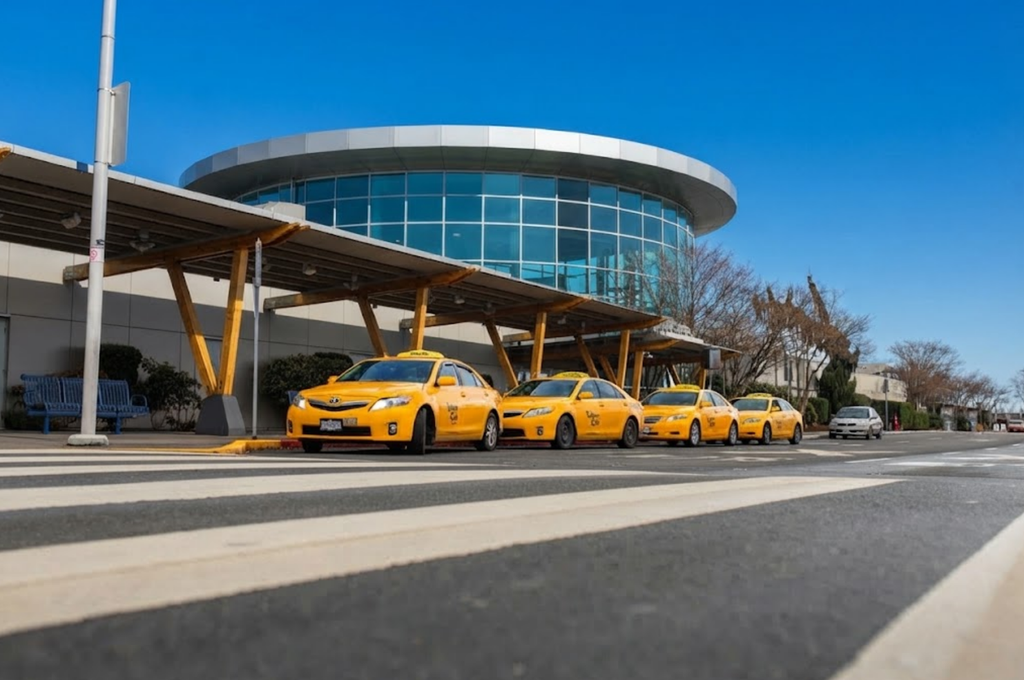
Taxis have long been part of Victoria’s transport ecosystem. As air travel expanded in the mid‑20th century, licensed taxi companies established permanent presences at YYJ, ensuring that passengers could find a cab at any hour. Unlike buses, which operate on fixed schedules, taxis offered flexibility, catering to business travelers, families, and late‑night arrivals. Over time, fleets modernized, introducing hybrid vehicles, accessibility features, and digital payment systems.
The Arrival of Ride‑Sharing
The landscape shifted in the 2010s with the arrival of ride‑sharing platforms. Services such as Uber and Lyft introduced app‑based booking, transparent pricing, and driver ratings. In Victoria, ride‑sharing was initially met with debate, as regulators balanced innovation with safety and fairness.
Eventually, ride‑sharing was legalized under provincial frameworks, and YYJ became one of the first points of contact for travelers using these services. Today, taxis and ride‑sharing coexist, offering passengers a choice between traditional metered fares and app‑based pricing.

The Journey into the City
From YYJ, the drive into downtown Victoria takes about 30 minutes, following Highway 17 south through North Saanich and suburban communities before arriving at the Inner Harbour. Unlike buses or shuttles, taxis and ride‑shares provide door‑to‑door service.
Whether heading to a hotel, a private residence, or a meeting venue, passengers avoid transfers, stops, or shared rides. This directness is particularly valuable for business travelers on tight schedules or families with children.
Comfort and Privacy
The defining feature of taxis and ride‑sharing is privacy. Passengers travel alone or with their companions, free from the presence of strangers. Vehicles are climate‑controlled, luggage is stored conveniently, and the ride is tailored to the passenger’s needs.
For those carrying heavy bags, traveling with pets, or requiring special assistance, taxis and ride‑shares provide flexibility that buses and shuttles cannot match.

Cost Considerations
Cost is the primary drawback. A taxi ride from YYJ to downtown Victoria typically ranges from CAD $60–$70, depending on traffic and destination. Ride‑sharing fares may be slightly lower, but surge pricing during peak hours can push costs higher.
For solo travelers, this expense is significant compared to the shuttle or bus. For families or groups, however, the cost per person may be reasonable, especially when balanced against convenience.
Accessibility and Regulation
Taxis are regulated by municipal authorities, ensuring safety, licensing, and fare transparency. Drivers undergo background checks, vehicles are inspected, and fares are standardized. Ride‑sharing operates under provincial frameworks, with app‑based transparency and customer ratings providing accountability. Accessibility is a growing focus, with wheelchair‑accessible taxis and ride‑share options available upon request.

Traveler Profiles
Different types of travelers gravitate toward taxis and ride‑sharing. Business travelers value speed and privacy, knowing they can reach meetings without delay. Families appreciate door‑to‑door service, avoiding the hassle of transfers. Elderly passengers benefit from assistance with luggage and direct drop‑offs. Tourists arriving late at night or with complex itineraries often choose taxis or ride‑shares for peace of mind.
Advantages and Drawbacks
The advantages are clear: taxis and ride‑shares offer speed, privacy, flexibility, and direct service. They are available at all hours, require no planning, and provide comfort unmatched by buses. Yet drawbacks exist. Costs are high, environmental impact is greater, and availability may fluctuate during peak times. For budget‑conscious travelers, these drawbacks outweigh the benefits.
Cultural Context
Culturally, taxis and ride‑shares represent modern convenience. They embody Victoria’s balance between tradition and innovation: licensed taxis reflecting decades of service, ride‑sharing apps symbolizing digital transformation. For many visitors, the choice between taxi and ride‑share reflects personal preference — trust in tradition versus embrace of technology.
The First Impression of Victoria
For many travelers, the taxi or ride‑share is their first encounter with Victoria. Drivers often act as informal guides, sharing anecdotes about the city’s gardens, history, and festivals. The ride sets the tone: professional, welcoming, and efficient. Whether through the quiet comfort of a taxi or the digital convenience of a ride‑share, passengers begin their journey with a sense of ease.
Taxis and ride‑sharing from YYJ to downtown Victoria embody convenience and privacy. They are the most expensive option, but they offer unmatched flexibility and comfort. For business travelers, families, and late‑night arrivals, they remain the preferred choice.