
A Hilltop Crown
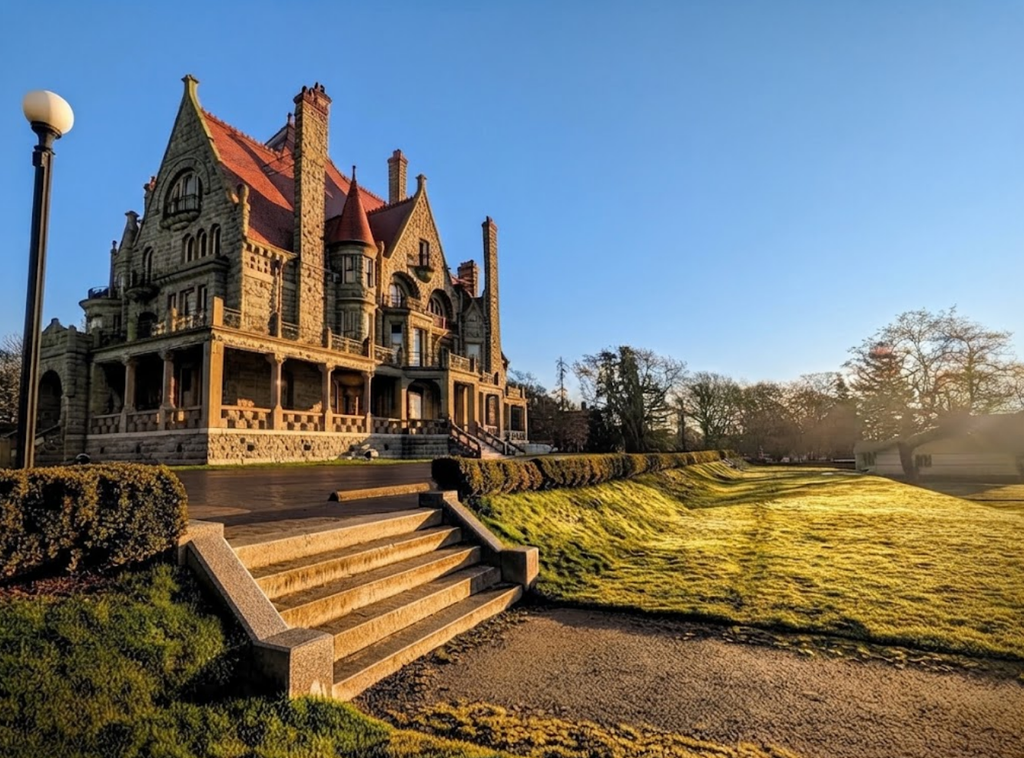
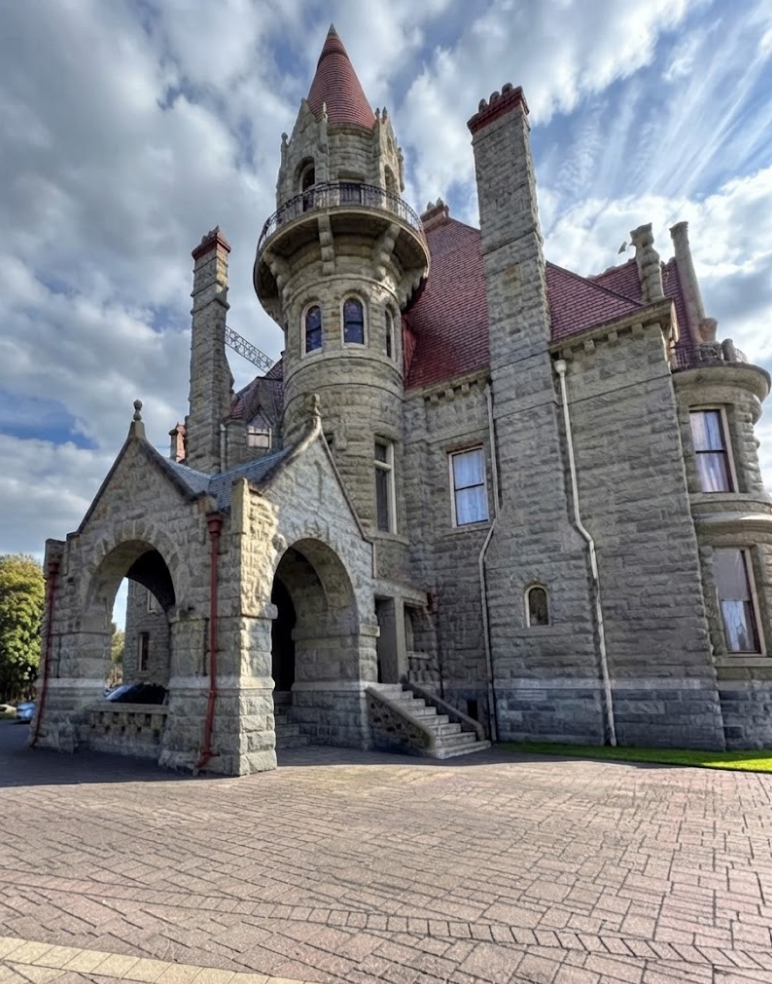
Victoria’s Rockland neighbourhood is a place of leafy streets and quiet gardens, but rising above it all is Craigdarroch Castle — sandstone walls, turrets, and towers that dominate the skyline. Built in the late 1800s for coal baron Robert Dunsmuir, the mansion is less a residence than a declaration. It speaks of ambition, wealth, and permanence, carved into stone and wood at a scale that still astonishes.
The Dunsmuir Legacy
Robert Dunsmuir’s story is woven into British Columbia’s industrial rise. A Scottish immigrant who made his fortune in coal, he commissioned Craigdarroch as a family seat — a place to embody success and secure legacy. Though he died before its completion, the castle became a symbol of the Dunsmuir dynasty, its rooms echoing with both grandeur and the complexities of family life.
Architecture as Statement
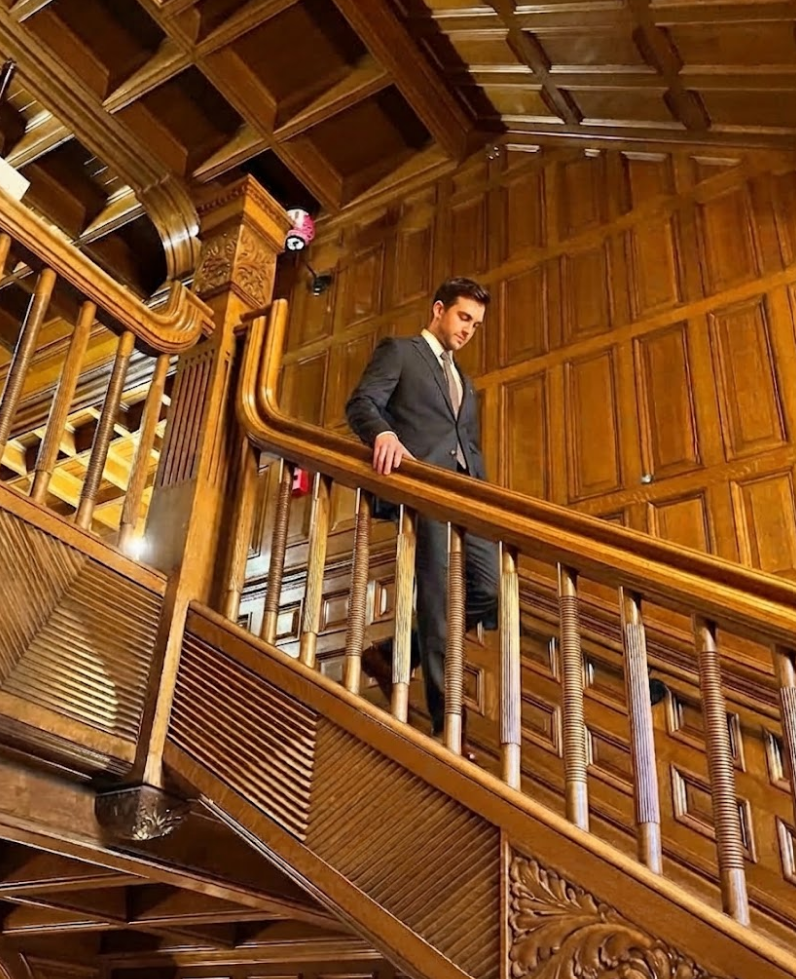
Craigdarroch is Romanesque Revival at its most theatrical: heavy sandstone quarried from Dunsmuir’s own holdings, rounded arches, and a tower that thrusts skyward. The oak staircase, prefabricated in Chicago, anchors the interior with craftsmanship that feels both monumental and intimate.
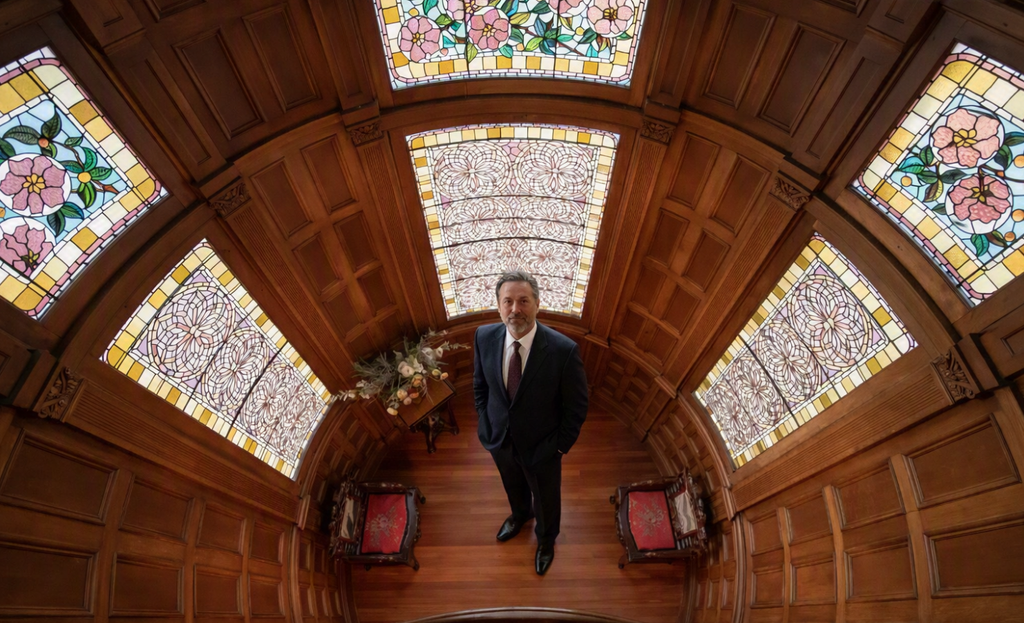
Stained glass windows scatter jewel-toned light across carved fireplaces and wallpapers, creating atmospheres that shift with the day.
Inside the Mansion
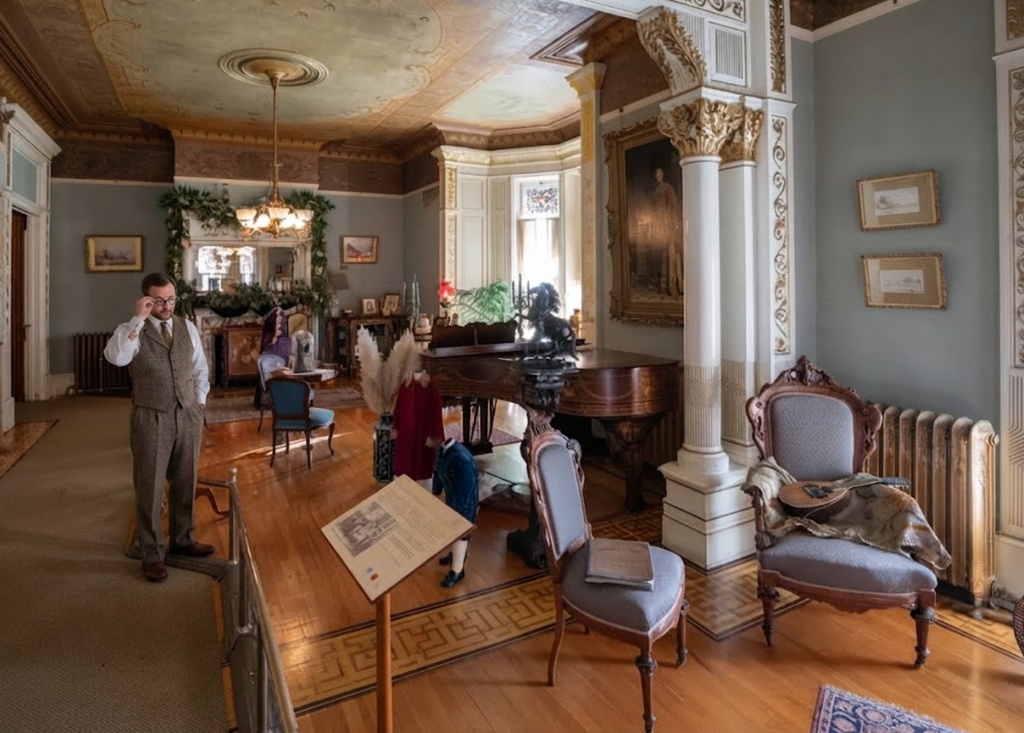
The self-guided tour unfolds across four floors. Parlours glow with polished woodwork, dining rooms speak of ceremony, bedrooms vibe with domestic detail, and servants’ quarters remind you of the hierarchy that kept the house running. Each room is carefully restored to its 1890s appearance, offering a layered portrait of Victorian life.
Stained Glass Stories
The castle holds one of North America’s finest collections of residential stained glass. Many windows are original, their colours filtering light into moody angles. They are artworks in themselves, but also functional — casting privacy, prestige, and atmosphere into the rooms they adorn.
Tower Views
Climb 87 stairs to the tower and Victoria stretches beneath you. The city’s harbour glimmers, the Strait of Juan de Fuca lies beyond, and on clear days the Olympic Mountains rise like a painted backdrop. It is a view that rewards effort, a panorama that connects the castle to its wider landscape.
Artifacts & Restoration
Craigdarroch is not empty grandeur. Its rooms hold Victorian-era furnishings, artwork, and personal artifacts: a Steinway baby grand piano, rare portraits, and everyday objects that humanise the Dunsmuirs. Restoration by the Craigdarroch Castle Historical Museum Society has been meticulous, ensuring the house remains both landmark and living archive.
From Home to Museum
The castle’s story did not end with the Dunsmuirs. Over time it became a military hospital, a college, and eventually a museum. Each layer adds depth, reminding visitors that buildings evolve, carrying traces of every life lived within their walls.
Visitor Experience
A typical visit lasts 60–90 minutes. Begin at the visitor centre, where tickets are purchased and facilities are located. Inside, the atmosphere is quiet, contemplative, and immersive — perfect in any weather. Accessibility is limited, with many stairs and no elevators, but for those able to climb, the reward is immersion in Victorian detail.
Rockland Neighbourhood Pairings
Craigdarroch is best experienced as part of a Rockland outing. Nearby are the Government House gardens, the Art Gallery of Greater Victoria, and Abkhazi Garden. Together they form a tapestry of culture, history, and landscape.Getting ThereThe castle sits at 1050 Joan Crescent, a short drive from downtown.
Free parking is available but fills quickly on weekends. From Ocean Island Inn, it’s a 30‑minute uphill walk through quiet residential streets — a pleasant approach if the weather cooperates.
Know Before You Go
Stairs: Expect many, with no elevators.
Facilities: Washrooms and gift shop are at the visitor centre.
Timing: Weekday mornings and shoulder seasons are quieter.
Atmosphere: Works well in any weather, especially paired with nearby gardens.
Why It Matters
Craigdarroch is more than a tourist stop. It is a time capsule, a cultural icon, and a reminder of how architecture can embody ambition. To walk its halls is to step into the 1890s, to glimpse both grandeur and the everyday lives that filled it.