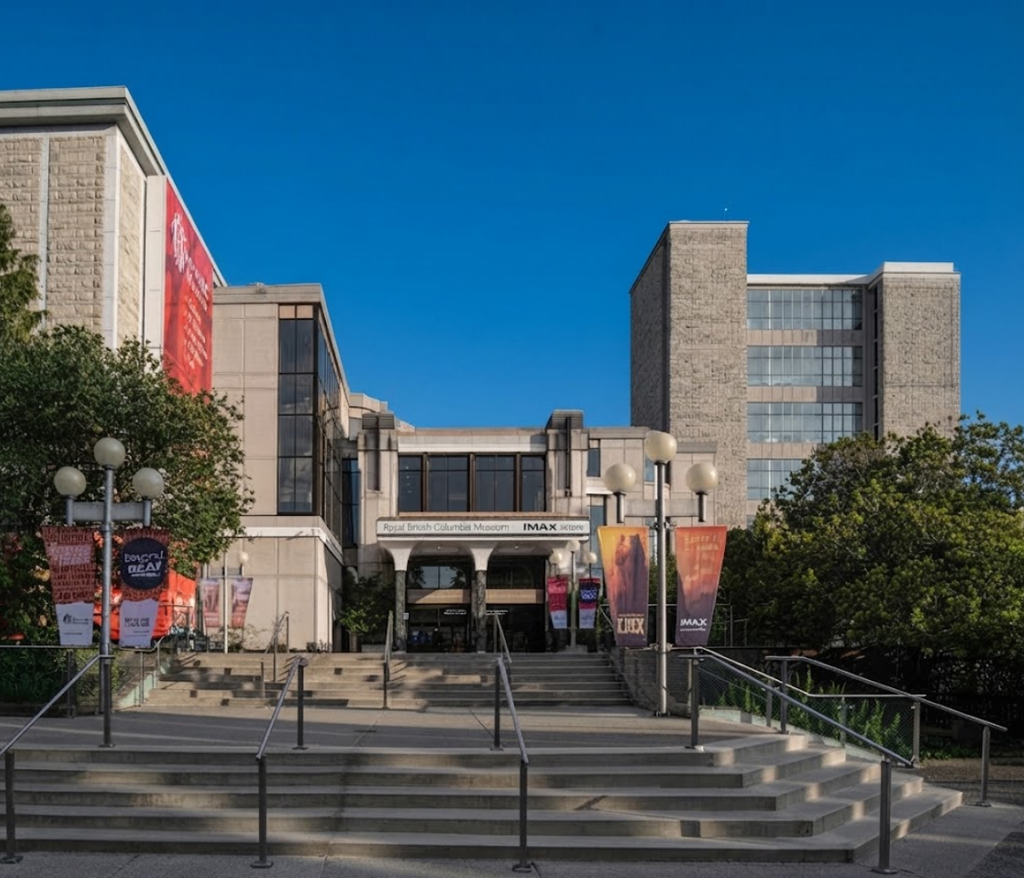
The Royal BC Museum is not simply a museum. It is a vessel of memory, a keeper of voices, a place where British Columbia’s landscapes and peoples are gathered under one roof. Founded in 1886, it has grown into one of Canada’s most treasured cultural institutions, a sanctuary where the province’s natural and human histories are preserved, safeguarded, and shared with the world.
Step inside, and you are not entering a building. You are entering a narrative — one that stretches from the Ice Age to the present, from towering mammoths to whispered Indigenous languages, from recreated Victorian streets to cinematic wonders on the largest screen in British Columbia.
The Natural History Floor — Landscapes in Miniature
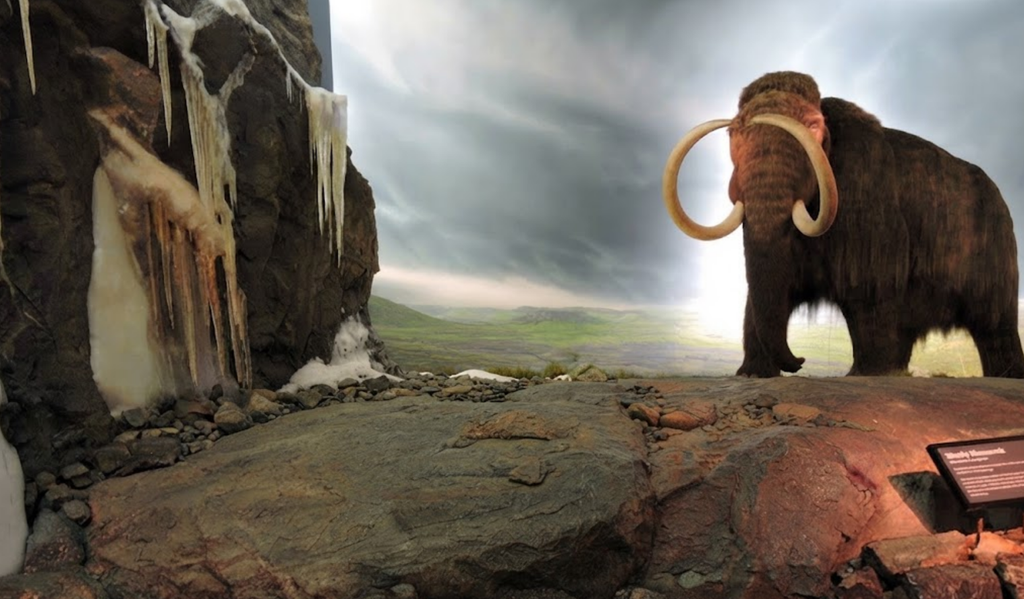
The Natural History Gallery is a world within walls. Rainforests drip with moss, grasslands stretch into shadow, and the icy breath of the Ice Age lingers in the air. At its centre stands a life‑sized woolly mammoth, its curved tusks gleaming, its shaggy coat conjuring a world long vanished. The mammoth is more than spectacle.
It is a reminder of survival and extinction, of the fragility of species and the vastness of time. The exhibit, created in partnership with Chicago’s Field Museum, is staged like a frozen theatre — a landscape of snow and silence, where visitors stand face‑to‑face with a creature that once roamed the earth.
Around it, British Columbia’s own creatures appear in lifelike dioramas. Bears pause mid‑stride, eagles spread their wings, salmon shimmer in imagined rivers. Each display is a portrait of the province’s astonishing biodiversity, a reminder that nature is both eternal and endangered.
The gallery does not feel static. It breathes. It whispers. It insists that the natural world is not a backdrop but a protagonist in the story of British Columbia.
The Human History Floor — Voices and Memory
Upstairs, the Human History floor opens with the First Peoples Gallery, a space of reverence and recognition. Totem poles rise like guardians, carved with ancestral stories. Canoes rest as if waiting for the tide. The Jonathan Hunt House stands as both installation and ceremonial ground — a Kwakwaka’wakw Big House, alive with meaning.
This house is not simply architecture. It is a living claim. In the potlatch system, the Chief presents crest images, songs, names, and prerogatives to an invited audience. Their recognition is legal validation, a binding act of memory and community.
To stand inside the Hunt House is to feel the weight of tradition, the continuity of culture, the resilience of a people. Nearby, Old Town unfolds. Cobblestone streets, storefronts, a silent streetcar — each detail is a portal into 19th‑century Victoria.
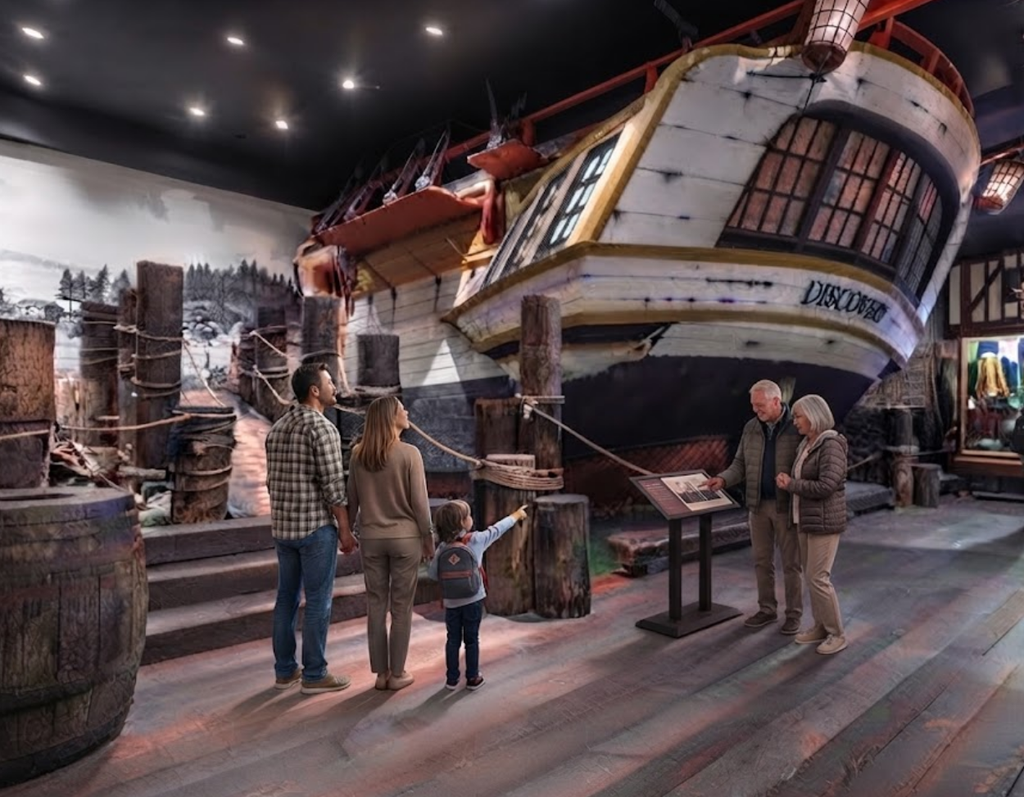
A general store smells faintly of imagined spices, a saloon waits for laughter and song, and the lamps glow with the soft light of another age. The HMS Discovery anchors the Modern History exhibit. Visitors walk aboard, exploring cabins and decks, imagining voyages across oceans.
Mining exhibits plunge into the claustrophobic dark of underground labour, with walls closing in, lanterns flickering, and the air thick with dust. It is immersive, unsettling, and unforgettable. The Human History floor is not nostalgia. It is confrontation. It asks visitors to see the province’s past not as distant but as present, alive in the architecture, the rituals, and the echoes of voices that still speak.
Language and Resilience — Our Living Languages
Among the museum’s most moving spaces is Our Living Languages, an award‑winning exhibit that honours the disrupted yet enduring voices of BC’s Indigenous peoples. Interactive displays and multimedia presentations reveal the beauty and resilience of languages once silenced, now being reclaimed.
Each word is a seed, each phrase a thread, each language a universe. To walk through this gallery is to feel hope — the hope that culture carried in words will continue to be carried forward by people.It is not simply an exhibit. It is a testament. A reminder that language is identity, and identity is survival.
Current and Upcoming Exhibits
The museum is never still. It evolves, adapts, renews.
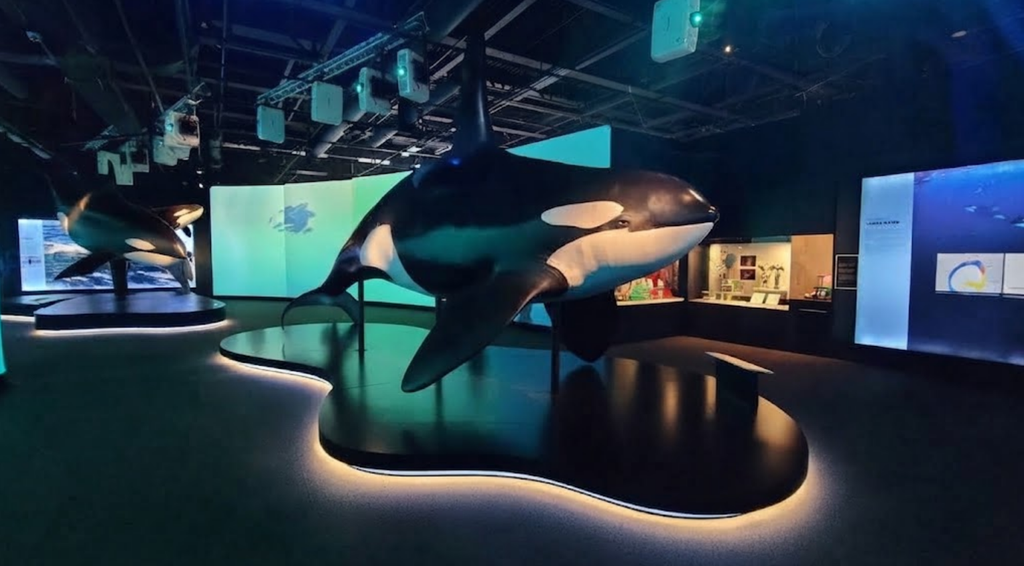
Stonehenge — Opening May 2024, this exhibition unravels the mysteries of the ancient monument with artifacts and immersive storytelling.
Canadian Modern — From June 2024, a celebration of Canadian creativity in art, design, and craft.
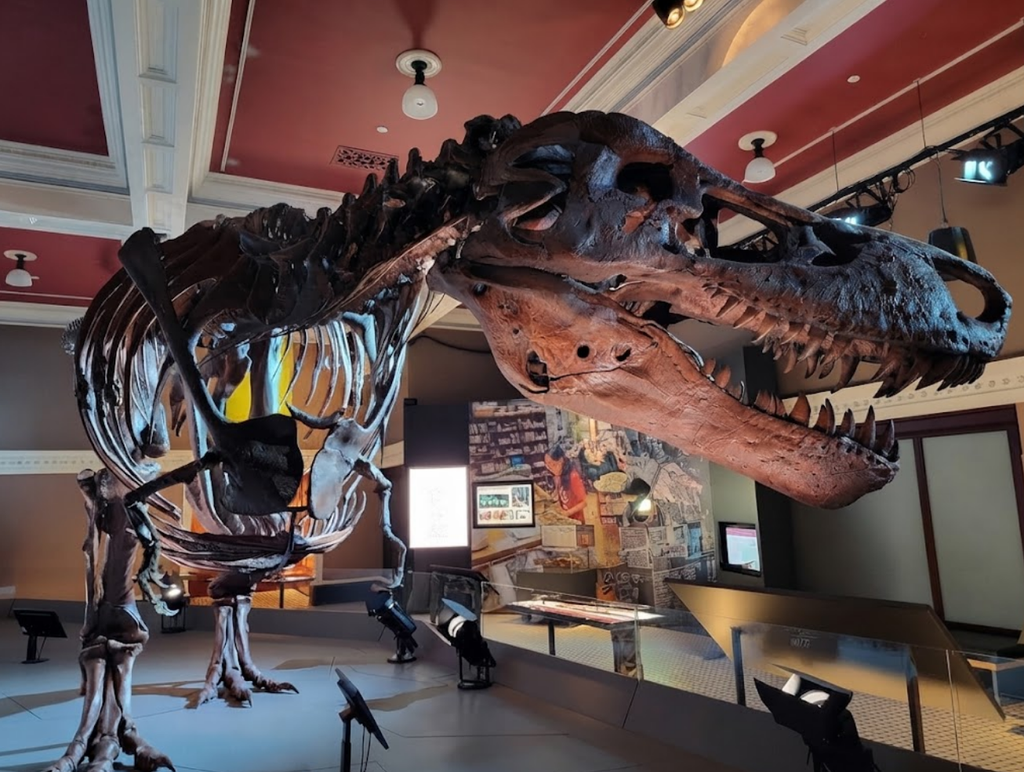
Natural History Gallery — Permanent displays of BC’s flora and fauna, from dinosaurs to coastal marine life.
Old Town — A recreated Victoria street scene, alive with history.Some galleries close temporarily as they are redesigned, but this is not absence. It is renewal. The museum is reimagining itself, promising new ways to reflect the province’s living, changing identity.
Location and Access
The Royal BC Museum stands in downtown Victoria, beside the BC Legislature and the Inner Harbour. Its setting is as much a part of the experience as the exhibits themselves — gardens, historic façades, and waterfront views frame the visit. Getting there from Vancouver is a journey in itself:
By car and ferry — 3.5 hours, about $100.
By bus — 4 hours, also around $100.
By seaplane — 35 minutes, a breathtaking flight over the strait, $250+.
Ease of reachability: 10/10. Walkable from most downtown hotels, with major transit options stopping nearby.
The Heart of BC
The Royal BC Museum is more than exhibits and archives. It is a mirror held up to the province. It reflects the grandeur of its landscapes, the depth of its cultures, and the resilience of its people.To walk its halls is to walk through British Columbia itself — past and present, memory and imagination, all gathered under one roof.
It is a place that sparks curiosity, that insists on reflection, that offers wonder. From towering woolly mammoths to immersive Indigenous exhibits, from recreated Victorian streets to cinematic marvels, the museum is a journey through time and story.And it is worth every moment.