The Red‑and‑White Thread Across the Strait
The Black Ball Ferry Line is more than a company; it is a story stitched into the waters of the Pacific Northwest. Its flagship, the M.V. Coho, has sailed between Victoria, British Columbia, and Port Angeles, Washington, since 1959. For nearly seven decades, this vessel has carried passengers, vehicles, and memories across the Juan de Fuca Strait, its red‑and‑white silhouette a familiar sight to generations who have trusted it to bridge two countries, two landscapes, and two ways of life.
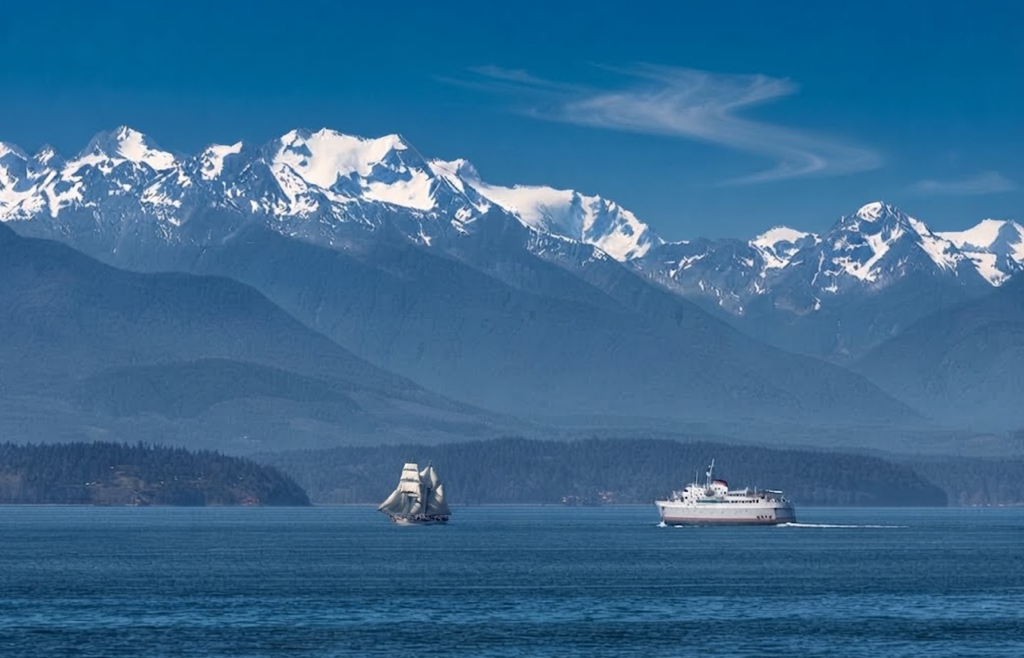
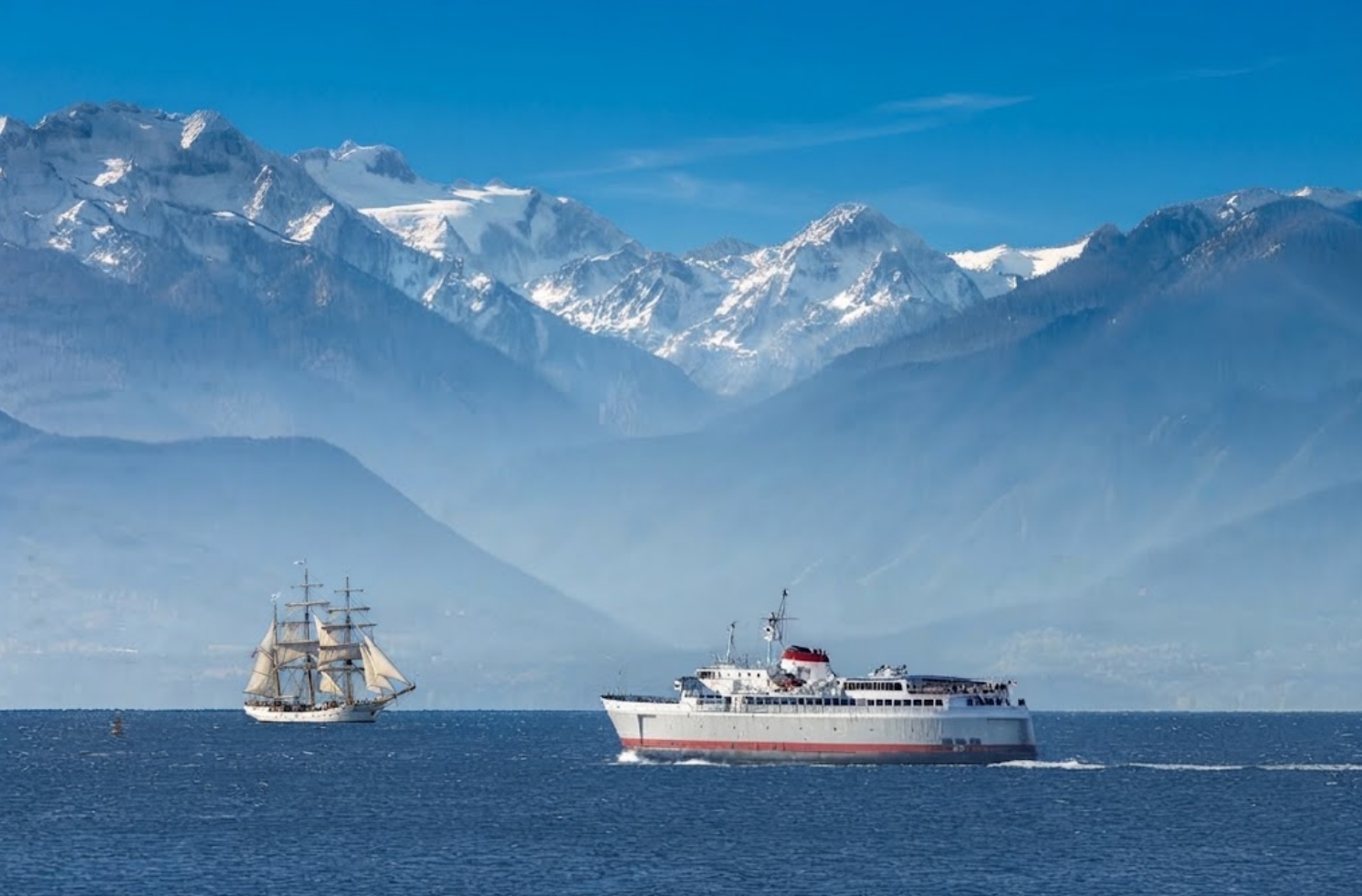
The Coho is not a hurried craft. It is steady, deliberate, a ship that invites travelers to slow down and let the sea set the rhythm. Ninety minutes is the length of the crossing, but the experience stretches beyond time. It is a passage where the horizon widens, where the Olympic Mountains rise in jagged silhouette, and where Victoria’s Inner Harbour recedes into a watercolor of gardens and Victorian facades.
A Vessel of Comfort and Character
Step aboard, and the Coho reveals itself as a floating community. Interior lounges vibe with conversation, their windows framing restless waters. A solarium glows with natural light, offering sanctuary for those who prefer to watch the world through glass. The cafeteria serves steaming coffee and simple fare, while the gift shop and duty‑free store tempt with trinkets and indulgences.
Pet‑friendly areas ensure that canine companions are welcome, tails wagging against the salt air. Children press noses to the glass, chasing glimpses of seabirds. Couples linger on deck, watching the Strait unfold. The vibe of the engines becomes a lullaby, steady and reassuring.
The Coho is not luxury in the modern sense, but it is comfort of another kind — the comfort of tradition, of familiarity, of a ship that has carried countless crossings and remains unchanged in its essence.
The Ease of Departure
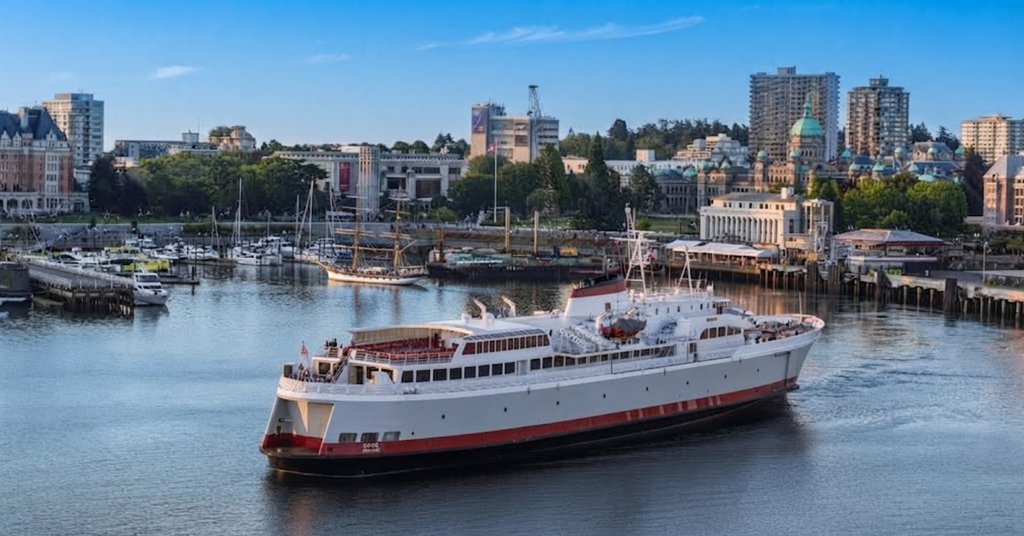
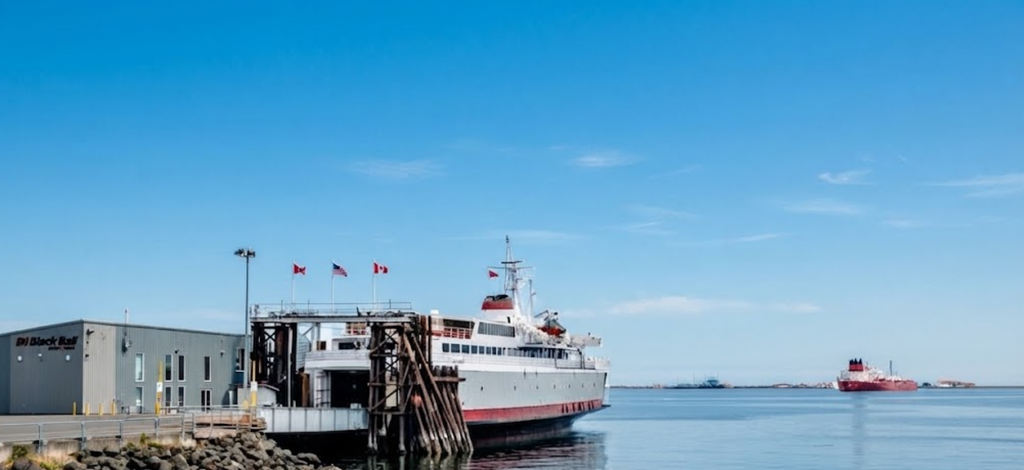
Victoria’s Inner Harbour is the Coho’s home port, and its location could not be more central. From downtown, the terminal is a ten‑minute walk, a short bus ride, or a gentle stroll past shops and gardens. Vehicles roll into the ship’s belly, while walk‑on passengers line up with passports in hand, clearing Canadian customs before boarding.
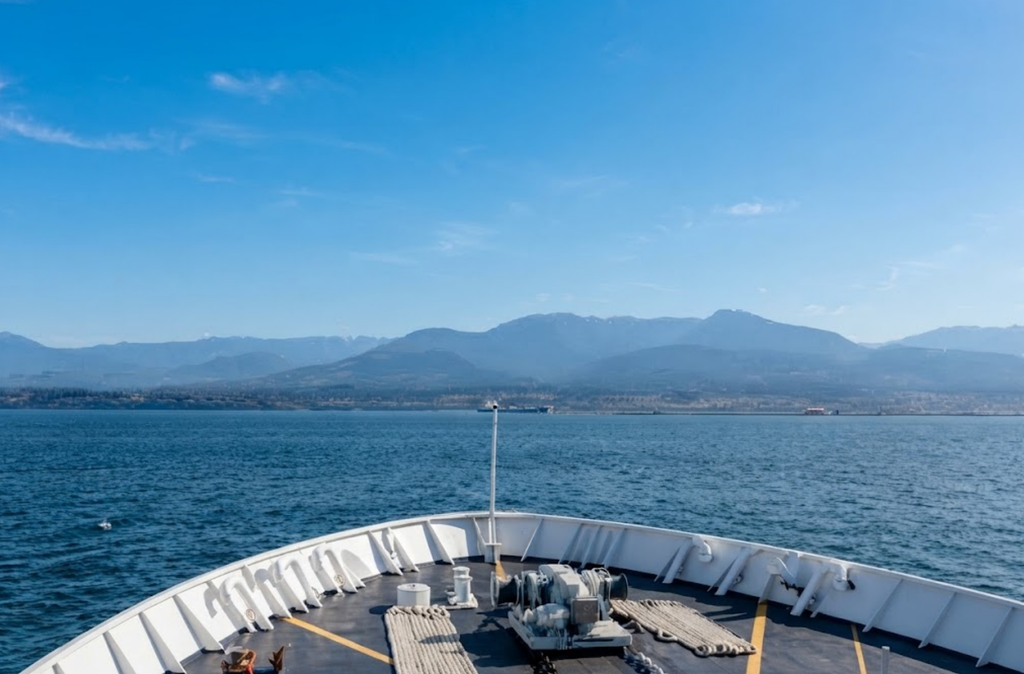
On arrival in Port Angeles, U.S. customs await, and beyond them lies the gateway to Olympic National Park — a wilderness of glacier‑capped peaks, moss‑draped rainforests, and wild Pacific shores. The ferry is not just transport but the beginning of an adventure, a bridge into landscapes that feel both untamed and eternal.
A Legacy on the Water
The Black Ball Line’s history stretches back to the mosquito fleet of Puget Sound, when ferries were lifelines before roads carved their way through the region. In the early twentieth century, movement around Puget Sound was easier by water than by land. The mosquito fleet buzzed across the Sound, carrying passengers and goods from Tacoma to Seattle, Seattle to Everett, and beyond.
By the 1920s, cars and buses began to steal the fleet’s business, and the company faced the challenge of reorienting its service. Depression‑era economics made new ferries difficult to afford, but ingenuity prevailed. In 1933, Alexander Peabody purchased the steel hull of the burned San Francisco Bay ferry Peralta.
Rebuilt in streamlined form, it became the Kalakala, a vessel so futuristic it was nicknamed the “silver slug.”Peabody’s vision carried the company through decades of change. Bargain purchases of Southern Pacific’s boats in the 1930s expanded the fleet, and by 1959, the Coho was launched to serve the Victoria–Port Angeles route. It has remained in service ever since, a stalwart presence on the Strait, a ship that carries history as much as passengers.
The Crossing Itself
To sail on the Coho is to experience a journey that is both practical and poetic. The ship departs with a low rumble, sliding past float planes and fishing boats, its wake curling into the harbor. The city recedes, its Victorian buildings and manicured gardens shrinking into the distance. The Strait opens wide, a shifting canvas of blues and greys.
On clear days, the Olympic Mountains rise in jagged silhouette, their peaks dusted with snow even in summer. On misty mornings, the horizon blurs, and the ferry seems to move through a dreamscape where sea and sky are indistinguishable. Passengers settle into their chosen rhythms. Some read, some doze, some wander the decks with cameras poised. Others simply watch, letting the scenery unfold like a slow‑moving film.
Arrival in Port Angeles
Port Angeles greets travelers with a working harbor, its piers lined with fishing boats and its streets leading into a town that feels both rugged and welcoming. It is the threshold to Olympic National Park, a place where ecosystems collide — alpine peaks, temperate rainforests, and wild coastline all within reach.
For many, the ferry is not just transport but the beginning of an adventure. Hikers, campers, and wanderers step ashore with boots and backpacks, ready to lose themselves in the park’s vastness. Others arrive for quieter pursuits: art galleries, seafood restaurants, or simply the pleasure of small‑town life.
Packages and Passage
Black Ball Ferry Line offers more than a crossing. Its curated packages weave together ferry tickets, hotel stays, and attractions, creating journeys that are both convenient and economical. Travelers who book these packages enjoy exclusive savings at some of the region’s favorite hotels, and the reservation fee for vehicles is waived — a small but welcome gesture that ensures peace of mind. It is a reminder that the ferry is not just a ship but part of a larger experience, a bridge into memory.
The Spirit of Continuity
The Coho is not the fastest way across the Strait, nor the most modern. Float planes skim the water and soar into the sky, offering quicker passage and dramatic views. Yet the ferry endures, chosen by those who value the journey as much as the destination. It carries history as much as passengers.
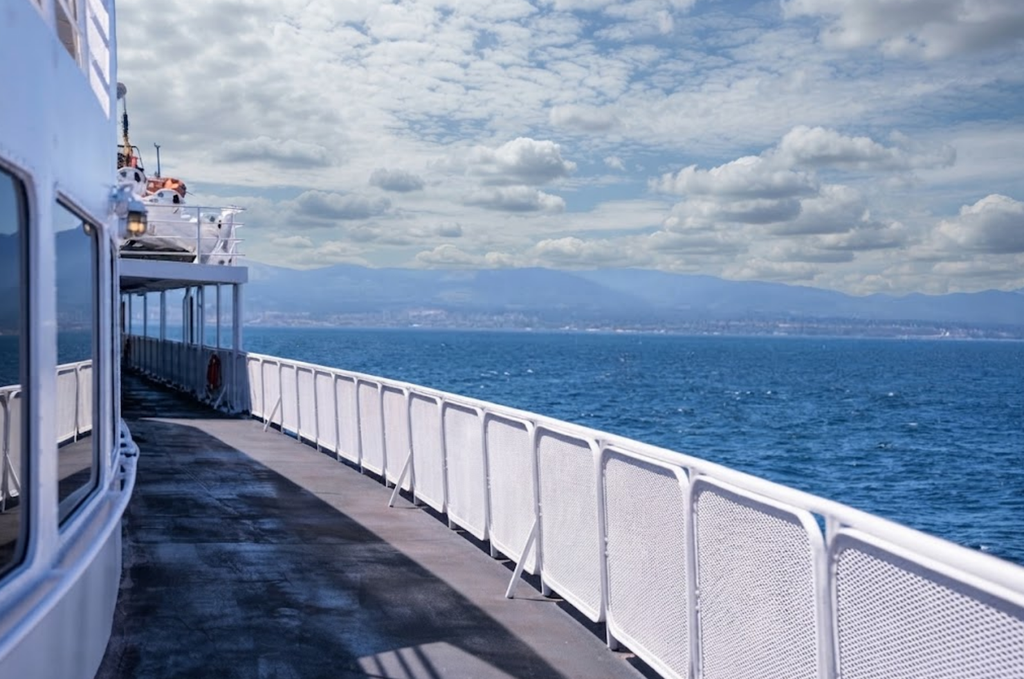
Its decks are stages where sea and sky perform, where travelers find themselves suspended between two countries, two landscapes, two rhythms of life.
Victoria’s Embrace
On the return journey, Victoria welcomes travelers with blooms spelling the city’s name along the waterfront. Fisherman’s Wharf beckons with its colorful floating homes and seafood stalls, while the Inner Harbour bustles with street performers and market stalls.
The city’s British colonial past is reflected in its architecture, its Victorian buildings standing as reminders of another era. Gardens spill over with flowers, and the rhythm of life feels both cosmopolitan and leisurely.For those arriving by ferry, Victoria is not just a destination but a revelation — a place where history, nature, and culture converge.
A Journey Without Hurry
The Coho ferry is a vessel of patience. It does not rush, does not demand. It invites travelers to slow down, to watch the horizon, to feel the sea’s pulse.It is a ship that has carried generations, that has weathered storms and celebrated calm. It is a reminder that travel is not always about speed, but about connection — to place, to history, to the simple act of crossing water.
Closing Reflection
The Black Ball Ferry Line’s Coho is more than transport. It is a tradition, a story, a bridge. It is the most central of the crossings, the most storied, the one that turns a journey into a chapter. To sail on the Coho is to step into history, to move with the tide, to arrive not just at a destination but at an experience. It is a passage that endures, a crossing that continues to bind Victoria and Port Angeles, Canada and the United States, travelers and the sea.