
The Descent into Lower Town
What to do in Quebec City? Quebec City is a place of layers — stone stacked upon stone, history folded into every corner. To reach Rue du Petit-Champlain, you descend from Upper Town, leaving behind the ramparts and the grand sweep of Dufferin Terrace. The journey itself is part of the tradition.
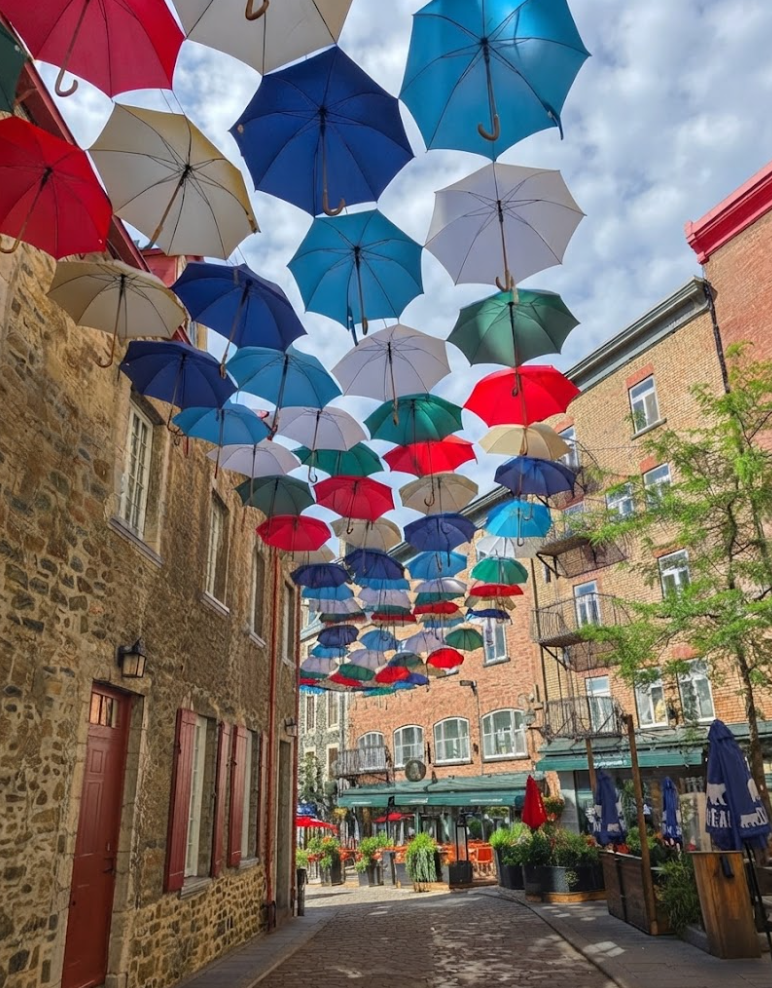
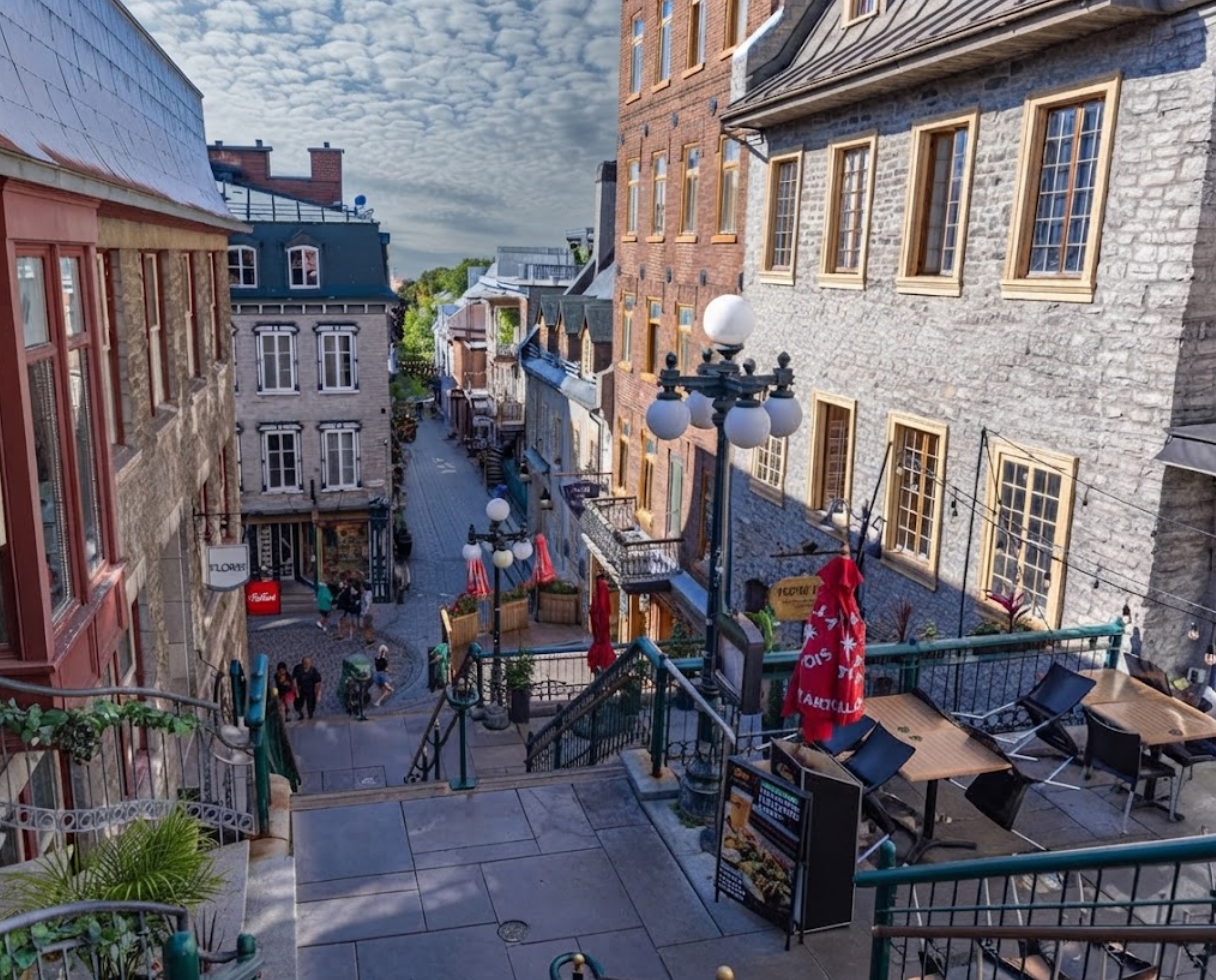
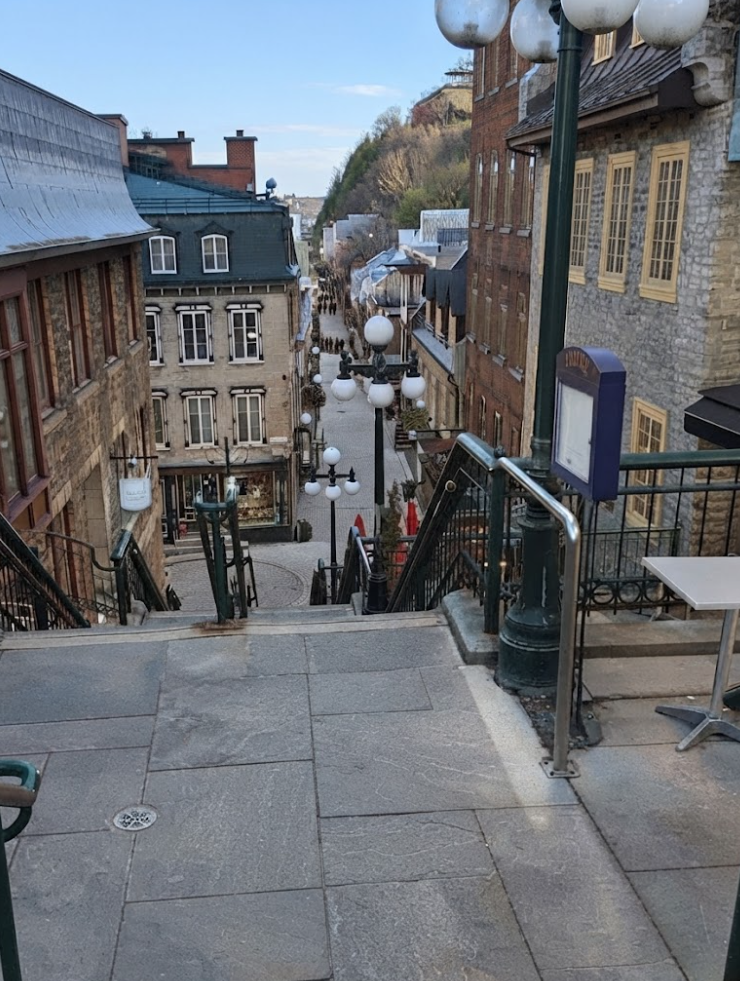
You can glide down in the funicular, watching the rooftops tilt and the river widen, or you can take the Breakneck Stairs, steep and unapologetic, the oldest staircase in the city. Halfway down, you pause, breath caught, and turn back. The view is a living postcard: lanterns strung across cobblestones, shop signs dangling like ornaments, flower boxes spilling color against stone walls.
This descent is more than geography. It is a passage into intimacy. Upper Town feels like ceremony — wide boulevards, grand hotels, the sweep of the Château Frontenac. Lower Town, and especially Rue du Petit-Champlain, feels like a whisper. Narrow lanes, painted shutters, iron balconies. It is a street that insists you slow down.
The Street’s Rhythm
Rue du Petit-Champlain is short — barely 300 meters — but it contains multitudes. At dawn, the lane is hushed, its shutters closed, its stones damp with river mist. You walk alone, latte in hand, and the silence feels like a gift. By midday, the street thrums with voices, cameras, and the shuffle of cruise‑ship crowds.
The cobbles become a bottleneck, and the magic is harder to catch. Yet in the evening, when the lights flicker on and the air softens, the street exhales. It becomes a place for slow wandering, for noticing iron balconies and painted lettering, for savoring the rhythm of Old Quebec without haste. This rhythm is the secret of Petit-Champlain. It is not a place to rush. It is a place to linger, to notice, to breathe.
The Fresque du Petit-Champlain
Near the foot of the Breakneck Stairs, the Fresque du Petit-Champlain blooms across stone — a mural that condenses centuries into a single frame. Merchants, artisans, and families gaze out from painted windows, their stories layered into pigment and plaster.
It is a history lesson disguised as art, a reminder that this street has been rebuilt, reshaped, and reborn after landslides and centuries of change. Step back across the street for the full sweep, or linger at dusk when the crowds thin and the mural glows in the lamplight. Early morning is best for soft light, when the figures seem to breathe.
Looking Up from Place Royale
Stand at the lower end, near Place Royale, and lift your eyes toward the funicular. The cobbles catch the last light, signs dangle above narrow lanes, and beyond it all the Fairmont Château Frontenac rises like a sentinel on the cliff. At golden hour, the whole street seems to shimmer — a corridor of history framed by stone and sky.
This view is one of the most photographed in Quebec City, yet it never feels tired. Each season reshapes it: autumn leaves burn against the stone, winter snow muffles the sound of footsteps, spring flowers spill from balconies, summer light gilds the signs.
Side Alleys and Shopfronts
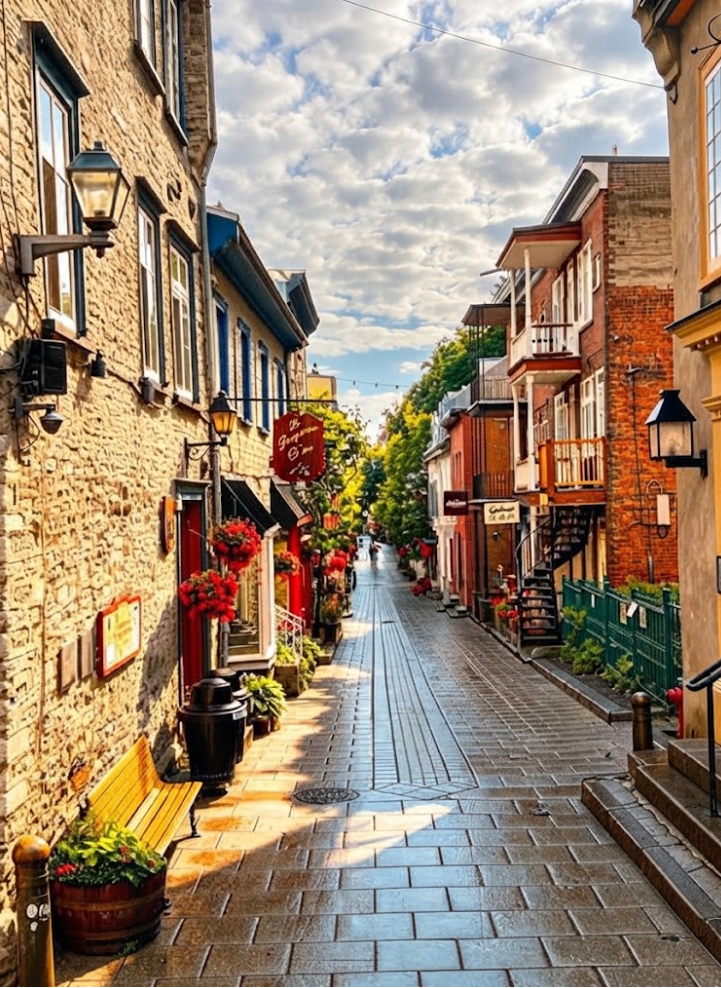
Slip into the side lanes, where lanterns hang low and silence lingers. Here, you’ll find angles untouched by crowds, perfect for a quiet photograph or a moment of stillness. Even the shopfronts tell stories: painted doors, vintage handles, seasonal garlands.
Pause at Brin de Folie, a toy shop brimming with wooden puzzles and bilingual books, or wander into Boutique Artnika, where notebooks and postcards carry the hand of local artists. These shops are more than commerce; they are continuations of the street’s tradition of craftsmanship.
And then there is Sculpteur Flamand, Alain Flamand’s boutique of wooden sculptures. Each piece is handmade, each cat or bird carved with care. Buying here feels less like shopping and more like carrying a piece of Quebec home.
The Street’s Origins
Rue du Petit-Champlain is not just charming; it is foundational. This is where the first merchants, artisans, and builders of New France established their workshops. The stone facades you admire today once housed carpenters, blacksmiths, and traders.
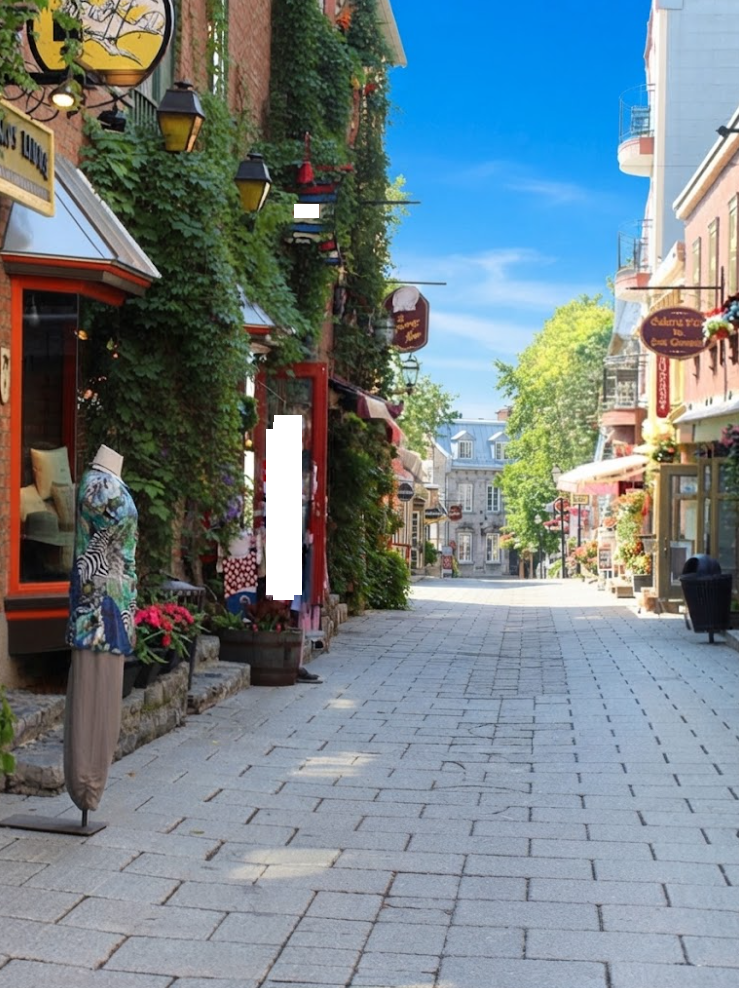
The street was practical before it was picturesque. Knowing this changes the way you walk it. The cobbles are not just quaint; they are resilient. The balconies are not just decorative; they are echoes of lives lived in close quarters. The mural is not just art; it is testimony.
The Entrances
The neighborhood is defined by three remarkable gateways: the Breakneck Stairs, Place Royale, and the Old Quebec Funicular. Each is worth a pause. The Breakneck Stairs are iconic, steep but short, delivering you directly into the heart of Rue du Petit-Champlain. Place Royale is the historic square, a reminder of Quebec’s beginnings, framed by plaques.
The Funicular is quick, scenic, and practical, especially if you are tired or carrying bags. Each entrance offers a different mood, a different approach. Together, they frame the street like a triptych.
The Museum of Civilization
Just minutes away lies the Museum of Civilization, one of Canada’s finest. Its permanent collections trace the history of Quebec, while its temporary exhibitions bring global stories to the city. Visiting the museum alongside Rue du Petit-Champlain deepens the experience. The street shows you history in stone; the museum shows you history in context.
The Summer Buzz
In July and August, Petit-Champlain is buzzing. Street artists perform, terraces overflow, festivals spill into the lanes. It is crowded, yes, but it is also alive. If you crave energy, this is the time to visit. If you crave quiet, come early in the morning or late in the evening.
Practical Notes
Parking is rare and paid. Favor public transport or taxis from Gare du Palais. From Montreal, VIA Rail delivers you in three hours. From the airport, a taxi takes about 25 minutes. Crowds peak in summer and during Carnival. For a quieter experience, favor weekdays or weekend mornings before ten.
How to Explore Without Rushing
Rue du Petit-Champlain is short, but it is not meant to be rushed. Walk it once without your camera. Then loop back and take the photos. Pause outside the boutiques even if you don’t plan to shop. Some are filled with locally made pieces, not just souvenirs — and a few shopkeepers love to chat if you’re not in a hurry.
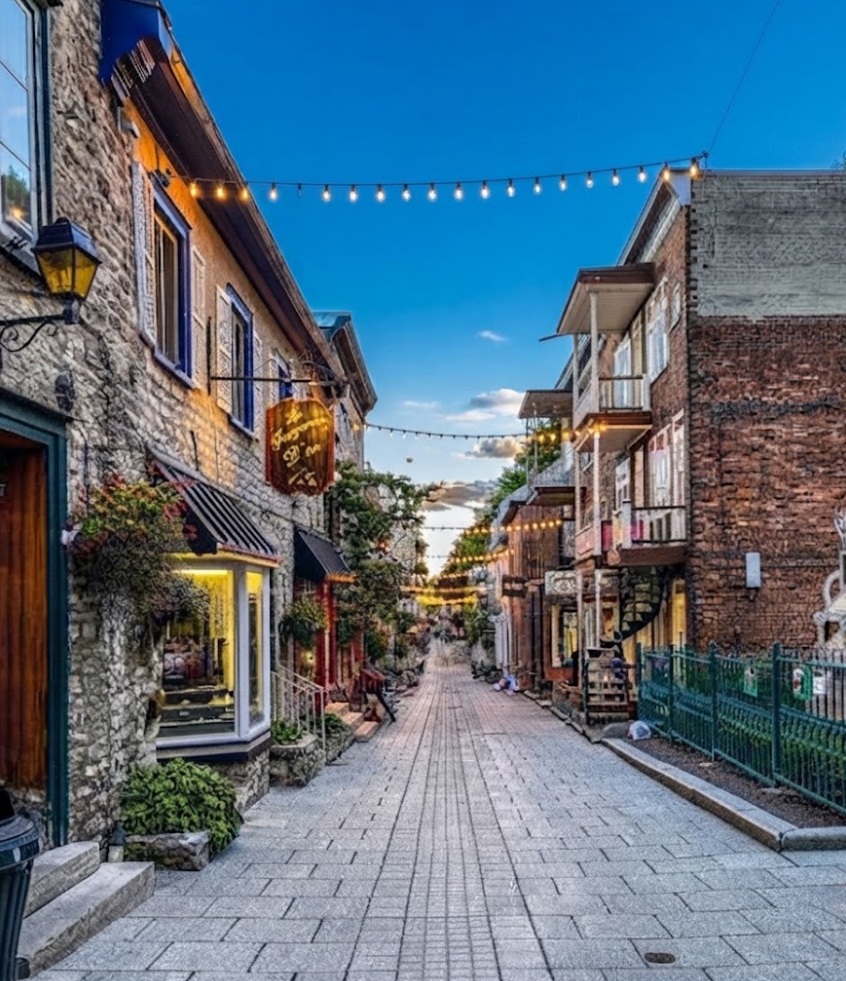
Look for details: painted signs, iron balconies, flower boxes, historical plaques. Every house has a story. Put down your camera from time to time. The best memories are formed in the mind, not on the SD card.
Why It Matters
Rue du Petit-Champlain is more than a street; it is a living stage. Its stones remember merchants of New France, its façades cradle modern shops, its murals whisper resilience after landslides and centuries of change. To rush through is to miss its heartbeat. To linger — slowly, deliberately — is to feel Old Quebec breathe around you.