
The Vertical Heartbeat of Old Québec
Old Québec is a city of layers — fortresses perched high above, riverside streets pressed low against the St. Lawrence, and a cliff that cleaves them apart. To walk here is to feel history stacked upon itself, stone on stone, century on century. And yet, there is one slender thread that binds these worlds together: the Funiculaire du Vieux‑Québec.
Since 1879, this inclined railway has carried travelers between Upper Town’s grand promenades and Lower Town’s lantern‑lit intimacy. It is more than a machine; it is a ritual, a glide between atmospheres, a pause in motion where the city unfurls beneath you.
A Living Symbol of Heritage
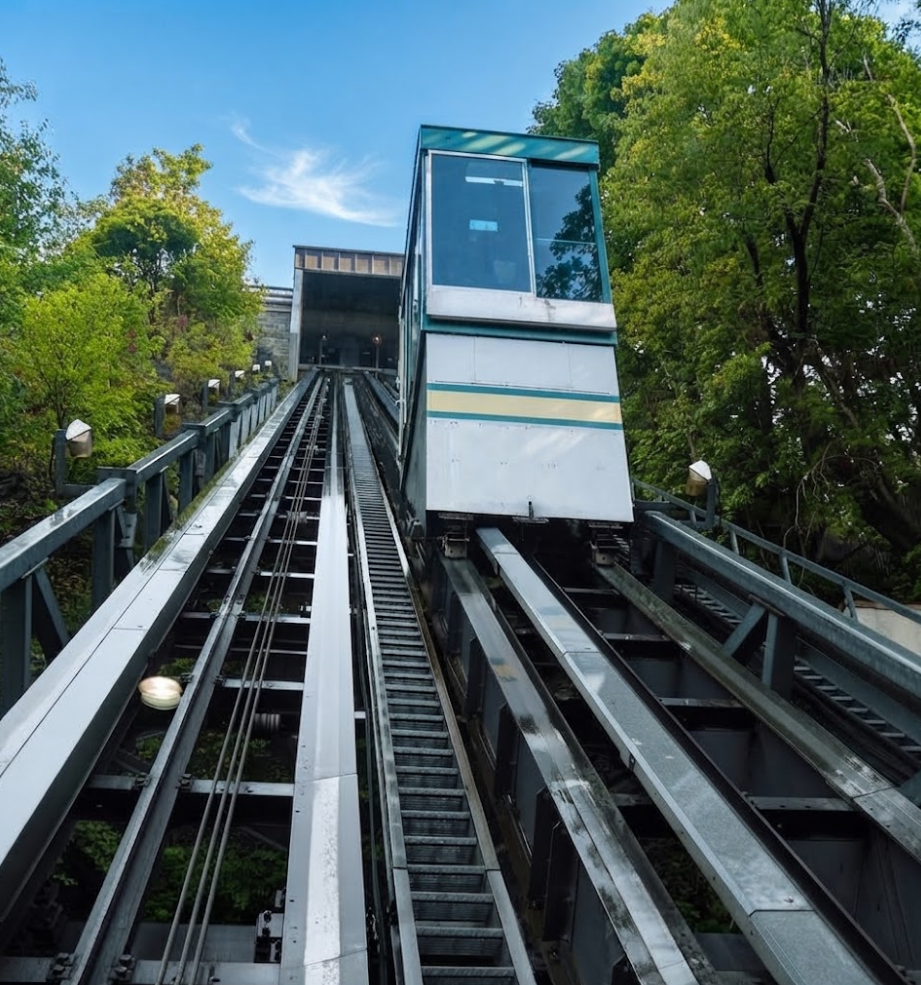
The funicular is not just transport. It is a living emblem of Old Québec’s heritage, a reminder that convenience can be beautiful, and that utility can be steeped in romance. Its glass‑walled cabins rise and fall along the cliff face, revealing fortifications, rooftops, and the shimmer of the river.
Step inside, and the city tilts. The cobblestones of Quartier Petit Champlain recede below, the boardwalk of Terrasse Dufferin beckons above, and the cliff itself becomes a stage for your ascent.
The Ride Itself
The journey lasts only a minute, yet it distills the essence of Québec City. The hum of the cable, the gentle sway of the car, the play of light on stone facades — all combine into a sensory snapshot. Large windows frame the panorama: iron balconies, painted shop signs, the sweep of the St. Lawrence.
Families with strollers, couples hand‑in‑hand, solo wanderers with cameras — all find the ride effortless. For those who prefer to avoid steep staircases or icy climbs in winter, the funicular is a gift. It is practical, yes, but also poetic.
A Seamless Link Between Worlds
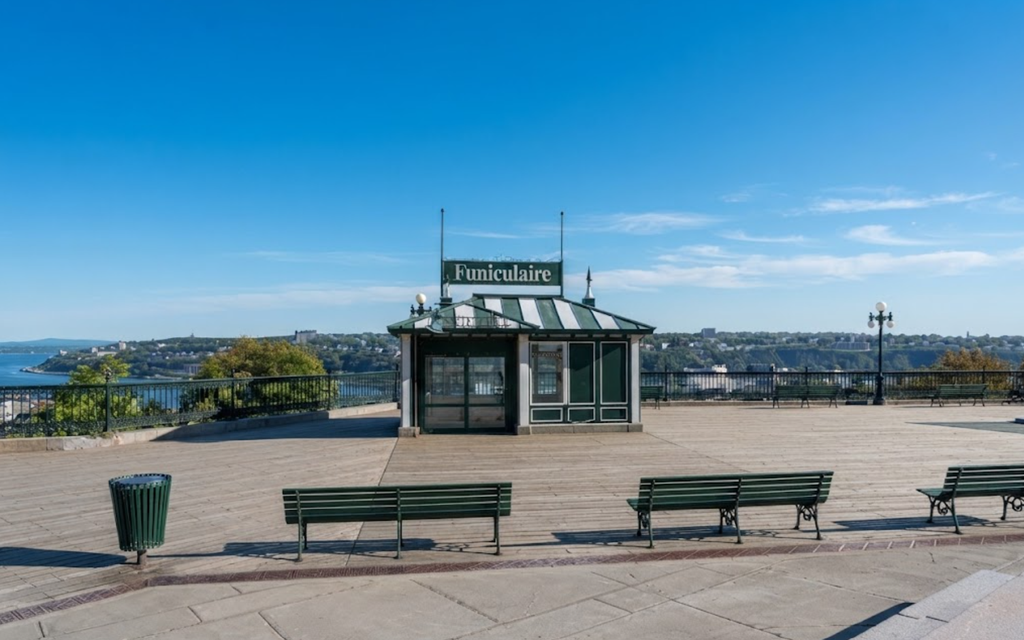
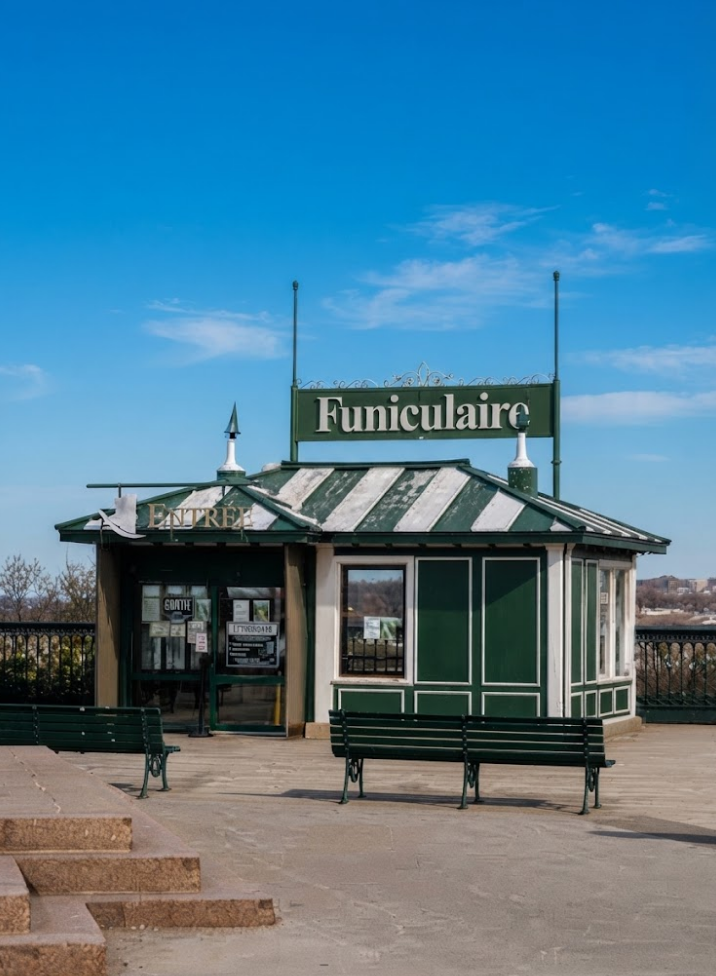
At the upper station, you step out onto Terrasse Dufferin, where cannons guard the cliff and the Fairmont Château Frontenac rises like a sentinel. From here, the city stretches in grandeur: lawns, fortifications, museums, and sweeping views of the river.
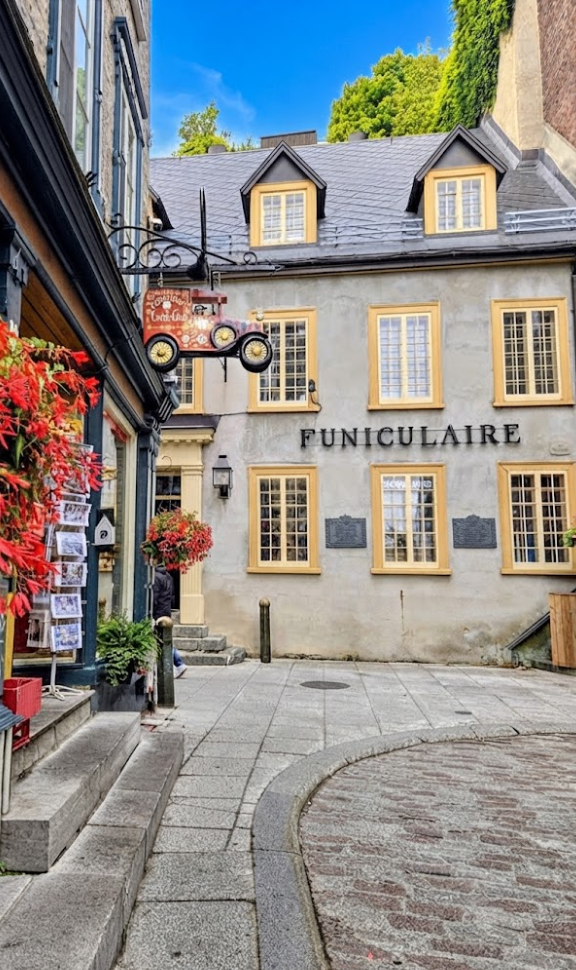
At the lower station, you arrive in Petit Champlain, a district of narrow lanes, boutiques, and bistros. Lanterns swing above cobbles, murals bloom across stone, and shopfronts spill warmth into the street. The funicular ties these experiences together, saving your breath while gifting you a new perspective.
History in Motion
The Funiculaire du Vieux‑Québec first opened in 1879, making it the oldest funicular in North America still in operation. Originally powered by water ballast, it has evolved into an electric cableway, rising 195 feet along the cliff.Its longevity is remarkable. Through landslides, renovations, and modern redesigns, it has remained a constant — a quiet witness to the city’s unfolding story.
To ride it is to join a tradition, to feel history pressed against glass and steel. The funicular contributes to this narrative by connecting you directly to key viewpoints and historic quarters. It is a small but meaningful convenience that allows more people to experience the city’s vertical character. Here, geography and urban fabric are inseparable.
The cliff defines the skyline, and the funicular embraces it. To glide along this rock face is to understand how closely the city’s identity is tied to its natural landscape.
Photography and Perspective
For photographers, the funicular is a moving vantage point. The contrast between cliff, rooftops, and river creates striking compositions. The slow movement of the car offers just enough time to capture changing views without feeling rushed. At dusk, the river glows bronze, the rooftops catch fire, and the lanterns of Petit Champlain flicker below. At dawn, mist curls along the cliff, softening the stone. Each ride becomes a frame, a fleeting tableau of Old Québec’s character.
Practical Notes
Tickets are priced at around $5 (USD or CAD), payable in cash. The ride is pet‑friendly — dogs are welcome at no extra charge. A small gift shop at the upper station offers souvenirs. Early morning rides are quieter, with fewer crowds and more space in the cabin. The funicular operates year‑round, making it especially useful in winter when staircases are icy.
These details matter, but they never overshadow the experience. The funicular is efficient, affordable, and family‑friendly, yet it remains memorable precisely because it is more than the sum of its parts.
A Day Shaped by the Funicular
Many visitors weave the funicular into their walking tours. Begin in Upper Town, tracing the fortifications and promenades. Pause at Terrasse Dufferin, then descend into Petit Champlain for shopping and dining. Later, ride back up for sunset views over the river. Others prefer the reverse: start by the river, ride up for the panorama, then wander back down on foot.
Whichever route you choose, the funicular maximizes your time and energy while giving you a full sense of the city’s vertical layout.
Atmosphere and Memory
Though brief, the ride often becomes one of the vivid memories visitors keep. The gentle glide, the play of light, the glimpse of stone facades — all combine into a sensory impression that lingers.It is a shortcut, yes, but also a moment of stillness. A pause between worlds. A reminder that even the simplest journeys can be beautiful.
Why It Endures
The Funiculaire du Vieux‑Québec endures because it embodies the city’s essence: practical yet poetic, historic yet modern, efficient yet atmospheric. It is a thread between layers, a bridge between moods, a glide between centuries. To ride it once is to understand Old Québec’s vertical soul. To ride it twice is to feel the city breathe around you. To ride it often is to make it part of your own tradition, your own memory of this treasure.
A Signature Experience
Old Québec is a city of drama — cliffs, fortresses, lanterns, and river light. The funicular distills that drama into a single minute. It is compact, charming, unforgettable.Whether you ride it at dawn, at dusk, or in the hush of winter, the Funiculaire du Vieux‑Québec will stand out among your experiences. It is more than a novelty. It is a living symbol, a glide between worlds, a memory pressed into motion.