
Some hikes leave the body weary; others leave the spirit altered. The Aletsch Glacier Panorama Trail belongs to the latter. It is not simply a walk through the Alps; it is a journey into the very bones of Switzerland, where ice and rock meet sky, and where human presence feels both humbled and exalted.
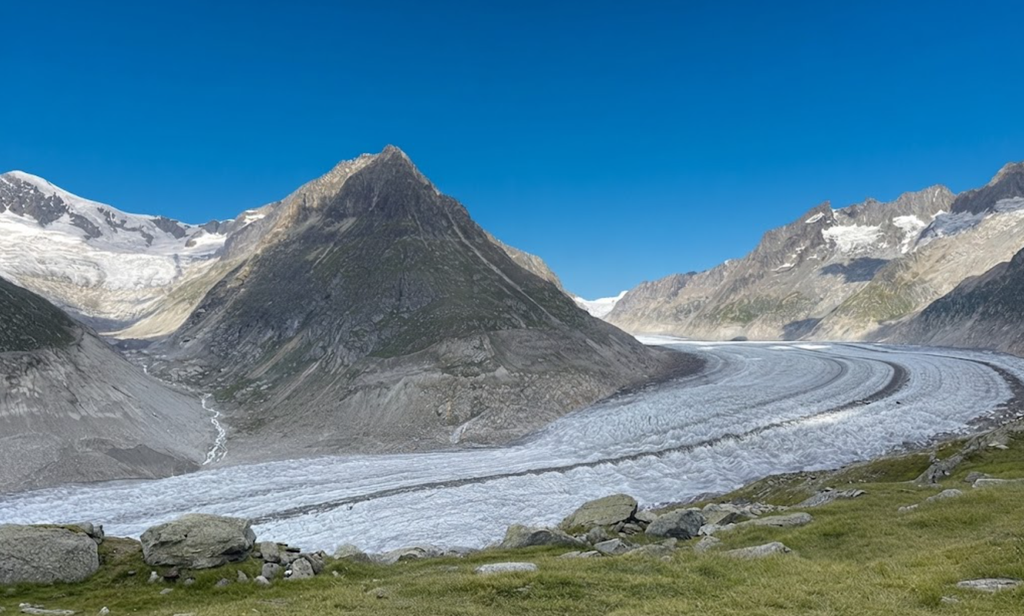
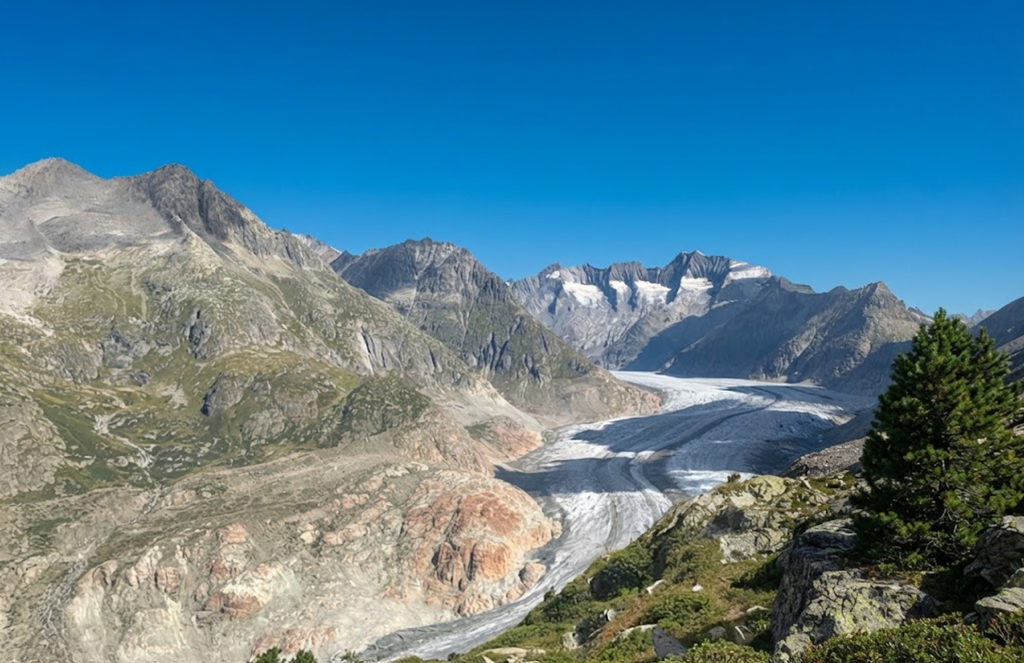
In a single sweeping day, the largest glacier in the Alps reveals itself — a 23‑kilometer river of ice that has carved valleys and shaped legends. The proud silhouettes of Jungfrau and Mönch rise nearby, the mighty Konkordiaplatz gathers four glaciers into one, and, in the opposite direction, the unmistakable pyramid of the Matterhorn pierces the horizon.This is the hike that makes Switzerland unforgettable, not just for postcard beauty but for raw, elemental grandeur.
The Trail: Numbers and Demands
The circuit stretches 16 kilometers, a full day’s journey of six hours on foot, eight with pauses for photographs, drone flights, and quiet awe. The terrain is demanding — gravel paths, steep ascents, and long descents — but never cruel. With 730 meters of climb and 470 meters of descent, stamina is required, not heroics.
At its lowest, Bettmeralp rests at 1927m; at its highest, the crossroads near Roti Chumme rise to 2480m, where the air thins and the horizon opens. Shoes with grip, trekking poles, and patience are essential companions.This is not a casual stroll. It is a mountain hike, moderate to hard, rewarding those who prepare.
Getting There: The Journey Begins
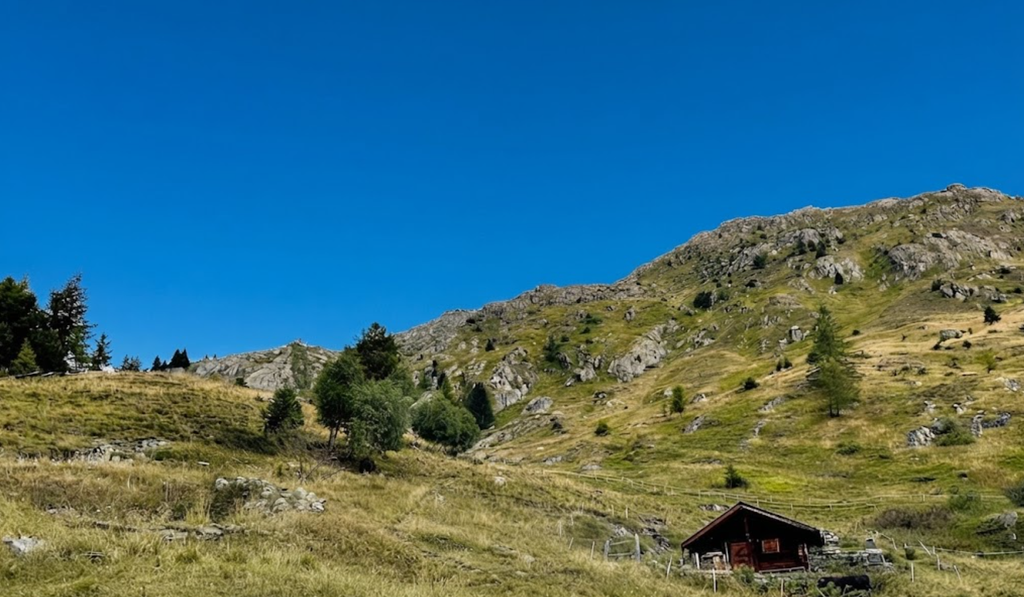
The pilgrimage begins with a train to Betten Tallstation, then a cable car to Bettmeralp. Later, the trail delivers hikers to Fiescheralp, where another cable car descends to Fiesch. The lifts are lifelines — but closing times must be respected, or the mountain will keep travelers longer than planned.
The ride itself is part of the magic: a slow ascent into alpine villages, a descent back into valleys, each transition a reminder of Switzerland’s seamless blend of wilderness and accessibility. Cable cars are affordable — CHF 9.80 up to Bettmeralp, CHF 20.00 down from Fiescheralp — and cheaper with the Half‑Fare Travel Card. But the real currency here is time. Miss the last lift, and a long, steep descent awaits.
What to Carry: Respecting the Glacier
This is a mid‑altitude mountain hike, and the glacier demands respect. Essentials include breathable layers, waterproof shells, merino socks, gloves, sunglasses, and sunscreen. A backpack of 25–35 liters holds food, water, and trekking poles. For overnight stays, add a headlamp, sleeping bag, and a change of clothes.
More than expected should be packed — the glacier is vast, the weather mercurial, and comfort fragile at altitude. Snacks, thermos, first‑aid kit — these are lifelines. For those planning to swim in alpine lakes, towel and swimwear are welcome additions.
The Mountain Hut: Gletscherstube Märjelen
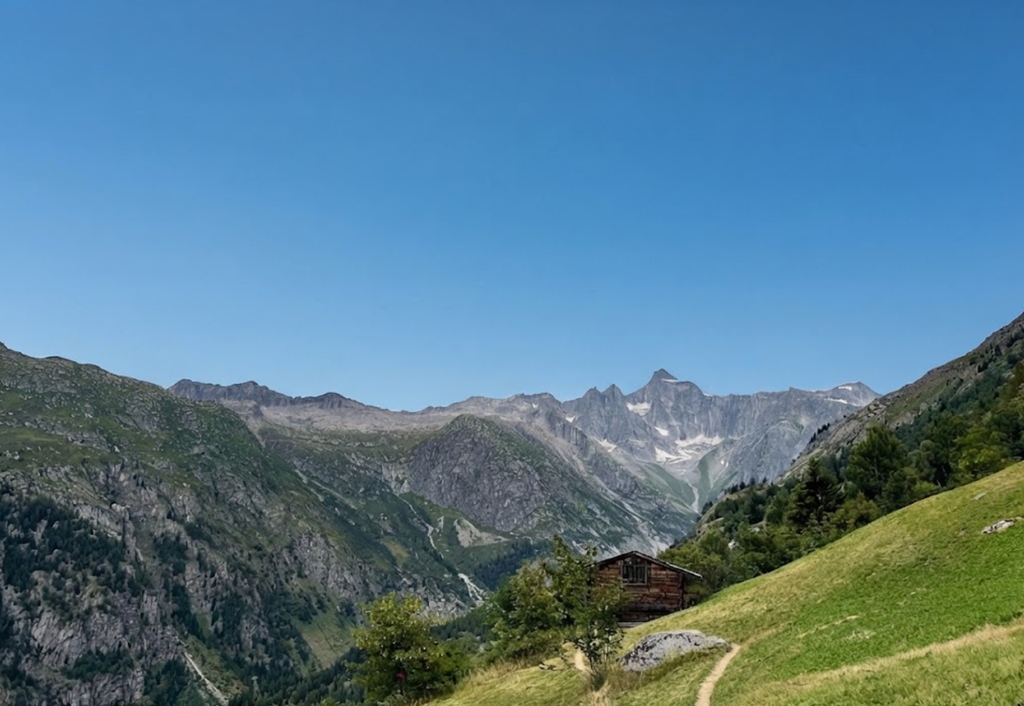
Nightfall brings hikers to Gletscherstube Berghütte Märjelen, a rustic refuge open July to October. Not part of the Swiss Alpine Club, discounts do not apply, but the half‑pension dinner after a long day’s hike is worth every franc. Showers are absent, alpine simplicity reigns. Calling ahead is wise for late arrivals.
Yet dawn at Vordersee erases all discomfort. Stepping outside to see the lake mirrored in sunrise light creates a memory that lingers long after aches fade. The hut offers belonging, not luxury — a place where boots dry by the door, stories are shared, and silence is broken only by laughter and wind.
Bettmeralp to Moosfluh: First Glimpse of Ice
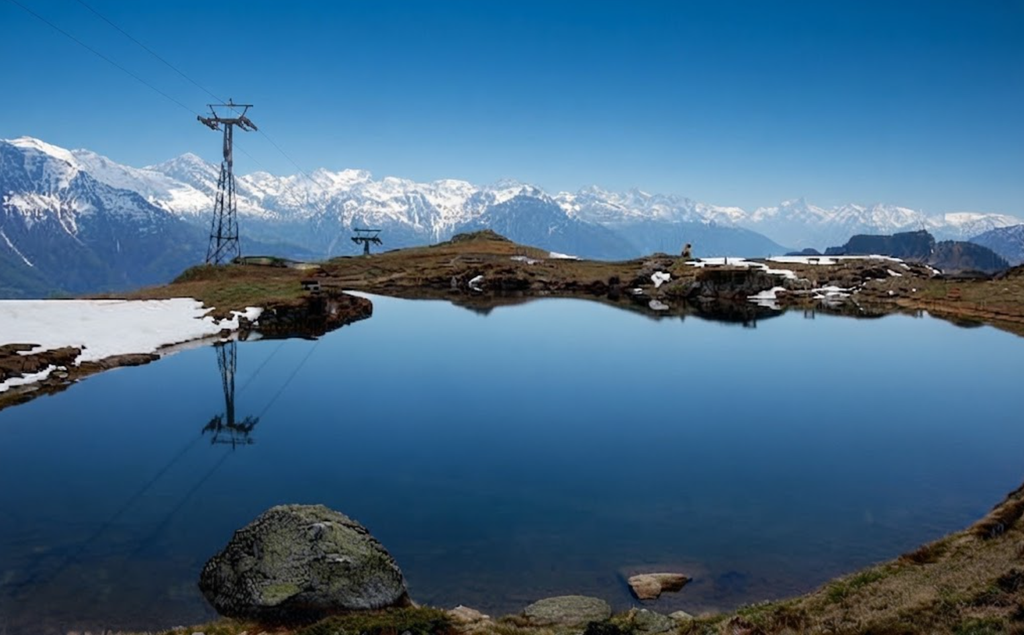
From Bettmeralp, the trail leads past Bettmersee lake, then climbs toward Blausee. The ascent is steady, 300 meters in total, and though the sun can be merciless, the reward is immense. At Härdernagrat ridge, the glacier reveals itself for the first time — a vast, white serpent winding through the mountains.
The sight halts footsteps. From here, a short walk leads to Moosfluh cable car station, accessible also from Riederalp. But the real prize is not the station; it is the view. The glacier stretches below, timeless and immense.
Moosfluh to Roti Chumme: Choosing the Path
Leaving Moosfluh, the trail splits. Right leads to Bettmerhorn summit — crowded, accessible by cable car, but offering sweeping views. Left follows a quieter, flatter path, four kilometers to Roti Chumme viewpoint. The left path rewards with silence. The glacier remains at one’s side, until Roti Chumme opens like a balcony over ice. Here, the trail feels less like a hike and more like meditation. Each step is measured, each view a reminder of scale.
Roti Chumme to the Glacier: Sunset and Awe
From Roti Chumme, another kilometer leads to the turning point — either toward Märjelensee and the hut, or down to the glacier’s entrance. At sunset, the sky burns orange, the glacier glows blue, and drones rise into alpine dusk. Few moments compare. Earlier arrivals may descend to the glacier itself, explore caves, and touch the ice. But at sunset, the glacier is not for touching. It is for reverence.
Sunrise at Vordersee: A Mirror of Peace
Morning at Vordersee is a gift. The lake lies still, a mirror reflecting mountains painted red by dawn. Peace reigns before the day’s demands. From here, descent to the glacier’s entrance begins. Fellow hikers speak of camping on the ice, listening to fractures through the night. Advice guides safe steps into caves and onto the glacier’s surface.
The caves change each year, sculpted by melt and freeze. Some are small, blue chambers; others open like cathedrals. All remind that glaciers are alive, moving, breathing, cracking. Care is essential. Beyond the grey ice, crevasses yawn open, and guides are required. For the bold, the trail continues to Konkordiaplatz, where four glaciers meet, and nights are spent at the remote Konkordia Hut. Even without that detour, the experience is profound.
Return via Tälligrattunnel: Clouds and Mystery
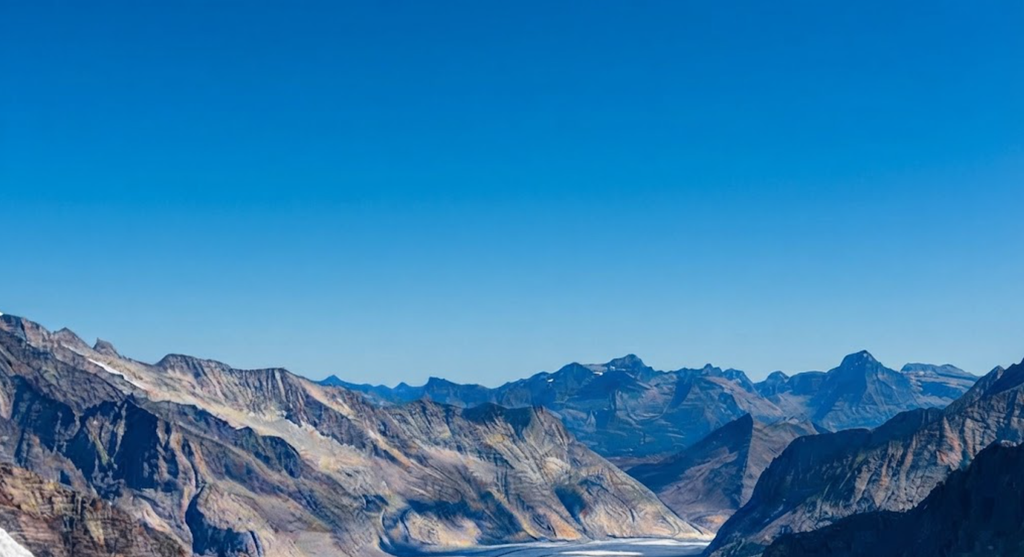
From the hut, the Tälligrattunnel offers a shortcut through the mountain, leading to Fiescheralp. Emerging from the tunnel, valleys appear veiled in cloud, landscapes moody and mysterious. Soon after, the cable car carries hikers back to Fiesch, and the hike concludes.
The descent feels less like an ending and more like a release. The glacier remains behind, but its presence lingers — in memory, in muscle, in spirit.
Why This Hike Matters
The Aletsch Glacier Hike is not just a trail. It is Switzerland distilled into a single experience: glaciers, peaks, alpine lakes, and the quiet endurance of mountain life. It reminds that nature is vast, time is deep, and humanity is small yet capable of wonder.
For those with time, the full experience — hut stay, sunrise, glacier entrance — is essential. The glacier teaches humility and awe in equal measure.
Upshot
Some hikes leave the body weary; others leave the spirit altered. The Aletsch Glacier Panorama Trail belongs to the latter. Surreal, inspiring, unforgettable.This is the hike that makes Switzerland unforgettable.