
The GR34, known locally as the Sentier des douaniers, is Brittany’s defining trail. Stretching more than 2,000 kilometers, it is both a journey through landscapes and a passage through history. Customs officers once walked these paths to guard against smugglers; today, hikers follow the same line, tracing cliffs, beaches, and fishing harbors.
From Mont-St-Michel to St-Nazaire, the GR34 is a living museum of maritime heritage. It is not simply a hike but a cultural immersion, where every bend reveals a lighthouse, a village, or a legend.
Origins of the Path
The trail’s roots lie in the 18th century, when customs officers patrolled Brittany’s jagged coast. Their mission was practical: to prevent contraband from slipping ashore. By the mid-20th century, these patrol paths had fallen silent. In 1968, local enthusiasts revived them as a marked hiking route.
This revival transformed a forgotten network into one of France’s most beloved trails. In 2018, the GR34 was voted the nation’s favorite long-distance path, a testament to its blend of scenery and story.
The Demands of the Coastline
At first glance, Brittany’s terrain seems modest. The highest point along the GR34 is only 128 meters. Yet the jagged shoreline creates relentless ascents and descents. Over the full distance, hikers accumulate nearly 28,000 meters of elevation gain — the equivalent of climbing Mount Everest three times.
Daily sections often involve 800 to 1,000 meters of climbing, much of it on wooden stairs or steep cliff paths. The trail is technically easy, but physically demanding. It rewards stamina more than skill.
Landscapes in Motion
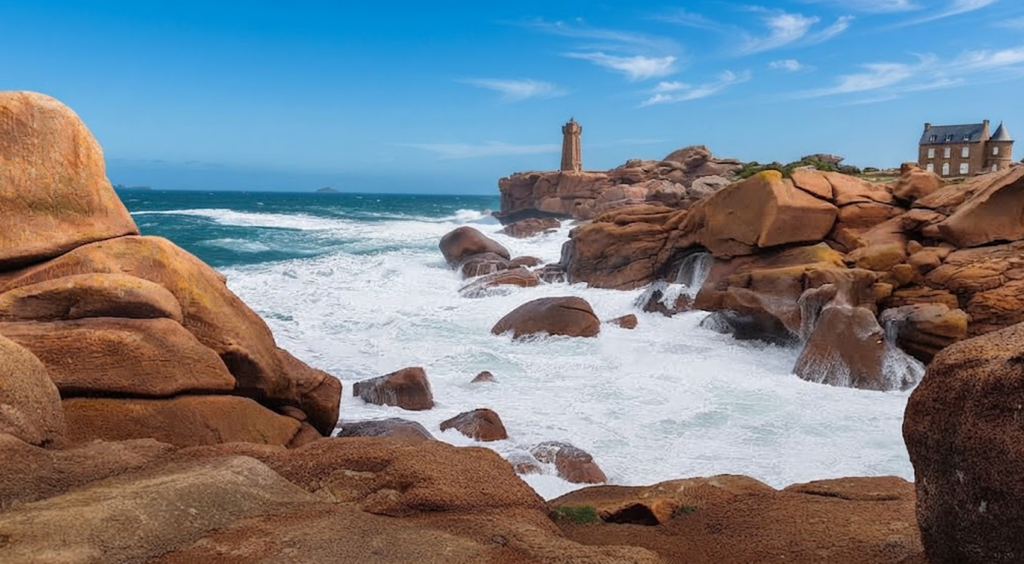
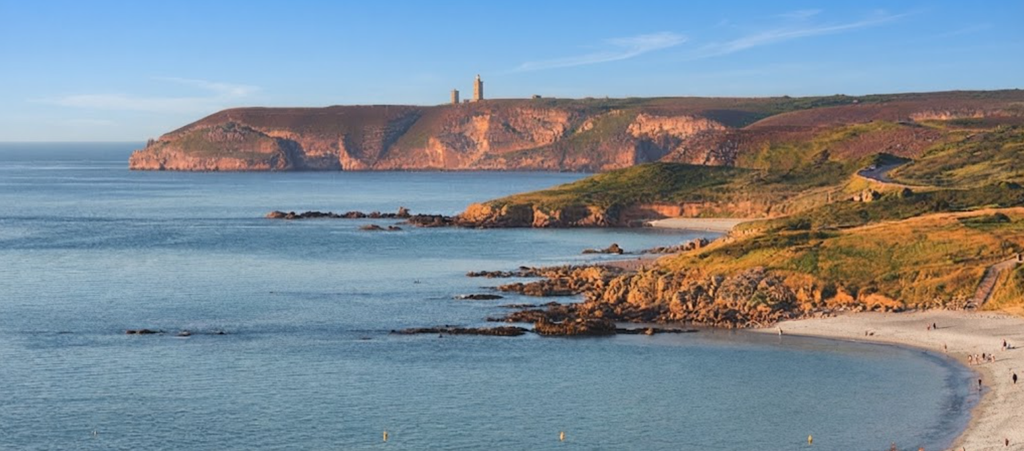
The GR34 is a gallery of contrasts. Wide sandy beaches give way to pink granite cliffs. Estuaries open into turquoise bays. Fishing villages punctuate stretches of wild coves. Highlights include: The Pink Granite Coast, where boulders glow rose-colored at sunset.
The Crozon Peninsula, with its dramatic cliffs and sweeping Atlantic views. The Morbihan Gulf, dotted with a thousand islands.Each section feels distinct, yet the sea is constant — always within sight, always shaping the journey.
Cities Along the Way
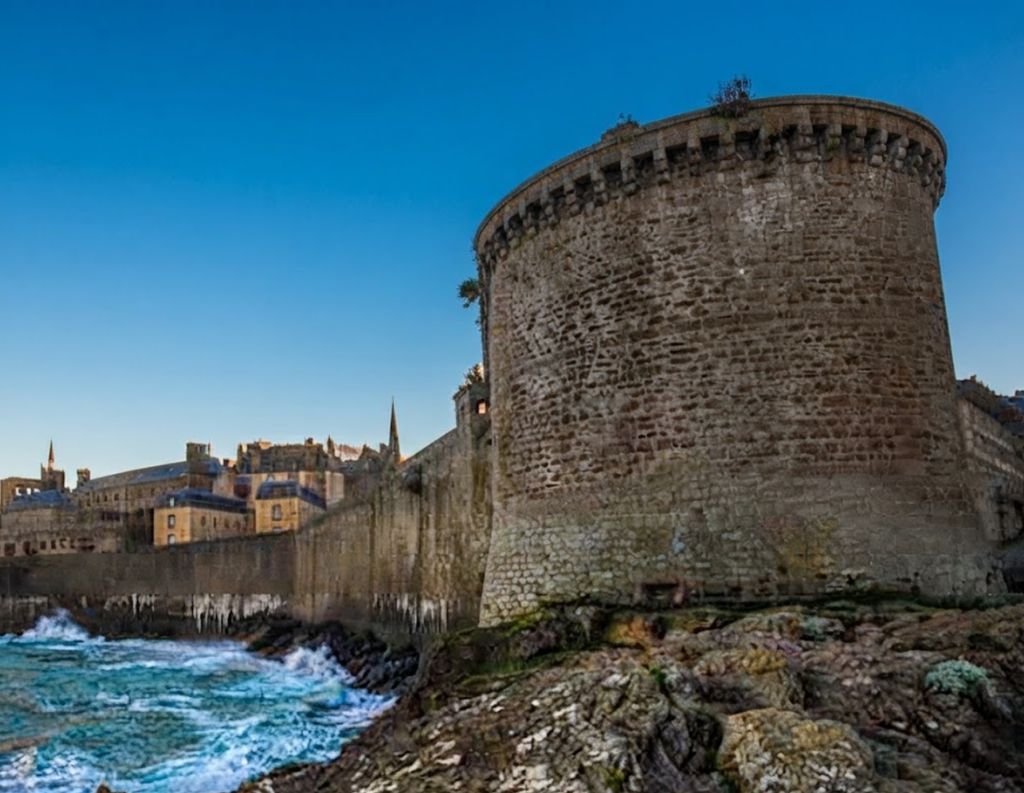
The trail threads through Brittany’s historic towns. Saint-Malo offers ramparts and pirate lore. Brest reflects naval heritage. Lorient and Vannes mix maritime culture with Breton tradition.These towns provide not only accommodation but also cultural depth. Museums, markets, and harbors enrich the hiking experience, turning the GR34 into a blend of outdoor adventure and urban exploration.
Culinary Brittany
Food is inseparable from the GR34. Each stop offers a taste of Brittany’s identity: Oysters from Cancale, fresh and briny. Buckwheat galettes, paired with local cider. Kouign-Amann, a caramelized pastry of butter and sugar. Crêpes with salted butter caramel, the perfect end to a long day. These flavors punctuate the trail like milestones, grounding the hike in local culture.
Accommodation and Rules
Wild camping is forbidden along the French coast. Hikers must plan for lodging — campsites, B&Bs, or hotels. Availability varies by season, and summer requires advance booking. The abundance of villages and transport links makes section-hiking easy. Yet careful planning is essential, especially in remote stretches.
Best Season to Walk
The GR34 is accessible year-round, but May to October offers the best conditions. Spring brings wildflowers, summer offers long days, and autumn provides crisp air. Weather shifts quickly: a sunny morning may turn into a windy shower by afternoon. Preparation is key. Waterproof gear and flexible plans ensure comfort across changing conditions.
Safety and Gear
Long-distance hiking demands foresight. Share itineraries with family or friends. Carry maps or GPX devices. Pack essentials: sturdy boots, poles, rain gear, and at least two liters of water daily.Respect Leave No Trace principles. Stick to marked paths, pack out waste, and protect wildlife. The GR34 is both fragile and resilient, shaped by centuries yet vulnerable to neglect.
The Abers Region
The Abers of northern Brittany are not simply estuaries; they are living corridors where the sea pushes inland, reshaping the land with every tide. Around Aber Wrac’h and Aber Benoît, the GR34 coastal trail reveals a geography that is both fragile and monumental. Dunes roll like pale waves, islets scatter across the horizon, and forts rise as reminders of centuries of defense against the Atlantic’s unpredictability.
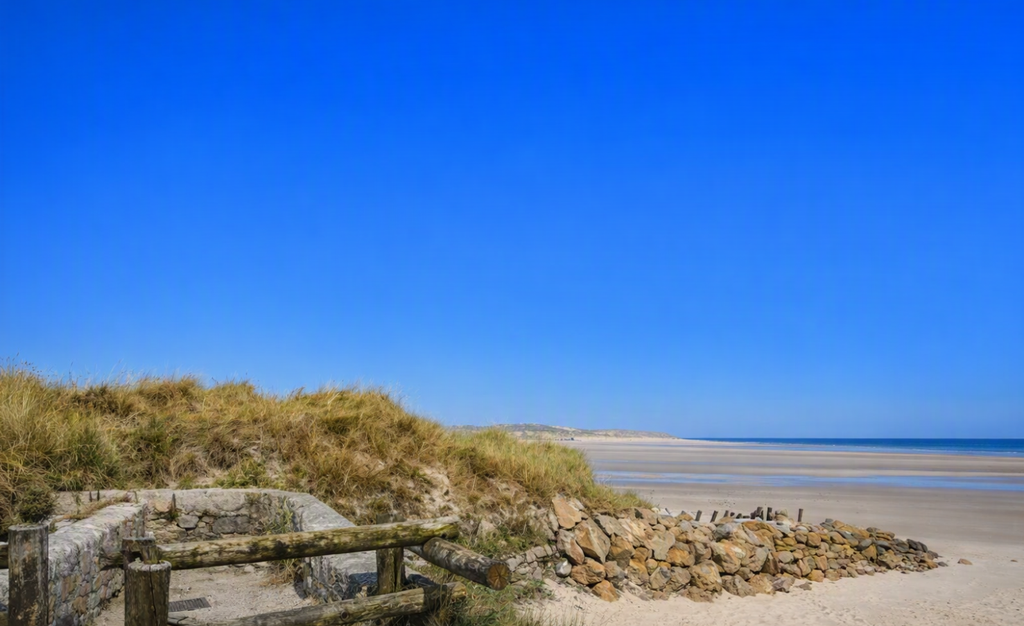
Plouguerneau & Ile Vierge
At Plouguerneau, the Ile Vierge lighthouse dominates the seascape. Built in 1902, it stands 82 meters high, making it the tallest lighthouse in Europe. Its granite shaft is a feat of engineering, designed to withstand storms that batter the Breton coast. Inside, a spiral staircase of 392 steps ascends toward the lantern room.
The climb is steady, the walls cool and echoing, until the summit opens onto a panorama that stretches from the dunes of Lilia to the restless Atlantic. The lighthouse is more than a navigational aid; it is a monument to endurance. For over a century, its beam has guided sailors through fog and tempest, sweeping across waters where shipwrecks once claimed countless lives. To ascend is to inhabit that maritime heritage, to feel the weight of history pressing against the wind.
The Coast of Legends
The Côte des Légendes is a theatre of stone. Granite boulders rise in shapes that defy geology, resembling mythical beasts frozen mid‑stride. Local folklore speaks of korrigans — mischievous spirits said to hide among the rocks, their laughter carried by the wind. The coastline feels enchanted, a place where myth and landscape entwine so tightly that one cannot be separated from the other.
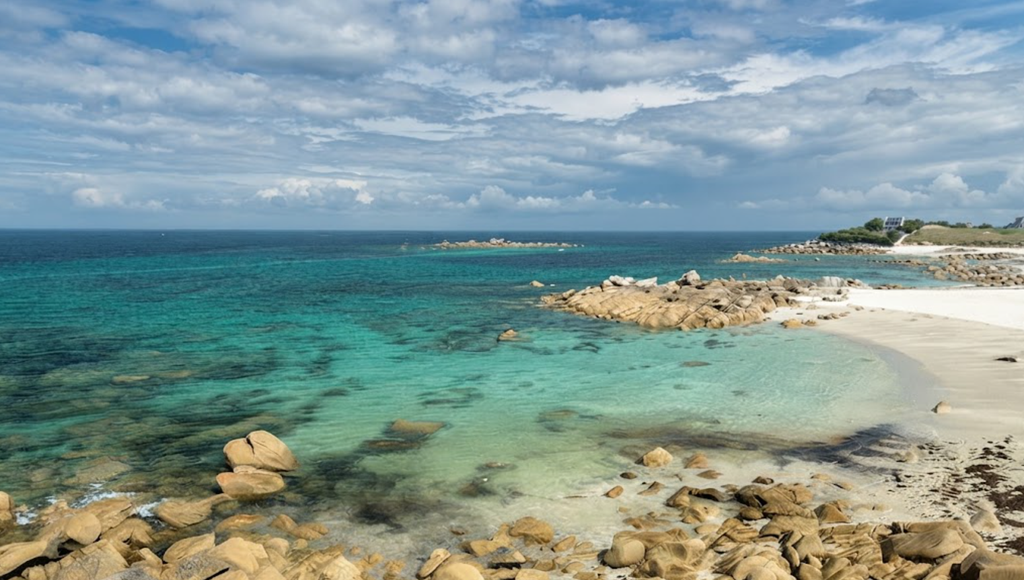
Meneham Village
At the heart of this coast lies Meneham, once a hamlet of seaweed gatherers. Its stone cottages crouch against the wind, built to withstand Atlantic tempests. Today, the village tells stories of shipwrecks and survival, its museum and reconstructed homes offering glimpses into a life shaped by salt and scarcity.
Walking through Meneham is to step into a narrative of resilience, where every wall and hearth speaks of endurance against the sea’s relentless pull. The atmosphere here is layered: the silence of abandoned cottages, the murmur of waves against granite, the echo of legends that refuse to fade. It is a place where history feels tactile, where myth is not simply told but lived in the contours of stone.
Pontusval to Plouescat
The journey from Pontusval lighthouse to Plouescat is a passage through contrasts. The lighthouse itself, built in 1869, is one of Brittany’s most photographed landmarks. Its white tower stands against a backdrop of turquoise sea and granite outcrops, a composition so perfect it feels painted.
From Pontusval, the route threads through Brignogan, where calm beaches stretch like ribbons of sand, and fishing ports vibe with quiet industry. Nets dry in the sun, boats rock gently in sheltered coves, and the rhythm of human life blends seamlessly with the cadence of the sea. By the time the trail reaches Plouescat, the landscape shifts again.
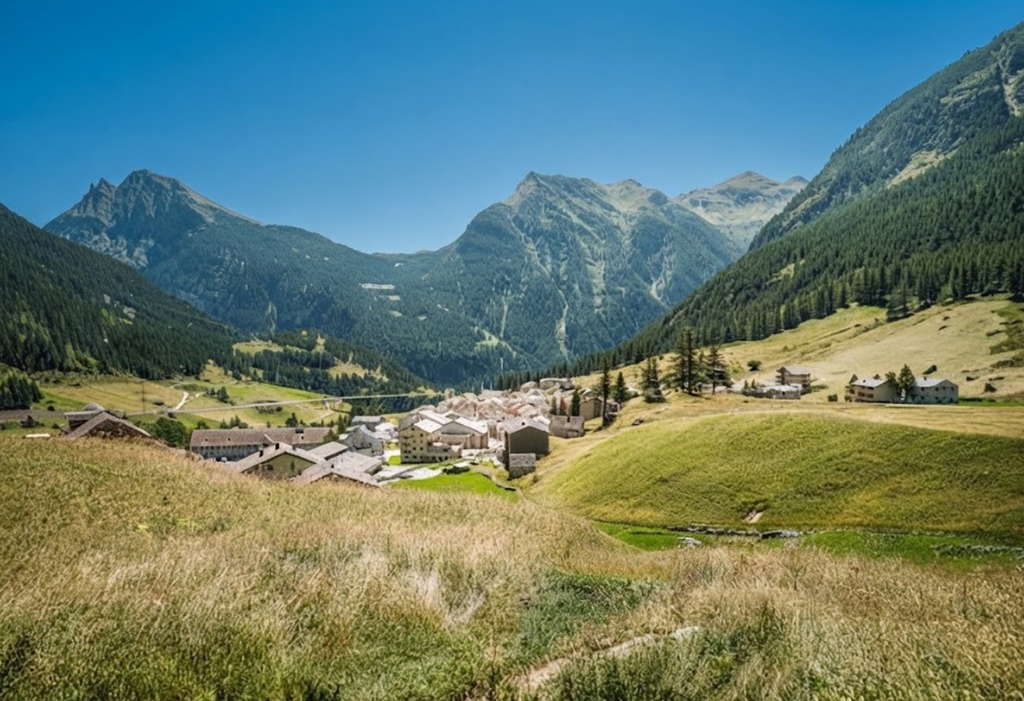
Here, dunes roll inland, and the coastline opens wide, a sweep of horizon that feels endless. The GR34 is not just a path; it is a narrative of transitions, carrying the walker from lighthouse to village, from myth to history, from solitude to community.
A Trail of Stories
The GR34 is more than a path. It is a narrative of Brittany’s relationship with the sea. Customs officers, fishermen, smugglers, and sailors all left traces along its line.Walking the trail is walking through centuries. Each lighthouse, each village, each legend adds a chapter.
Why the GR34 Endures
Few trails combine accessibility with grandeur. The GR34 offers both. It is easy to section-hike, with frequent accommodations and transport links. Yet it remains vast, demanding, and endlessly varied. Its endurance lies in its balance: history and nature, effort and reward, culture and solitude.
The GR34 is Brittany’s coastal epic — a trail that circles a region yet never circles back on itself. Each step is forward, each view new. It is a journey of landscapes, legends, and flavors, stitched together by the constant presence of the sea.For hikers seeking immersion rather than speed, the GR34 is unmatched. It is not simply a walk; it is Brittany itself, revealed one kilometer at a time.