
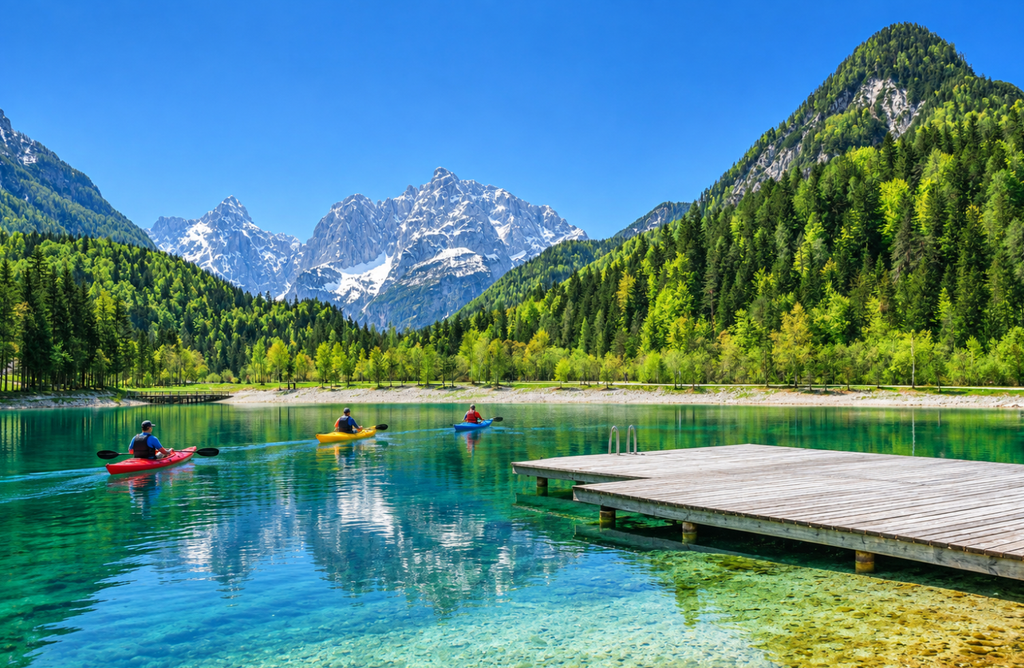
Slovenia’s Triglav National Park is the country’s largest protected area, covering 838 square kilometers of the Julian Alps. It is a landscape of limestone ridges, glacial valleys, alpine lakes, and high pastures, all dominated by Mount Triglav, the nation’s highest peak at 2863 meters. Hiking here is not simply a pastime; it is a cultural experience, a journey into Slovenia’s alpine heart.
The Park
The park offers endless trekking possibilities. Gentle trails wind through valleys where alpine villages sit beside rivers so clear they reflect the sky. More demanding routes climb through pastures and ridges, where hikers look down on pristine lakes framed by jagged peaks. Every visitor can find a trail that matches their ability, whether seeking a quiet walk or a strenuous climb.
Seasons for Hiking
The season chosen defines the character of the hike. In late spring, valleys bloom with wildflowers, and the contrast between green meadows and snow‑covered summits is striking. Lowland hikes are particularly rewarding at this time, with mild temperatures and long daylight hours.
Summer is the busiest season. Forested paths, gorges, and rivers such as the Soča and Mostnica provide shade and refreshment. Higher terrain becomes accessible once the snow melts, and alpine lakes shimmer beneath clear skies. Early starts are essential, as mornings are cooler and afternoon storms can arrive suddenly.
Autumn brings stability and color. Forests turn gold and red, temperatures remain pleasant, and trails are quieter. It is a season of crisp air and clear horizons.
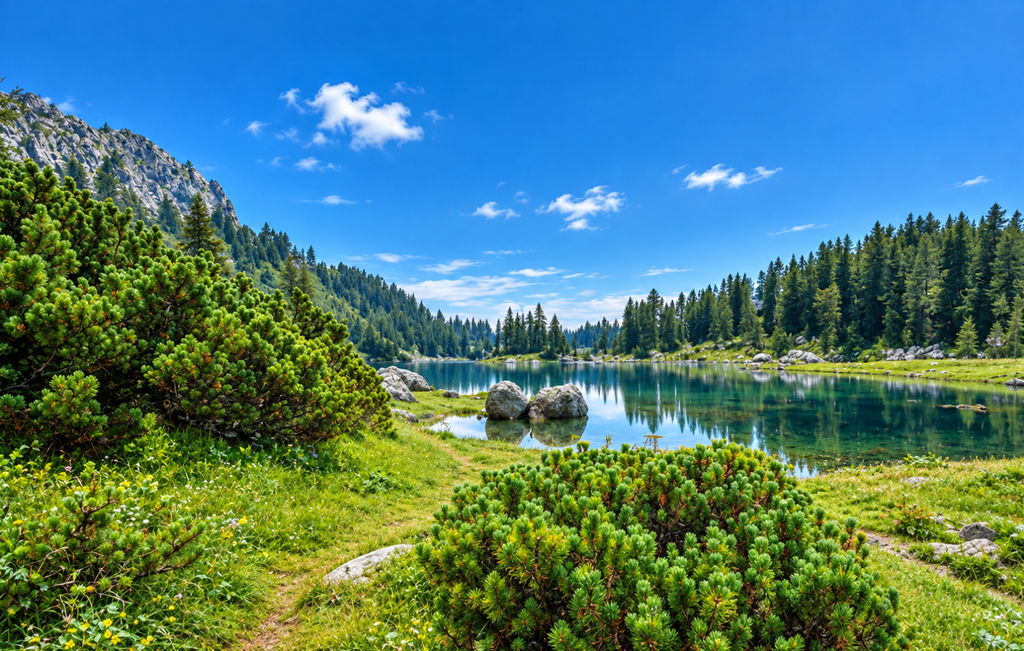
Winter transforms the park into a demanding alpine environment. Snow and ice cover the ridges, and only experienced mountaineers venture into the high terrain. Crampons, ice axes, and avalanche gear become essential. Even in summer, patches of snow can linger, reminding hikers that this is a true alpine landscape.
Preparing for the Trails
Preparation is as important as the hike itself. Packing too little risks safety, while packing too much burdens the body. Warm layers are necessary even in summer, as weather can change quickly. A windproof jacket and sturdy boots with strong grip are non‑negotiable.
Navigation requires foresight. Phone reception is unreliable, and GPS may fail. Maps should be stored offline, and batteries conserved. In case of emergency, Slovenia’s number is 112.
On exposed trails, helmets are recommended. Limestone rock is crumbly, and debris can fall from hikers above or passing animals. Water supplies must be carried, as karst terrain makes streams scarce. High‑calorie food provides energy when huts are distant.
Demanding routes call for professional guidance. Local guides know the terrain, the weather, and the techniques required to move safely across scree, ridges, and secured passages.
The Soča Trail
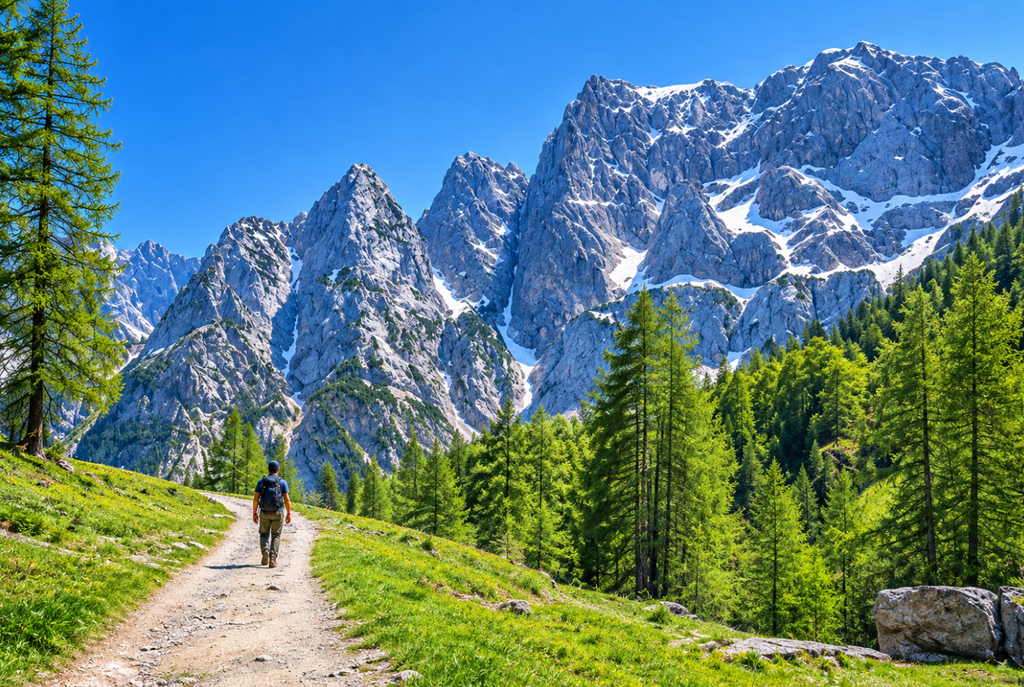
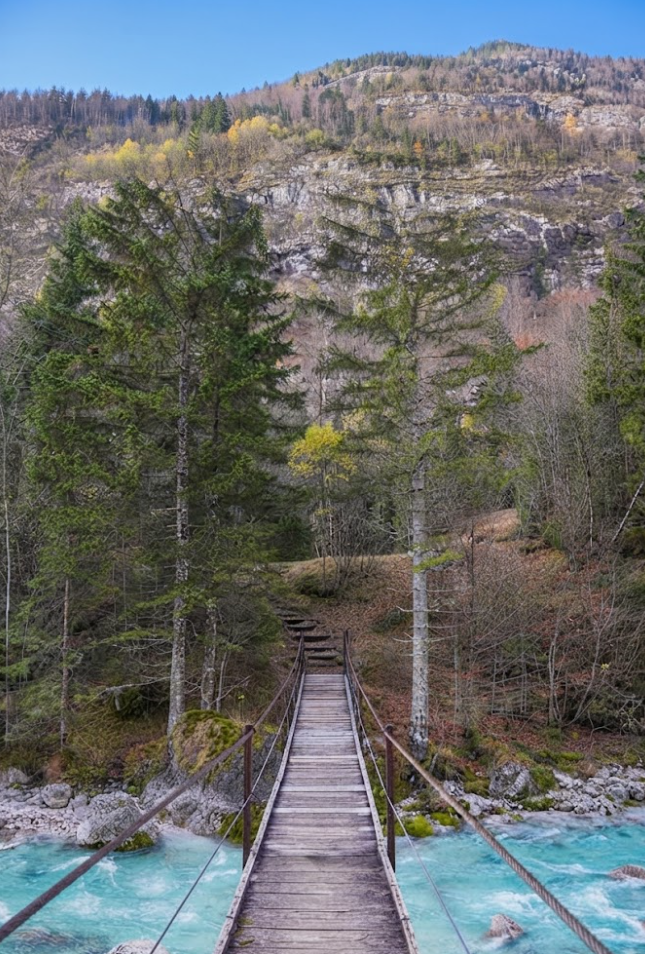
One of the park’s most celebrated routes is the Soča Trail. Stretching 25 kilometers, it follows the emerald river from its source through the Trenta Valley to the town of Bovec. Footbridges cross the rushing water, and meadows open into wide views of the Julian Alps. The trail is part of the Alpe Adria Trail, which connects Austria and Slovenia with the Adriatic coast, making it both a local highlight and a link in a larger journey.
Mostnica Gorge
Above the village of Stara Fužina lies the Mostnica Gorge, a short but enchanting walk. The river pools are deep and clear, sometimes reaching twenty meters. The path continues into the Voje Valley, where meadows and forests frame the water. The gorge’s most famous feature is a rock shaped like an elephant’s head, a natural sculpture carved by centuries of flowing water.
Hiking above the Pokljuka Plateau
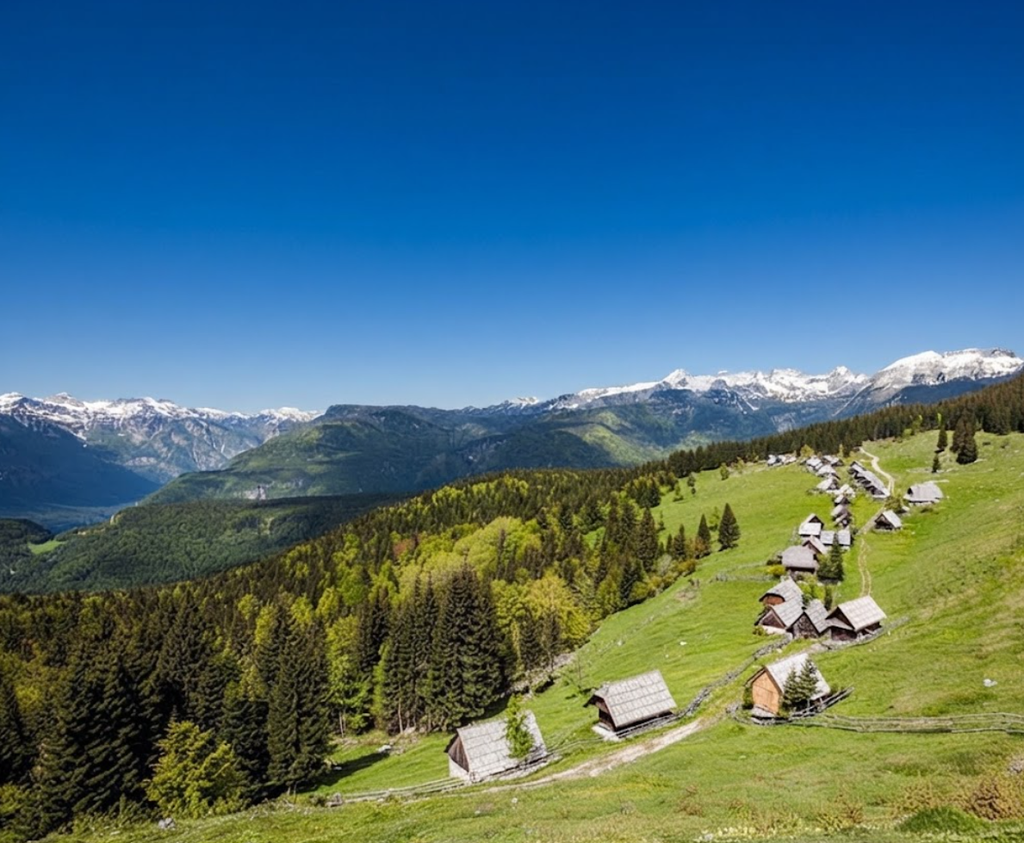
The Pokljuka Plateau is a vast forested highland, an excellent starting point for hikes. Beginning at higher elevation saves time and energy, allowing access to panoramic peaks more quickly. Hut‑to‑hut tours often begin here, while day hikes such as Viševnik offer accessible yet rewarding climbs. The plateau’s forests are dense, but the views from its ridges open wide across the Julian Alps.
The Seven Lakes Valley
The Seven Lakes Valley, also known as the Triglav Lakes Valley, is often described as the heart of the park. It was the first area to be protected, and its alpine pastures and crystal lakes remain among the most iconic landscapes in Slovenia. The valley can be traversed in a single day, but its true character is revealed on multi‑day tours. Each lake reflects the surrounding peaks, and the trail passes through meadows where edelweiss and alpine flowers bloom.
Mount Triglav
Climbing Mount Triglav is more than a hike; it is a national symbol. Slovenians say that no one becomes a true Slovene until they stand on its summit. The climb is demanding, requiring alpine experience, but the reward is immense. The view from 2864 meters stretches across the Julian Alps, into Italy and Austria, and down to the valleys of Slovenia. Many hikers include Triglav in a three‑day hut‑to‑hut tour, combining the ascent with nights in mountain huts and traverses across ridges.
The Juliana Trail
For those who prefer long‑distance journeys without venturing too high, the Juliana Trail offers a circuit around the Julian Alps. It passes through valleys, rivers, villages, and towns, revealing the cultural as well as natural beauty of the region. It is a trail of discovery, connecting landscapes with communities, and offering a slower, more immersive experience of the park.
Hut‑to‑Hut Across Triglav
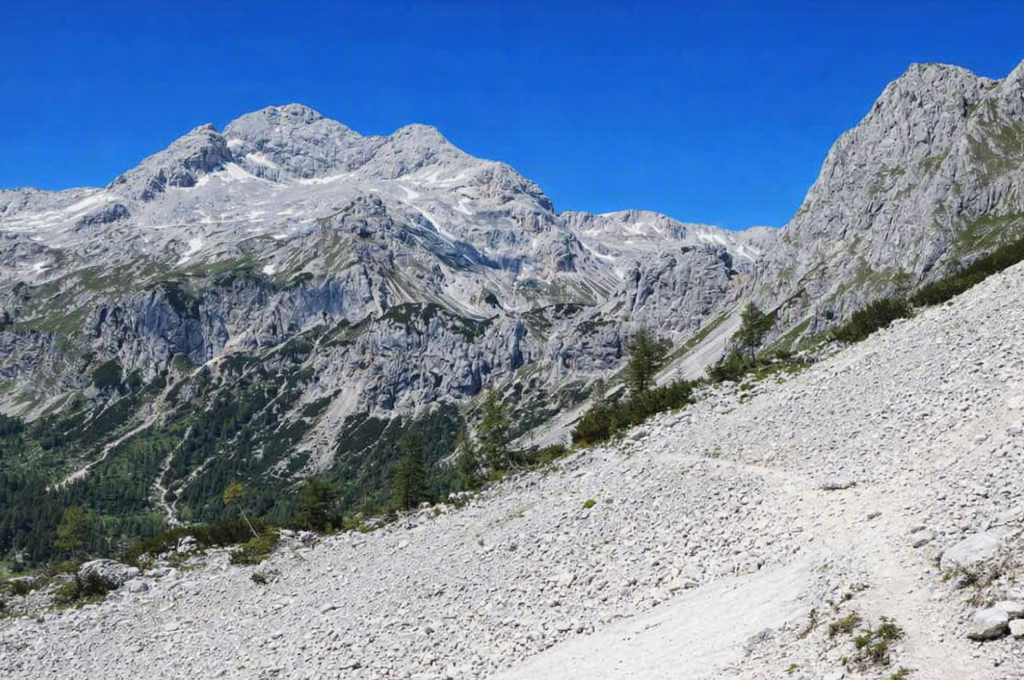
A four‑day hut‑to‑hut trek across the park begins at Vršič Pass near Kranjska Gora and ends at Lake Bohinj. The route crosses the high plateau of Kriških podih, the Seven Lakes Valley, Luknja Pass, and the pastures of Planini pri Jezeru. Each stage reveals new scenery: jagged limestone ridges, alpine lakes, and meadows where ibex graze.
The trek is demanding. Scrambling across scree requires agility and confidence. Secured passages with cables and pegs demand focus. A helmet is essential, though a full via ferrata kit is not required unless summiting Triglav with a licensed guide. Trail markings, the red circle with a white center known as the Knafelc Waymark, keep navigation clear.
Logistics are smooth. Extra luggage can be transferred to Bled, leaving hikers free to carry only essentials. GPS tracks provide reassurance, and support is available throughout. For those seeking the ultimate challenge, adding the Triglav summit with a guide completes the journey, providing equipment and expertise for the final climb.
The Experience
The hike is sensational. Views open across mountains and valleys, edelweiss blooms along the paths, and alpine lakes reflect the sky. Ibex move across ridges, and the silence of the high pastures is broken only by the wind. Each hut offers shelter and camaraderie, a place to share stories and prepare for the next stage.
Many hikers describe this trek as one of the hardest multi‑day hikes they have undertaken. The uneven limestone terrain, the scrambling, and the exposure make it challenging. Yet for those with alpine experience, it is manageable, and the rewards are unforgettable.
Why It Matters
Triglav National Park is more than a destination. It is a symbol of Slovenia’s alpine heritage, a place where nature and culture meet. Hiking here is not only about reaching summits or crossing valleys; it is about experiencing a landscape that has shaped a nation.
The park’s trails, from gentle gorges to demanding ridges, invite exploration. Its seasons offer variety, from spring blossoms to winter snowfields. Its huts provide shelter, and its peaks provide challenge. To hike in Triglav National Park is to step into Slovenia’s alpine story, a journey that rewards with beauty, difficulty, and meaning.