
Hiking in the Alps: A Season of Anticipation
The hiking season in the Alps begins in June, when snow finally loosens its grip on the high passes, and stretches into September — sometimes October if conditions allow. Each year, from November through May, the wait feels endless. Winter becomes a season of planning, of poring over maps and routes, of imagining the ridges and valleys we’ll soon walk again.
The colder months are spent researching trails and hut‑to‑hut journeys, tracing lines across the mountain chain that arches through eight countries. Summer is the payoff: long days on ridges, quiet mornings by alpine lakes, and evenings savoring the grandeur of these peaks. The Alps may not be as wild as Patagonia or the Himalayas, but they are unmatched in their blend of adventure and comfort. Hiking here is not only about the trail.
It is about the rhythm of ascent and descent, followed by the ease of a hotel spa, the ritual of a multi‑course dinner, and the joy of knowing tomorrow brings another ridge to conquer.Where else can you hike a knife‑edge ridge in the morning, soak in wellness facilities in the afternoon, and settle into a gourmet evening? The Alps invite both exertion and relaxation, and perhaps that balance is what makes them irresistible.
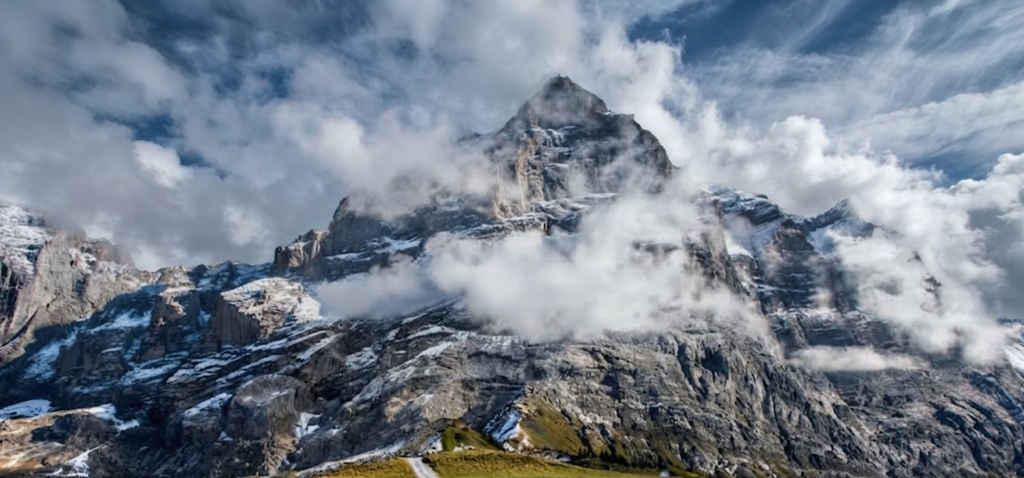
This guide is only a sampling. We’ve written hundreds of detailed accounts of Alpine routes, but here the aim is to entice — to show what awaits when you step into these mountains.
Hiking season: mid‑June to mid‑October, depending on snow and ice.
Hut‑to‑hut season: late June/early July to late September.
1. Triglav Lakes Valley Day Hike
The Triglav Lakes Valley, or Seven Lakes Valley, is one of Slovenia’s most iconic alpine corridors, lying within the Julian Alps and Triglav National Park. This glacial valley is both a natural wonder and a cultural landmark, tied to Mount Triglav, the country’s highest peak and national symbol.
The valley’s fame rests on its seven lakes, each distinct: the hidden Jezero pod Vršacem, delicate Mlaka v Laštah, earthy Rjavo jezero, emerald Zeleno jezero, vast Veliko jezero, romantic Dvojno jezero, and dark Črno jezero. Together they form an 8‑kilometer pilgrimage route for hikers.
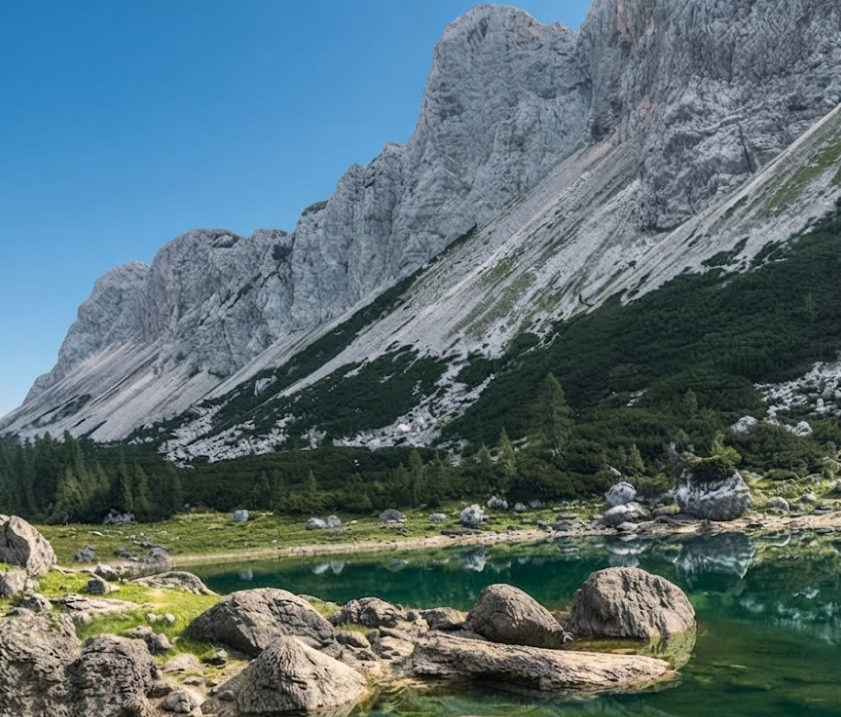
The gentlest approach begins at Planina Blato, reached by toll road from Stara Fužina. The alternative, from Koča pri Savici, is steeper and less recommended. Trail details: 15.2 km out‑and‑back, 6 hours, 1051 m elevation gain, easy‑moderate difficulty.
The route passes huts, meadows, and ridges before reaching the Triglav Lakes Hut, where hikers pause for rustic meals. Rules of Triglav National Park demand respect: no bathing, camping, or drones, and strict leave‑no‑trace ethics.Most day hikers turn back at Double Lake, though extensions lead to Veliko Jezero or multi‑day treks toward Zasavska koča. To walk here is to experience Slovenia’s alpine heritage — a living landscape of water, stone, and tradition.
2. Lake Formarinsee to Lake Spullersee
The hike between Lake Formarinsee and Lake Spullersee is one of Vorarlberg’s finest point‑to‑point routes, traversing the limestone peaks and karst plateaus of the Lechquellen Mountains. Unlike many Austrian ranges, this area remains free of ski infrastructure, offering a natural alpine atmosphere.Logistics are straightforward: bus 707 connects Lech to Formarinsee, while bus 706 returns from Spullersee.
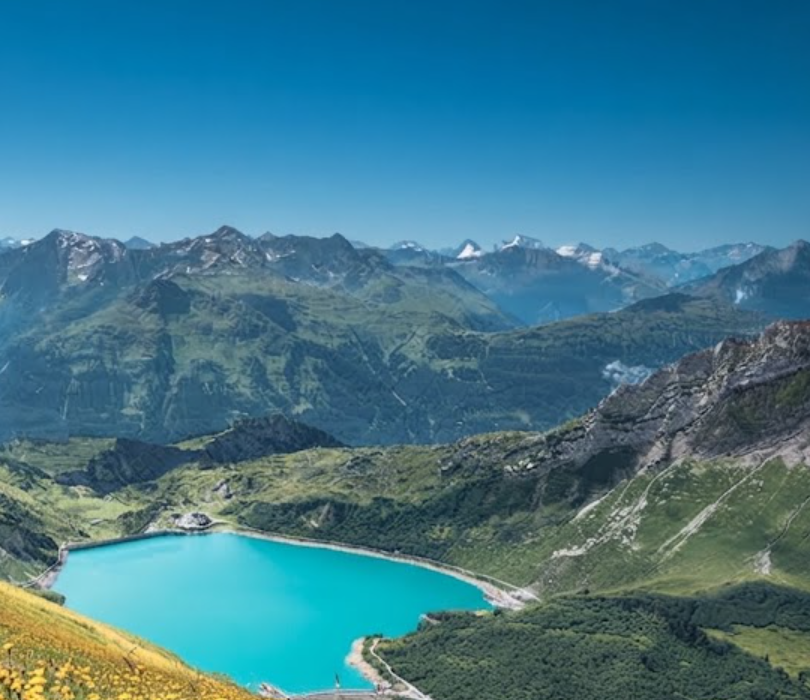
The trail covers 11.4 km, with 637 m ascent and 673 m descent, requiring 4.5–6 hours. Season runs late June to September. The route unfolds in three stages. From Formarinsee, hikers pass Freiburger Hütte, a staffed refuge beneath Rote Wand. Meadows bloom with wildflowers in July, leading to the Steinernes Meer, a striking karst plateau of limestone slabs.
Crossing demands balance and concentration. Beyond, the trail climbs to Gehrengrat Ridge, the high point at 2439 m. Views span the Lechquellen, Verwall, Silvretta, and Rätikon ranges, with Spullersee framed below. The descent is steep and eroded, requiring poles and sturdy boots, before easing into the pastures of Dalaaser Schütz.
The final approach delivers hikers to Spullersee, a dramatic reservoir surrounded by jagged peaks. With varied terrain, accessible transport, and panoramic scenery, this hike balances challenge and reward, making it a standout in Austria’s Alps.
3. Hofpürgl–Sulzenalm Circuit
The Hofpürgl Hut to Sulzenalm circuit near Filzmoos is a classic alpine hike in the Dachstein Mountains, weaving together forests, meadows, rocky basins, and panoramic ridges. Starting at Hofalm, reached by toll road or summer bus, the trail follows Route 612, known as the Austriaweg.
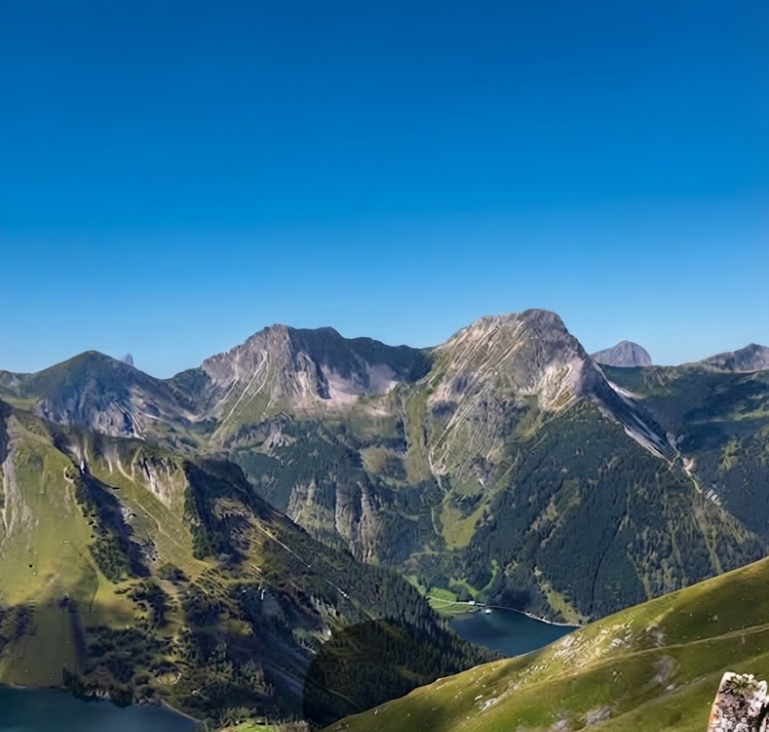
The ascent to Hofpürglhütte passes larch forest and alpine pastures, with views of Sammetkogel, Torstein, and the Dachstein massif. From the hut, the Linzerweg traverses beneath the twin towers of Bischofsmütze, crossing scree and stone rivers before descending into the raw meadow of Rinderfeld.
A steady climb leads to Sulzenschneid, where the panorama peaks: Bischofsmütze rising like a cathedral, Gosaustein looming nearby, and valleys stretching into Salzburg. The descent continues to Sulzenhals, framed by dwarf pine and larch, before reaching Sulzenalm. Here, huts such as Wallehenhütte and Krahlehenhütte serve traditional alpine fare.
The return to Hofalm winds through pastures and farm roads, with optional detours to Almsee Lake or Kapelle Maria am Steinegg’l.Trail details: 12.9 km circuit, 5 hours 15 minutes, 912 m elevation gain/loss, moderate–hard difficulty. Best season is June–October, with late September offering golden larches and fewer crowds. This hike balances drama with comfort, solitude with tradition, leaving lasting impressions of Salzburg’s alpine heritage.
4. Edelweissweg Hike
The Edelweissweg is a demanding circular trail above Zermatt, offering one of the most complete panoramas of the Pennine Alps. Covering 17.5–20 km with 1,194 m of elevation gain, it requires seven to nine hours, making it a full‑day alpine experience. The ascent begins in Zermatt’s town center, climbing steeply past cobbled lanes and larch forest.
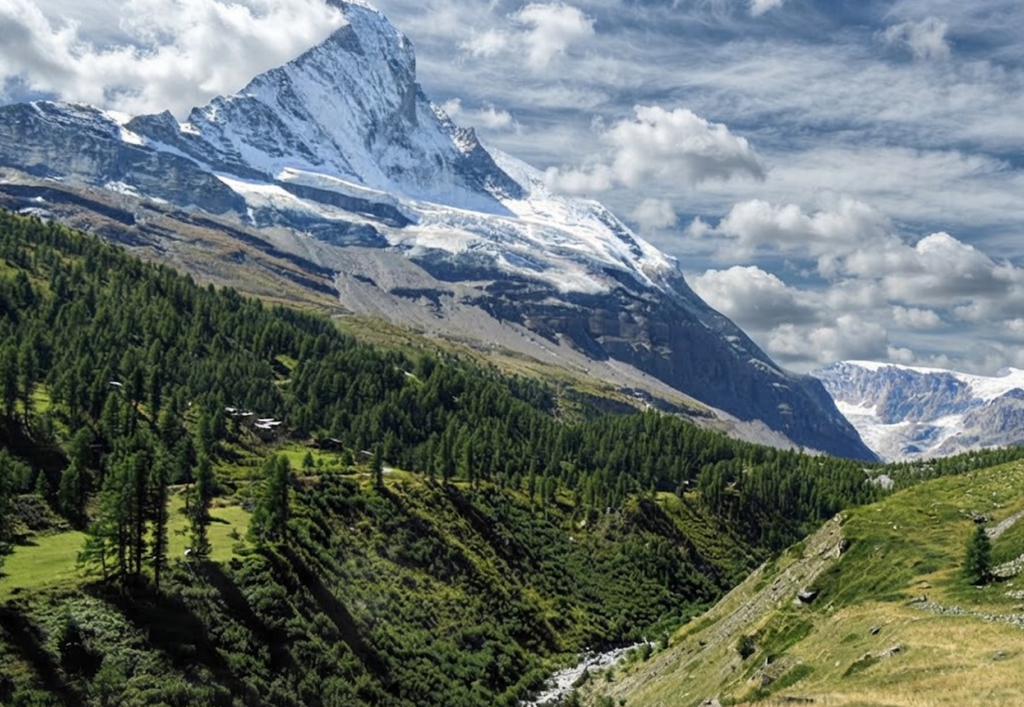
At Herbrig plateau, Europe’s oldest barn (1261) marks the way. Views expand to the Mischabel peaks, Täschhorn (4,490 m) and Dom (4,545 m). From Hubel, the trail forks toward Höhbalmen, with Breithorn and Klein Matterhorn rising nearby. At 2,665 m, the Höhbalmen plateau delivers the hike’s highlight: a balcony trail overlooking the Matterhorn’s north face, Monte Rosa, Dent d’Hérens, and the Zmutt Glacier.
The descent into Zmutt Valley passes waterfalls, larch stands, and the 500‑year‑old hamlet of Zmutt, where Restaurant Z’Mutt offers rustic meals.Trail variations include the longer Trift ascent (20 km, gradients up to 41%) or the shorter Hubel route (17.5 km). Rated T2–T3, the challenge lies in endurance rather than technical difficulty.
Best season is June–September, with October offering quieter paths. The Edelweissweg is a hike of grandeur: flowers, glaciers, waterfalls, and the Matterhorn itself — Zermatt’s finest balcony trail.
5. Grand Balcon Nord
The Grand Balcon Nord is one of Chamonix’s most celebrated day hikes, combining accessibility with world‑class scenery. At 6 km with 353 m ascent and 745 m descent, it takes 2.5–3 hours and is graded easy to moderate. The trail runs between Plan d’Aiguille, reached by cable car, and Montenvers, where the rack‑and‑pinion train returns to town.
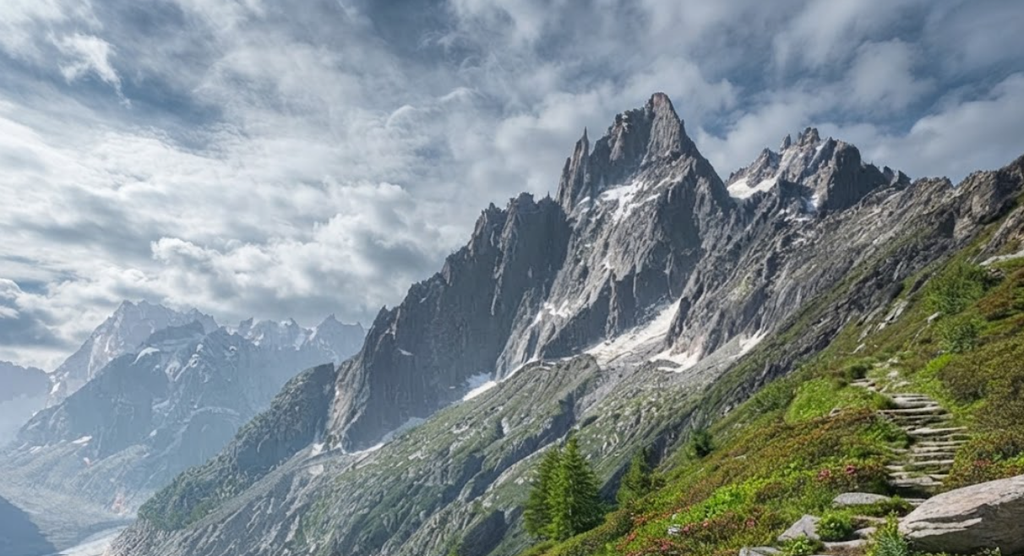
Most hikers walk Plan d’Aiguille to Montenvers for gentler elevation gain, though the reverse offers steeper climbs and slightly better views of Mont Blanc. Highlights include the Refuge Plan d’Aiguille, Lac Bleu detour, and the balcony traverse overlooking the Aiguille du Dru and valley floor.
Optional side trips enrich the day: the Aiguille du Midi cable car (3,842 m summit, panoramic views of France, Switzerland, Italy) and the Panoramic gondola crossing the Glacier du Géant to Italy. Midway, hikers may descend to Alpages de Blaitière, a working alpine farm producing cheese and wool.
The climb to Signal Forbes is short but steep, rewarding with the finest view of the Mer de Glace glacier. The descent to Montenvers completes the circuit, with options to visit the ice cave, Glaciorium, or stay at the Refuge Hotel.