
Faroe Islands > Things to do in Faroe Islands > Mykines
The Faroe Islands are an archipelago of 18 islands in the North Atlantic, located roughly equidistant between Iceland, Scotland, and Norway. They are part of the Kingdom of Denmark but operate with a high degree of self‑governance. The Faroes are known for their fishing industry, particularly salmon exports, and increasingly for tourism. Among these islands, Mykines stands out as the westernmost island and as the most famous destination for observing puffins.
This essay provides a factual overview of Mykines, covering how to get there, what to expect, practical travel details, and the broader context of visiting the Faroe Islands.
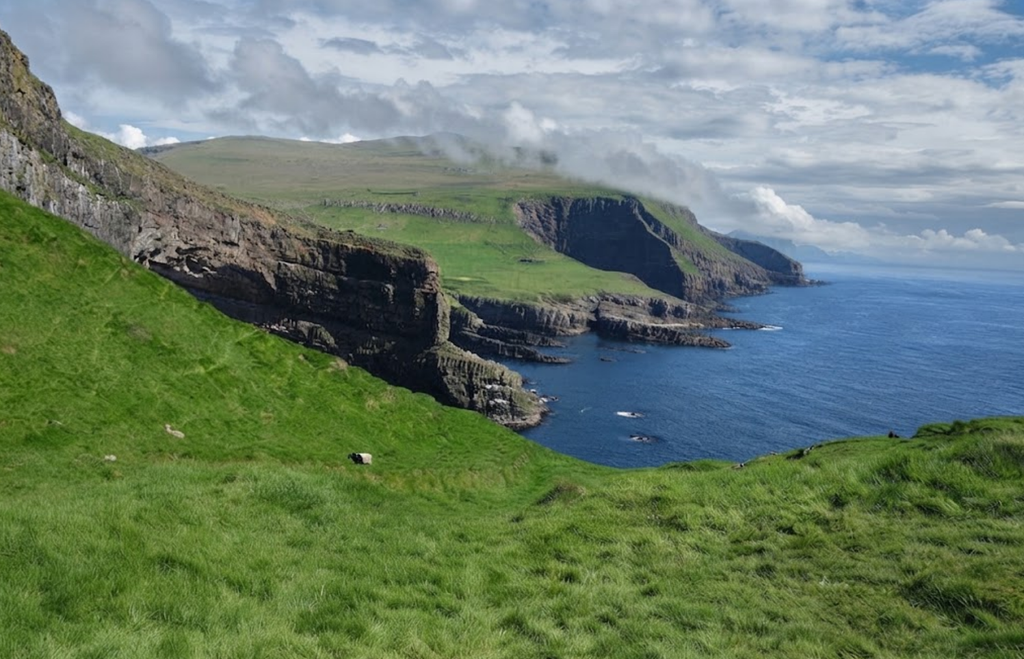
Geography and Settlement
Mykines is the westernmost island of the Faroes. It is small, rugged, and dominated by cliffs and grassy ridges. The only settlement is the village of Mykines, which today has around a dozen permanent residents. Historically, the population was larger, but like many Faroese villages, numbers declined due to migration to larger towns and abroad.
The village is characterized by traditional Faroese architecture: turf‑roofed houses, narrow lanes, and a layout adapted to the steep terrain.
Access to Mykines
There are two ways to reach Mykines:
- Ferry: Operates from Sørvágur on the island of Vágar. The crossing takes about 45 minutes. Service is seasonal, generally from May to August, and depends on weather.
- Helicopter: Operated by Atlantic Airways. Prices are similar to the ferry. Helicopter flights are less frequent and also weather‑dependent.
Because ferry tickets can sell out, it is recommended to book them before arranging guides or accommodation.
Regulations and Fees
Visiting Mykines requires payment of a hiking fee if you plan to walk beyond the village. This fee supports conservation and maintenance of trails, particularly to protect puffin burrows. If you hire a guide, the fee is included in the cost.
Guides are mandatory for hiking outside the village. This rule was introduced to protect both visitors and wildlife. Before guides were required, accidents were common, with tourists injuring themselves by stepping into puffin burrows.
Birdlife
Mykines is known for its bird populations, especially puffins. During summer, thousands of puffins nest in burrows across the island. Other species include gannets, cormorants, razorbills, fulmars, storm petrels, and kittiwakes.
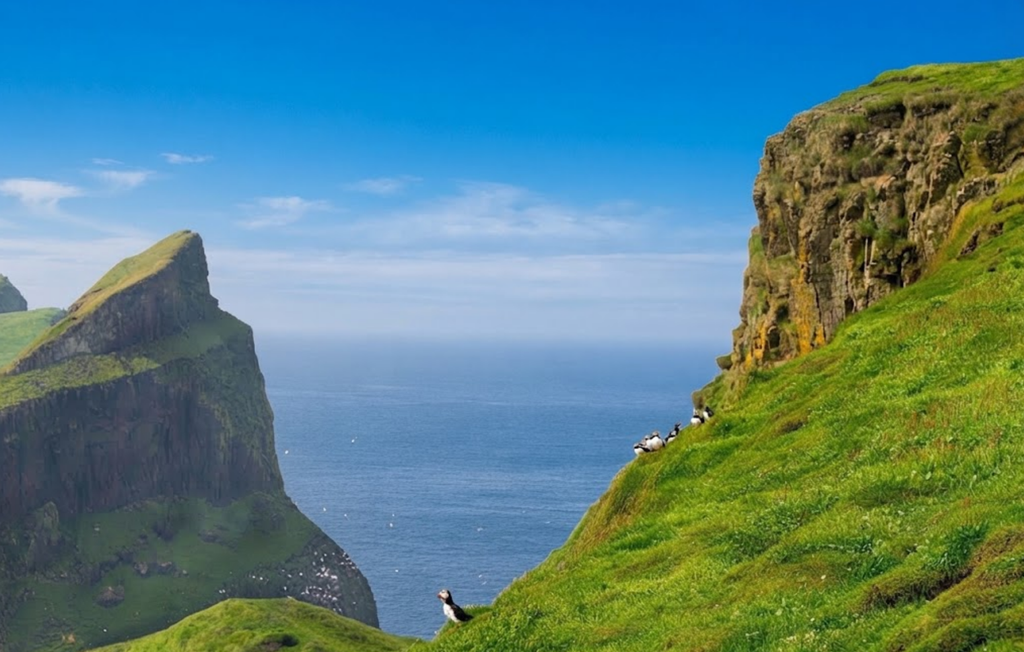
The puffins are the main attraction. They nest from late April until early September. Visitors can observe them at close range, often within a few meters. Because puffins are accustomed to human presence, they can be photographed without specialized equipment, though a zoom lens is useful.

Hiking Routes
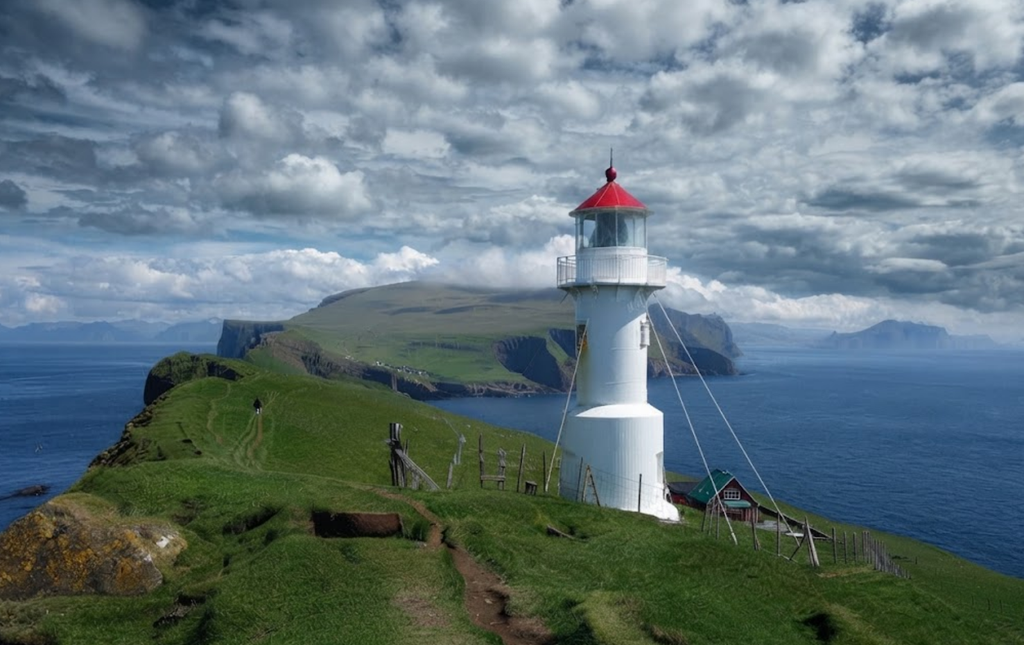
The main hiking route leads from the village across farmland and ridges to the islet of Mykineshólmur, where the lighthouse is located. The walk is steep in places but manageable for people of average fitness. Guides pace the hike to accommodate all participants.
Mykineshólmur is uninhabited but alive with seabirds in summer. Puffins nest in burrows across grassy slopes, gannets occupy cliffs, and fulmars glide overhead. The islet is separated from Mykines Island by Hólmagjógv gorge, crossed by a 40‑metre steel bridge. From northern Mykines, visitors enjoy striking views of the lighthouse and cliffs.
To hike beyond the village, visitors must pay a hiking fee of 250 DKK per person. This supports conservation and trail maintenance, especially protecting puffin burrows. Payment can be made online or at the trail checkpoint. Guides are mandatory for hiking outside the village, introduced to reduce accidents and protect wildlife.
Puffins They can be seen flying to and from the sea, carrying fish to their burrows. Officials manage visitor flow here to protect the birds.
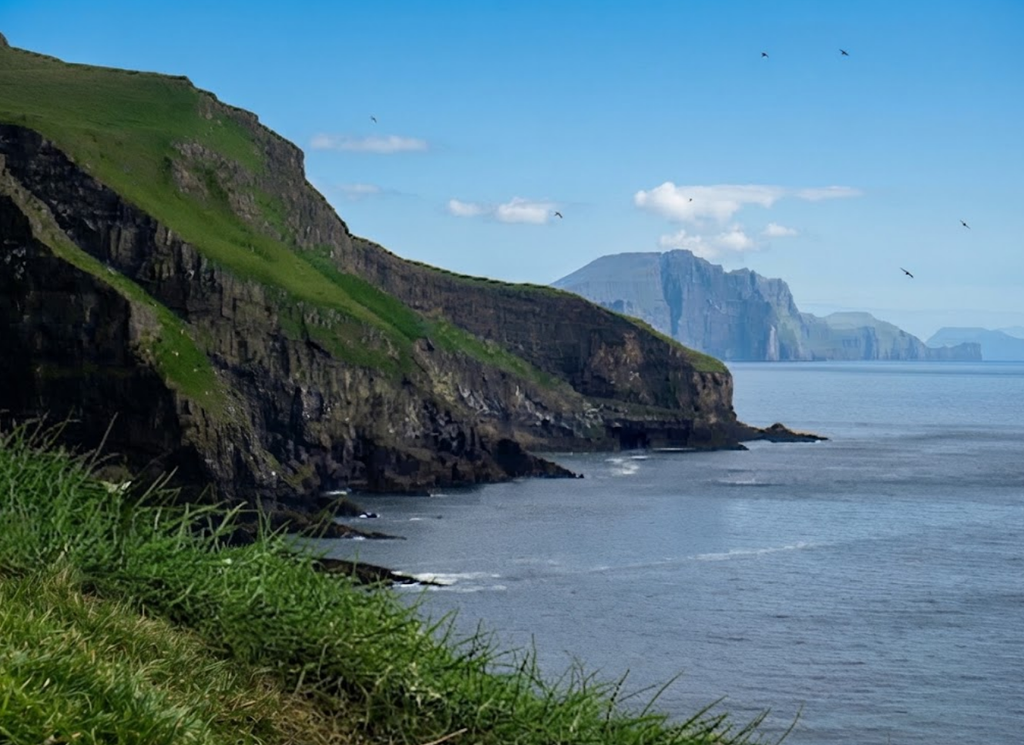
At the end of the islet stands the Mykines Lighthouse, built in 1909. It remains one of the island’s most recognisable features. Nearby are remnants of World War II shelters used during German bombing raids. The views back toward Mykines, with the lighthouse in the foreground, are among the Faroes’ most photographed.
The best time to hike is late May to early August, when puffins nest and ferries run regularly. July offers the most reliable sea conditions. September is quieter but puffins have left and ferry schedules are reduced. Outside summer, access is limited.
Mykines and Mykineshólmur are havens for seabirds. Puffins are the main attraction, but gannets also nest here, the only site in the Faroes where they breed. Guillemots, kittiwakes, fulmars, and oystercatchers are common, and seals are occasionally seen in calmer waters.
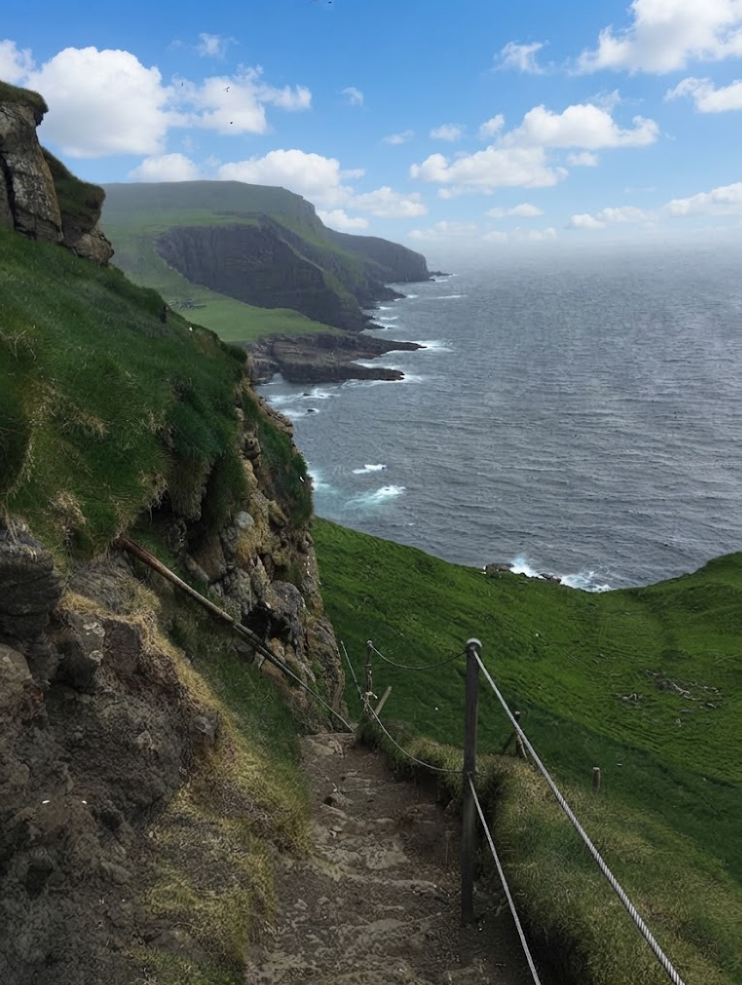
The ridge walk offers panoramic views of cliffs, the Atlantic Ocean, and bird colonies. The bridge to Mykineshólmur is narrow and exposed, adding to the sense of remoteness.
Practical Travel Advice
- Clothing: Weather is unpredictable. Waterproof and windproof layers are essential. Hats and sturdy boots are recommended.
- Timing: Puffins are present from late April to September. Outside these months, the island is still accessible but lacks puffins.
- Photography: A zoom lens is useful but not essential. Puffins can be photographed with standard equipment. Carrying lighter gear is advisable due to steep climbs.
- Safety: Stay on marked paths to avoid damaging burrows or risking injury. Follow guide instructions.
The Faroe Islands
The Faroes are part of Denmark but maintain their own parliament and control most domestic affairs. Faroese is the primary language, though Danish and English are widely spoken.
The islands are known for:
- Fishing industry: Salmon exports are central to the economy.
- Landscape: Frequent rain produces lush green terrain and numerous waterfalls.
- Tourism: Growing steadily, with highlights including villages like Saksun, Gjógv, and the capital Tórshavn.
Transport to the Faroes
- Flights: Vágar Airport (FAE) is the only airport. Regular flights connect to Copenhagen, with seasonal routes to other European cities.
- Ferries: Smyril Line operates ferries from Denmark and Iceland.
- Cruise ships: Occasionally dock, though less common than flights.
Tourism Season
The best time to visit is between mid‑April and mid‑August. This period offers the warmest weather and the presence of puffins. Even in summer, temperatures are cool, and rain is frequent.
Mykines is a factual highlight of the Faroe Islands. It combines wildlife observation, hiking, and cultural heritage in a single destination. Puffins are the main attraction, but the island also offers insight into traditional Faroese life and the challenges of living in remote settlements.
For travelers, the key points are:
- Book ferry tickets early.
- Hire a guide, as required.
- Pack waterproof clothing and sturdy boots.
- Visit during summer for puffins.
Mykines is not just a tourist stop; it is a carefully managed environment where conservation and tourism coexist. For anyone visiting the Faroes, it represents one of the most distinctive experiences available.