
Faroe Islands > Things to do in Faroe Islands > Nólsoy
From the harbor of Tórshavn, the island of Nólsoy is always there — a low, wind‑swept silhouette stretched across the horizon, its grass‑clad slopes rising gently before falling into the sea. It is not a distant place, only a short ferry ride away, but it feels like another world. Nólsoy is both a shield and a sanctuary: a protective barrier against the roaring waves of the North Atlantic, and a haven for seabirds, storytellers, and wanderers who come seeking quiet.
Crossing the Strait
The journey begins with the ferry, route 90, a vessel that hums across the strait in twenty minutes. The crossing is brief, but the sensation is profound. The capital recedes, its bustle softened by distance, and the island grows larger, its contours sharpening against the sky. On stormy days, waves crash across Nólsoy’s shoreline, sometimes spilling dangerously close to the houses. Yet the island endures, as it always has, bracing itself against the ocean’s fury.
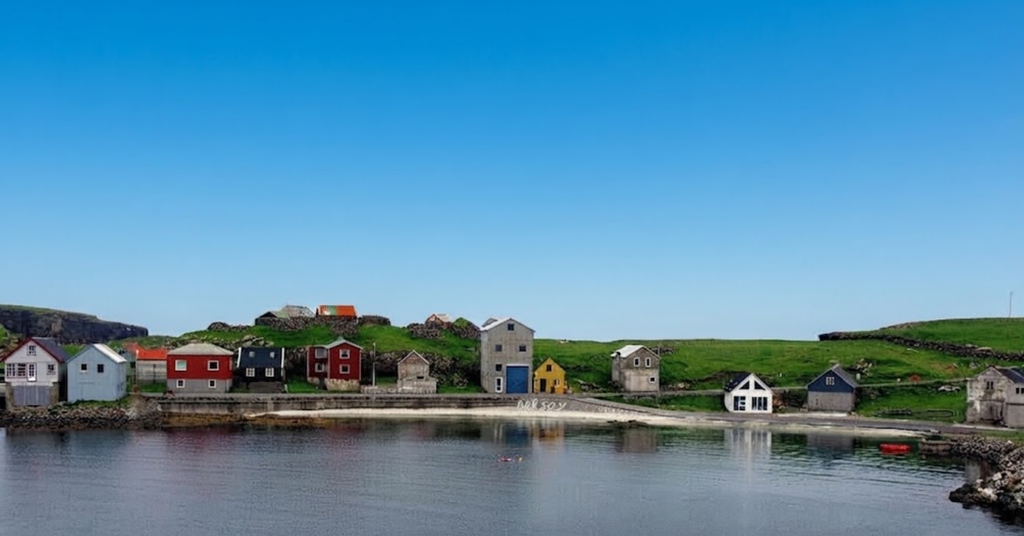
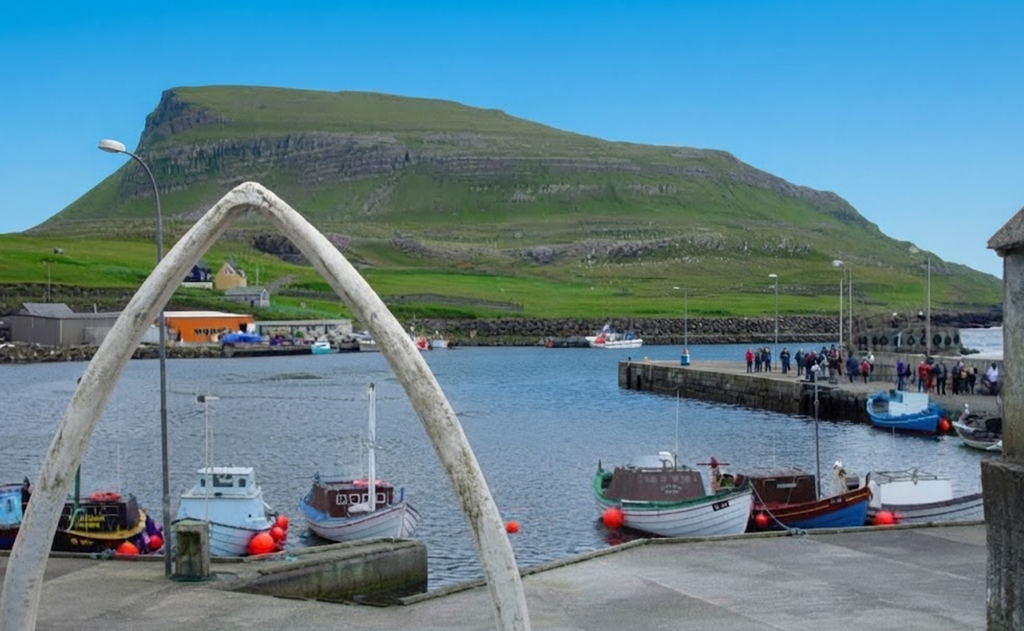
Arriving at the harbor, the first impression is intimacy. The ferry docks inside a small, sheltered basin, where colorful houses cluster tightly together. A white wooden church stands by the pier, its simplicity luminous against the basalt cliffs. Wheelbarrows line the quay — practical, communal tools for carrying groceries, fishing gear, or luggage. They are symbols of a village that shares, improvises, and thrives in its own rhythm.
The Village
Nólsoy has only one settlement, a village of about 250 people. Life here is measured not in haste but in tides. There is a grocery store, a café, and even a music venue. The atmosphere is relaxed, unhurried, and deeply human. Walking through the narrow streets, one feels the closeness of community: doors painted in bright colors, fishing nets drying in the wind, children playing where car traffic is rare.
The village is also a place of memory. A memorial stone honors Nólsoyar Páll, the Faroese hero who defied the Danish trade monopoly. His courage is part of the island’s identity, a reminder that even small places can harbor great resistance. Another story belongs to Ove Joensen, who in 1986 rowed alone from the Faroes to Denmark. His feat is celebrated each August at Ovastevna, a festival of food, music, and dancing that fills the streets with joy.
The Walks
From the village, paths unravel into the island’s wildness. One easy walk leads north to Stongin, the northern tip, where rolling grassland meets the ocean. It takes less than an hour, along an unpaved road, to reach the end. The views are wide, the air sharp, and puffins often wheel above the cliffs.
For those who crave more, the climb to Eggjarklettur beckons. At 372 meters, it is the island’s highest peak. The ascent is steady, the reward immense: grandiose views of the surrounding sea and neighboring islands, a panorama that stretches into infinity.
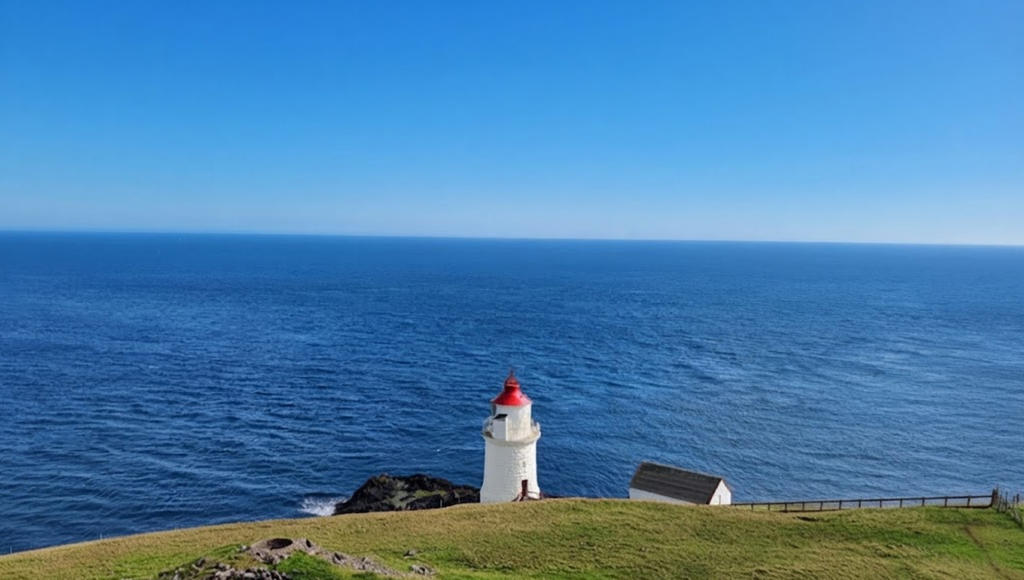
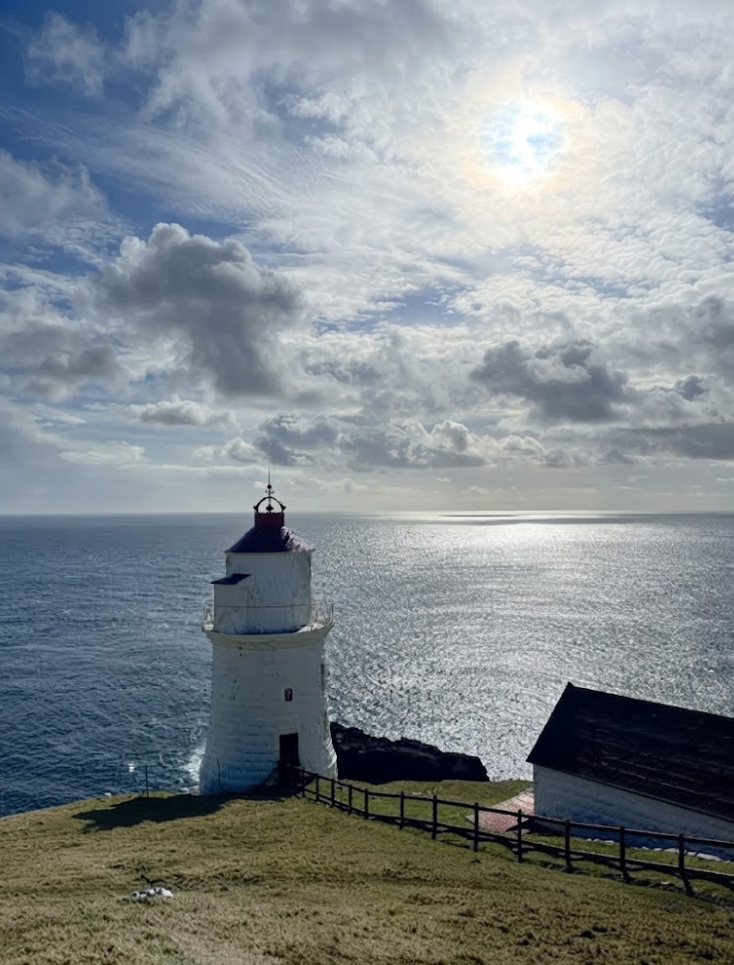
But the most haunting journey is southward, across valleys and wetlands, past ruins where a Scottish princess once lived, and caves where villagers once hid from pirates. The path rises to about 220 meters, then levels out, winding through landscapes that feel timeless. The destination is the basalt‑stone Nólsoy Lighthouse, built in 1893.
Lighthouse at the End of the World
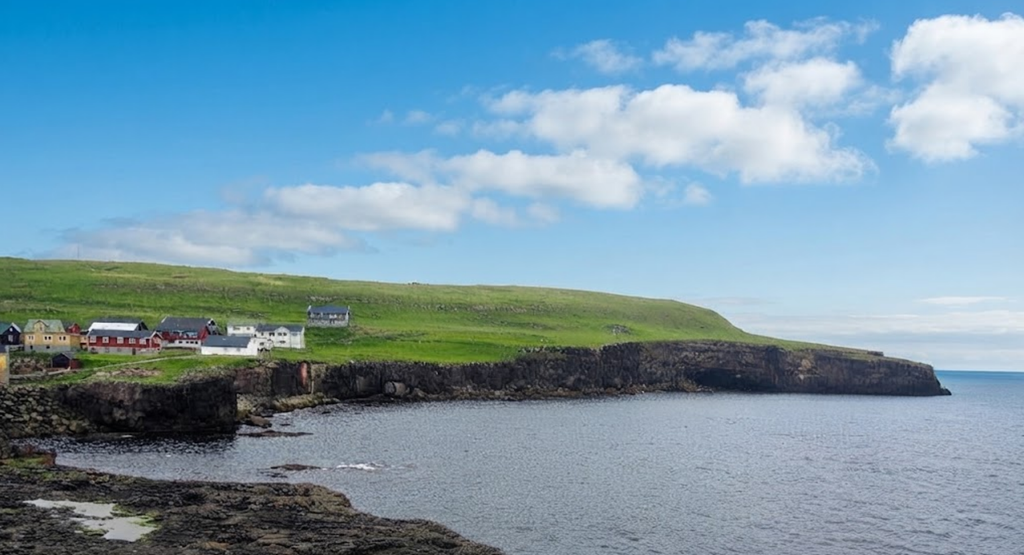
The lighthouse is one of the most robust in the Faroes, hewn from basalt, braced against storms. Once, families lived here, keepers tending the light, children playing in the shadow of the tower. At times, thirty people inhabited the buildings. Since 1995, the lighthouse has been automated, its keepers gone, its houses empty.
To sit in the grass here is to feel the phrase of William Heinesen: “the end of the world.” The sea stretches endlessly, the wind carries whispers, and the solitude is profound. Yet it is not despairing. It is peace — a reminder that endings can also be beginnings, that silence can be full of meaning.
The Birds
Nólsoy is a paradise for birds. Declared a Ramsar site in 2012, the island is free of rats, making it a safe haven for breeding colonies. Puffins burrow into the slopes from May to August, their bright beaks flashing against the grass. Fulmars nest on steep cliffs, their cries echoing across the valleys.
Most remarkable are the storm petrels. Nólsoy hosts one of the largest colonies in the world, with tens of thousands of pairs. At night, they fill the sky, their wings restless, their calls haunting. Alongside them, black guillemots dart across the water, their crimson feet flashing against basalt.
To walk here is to be immersed in sound: the rapid whinnying of the whimbrel, the booming of the common snipe, the chorus of seabirds that make the island alive.
Stories and Legends
Nólsoy is not only nature; it is narrative. The ruins of the Scottish princess, the caves of pirates, the memorials of heroes — all are woven into the island’s fabric. The annual festival, the communal wheelbarrows, the shared café — these are not just conveniences but expressions of identity.
The island has been called the “Saint Tropez of the Faroes,” not for glamour but for its charm. Its harbor, its football field, its narrow strip of basalt cliffs — all speak of a place where life is simple yet profound.
Practicalities
Despite its small size, Nólsoy offers basic services:
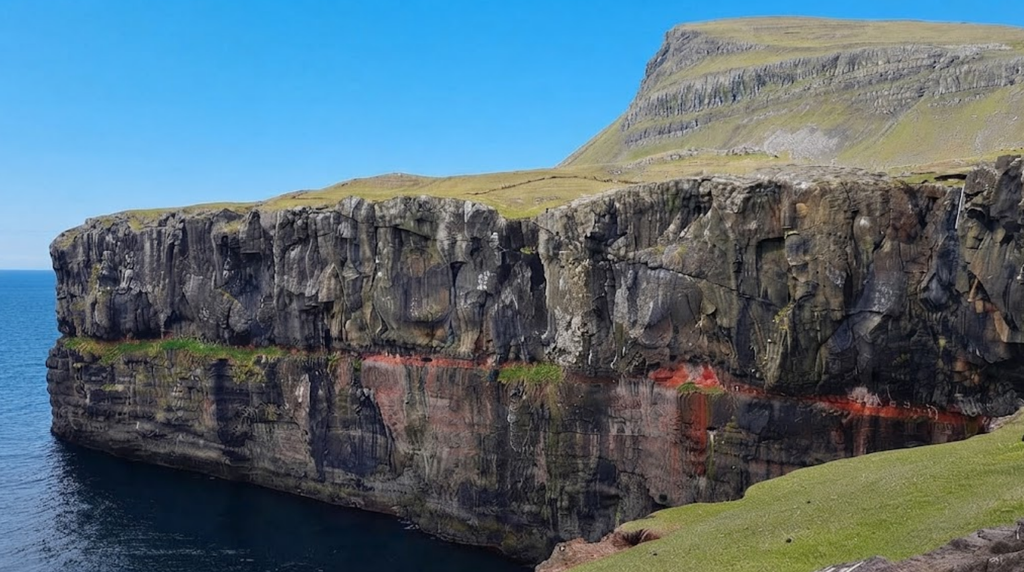
- Grocery store
- Public toilet
- Indoor ferry terminal
The ferry can carry vehicles, but there is no need to bring a car. It is easier to park in Tórshavn and walk. The island is best explored on foot, its paths leading directly into nature.
Tours and Hikes
Several guided experiences are available:
- Hiking trip to Nólsoy Lighthouse
- Duration: 8–9 hours
- Distance: 14–17 km
- Difficulty: Medium+
- Price: 3.995 DKK
- Stongin hike & village tour
- Duration: 5–6 hours
- Difficulty: Easy
- Price: 3.995 DKK
Each includes transport, guide, meals, and ferry tickets. Warm, waterproof clothes and good shoes are essential.
The Spirit of Nólsoy
To spend time on Nólsoy is to be reminded of scale. The island is small, yet it holds vastness: of sea, of sky, of story. It is a place where puffins burrow, where storm petrels darken the night, where heroes row across oceans, where lighthouses stand against storms.
It is also a place of peace. To walk its paths, to sit by its harbor, to listen to its birds — these are acts of stillness, of presence. Nólsoy does not demand; it invites. It does not overwhelm; it offers.
And when the ferry carries you back to Tórshavn, the island remains on the horizon, watching, guarding, reminding.