
Faroe Islands > Things to do in Faroe Islands > Skansin Fortress
Skansin is one of the most recognizable historic landmarks in Tórshavn, the capital of the Faroe Islands. Built in 1580 by Magnus Heinason, a Faroese naval hero, the fortress was originally intended to protect the town against pirate raids. Over the centuries, it has been expanded, modified, and repurposed, serving as a defensive stronghold, a British military station during World War II, and today as a cultural heritage site and recreational area.
Its location on a hill directly above the harbor makes it both strategically important and visually striking, offering panoramic views of the town, the port, and the nearby Nólsoy Island.
Historical Background
The origins of Skansin are closely tied to the turbulent maritime history of the North Atlantic. In the late 16th century, pirate raids were a constant threat to the Faroese population. Magnus Heinason, who had himself narrowly escaped such an attack, commissioned the construction of the fortress to provide a defensive shield for Tórshavn.
The design reflected Renaissance military architecture, with bastions angled to provide overlapping fields of fire and thick stone walls capable of resisting cannon fire. In 1780, the fortress underwent significant expansion. The bastions were reinforced, additional artillery was installed, and the layout was adapted to accommodate evolving military technologies.
These changes ensured that Skansin remained relevant as a defensive structure well into the 19th century. During World War II, the British army stationed cannons at Skansin, marking the only period when the fortress was actively used in combat operations.
Architectural Features
Skansin was built as a bastioned fortress, a style common in Europe during the Renaissance. The angled bastions allowed defenders to cover adjacent walls, reducing blind spots and strengthening the defensive perimeter. The fortress included ramparts, gun emplacements, and a secure courtyard for troops and supplies. Although much of the original structure has been lost to time, sections of the walls and bastions remain, providing a clear sense of its former scale and purpose.

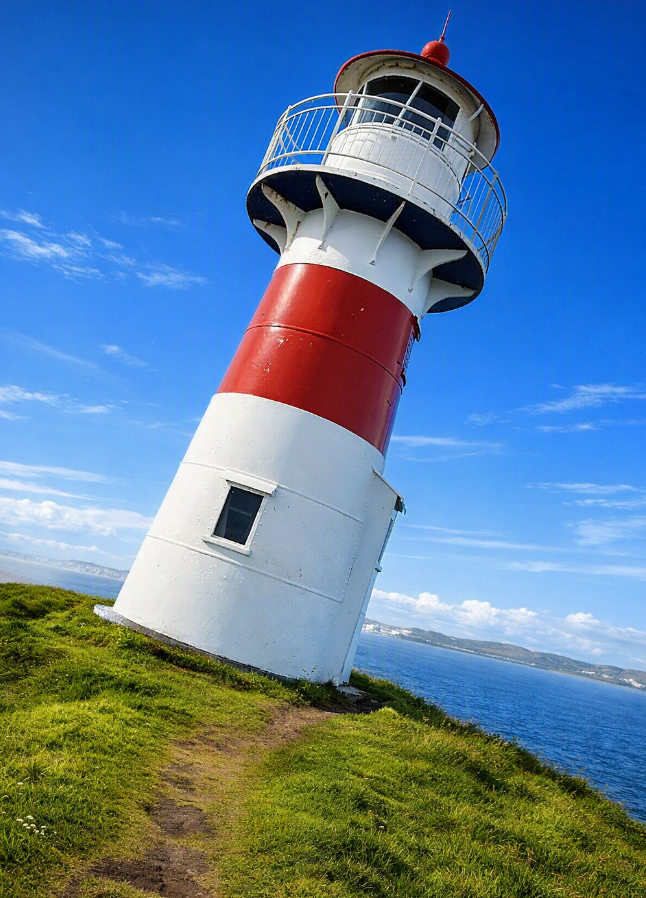
The most recognizable feature of the site today is the Skansin Lighthouse, constructed in 1888. Painted white with red detailing, the lighthouse stands prominently atop the hill and continues to serve as a navigational aid for vessels entering Tórshavn harbor. Its relatively low profile reflects the need to withstand strong winds common in the Faroe Islands.
Location and Access
Skansin is located directly across from the Smyril Line Ferry Terminal, making it one of the most accessible attractions in Tórshavn. Visitors arriving by car can park at the large public lot adjacent to the terminal. The city bus system also provides convenient access, with Bus 2 stopping at Skansin and other routes passing nearby at Farstøðin.
For those exploring on foot, the fortress is only a short walk from the Tinganes peninsula, where the government buildings are located, and from the Old Town district. The hill itself is easy to ascend. One path is paved, allowing wheelchair users to reach the top without difficulty. Once on the hill, visitors will find grassy areas, benches, and walking paths that encourage exploration. The lighthouse is not open to the public, but its exterior remains a highlight of the site.

Visitor Experience
Skansin offers a relaxed atmosphere, making it a popular spot for both locals and tourists. The elevated position provides sweeping views of Tórshavn harbor, the town, and Nólsoy Island. On clear days, the vistas extend far into the North Atlantic, emphasizing the fortress’s strategic location.
Visitors can walk among the cannons, some dating back to earlier centuries and others installed by the British during World War II. The remaining fortress walls and bastions provide a tangible connection to the site’s military past. Benches scattered across the hill invite visitors to sit and enjoy the coastal scenery.
The fortress has also served as a gathering point for special events. During the total solar eclipse of 2015, many people assembled at Skansin to witness the phenomenon, underscoring its role as a public viewpoint.
Surrounding Attractions
Skansin’s location makes it an excellent starting point for exploring Tórshavn. The Tinganes district, with its historic government buildings, is only minutes away on foot. The Old Town, characterized by narrow lanes and traditional Faroese houses, is also nearby.

Several hotels are located within walking distance, including Hotel Hafnia and Hotel Djurhuus, making Skansin an easy addition to any visitor’s itinerary. The National Museum of the Faroe Islands and other cultural institutions are also accessible from the fortress.
Practical Information
Skansin is open to the public at all times, with no admission fee. This accessibility makes it an attractive option for an evening activity, particularly during the summer months when the weather is milder and daylight hours are longer. Most visitors spend between 30 and 45 minutes exploring the site, though those interested in photography or history may linger longer.
The best time to visit is during the summer, from June to August, when the fortress is fully accessible and the weather is most favorable. Evenings are particularly pleasant, with gentle breezes and soft light enhancing the views.
Cultural Significance
Skansin is more than a historic monument; it is a symbol of resilience and adaptation. Built to defend against pirates, expanded to meet new military challenges, and repurposed during World War II, the fortress reflects the evolving needs of the Faroese people. Today, it stands as a reminder of the islands’ strategic importance in the North Atlantic and as a testament to the blending of European military architecture with local conditions.

The Faroese often refer to Skansin as the most peaceful fort on Earth. While it was constructed for defense, its primary use over the centuries has been ceremonial, particularly for saluting. This reputation underscores the contrast between its intended purpose and its actual role in Faroese history.
Skansin remains one of the key sights of the Faroe Islands. Its combination of historical significance, architectural features, and scenic views makes it a destination that appeals to a wide range of visitors. Whether approached as a cultural heritage site, a recreational space, or simply a viewpoint, Skansin offers a clear window into the history and landscape of Tórshavn.