
The Gateway to the Islands
Every traveller to the Faroe Islands begins at Vágar Airport, a small but vital hub carved into the western edge of the archipelago. Planes land between mountains, winds sweep across the runway, and the Atlantic presses close. From here, the question is simple: how to reach Tórshavn, the capital, forty‑five kilometres away. The answer, for most, is the bus — Route 300. It is not glamorous, but it is reliable, affordable, and deeply woven into the rhythm of island life.
The Practical Frame
Route 300 is operated by Strandfaraskip Landsins, the national transport company. The bus runs directly from the airport to Tórshavn, with intermediate stops in villages along the way. The journey takes about fifty to sixty minutes, depending on traffic and weather. Tickets cost around DKK 30 (USD 4), making it the cheapest transfer option. Schedules are aligned with flight arrivals, though not perfectly; buses depart every few hours, so planning matters.
The Departure Ritual
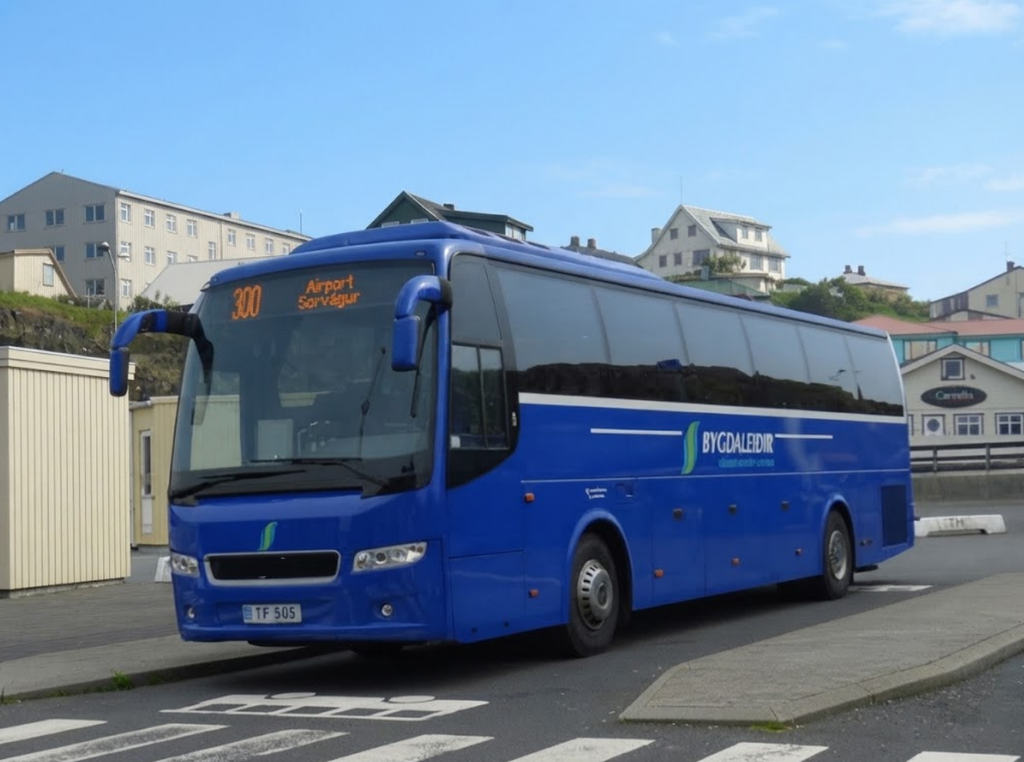
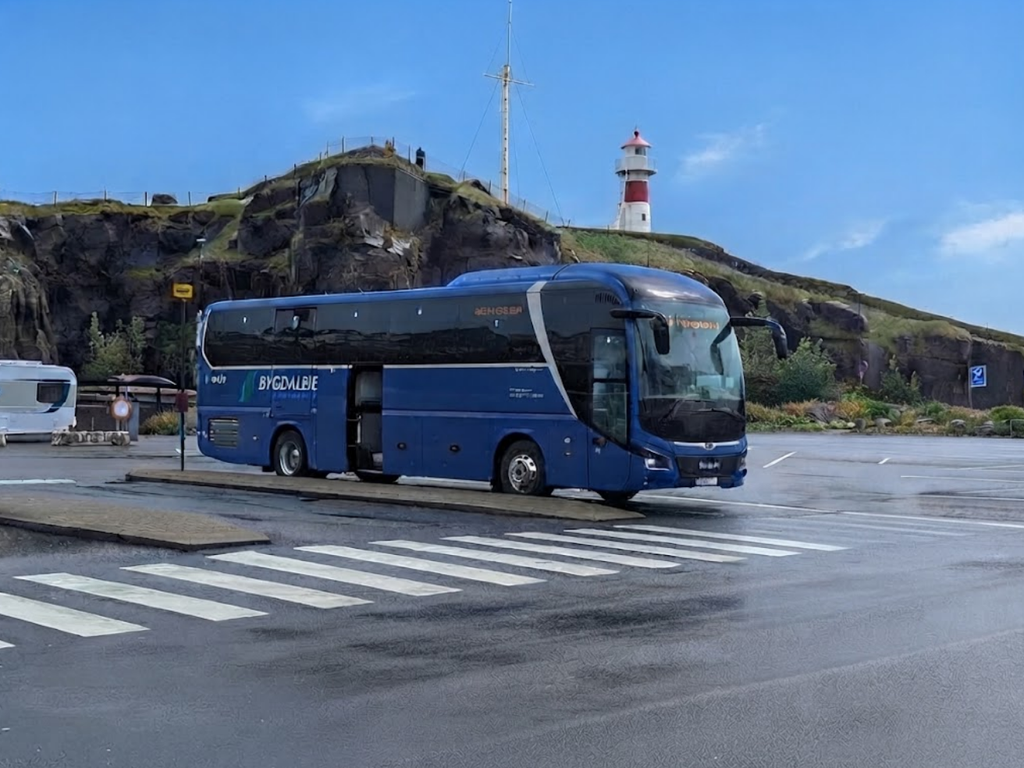
At Vágar Airport, the bus stop is just outside the arrivals hall. There is no confusion, no sprawling terminals. You step out, bags in hand, and the bus is waiting. Painted in the company’s blue livery, it is modern, clean, and fitted with comfortable seats. Tickets are purchased directly from the driver, cash or card. Locals board alongside tourists, some heading home, others beginning their journey. The atmosphere is calm, practical, unhurried.
The Route Experience
The bus pulls away from the airport and begins its climb through Vágar’s valleys. Sheep graze on slopes, waterfalls spill from cliffs, and turf‑roofed houses dot the landscape. Within minutes, the road leads to the Vágatunnilin, the sub‑sea tunnel connecting Vágar to Streymoy. At 4.9 kilometres long, it is a feat of engineering, plunging beneath the fjord and rising again on the other side. Emerging from the tunnel, the bus continues east, tracing fjords and passing small villages. The scenery is constant — mountains, sea, sky — shifting with weather and light.
The Arrival Scene
After about an hour, the bus enters Tórshavn. Streets narrow, houses cluster, and the harbour appears. The final stop is the central bus station, within walking distance of hotels, restaurants, and the old town Tinganes. You step off, luggage in hand, already immersed in the capital. No transfers, no taxis, no detours. The bus delivers you directly to the city’s heart.
The Weather Factor
The Faroe Islands are famous for sudden weather changes. Fog rolls in, rain lashes sideways, winds rise without warning. Buses, unlike helicopters or ferries, are rarely cancelled. Roads remain open, tunnels provide shelter, and drivers are accustomed to conditions. Delays happen, but cancellations are rare. For travellers seeking certainty, the bus is the most dependable option.
The Economics of Choice
Compared to taxis (USD 100–120) or helicopters (USD 110–150), the bus is inexpensive. For budget travellers, students, and families, the savings are significant. Even for those who could afford alternatives, the bus offers value. It is not just about cost; it is about connection. You share the ride with locals, see villages along the way, and experience the islands at ground level. It is transport, but also introduction.
The Cultural Layer
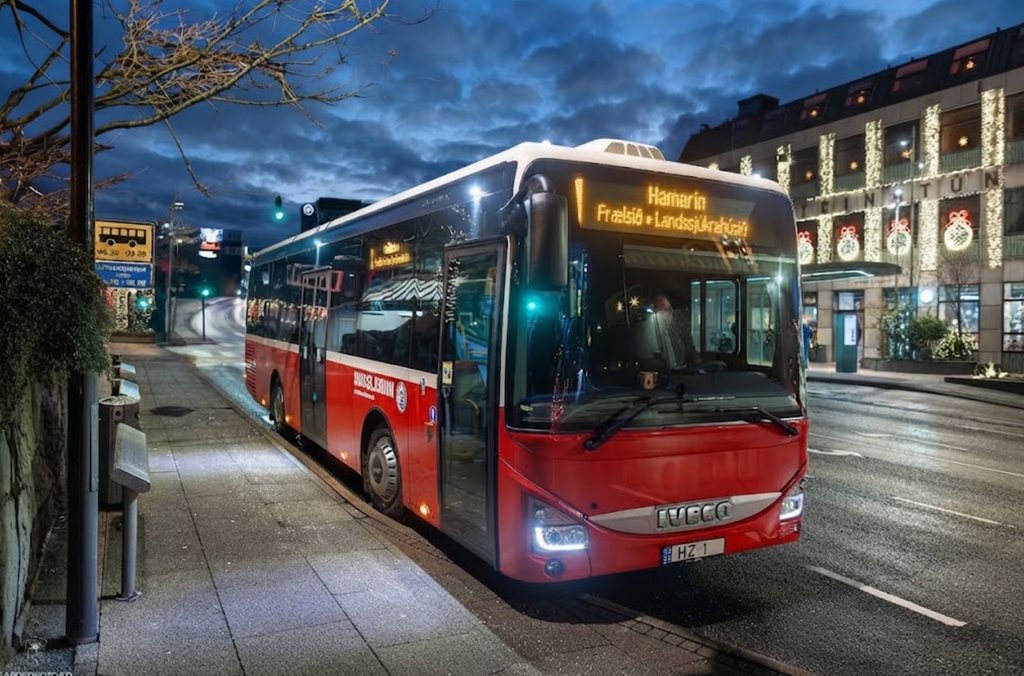
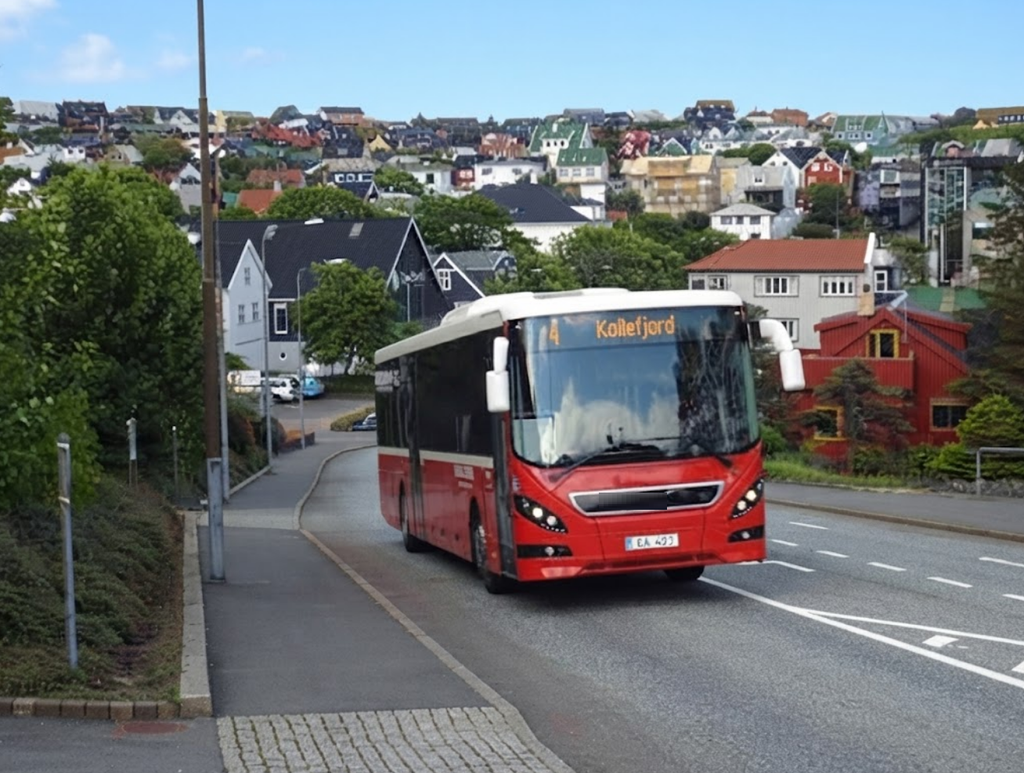
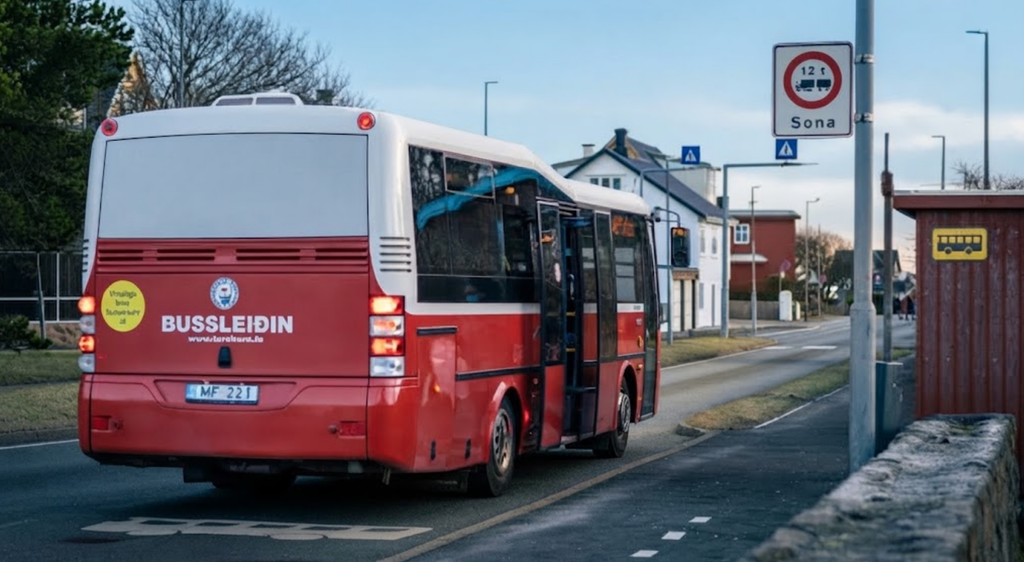
Route 300 is more than a shuttle. It is part of the national transport network, linking communities across the islands. Locals use it daily, not just tourists. Students commute, workers travel, families visit relatives. To ride the bus is to step into the rhythm of Faroese life, where public transport is not just convenience but necessity. It is a reminder that the islands, though remote, are connected.
The Scenic Argument
From the bus window, the Faroe Islands unfold slowly. You see valleys deepen, fjords widen, cliffs rise. You see sheep grazing, boats moored, houses clustered. You see weather shift — sun breaking through clouds, rain sweeping across slopes, fog drifting over peaks. The bus is not fast, but it is immersive. It shows you the islands as they are lived, not just as they are flown over.
The Logistics of Booking
Tickets require no advance purchase. You simply board and pay. Schedules are posted online and at the airport. Buses generally align with flight arrivals, though gaps exist. If your flight lands late at night, taxis may be the only option. Otherwise, the bus is waiting. Luggage is stored beneath the cabin, seats are unreserved, and boarding is simple. It is transport stripped of complication.
The Comfort Equation
Seats are padded, windows large, heating reliable. The ride is smooth, though winding roads can cause motion sickness for some. Wi‑Fi is not guaranteed, but views compensate. The bus is not luxury, but it is comfortable. For an hour, you sit, watch, and arrive. It is enough.
The Comparative Lens
- Bus Route 300: Cheapest, reliable, scenic, communal.
- Taxi: Fast, private, expensive.
- Car rental: Flexible, independent, costly.
- Helicopter: Fastest, dramatic, limited.
Each option has its place. The bus is the default, the backbone, the choice for most. It is not glamorous, but it is honest.
The Symbolic Weight
To ride Route 300 is to begin your Faroese journey in rhythm with the islands. It is to share space with locals, to see landscapes unfold, to arrive in Tórshavn grounded. It is not just transport; it is orientation. It tells you what the islands are: practical, communal, scenic, unpredictable, yet dependable.
The Island Lesson
The Faroe Islands teach patience, planning, and respect for weather. The bus embodies those lessons. It is slow compared to helicopters, but steady compared to ferries. It is cheap compared to taxis, but rich compared to isolation. To ride it is to understand the islands differently — not just as places to cross, but as places to inhabit, even briefly, from a bus seat.