
Faroe Islands > Things to do in Faroe Islands > Hvannhagi Valley
Arrival in Suðuroy
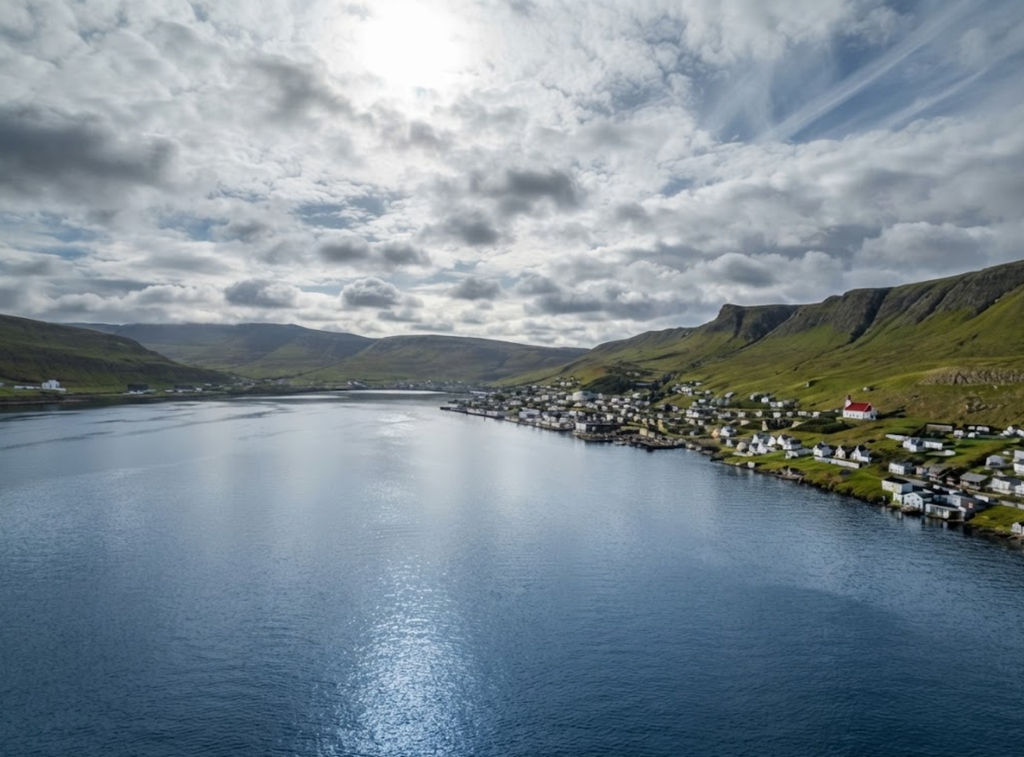
The journey to Hvannhagi begins long before your boots touch the trail. From Tórshavn, the ferry to Suðuroy cuts across the restless Atlantic, a voyage that feels like a prelude to discovery. The deck offers sweeping views of the archipelago, cliffs rising like fortresses from the sea. As the ferry approaches Tvøroyri, the southern island reveals itself — rugged, remote, and steeped in quiet drama. Tvøroyri is more than a gateway; it is a village where the rhythm of Faroese life unfolds in fishing boats, hillside houses, and the ever‑present call of seabirds.
Trailhead Beginnings
Above Tvøroyri hospital lies the start of the Hvannhagi hike. A wooden staircase leads upward, marking the transition from village to wilderness. Orange posts guide the way, threading through a gated wooded area where birch and willow whisper in the wind. The path climbs steadily, past farmsteads and sheep pastures, offering glimpses of rural Faroese life. Here, agriculture and wilderness coexist, the valley serving as “fat pasture” for sheep while remaining untouched in spirit.
The Hvannhagi Hike
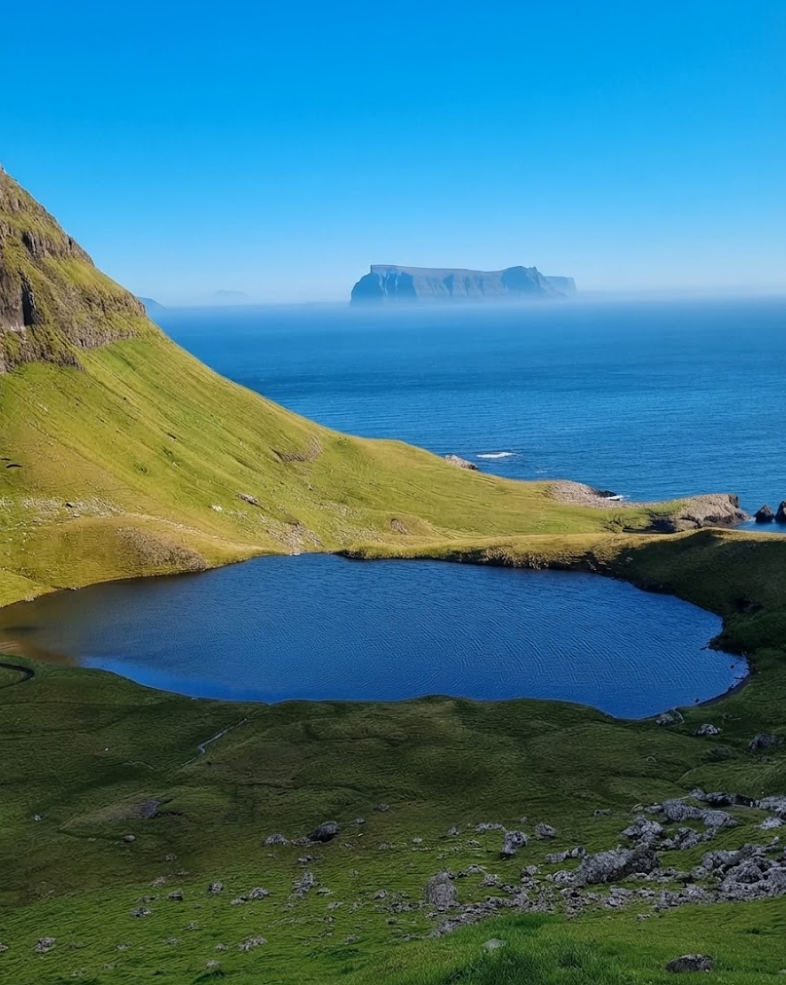
The standard out‑and‑back trail spans 7.7 kilometers, with an elevation gain of 278 meters. Moderate in difficulty, it demands sturdy boots and layered clothing, for Faroese weather is famously unpredictable. The ascent opens into cliffside views, where the ocean stretches endlessly and the silhouettes of distant islands punctuate the horizon. The descent into Hvannhagi Valley is the hike’s crescendo, leading to the shores of Lake Hvannavatn.
Lake Hvannavatn
At the valley’s heart lies Hvannavatn, a circular glacial relic from the Ice Age. Its waters are still, reflecting the steep crescent‑shaped mountainsides that cradle it. For hikers, it is a natural resting place, a serene counterpoint to the rugged terrain. Birdlife gathers here, turning the lake into a sanctuary of motion and sound. Hvannavatn is not only a geological artifact but a living ecosystem, embodying the valley’s dual identity as both scientific marvel and pastoral refuge.
Geological Eldorado
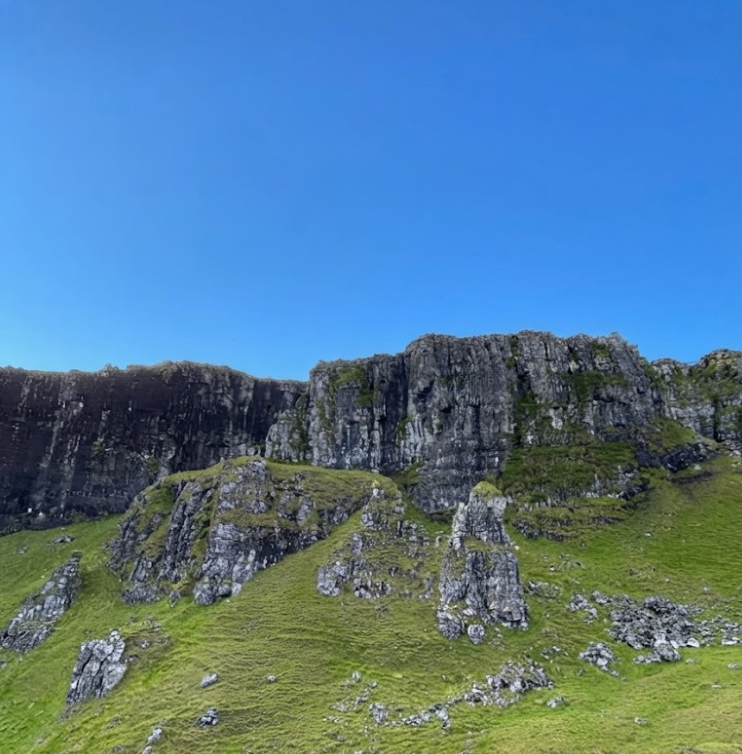
Hvannhagi is often called a geological Eldorado, and with reason. The Hvannhaga Formation reveals basaltic structures shaped by ancient volcanic activity. Dysjarnar, a field of massive stones scattered by avalanches and rock slides, feels like a landscape frozen mid‑collapse. Each boulder tells a story of violent geological forces, yet together they create a tableau of stark beauty. For geologists, Hvannhagi is a classroom; for travelers, it is a reminder of nature’s restless power.
Mountain Majesty
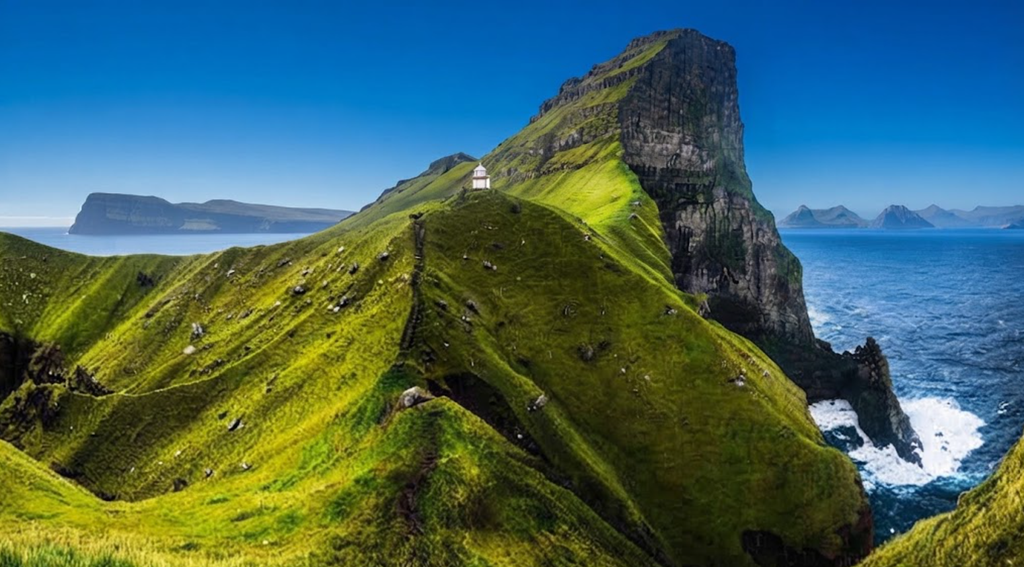
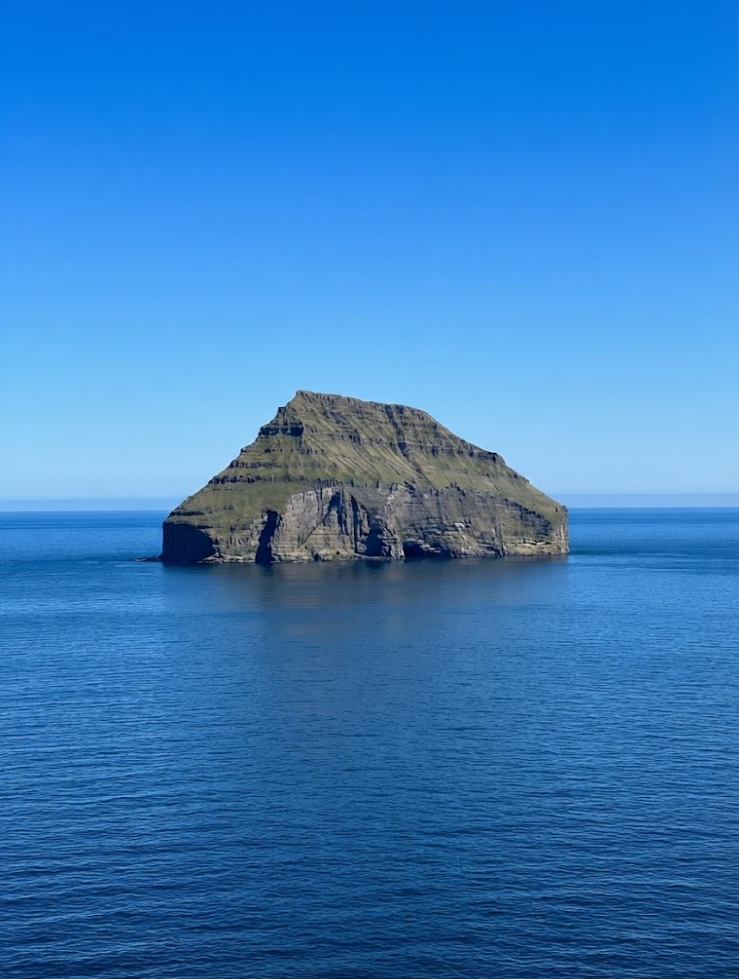
The valley is framed by peaks such as Skornasaklettur and Fjallið, their rugged profiles etched against shifting skies. Ascending these slopes rewards hikers with panoramas of Lítla Dímun, Stóra Dímun, and Sandoy Island. On clear days, the view stretches far across the North Atlantic, a sweep of ocean and islands that captures the essence of Faroese wilderness. The interplay of light and shadow on these mountains creates endless compositions for photographers, each moment fleeting yet unforgettable.
Circuit Variation
For those seeking adventure, the Frostgjógv gorge offers a circuit trail. Scrambling through steep rock and uneven terrain adds intensity to the hike, demanding focus and resilience. The reward is fresh perspectives on Hvannhagi’s geology, from narrow gullies to exposed ridges. Along the way, remnants of ancient sheep pens remind hikers of the valley’s agricultural history, where human presence has long been woven into the land.
Seasonal Rhythm
Hvannhagi changes with the seasons. Summer, from June to August, brings long daylight hours and milder weather, ideal for exploration. Birdwatchers favor late spring, when seabirds return to nest along the cliffs. Yet even in summer, skies shift quickly, and rain can arrive without warning. Autumn cloaks the valley in muted tones, while winter transforms it into a stark, windswept expanse. Each season offers a different lens, a different mood, a different Hvannhagi.
Safety and Preparation
The valley demands respect. Waterproof boots with ankle support are essential, as terrain can be slippery. Layers, including a waterproof shell, guard against sudden weather changes. Maps, compasses, and first‑aid kits are practical necessities. Staying on marked paths protects fragile vegetation and ensures safe passage. Cliff edges are porous and dangerous; distance is safety. For solo hikers, informing someone of plans and return time is a wise precaution.
Cultural Threads
Hvannhagi is not only geology and scenery; it is culture and legend. The name itself recalls the angelica plant, “hvann,” once vital in Faroese medicine. Folklore weaves through the valley, stories of spirits and shepherds carried by generations. Agriculture remains central, with sheep grazing the lush pastures, a living link between tradition and landscape. Hvannhagi embodies the Faroese ethos: a harmony between human life and untamed nature.
Photography and Perspective
For photographers, Hvannhagi is a dream. The lake’s mirror surface, the scattered stones of Dysjarnar, the silhouettes of Skornasaklettur — each element offers composition. Light shifts constantly, clouds racing across the sky, shadows deepening valleys and brightening peaks. Morning brings clarity, midday offers drama, and evening cloaks the valley in gold. Every frame is fleeting, every shot a dialogue between permanence and change.
Guided Exploration
While Hvannhagi can be explored independently, guided tours enrich the experience. Local guides share insights into geology, flora, fauna, and folklore. They know the safest routes, the hidden vantage points, the stories embedded in stone and soil. For visitors unfamiliar with Faroese terrain, guides provide both safety and depth, transforming a hike into a layered journey.
Hvannhagi in Context
Hvannhagi is part of a larger Faroese narrative. The islands are shaped by volcanic origins, glacial forces, and relentless weather. Each valley, each cliff, each fjord tells a chapter of this geological saga. Hvannhagi stands out as a concentrated expression of these forces, a valley where geology, ecology, and culture converge. It is a candidate for geopark registration, a recognition of its significance in the natural world.
Departure and Reflection
Leaving Hvannhagi is not an ending but a continuation. The hike back to Tvøroyri retraces steps, yet feels different, shaped by the valley’s imprint. The ferry ride north becomes a time of reflection, the ocean a canvas for memory. Hvannhagi lingers, not as a destination checked off, but as an experience absorbed — a geological marvel, a cultural landscape, a wilderness that speaks in stone and silence.