
Faroe Islands > Things to do in Faroe Islands > Streymoy
The largest island in the Faroe archipelago, Streymoy holds nearly half of the country’s population yet still feels untamed. Its name translates to “island of currents,” a reminder of the restless waters that surround it. The island is a place of contrasts: roaring waterfalls, silent lagoons, cliff‑side roads, and turf‑roofed villages.
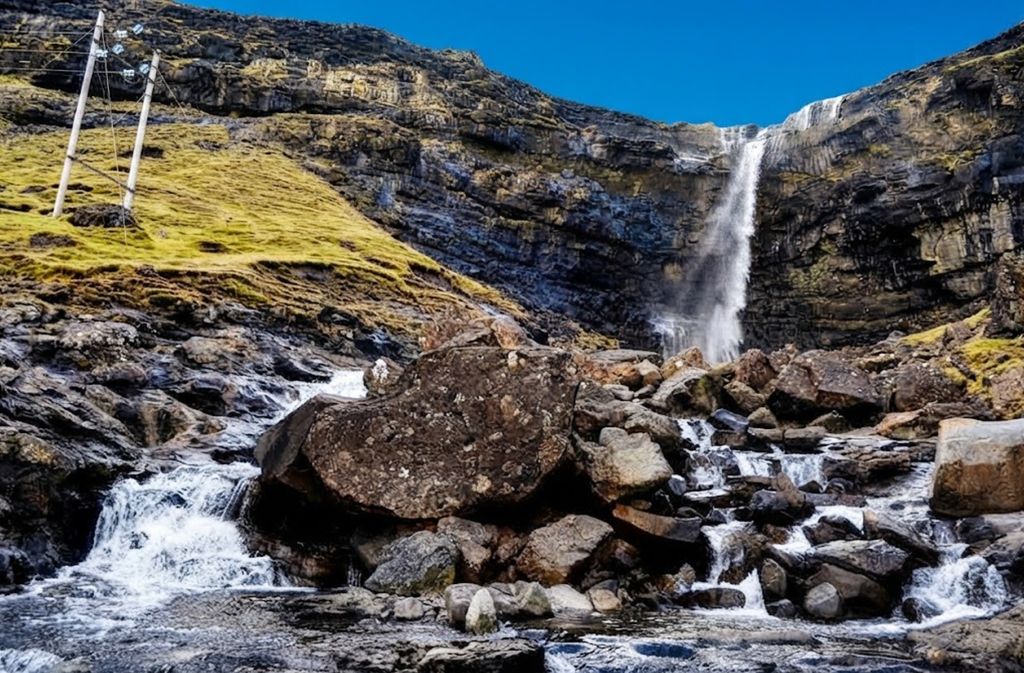
Fossá Waterfall – Power in Motion
On the eastern coast of Streymoy, the Fossá Waterfall plunges 140 meters in two dramatic tiers, making it the tallest in the Faroe Islands. Its name, “river with waterfalls,” captures its essence perfectly. The experience of Fossá changes with the weather. After heavy rain, the falls roar with energy, mist rising into the valley and the sound echoing across the cliffs.
On drier days, the flow softens into a quieter stream, revealing a gentler side of the landscape. Visitors can hike up the tiers for closer views, though the spray and slippery rocks demand caution. Standing alone at Fossá, with only the roar of water and the rush of air, is one of Streymoy’s most elemental experiences.
Tjørnuvík – Village at the Edge
North of Fossá lies Tjørnuvík, a tiny settlement tucked into a valley that opens directly onto the Atlantic. Its black‑sand beach is framed by colorful houses and mountains, while the sea stacks Risin og Kellingin—the Giant and the Witch—rise in the distance, tied to a legend of trolls turned to stone.
The beach is popular with surfers, and at sunset the fjord glows with soft light. For photographers, the contrast of painted homes against muted earth tones makes Tjørnuvík unforgettable. The road to the village clings to cliffs, offering dramatic views of the ocean. Arriving here feels like reaching the edge of the world.

Saksun – Lagoon of Silence
On the northwest coast, Saksun is a village of turf‑roofed houses overlooking a tidal lagoon. At low tide, visitors can walk across the sand to reach Út á Lónna, a black‑sand beach surrounded by mountains. The short hike is easy, and the scenery recalls Iceland’s Vík, though here the silence feels deeper.
The Dúvugarðar Heritage Farm offers a glimpse of traditional Faroese life, with its stone walls and grass roofs. Even in poor weather, the fjord and lagoon radiate timeless beauty, making Saksun a place worth revisiting in clearer light. The village is remote, and the drive there winds through valleys and ridges, reinforcing the sense of isolation.
Syðradalur – The Southern Valley
On Streymoy’s west coast, Syðradalur remains a hidden gem. Just 20 minutes from Tórshavn, the road descends through zig‑zagging cliffs into a valley where only one farming family lives. The views stretch across the sea to Vágar, Koltur, and Hestur islands.
The drive itself is an adventure, with narrow roads clinging to mountainsides and sheep grazing along the way. At sunset, the valley glows with serenity, offering solitude rarely found elsewhere in the Faroes. The remoteness of Syðradalur makes it a place where time slows, and the silence of the sea becomes the soundtrack of the evening.
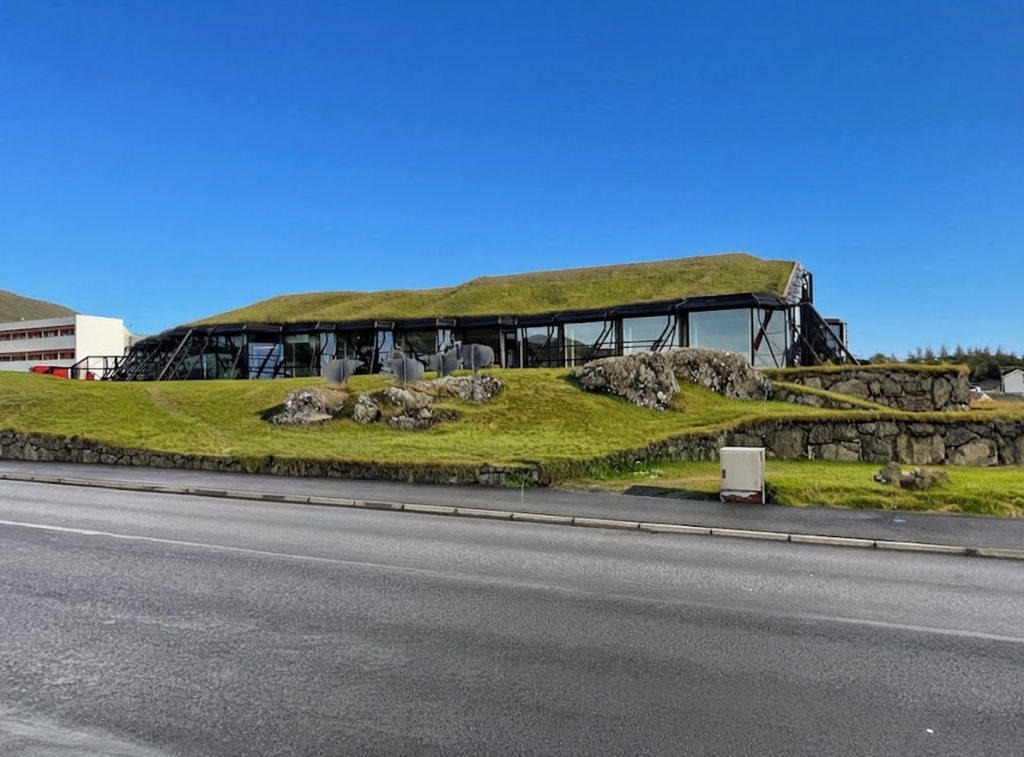
Tórshavn – Capital of Contrasts
The journey begins in Tórshavn, the Faroese capital. Old Town’s turf‑roofed timber houses line narrow alleys, while the Tinganes peninsula preserves one of the world’s oldest parliamentary sites. Modern shops, and cultural venues cluster around Vaglið Square, blending history with contemporary life. From here, roads lead south to Kirkjubøur, once the religious heart of the islands. Tórshavn is both a gateway and a destination, a city where tradition and modernity coexist.
Kirkjubøur – Heart of History
On the southwest coast lies Kirkjubøur, a village that was once the religious center of the Faroes. The ruins of Saint Magnus Cathedral dominate the site, their stone walls open to the sky. Nearby stands the Roykstovan, the oldest inhabited wooden house in Europe, still home to the same family after centuries.
The village feels timeless, its history woven into every stone and timber. For photographers and history enthusiasts, Kirkjubøur is a must‑visit, offering a glimpse into the medieval past of the islands.
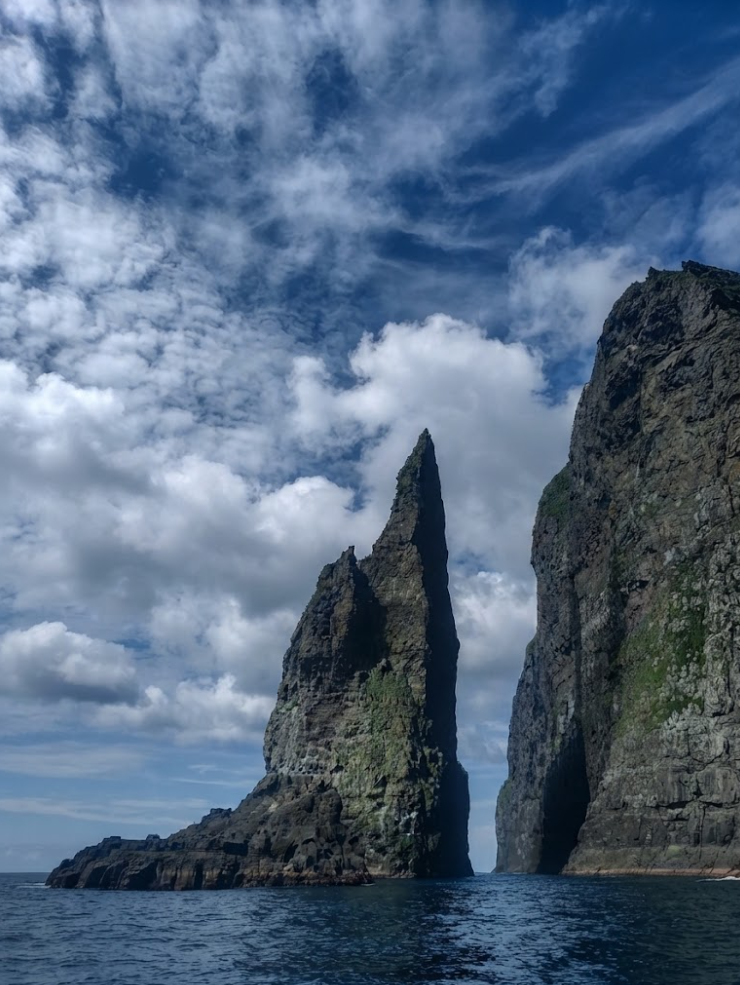
Vestmanna Cliffs – Sea Birds and Stone
On the northern coast, the Vestmanna Cliffs rise dramatically from the sea. Boat tours take visitors beneath towering walls of rock, into sea caves, and past nesting sites of puffins and other seabirds. The cliffs are a reminder of the raw power of nature, sculpted by wind and waves.
The experience of sailing beneath them, with birds wheeling overhead and the ocean surging below, is one of the highlights of Streymoy.
Travel Logistics – Getting to Streymoy
From Vágar Airport, the Vágatunnilin undersea tunnel connects Vágar to Streymoy in under ten minutes. By car, Tórshavn is about 40 minutes away, Saksun about 55 minutes away. Roads are paved and well‑maintained, making driving straightforward. By bus, Route 300 runs hourly to Tórshavn, taking about fifty minutes at a cost of 60 DKK.
Local buses in Tórshavn are free, and inter‑island routes connect the capital to villages like Vestmanna, Kollafjørður, and Hvalvík. Driving times from Tórshavn are short: Vestmanna in 35 minutes, Saksun in 45 minutes, Kirkjubøur in 15 minutes.
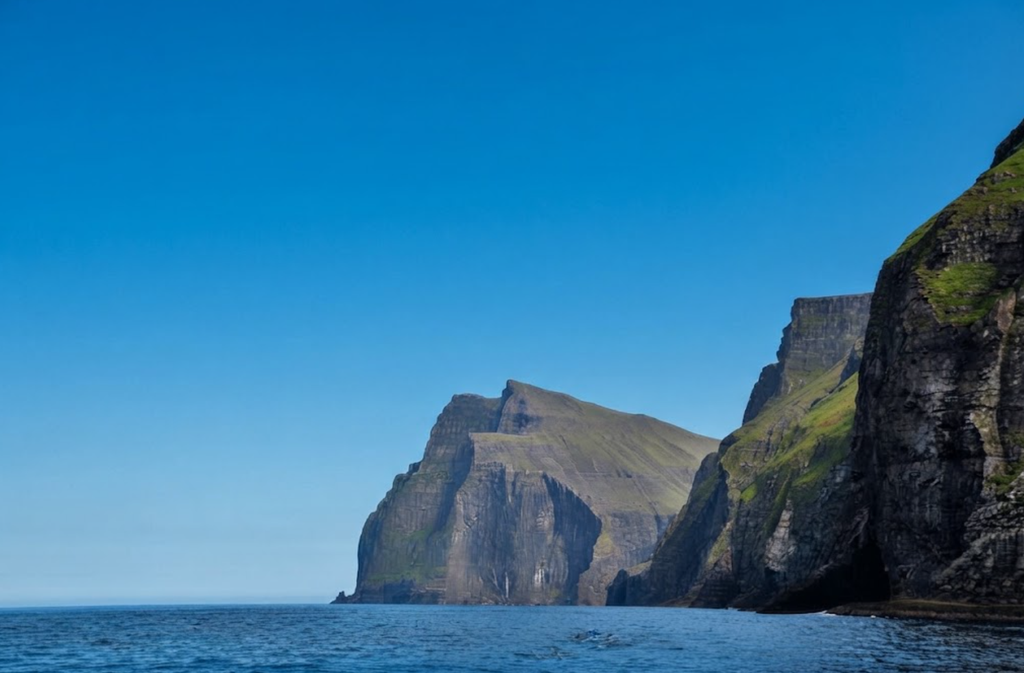
Streymoy – Island of Contrasts
Streymoy is the largest island of the Faroes, its land area a quarter of the country. Almost half the population lives here, yet the island feels wild and untamed. Its north is dominated by mountains and the Vestmanna Cliffs, while its coasts reveal beaches, lagoons, and waterfalls.
Trees are scarce, but the landscapes are alive with sheep, seabirds, and shifting weather. From roaring cascades to silent valleys, from cliff‑side roads to turf‑roofed villages, Streymoy is an island of contrasts—where solitude and culture meet in equal measure.