
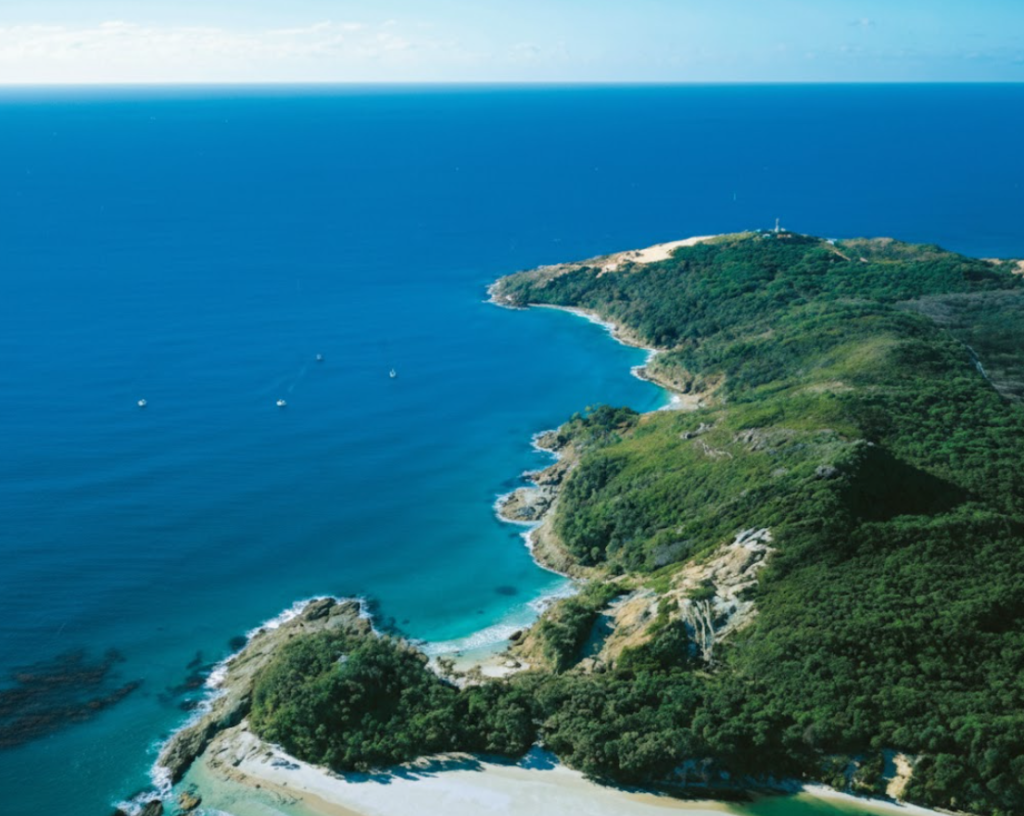
Known as Mulgumpin in the Indigenous Quandamooka language, Moreton Island is a raw paradise just off the coast of Brisbane. It’s one of the world’s largest sand islands, a place where adventure is written into the landscape — towering dunes, freshwater lagoons, and endless beaches. Alongside Fraser Island and North Stradbroke, it’s considered one of the ultimate 4WD playgrounds on Australia’s east coast, but it’s also a sanctuary for wildlife and a retreat for those who crave nature at its most untamed.
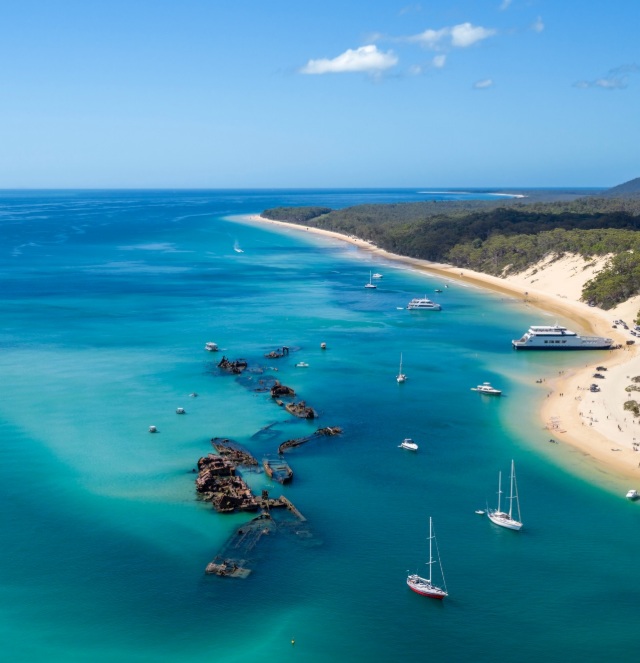
Getting to Moreton Island
The island is 4WD‑only — there are no paved roads, just sand tracks — but you don’t need to own one to visit. If you do have a 4WD, book the Micat vehicle ferry from the Port of Brisbane. The barge takes about 90 minutes, and you can load up your car with camping gear and supplies, ready to roam freely once you arrive. Tickets start around $120 return, but book early, especially during school holidays, as spots fill quickly.
For those without a 4WD, there are day tours and resort packages that include transfers, accommodation, and guided adventures. These options allow you to experience the island’s highlights without worrying about navigating the sand tracks yourself.
Best Time to Visit
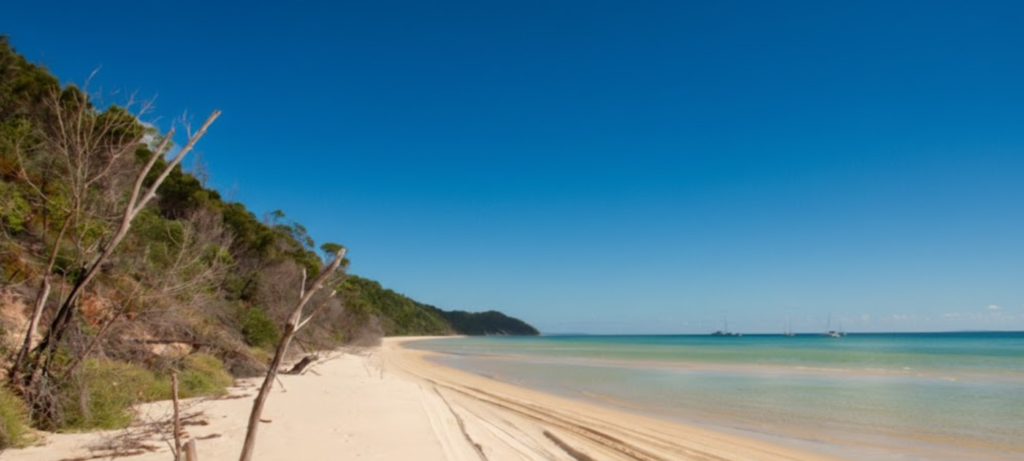
Moreton Island is spectacular year‑round, but each season offers something different:
- Summer (Dec–Feb): Perfect for snorkelling, diving, and sand tobogganing.
- Autumn (Mar–May): Mild weather, fewer crowds, and excellent fishing, with dolphins and turtles often spotted.
- Winter (Jun–Aug): Cooler temperatures ideal for whale watching and long explorations.
- Spring (Sep–Nov): Turtle nesting season and migratory bird arrivals, adding another layer of natural wonder.
Wildlife Encounters
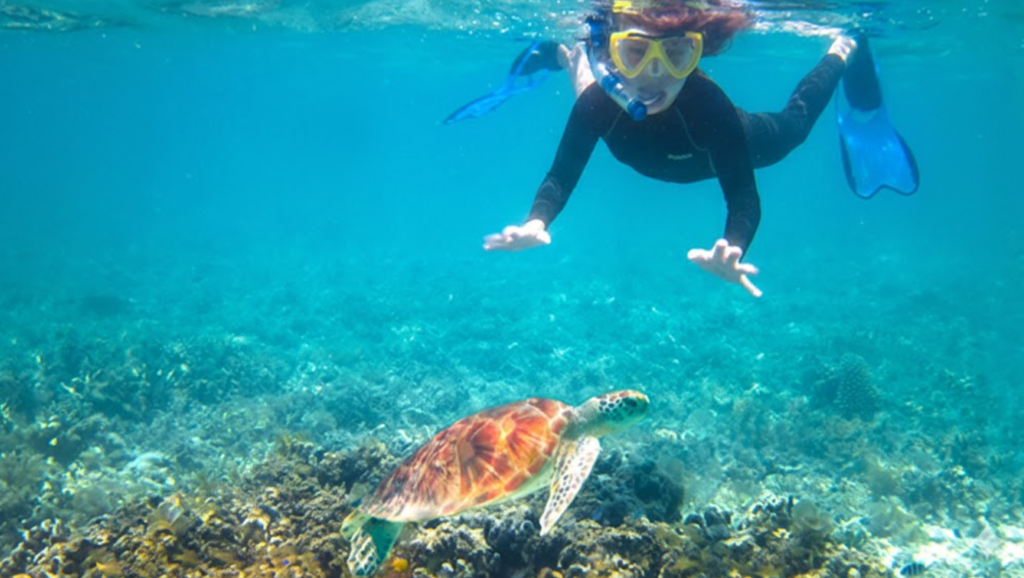
The island teems with life. Dolphins visit Tangalooma Resort’s pier every evening, offering the chance to hand‑feed them at sunset. Humpback whales pass by between June and November, best seen from Cape Moreton Lighthouse — the island’s highest point with sweeping 360‑degree views. Dugongs graze in the protected waters, turtles nest on sandy shores, and snorkellers can spot reef fish, rays, and even wobbegongs. Birdwatchers will find migratory shorebirds in spring and summer, while the island’s bushland shelters countless native species.
Highlights Not to Miss
- Cape Moreton Lighthouse: A short walk from the sand car park leads to panoramic views, perfect for spotting whales and dolphins.
- Blue Lagoon: A crystal‑clear freshwater lake surrounded by white sand, ideal for a morning swim or a peaceful picnic.
- Tangalooma Dolphins: Wild bottlenose dolphins arrive at sunset, each with their own personality, making this encounter unforgettable.
- Sand Tobogganing at the Dunes: Thrill‑seekers can race down towering dunes at high speed, a signature island adventure.
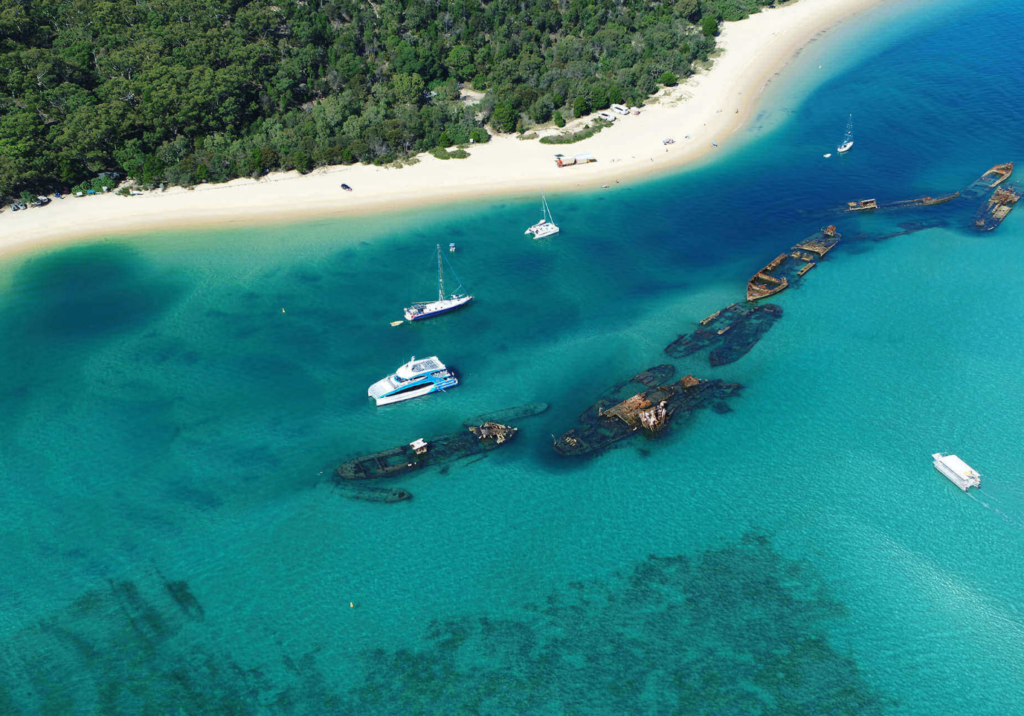
- Snorkelling the Wrecks: The Tangalooma Wrecks are a cluster of sunken ships that now form an artificial reef, teeming with marine life.
Essentials to Pack
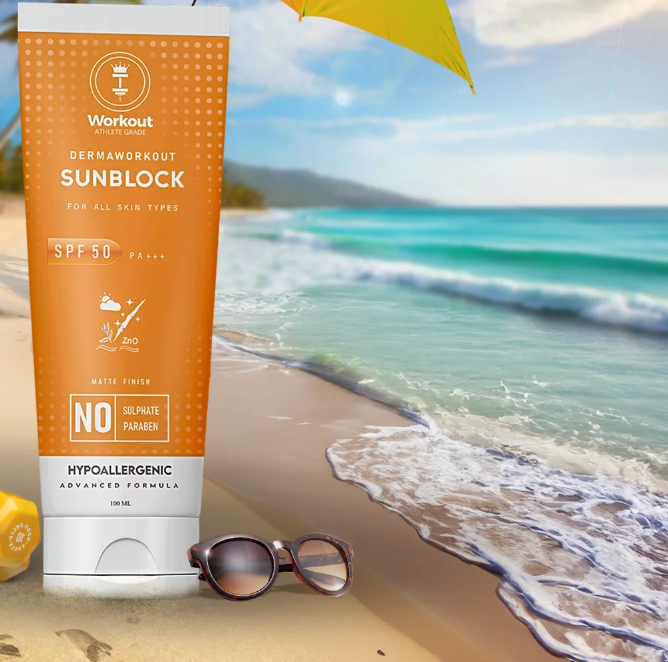
Sunscreen, hat, sunglasses, swimwear, towel, insect repellent, and a first‑aid kit are musts. If camping, bring sturdy gear, extra water, and supplies — the island’s rugged nature means preparation is key.
Moreton Island is not just a destination; it’s an experience of wild beauty and freedom. Whether you’re chasing whales, swimming in lagoons, snorkelling shipwrecks, or feeding dolphins at dusk, every moment here feels like a rare gift from nature. It’s a place where adventure and serenity coexist, where the sand itself becomes your road, and where the ocean offers endless stories to those willing to listen.