
A Different Side of the Great Ocean Road
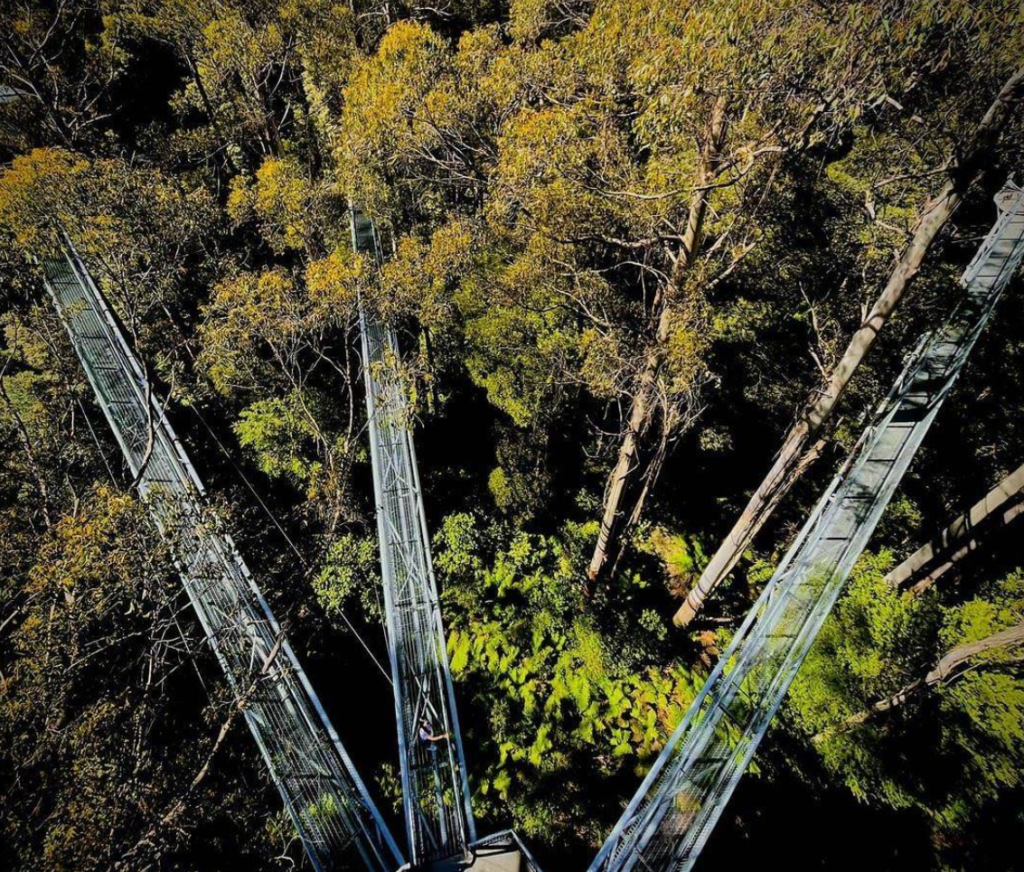
The Great Ocean Road is famous for its dramatic coastline, but halfway along at Cape Otway lies a destination that offers something entirely different. The Otway Fly Treetop Walk is a purpose-built steel walkway that allows visitors to explore the rainforest from both the ground and the canopy. It is one of the longest and highest treetop walks in the world, designed to make the rainforest accessible without disturbing its natural growth.
Structure and Design
The walkway is approximately 600 metres long and elevated between 25 and 30 metres above the forest floor. At its highest point, a viewing tower rises nearly 50 metres, giving visitors a perspective usually reserved for birds. The entire circuit, including the forest trail leading to the walkway, measures 1.9 kilometres. Depending on pace and stops, most visitors complete the walk in 1 to 2.5 hours.
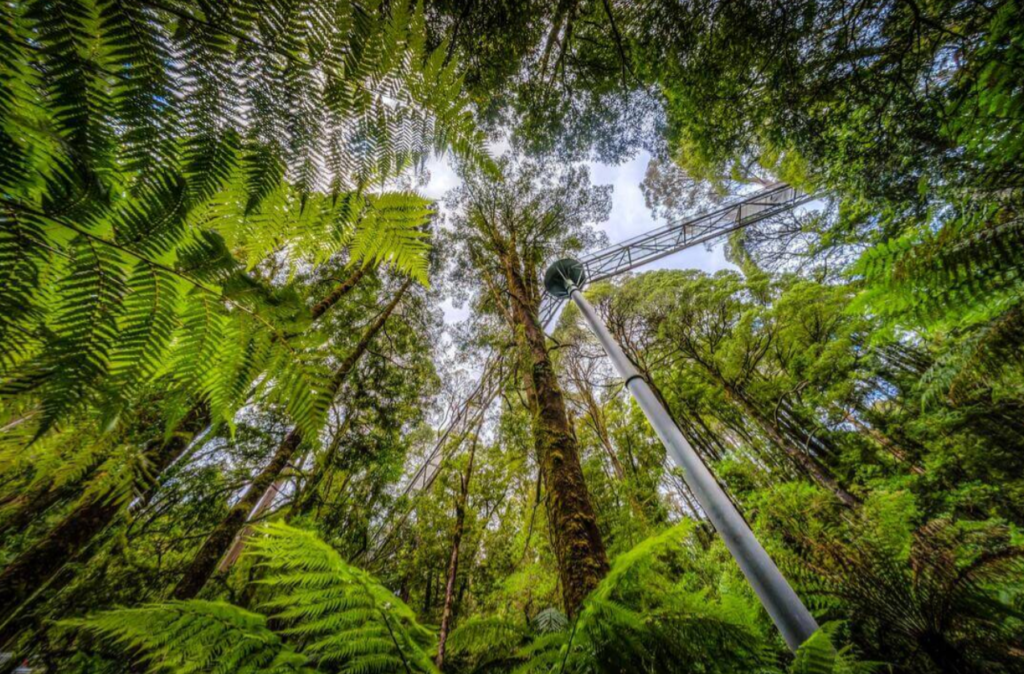
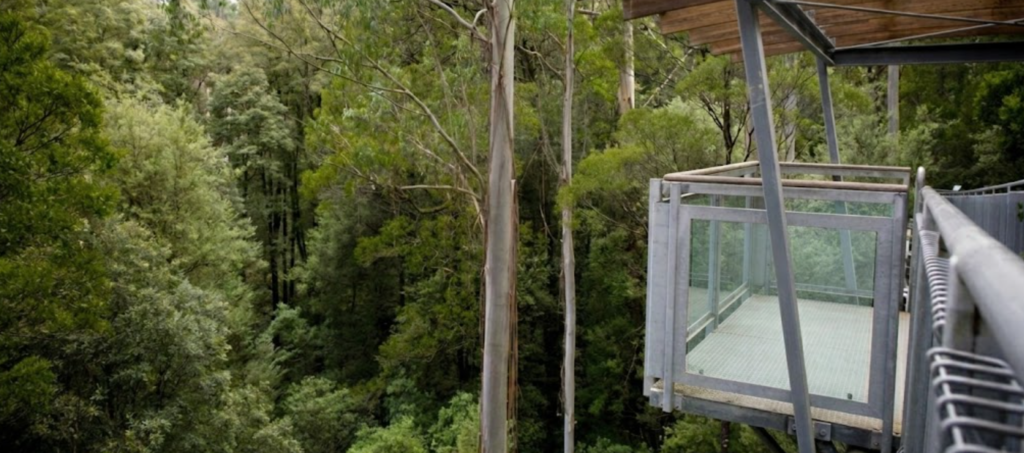
The structure is built from steel, engineered to withstand the region’s heavy rainfall and strong winds. Safety railings line the entire path, and several viewing platforms extend outward to provide panoramic views of the surrounding forest. Some platforms are partially covered, offering shelter during the frequent showers that characterize the Otways.
The Visitor Journey
The experience begins at the information centre, which includes ticketing facilities, a café, and restrooms. The café is known for serving fresh barista-made coffee and traditional Australian treats such as lamingtons. From here, visitors follow a forest trail for about one kilometre before reaching the elevated walkway.
The trail is well-maintained but includes some uphill sections. Good walking shoes are recommended, and umbrellas or rain jackets are useful due to the region’s high rainfall. The rainforest climate means conditions can change quickly, with mist and drizzle common even in summer.
Viewing Platforms and Scenery
The walkway includes multiple viewing platforms. These are designed to give visitors uninterrupted views of the canopy and forest floor. The highest tower, nearly 50 metres tall, is the highlight, offering a sweeping perspective across the rainforest.
Wildlife sightings are common. Colourful native birds often perch on the railings or fly through the treetops. The platforms provide excellent opportunities for photography, with vantage points that capture both the dense greenery below and the canopy above.
Flora of the Otways
The Otway Fly is surrounded by some of Victoria’s most iconic native trees. Species include giant eucalyptus, stringybark, grey gum, blue gum, beech, and blackwood. Some trees have trunk girths exceeding 10 metres, making them among the largest in the region.
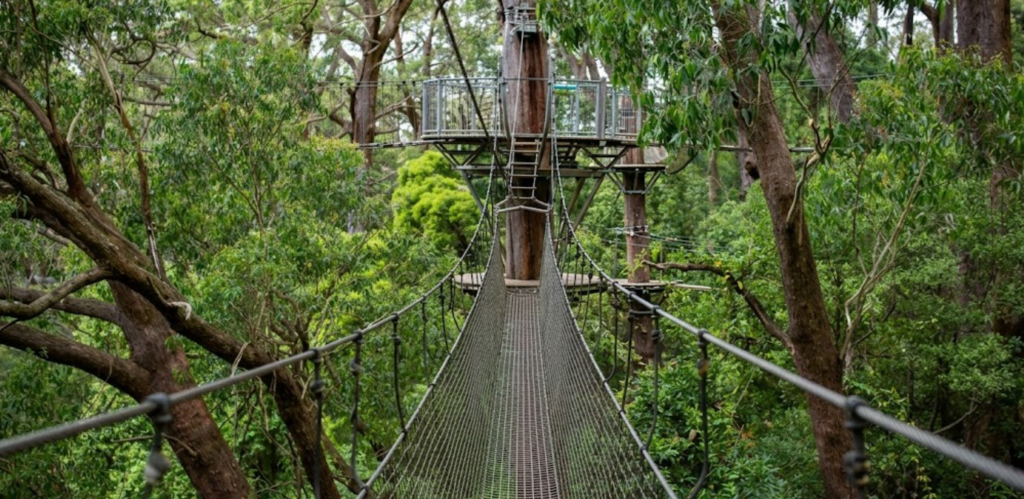
The forest floor is equally diverse. Mosses cover rocks and fallen logs, fungi thrive in the damp conditions, and ferns grow to impressive heights. The constant moisture in the air supports this dense vegetation, creating one of the most vibrant rainforest ecosystems in southern Australia.
Zipline Adventure
For visitors seeking more than a walk, the Otway Fly also offers a zipline tour. This experience involves a series of cables and platforms that allow participants to glide through the canopy. Safety harnesses and helmets are provided, and trained guides accompany each group. The zipline tour is designed to be both safe and thrilling, giving participants a different perspective of the forest while moving at speed through the treetops.
Accessibility and Fitness Requirements
The treetop walk is suitable for most fitness levels. While the trail includes some inclines, the gradient is manageable, and the walkway itself is flat. Families with children often complete the circuit, and the platforms provide regular opportunities to rest.
Visitors should be prepared for wet conditions, as rain is frequent in the Otways. Non-slip footwear is recommended, and layered clothing helps with the cool, damp climate. The walk is not strenuous but does require the ability to walk for up to two hours.
Practical Information
- Length of walk: 1.9 kilometres (forest trail plus elevated walkway).
- Time required: 1 to 2.5 hours depending on pace.
- Height of walkway: 25–30 metres above the forest floor.
- Height of tower: Nearly 50 metres.
- Structure: Steel walkway with safety railings and viewing platforms.
- Facilities: Information centre, café, restrooms, parking.
- Additional activity: Zipline tour available with separate booking.
Why Visit the Otway Fly
The Otway Fly Treetop Walk offers a perspective that is not available along the coastal route of the Great Ocean Road. While the coastline provides dramatic views of cliffs and ocean, the inland rainforest reveals Australia’s natural diversity in a different way. The treetop walk allows visitors to see the forest from above, appreciating its scale and complexity.
It is also one of the few places where visitors can safely access the canopy without specialist climbing equipment. The combination of engineering and natural beauty makes it a destination that appeals to families, nature enthusiasts, and adventure seekers alike.
Nearby Attractions
The Otway Fly is located within the Great Otway National Park, which includes other attractions such as waterfalls, walking trails, and historic sites. Cape Otway Lighthouse, one of Australia’s oldest, is nearby and offers coastal views. The region is also known for its wildlife, including koalas, which are often seen in the eucalyptus trees along the roads leading to the site.
The Otway Fly Treetop Walk is a structured, fact-based experience that combines accessibility with immersion in nature. With its 600-metre steel walkway, 50-metre tower, and 1.9-kilometre circuit, it provides clear, measurable opportunities to explore the rainforest. Visitors can expect reliable facilities, safe infrastructure, and a choice between a gentle walk or an adventurous zipline.
For those traveling the Great Ocean Road, the Otway Fly represents a worthwhile detour inland. It is not a coastal lookout or a beach, but a rainforest experience that complements the journey. By including both the coastline and the forest in their itinerary, visitors gain a fuller understanding of the diversity of Victoria’s landscapes.