
Step into the Kimberley’s desert silence and find yourself at the edge of an ancient scar in the Earth — Wolfe Creek Crater, a place where science, story, and solitude converge.
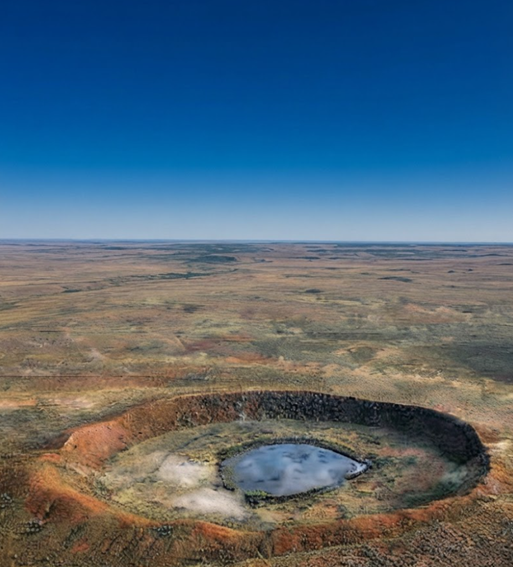
Three hundred thousand years ago, a meteorite weighing 50,000 tonnes tore through the atmosphere at 15 kilometres a second. The impact was cataclysmic: rocks shattered, molten debris scattered, fragments of the meteorite fused into the crater walls. What remains is a near-perfect circle, 880 metres wide, its rim rising like a low crown above the flat desert plain. From ground level, it looks deceptively ordinary — another hill in the outback. But from above, its geometry is undeniable, a cosmic fingerprint pressed into the Kimberley.
Long before Europeans spotted it during an aerial survey in 1947, Aboriginal communities wove Wolfe Creek into their lore. Their stories imbue the hollow with mystery, while geologists speak of physics and force. Between myth and science, the crater holds both silence and meaning.
The Journey Out
Reaching Wolfe Creek is an odyssey across the outback. From Halls Creek, the Tanami Road stretches rough and red, corrugated gravel that rattles bones and sharp stones that test tyres. A 4WD is your best ally, though conventional cars can attempt the trip in the dry season between May and October. Refuel, stock up, and drive slow — the desert punishes the unprepared.
The road deteriorates gradually, sealed for a short stretch before giving way to dust and corrugations. The final 23 kilometres along Wolfe Creek Road are narrow and rugged, demanding patience. Allow three hours in a 4WD, longer in a regular vehicle. Heavy rain can render the route impassable, so check conditions before setting out. The journey is long, bumpy, but rewarding — each kilometre a step deeper into remoteness.
Life on the Rim
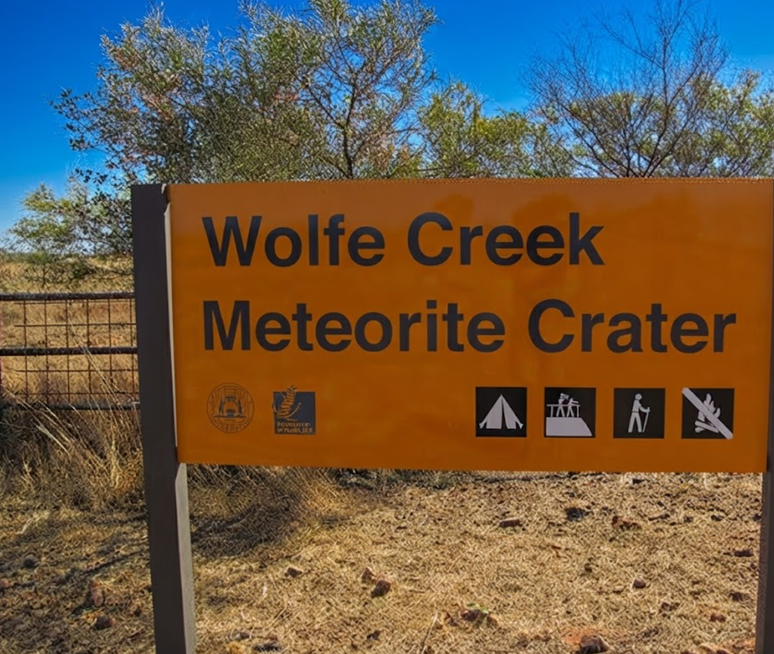
At the crater’s edge, the land opens into vastness. A rocky trail loops 4.5 kilometres around the rim, taking about two and a half hours. Good boots are essential — the path is uneven, the stones sharp, the heat relentless. From here, the view is endless: spinifex plains, desert shrubs, and the faint shimmer of heat rising from the Great Sandy Desert.
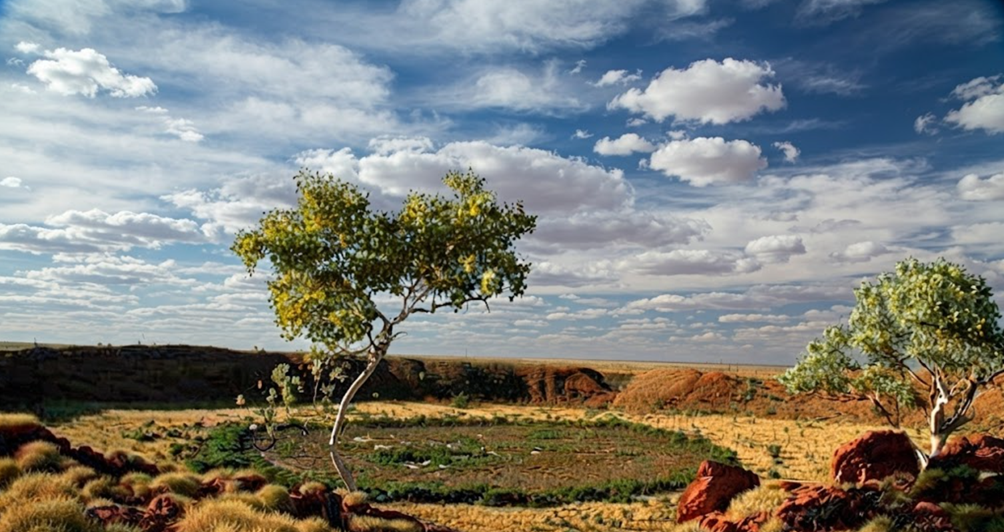
Descend to the crater floor and you’ll find salt wattles feeding nomadic birds — honey eaters darting through the scrub, Major Mitchell cockatoos flashing pink and white against the ochre. Red kangaroos move through the grasses, while brown ringtail dragons cling to the crater wall. Life persists even here, in the dry silence, adapted to extremes.
Nights Beneath the StarsThe campground is simple: bush toilets, picnic tables, no water. Survival here is part of the thrill. As dusk falls, the desert sky deepens into velvet. Stars ignite one by one, until the heavens are ablaze. To spend a night here is to feel the immensity of both Earth and cosmos — the crater below, the universe above.
On quiet nights, the campground empties, leaving you alone with the crater. The silence is profound, broken only by wind across spinifex or the cry of a cockatoo. The outback sky is unpolluted, clear, and infinite. Stargazing here is unforgettable — a reminder of the meteorite that once fell, and of the countless others still burning above.
Fast Facts
Location: 150 km southwest of Halls Creek, Kimberley region, Western Australia.Facilities: Basic camping area, bush toilets, information shelter. No water — stock up in Halls Creek.
Access: Via Tanami Road; 4WD recommended. Dry season travel only.
Activities: Rim walk (4.5 km loop), crater floor hike, stargazing.
Wildlife: Red kangaroos, ringtail dragons, honey eaters, Major Mitchell cockatoos.
The Crater’s Presence
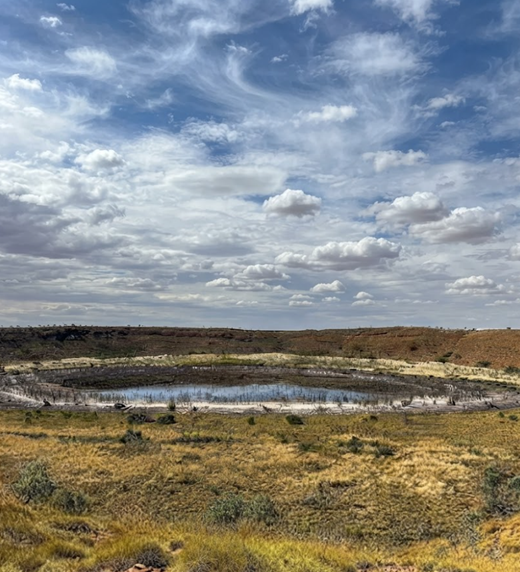
Wolfe Creek Crater is more than a geological marvel. It is a place where the desert holds its breath, where the past presses close, and where the night sky reminds you of both destruction and wonder. To stand at its rim is to feel small, to sense the weight of time, and to glimpse the vastness of forces beyond human scale.