
A Castle That Breathes Nature
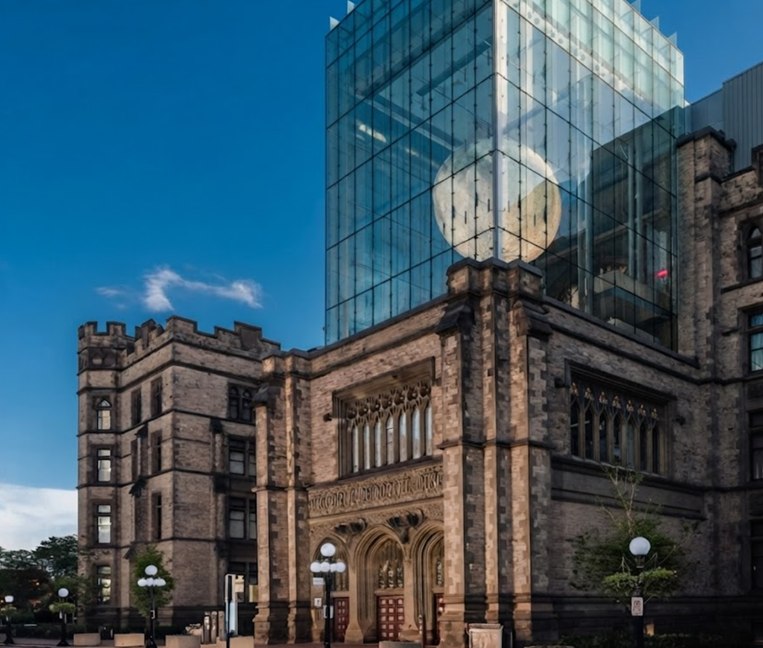
Ottawa’s skyline is punctuated by Parliament Hill, but just a few blocks away rises another landmark—one that feels less political and more poetic. The Canadian Museum of Nature, housed in a Revival “castle,” is a heritage building that seems to whisper of secrets within. Its turrets and towers, carved from stone, are not merely architectural flourishes; they are gateways into worlds of discovery.
Walking up to the entrance, you sense the building’s dual identity: part fortress, part sanctuary. It is a place where the past and present converge, where fossils, minerals, and living creatures are not just displayed but celebrated. The museum is more than an institution—it is a living atlas of Earth’s story.
Fossil Gallery: Shadows of Giants
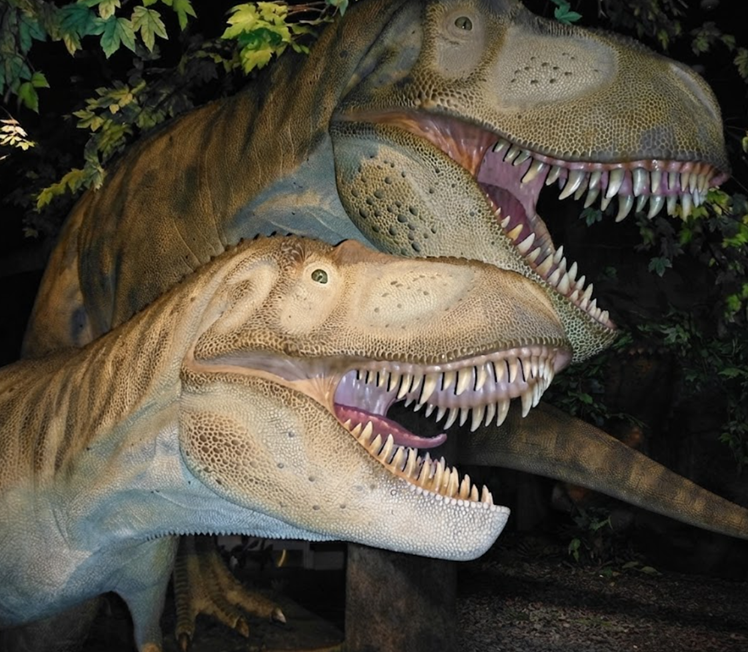
Step inside and the first encounter is with time itself. The Fossil Gallery is a cathedral of bones, where skeletons of dinosaurs tower overhead. The Tyrannosaurus rex looms with jaw agape, its bite force once the most powerful of any land animal. Nearby, the triceratops spreads its horns in silent defiance.
Here, the air feels charged with ancient energy. Children crane their necks upward, adults linger in awe. Over 80% of the specimens are authentic, their fossils carrying the weight of millions of years. The gallery is not just about spectacle—it is about perspective. To stand among these giants is to realize how fleeting human history is compared to the vastness of Earth’s timeline.
Water Gallery: Oceans Unveiled
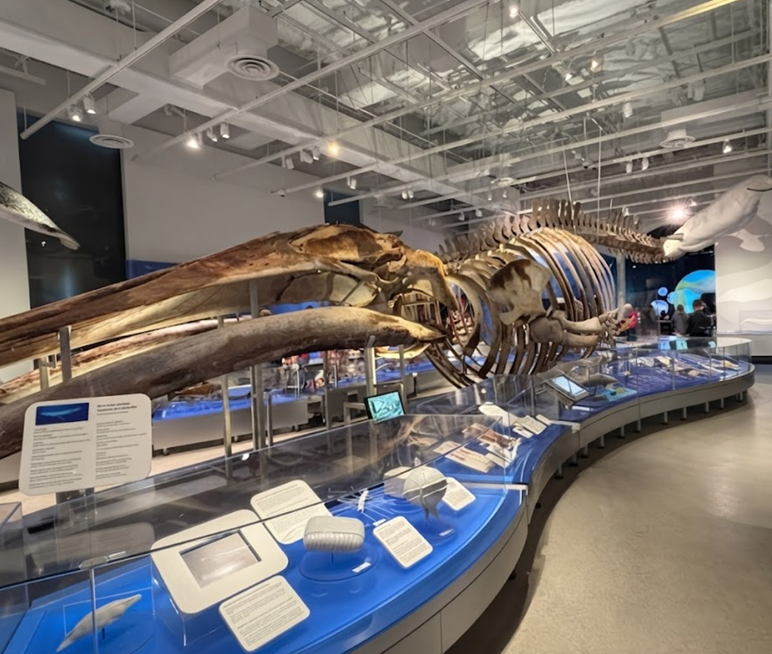
From stone to sea, the Water Gallery plunges visitors into aquatic mysteries. Bioluminescent jellyfish pulse with ghostly light, while sharks glide in suspended motion. The centerpiece is the skeleton of a blue whale—the largest animal ever to live on Earth—stretching across the hall like a cathedral nave.
Interactive exhibits reveal how ocean currents shape climate, how ecosystems balance precariously, and how much remains unknown. More than 80% of the ocean is unexplored, a statistic that hangs in the air like a challenge. The gallery is both wonder and warning: a reminder that the sea is vast, fragile, and essential.
Pacific Discovery Pool: Touching the Tide
At the heart of the Water Gallery lies the Pacific Discovery Pool. Here, curiosity is tactile. Children dip their hands into saltwater to touch starfish, sea urchins, and sea cucumbers. Adults, too, lean close, rediscovering the thrill of contact.
The pool is not just an exhibit—it is an invitation. To touch a starfish and know it can regenerate a lost arm is to glimpse resilience in its purest form. Every interaction becomes a story, every touch a bridge between human and marine life.
Mammal Gallery: Wildly Canadian
The Mammal Gallery is a panorama of habitats. Dioramas recreate forests, tundras, and plains, each populated by life-size specimens. Wolves stand poised in mid‑stride, caribou gather in herds, and beavers—the national animal—wait beside felled trees.
The gallery is immersive, but it is also intimate. Each display is a vignette of adaptation, showing how mammals survive and thrive across Canada’s diverse landscapes. Did you know a beaver can fell a tree in a single night? Such facts punctuate the experience, grounding awe in reality.
Earth Gallery: Minerals and Moonlight
The Earth Gallery is a kaleidoscope of color. Over a thousand minerals and rocks shimmer under lights, their crystalline structures dazzling the eye. Among them rests a moon rock from Apollo 17—a fragment of another world, quiet yet monumental.
Interactive stations invite visitors to create miniature volcanoes, simulate earthquakes, and explore limestone caves. The gallery is alive with activity, yet beneath the play lies profound truth: Earth is dynamic, restless, and endlessly creative. Tectonic plates shift continents, minerals grow silently, and geology shapes the stage upon which life unfolds.
Live Bug Gallery: Insects at Work
Tiny creatures take center stage in the Live Bug Gallery. Colonies of ants tunnel industriously, stick insects vanish into camouflage, and beetles shimmer with iridescence.
Here, insects are revealed not as nuisances but as engineers. They pollinate, recycle, and sustain ecosystems. Interactive demonstrations highlight their diversity and importance. Did you know some beetles produce light through bioluminescence? In this gallery, the overlooked becomes extraordinary.
Bird Gallery: A Festival of Feathers
The Bird Gallery is a chorus of wings. Over 500 specimens line the space, each frozen mid‑song or mid‑flight. Visitors learn to recognize calls, admire plumage, and trace migratory paths.The great blue heron, standing up to 1.4 meters tall, commands attention. Yet smaller birds—warblers, finches, sparrows—remind us of the delicate threads that weave ecosystems together. The gallery is both archive and celebration, a festival of feathers that honors avian diversity.
Arctic Gallery: A World of Ice and Snow
Cold air seems to seep from the walls of the Canada Goose Arctic Gallery. Polar bears, narwhals, and Inuit traditions immerse visitors in the stark beauty of the North.The gallery is not just about survival—it is about adaptation. First Peoples’ ingenuity in clothing, shelter, and hunting reveals resilience in the face of extremes. Did you know polar bears can swim over 100 kilometers in search of food? Such facts underscore the harshness of the Arctic, but also its majesty.
Behind the Scenes: Collections and Research
Beyond public galleries lies a quieter world. The museum cares for 15 million specimens—fossils, minerals, plants, and animals. Researchers study them in labs and fields, piecing together Earth’s story. Their work flows outward through the Science Blog, where biodiversity, Arctic studies, and ornithology are shared.
The museum’s library in Gatineau preserves 35,000 books and rare volumes, linking Canada’s natural history to the global Biodiversity Heritage Library. Knowledge here is treated as an ecosystem—fragile, interconnected, and vital. Just as species depend on one another, so too does information. To lose a book or a specimen is to weaken the network of understanding.
Practical Details
Where: 240 McLeod Street, Ottawa
When: Mon–Wed 9:30–5; Thu 9:30–8; Fri–Sun 9:30–5
Admission: Free for children, youth, and Indigenous peoples; adults $12–24; seniors $19. Free Thursdays 5–8 p.m.
Why It Matters
The Canadian Museum of Nature is not just a museum—it is a journey. It is a place where dinosaurs remind us of time’s immensity, where minerals shimmer with Earth’s quiet power, where insects reveal hidden genius, and where oceans whisper of mysteries yet unsolved.It is also a place of responsibility.
Biodiversity is fragile, ecosystems are strained, and knowledge must be preserved. The museum does not simply display nature—it defends it, studies it, and shares it.For families, it is adventure. For scientists, it is evidence. For travelers, it is wonder. And for all, it is a reminder: nature is not separate from us—it is us.