
The Bruce Trail begins at the Niagara River, its white blazes leading hikers into the gorge where limestone cliffs rise and the roar of water never fades. This is the southern gateway to Canada’s oldest and longest marked trail, and the Niagara Glen section is where many hikers first feel the rhythm of the escarpment.
Stretching more than 900 km from Niagara to Tobermory, the Bruce Trail is a pilgrimage through geology, forest, and history. But here, at Niagara Glen, the journey begins with immediacy: a descent into stone and forest, a dialogue with roots and rock, and a reminder that hiking is not just movement but meaning.
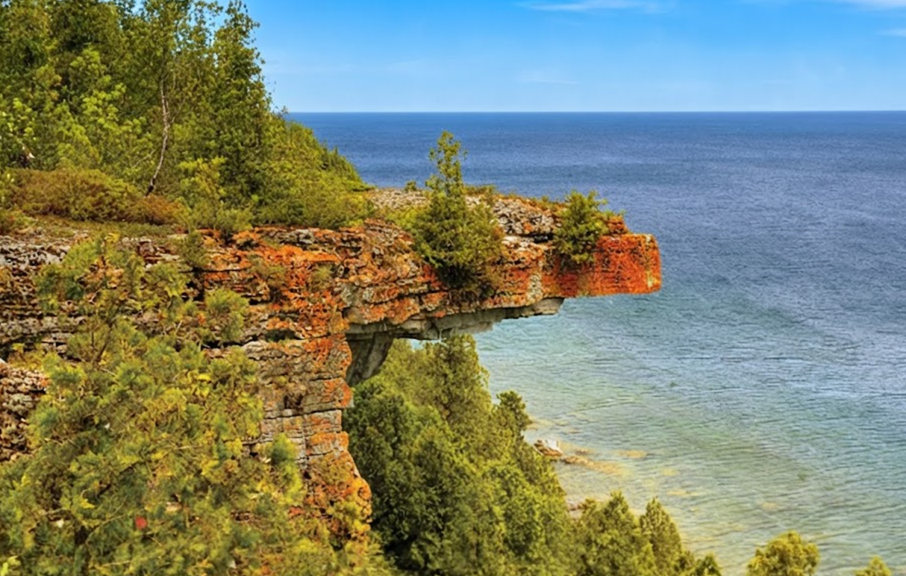
Into the Glen — The Descent
The trailhead sits at the Niagara Glen Nature Centre, perched above the gorge. From here, stairs cut into the slope carry you downward, away from the bustle of the Parkway and into a forest that feels older than memory. Roots twist across the path, boulders lie scattered like forgotten relics, and the canopy filters sunlight into shifting green.
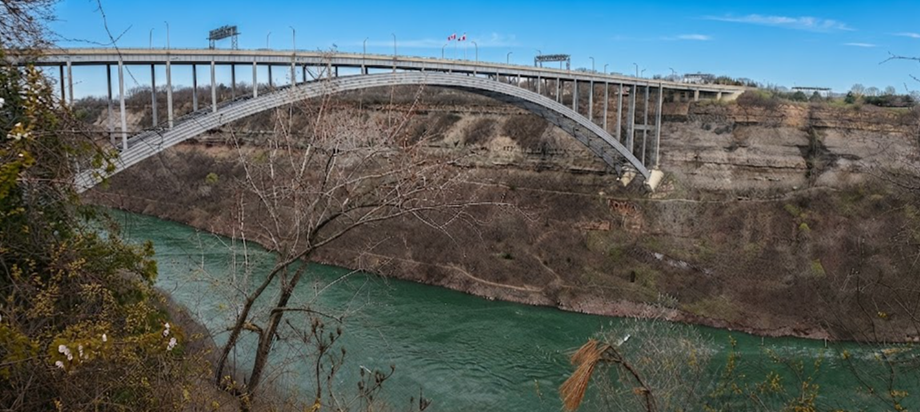
The air is cool, damp, touched by the river. Every turn reveals geology in motion: dolostone ledges, fossil‑rich limestone, and gorge walls carved by ice and water. The trail is rugged, uneven, demanding focus. Yet it rewards with glimpses of the Niagara Whirlpool, its currents swirling in hypnotic patterns.
Trail Rhythm — Loops and Ledges
The Bruce Trail here is not a straight line but a weave of loops and side paths. You follow blazes through narrow corridors, scramble over rock, and pause at overlooks where the river bends. The terrain is technical—rocky, rooted, steep in places—but manageable for those willing to move slowly, deliberately.
Hiking Niagara Glen is less about distance (just 4 km of trail) and more about immersion. Each step feels like a dialogue with stone and forest, each pause a chance to listen to the river’s constant voice.
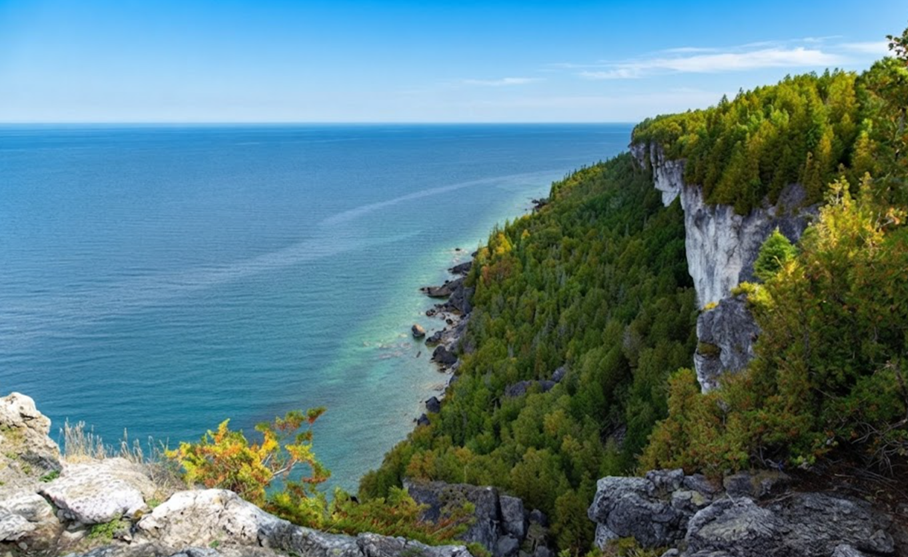
Atmosphere of the Glen
Summer brings crowds—families exploring short loops, trail runners weaving through roots, photographers chasing light across the gorge. The trail hums with energy, voices mingling with birdsong. In autumn, the forest burns with colour. Maples flare red, oaks turn gold, and the gorge feels alive with fire.
Winter strips the leaves, leaving bare stone and ice, the trail quieter, harsher, but no less beautiful. Spring is renewal—wildflowers pushing through soil, water rushing high, the forest damp and fragrant. Each season reshapes the Glen, offering a different rhythm, a different mood.
Hiking Stats
Distance: ~4 km of trails within Niagara Glen, connected to the Bruce Trail.
Difficulty: Moderate — rocky, rooted, uneven terrain.
Time Required: 1–3 hours depending on chosen loop.
Trailhead: Niagara Glen Nature Centre, Niagara Parkway.
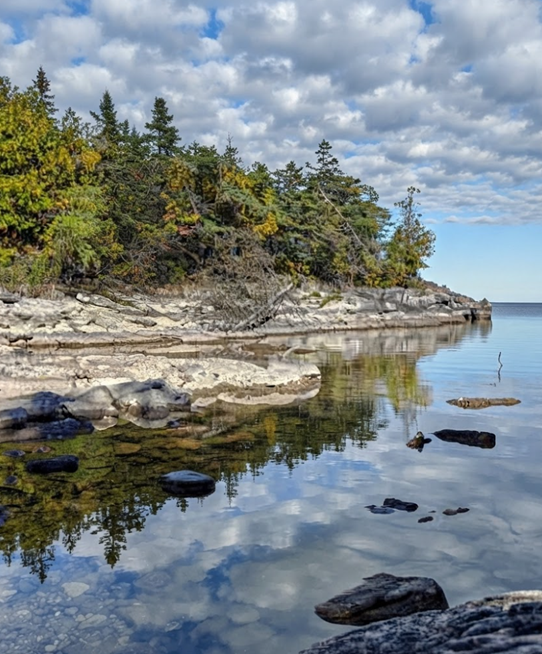
The Escarpment’s Story Beneath Your Feet
The Niagara Glen is more than scenery—it is geology exposed. The Niagara Escarpment is a ridge of dolostone and limestone formed hundreds of millions of years ago. Here, glaciers carved the gorge, leaving cliffs and boulders that now shape the trail.
Walking the Glen is walking through time. Fossils lie embedded in stone, remnants of ancient seas. The cliffs rise like walls, their strata visible, their colours shifting from grey to ochre. The trail is a classroom without walls, teaching geology through experience.
The Whirlpool Overlook
One of the highlights of the Niagara Glen section is the overlook of the Niagara Whirlpool. The river bends sharply, currents collide, and water spins in a vast, hypnotic circle. Standing here, you feel both awe and humility—the power of water, the persistence of stone, the scale of forces beyond human control.
The overlook is a reminder that hiking is not just about movement but about perspective. The trail leads you to places where the world feels larger, older, and more alive.
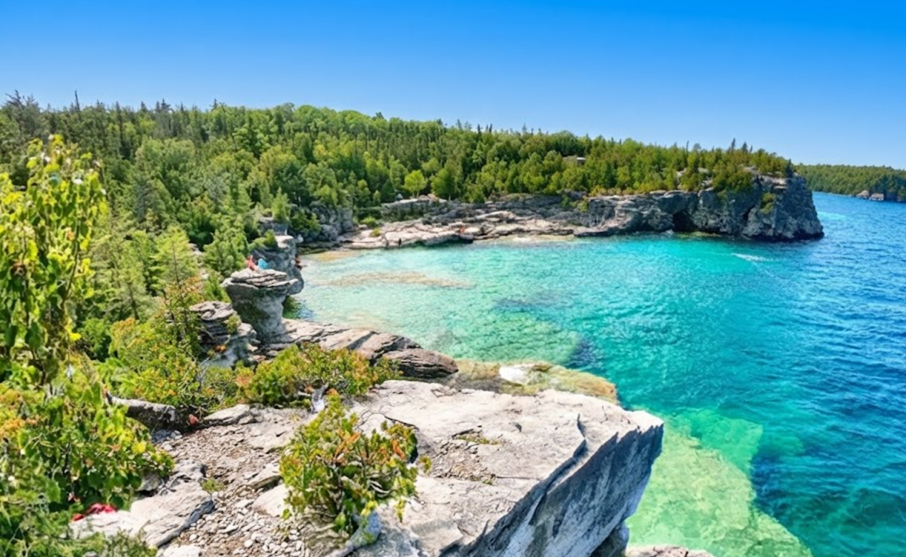
Hiking Atmosphere — A Seasonal Journey
Summer: Crowded, vibrant, alive with voices and footsteps.
Autumn: Fiery colours, crisp air, quieter trails.
Winter: Bare stone, icy paths, solitude.
Spring: Renewal, wildflowers, rushing water.
Each season reshapes the Glen, offering a different rhythm, a different mood.
Beyond Niagara Glen — The Bruce Trail’s Larger Journey
While Niagara Glen is a short section, it is part of a much larger story. The Bruce Trail runs north along the escarpment, through conservation areas, forests, and towns. Each section offers its own character: waterfalls near Hamilton, rugged climbs in the Blue Mountains, windswept cliffs near Tobermory.
For many hikers, Niagara Glen is the beginning of a longer journey—an introduction to the escarpment’s rhythm, a first step toward the challenge of end‑to‑end hiking.
A Day in the Glen — Sensory Vignettes
Morning: The trail is quiet, dew clings to leaves, and the forest smells of earth. Footsteps echo on stone stairs, and the river’s roar grows louder as you descend.
Midday: Sunlight filters through canopy, dappling rock. Families pause at overlooks, children peer into the whirlpool, and trail runners move swiftly past.
Afternoon: Shadows lengthen, colours deepen. The forest feels older, quieter. The trail demands focus—roots, rocks, uneven ground.
Evening: The gorge cools, air dampens, and the river glows silver in fading light. The climb back to the Nature Centre is steep, lungs burn, but the day feels complete.
Why Niagara Glen Matters
The Niagara Glen section is short, but it is iconic. It introduces hikers to the Bruce Trail’s essence: rugged terrain, geological wonder, and constant proximity to water. It is a place where the escarpment reveals itself in miniature—cliffs, forest, river, all compressed into a few kilometres.
For many, this is the first step on a journey that stretches 900 km north to Tobermory. For others, it is a destination in itself, a chance to stand in the gorge and feel the weight of history beneath their feet.