
A Canyon That Speaks
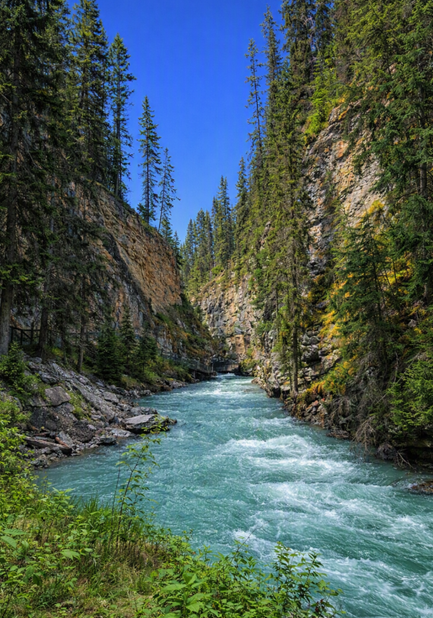
In Banff National Park, some landscapes whisper, others roar. Johnston Canyon does both. It is one of the park’s most accessible natural wonders, a place where steel catwalks cling to limestone walls, waterfalls thunder through narrow chasms, and mineral springs bubble in alpine meadows.
Located 25 kilometers west of Banff townsite along the Bow Valley Parkway, Johnston Canyon is not just a hike — it is a layered experience, a journey through sound, stone, and water.
The Trailhead — Gateway to Spectacle
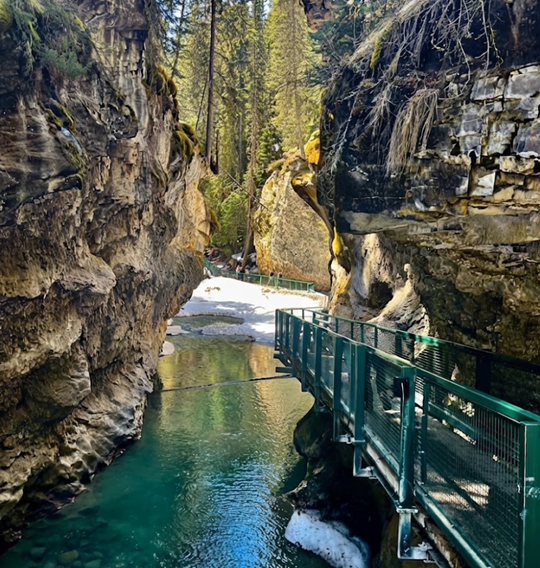
Arriving at Johnston Canyon, the first impression is scale. The day‑use area is vast, with paved parking for over 100 vehicles, flush‑toilet facilities, and overflow lots. Popularity has shaped this place: investment in infrastructure, wide paths, and railings that make the canyon accessible to families, strollers, and casual walkers.
The trail begins beneath a timber archway, a ceremonial entrance into a world carved by Johnston Creek. Signs warn, advise, and welcome. Soon, the canyon swallows you — walls rising, water rushing, catwalks suspended above the torrent.
Lower Falls — Intimacy in Stone
The Lower Falls are reached after 1.2 km, with only 50 m of elevation gain. The approach offers elevated views before you descend toward the creek.Here, a narrow iron bridge crosses the water to a rock landing. A short tunnel through the canyon wall delivers you to a fenced ledge, mist on your face, the roar of the falls filling your ears. It is intimate, visceral, and crowded.
Expect to wait — in summer, queues stretch across the bridge. Yet the moment you stand before the cascade, spray cooling your skin, the wait feels worth it.
Upper Falls — Drama and Scale
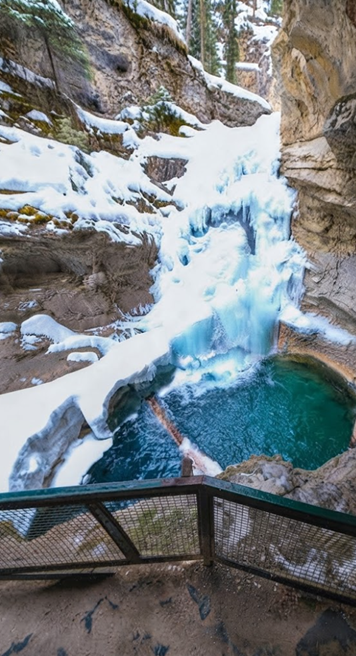
Continue another 2.7 km and the canyon deepens. The Upper Falls rise 30 metres, a twin waterfall plunging into a pool below. Two viewpoints await: one at the base, where the water crashes with force, and one higher, where you look down upon the torrent. The trail here is steeper, less paved, with 120 m of elevation gain.
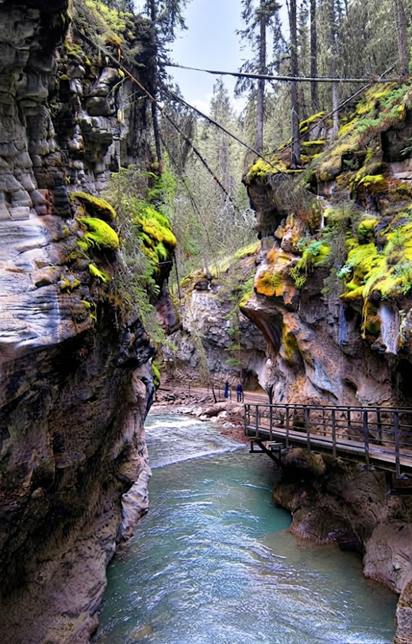
Catwalks cling to rock, bridges span rushing water, and the canyon narrows into stone corridors. The Upper Falls are more dramatic than the Lower, though less intimate — grandeur replaces closeness.
The Ink Pots — Serenity Beyond the Roar
Beyond the Upper Falls lies a quieter world. The Ink Pots are reached after a 5.8 km climb (11.6 km round trip). Here, seven mineral springs bubble into shallow pools, their waters shimmering green and blue.The meadow is serene, framed by forest and mountains.
Crowds thin, voices fade, and the canyon’s roar gives way to alpine silence. It is a place to linger, to watch water rise from deep within the Earth, to feel time slow.
Atmosphere of the Canyon
Morning: Cool air, fewer crowds, sunlight filtering through canyon walls.
Midday: Trails busy, bridges crowded, waterfalls roaring with snowmelt.
Evening: Shadows deepen, the canyon quiets, and the creek glows silver.
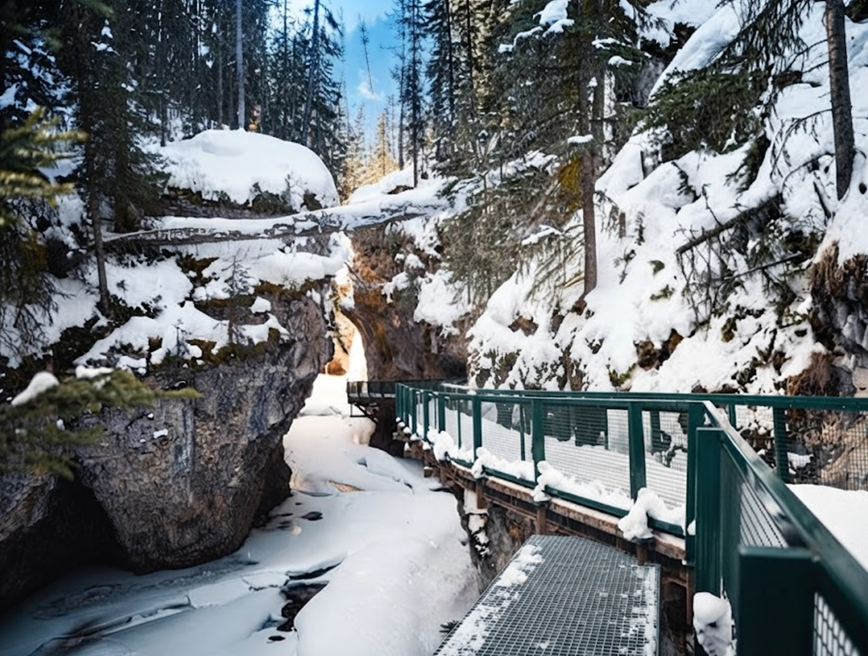
Winter: Frozen waterfalls transform the canyon into a cathedral of ice.
Unique Features
Catwalks: Steel walkways bolted into rock, carrying you above rushing water.
Travertine curtain: Near the Upper Falls, mineral deposits create formations reminiscent of Yellowstone’s Mammoth Hot Springs.
Additional waterfalls: Stella Falls, Tunnel Falls, and unnamed cascades line the canyon, each worth pausing for.
Seasonal Rhythm
Summer: Lush greenery, vibrant waters, heavy crowds.
Autumn: Quieter trails, golden leaves, crisp air.
Winter: Ice climbers ascend frozen waterfalls; hikers tread snowy paths.
Spring: Snowmelt swells Johnston Creek, Bow Valley Parkway closes to vehicles, access rerouted via Castle Mountain interchange.
Practical Notes
Trailhead: Johnston Canyon Day‑use Area, across from the campground and next to Johnston Canyon Lodge & Bungalows.
Parking: Large paved lot with overflow areas; over 100 vehicles accommodated.
Difficulty: Easy to moderate; paved paths and catwalks make it accessible to most.
Crowds: Arrive early or in shoulder seasons for quieter experiences.
Johnston Canyon in Context
Banff National Park is filled with iconic hikes — Lake Agnes Tea House, Plain of Six Glaciers, Sulphur Mountain. Johnston Canyon stands apart for accessibility and spectacle. It is a hike where geology is revealed not in silence but in roar, where infrastructure makes wonder available to all. Johnston Canyon is best understood as three acts:
Lower Falls — intimacy. Mist on your face, roar in your ears, closeness to water.
Upper Falls — grandeur. Scale, drama, twin cascades plunging into stone.
Ink Pots — serenity. Mineral springs, alpine meadow, silence after spectacle.
Together, they form a narrative arc: close, dramatic, tranquil.
Why Johnston Canyon Endures
Johnston Canyon is Banff’s living story of water and stone. Catwalks cling to canyon walls, waterfalls roar with ancient force, and mineral springs shimmer in alpine meadows. It is crowded, yes, but also unforgettable — a hike that balances accessibility with awe, intimacy with grandeur, and spectacle with serenity.
To walk Johnston Canyon is to experience geology as theatre. It is a canyon that speaks, sometimes whispering, sometimes roaring, always reminding you that water and time shape everything.