
Introduction
Manitoulin Island is not simply a place on the map—it is a living spirit. Nestled in the sparkling waters of Lake Huron, it holds the distinction of being the largest freshwater island in the world. Known in Ojibwe as “Spirit Island,” it is a land where rivers carry salmon upstream, cliffs rise into panoramic vistas, and waterfalls tumble into gorges.
It is also home to six Anishinaabe First Nations communities, where heritage and tradition shape the rhythm of daily life. For visitors, Manitoulin is a sanctuary of contrasts: rugged yet gentle, adventurous yet tranquil, deeply rooted in Indigenous culture yet open to exploration. It is a destination where families, hikers, and dreamers alike can find connection—to nature, to history, and to themselves.
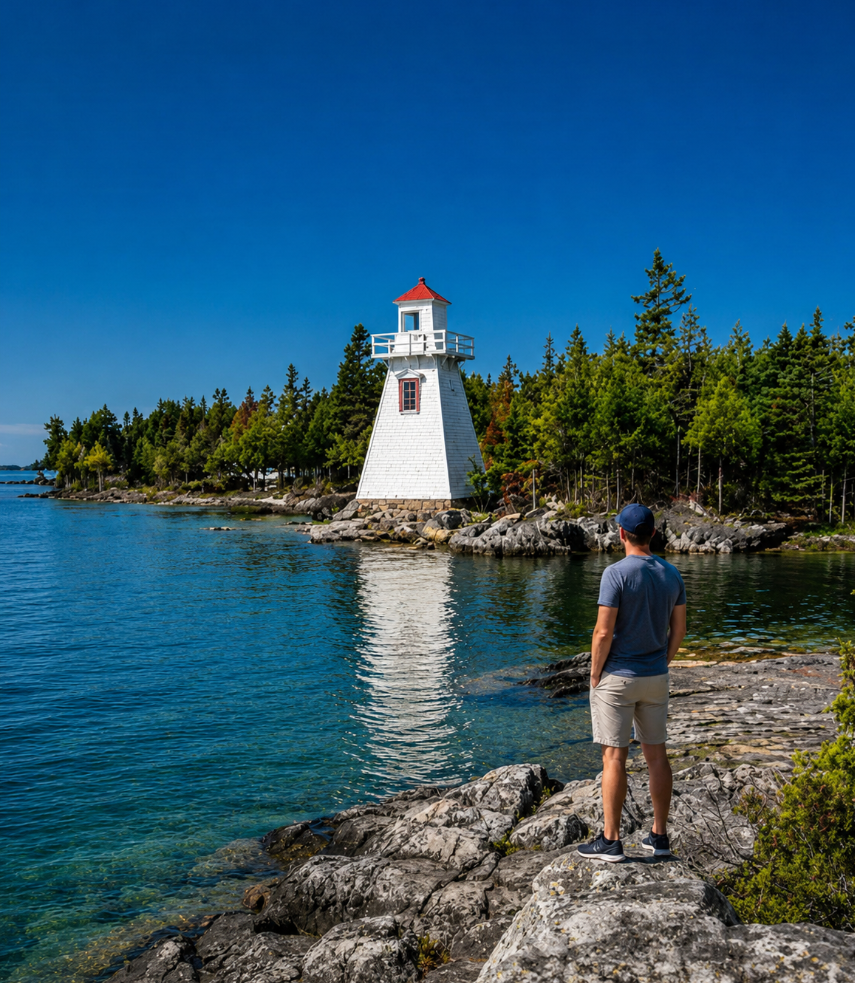
Arrival: Crossing Into Spirit Island
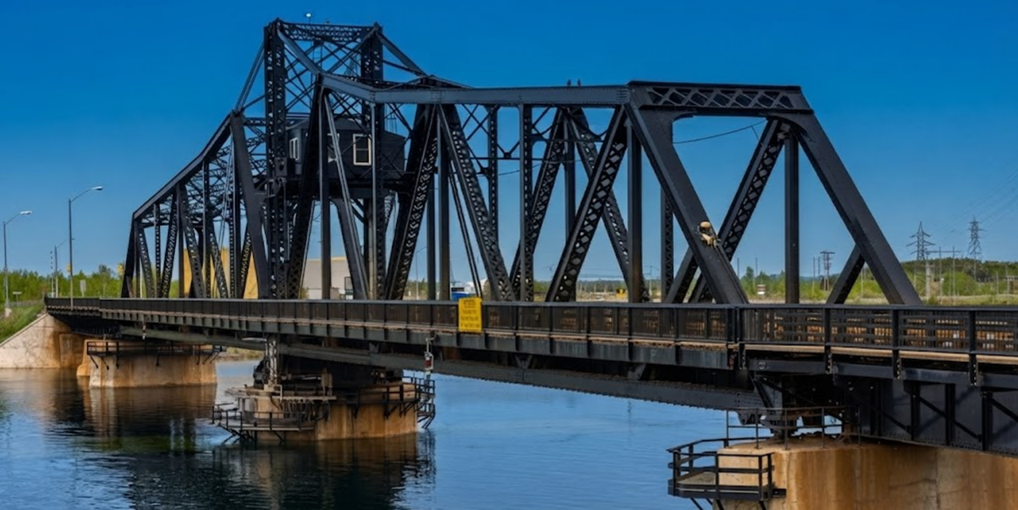
The journey to Manitoulin is part of its magic. From Sudbury, travelers cross the Little Current Swing Bridge, a two‑hour drive that feels like a passage into another world. In summer, the MS Chi‑Cheemaun ferry sails from Tobermory across Lake Huron, its decks alive with anticipation.
Children watch the horizon and everyone feels the shift as the mainland recedes and the island rises ahead. Geographically, Manitoulin separates the larger expanse of Lake Huron from Georgian Bay and the North Channel. It is best explored by car or motorcycle, each curve of road revealing new vistas—forests, shorelines, and skies that seem endless.
Cup and Saucer Trail: Clifftop Adventure
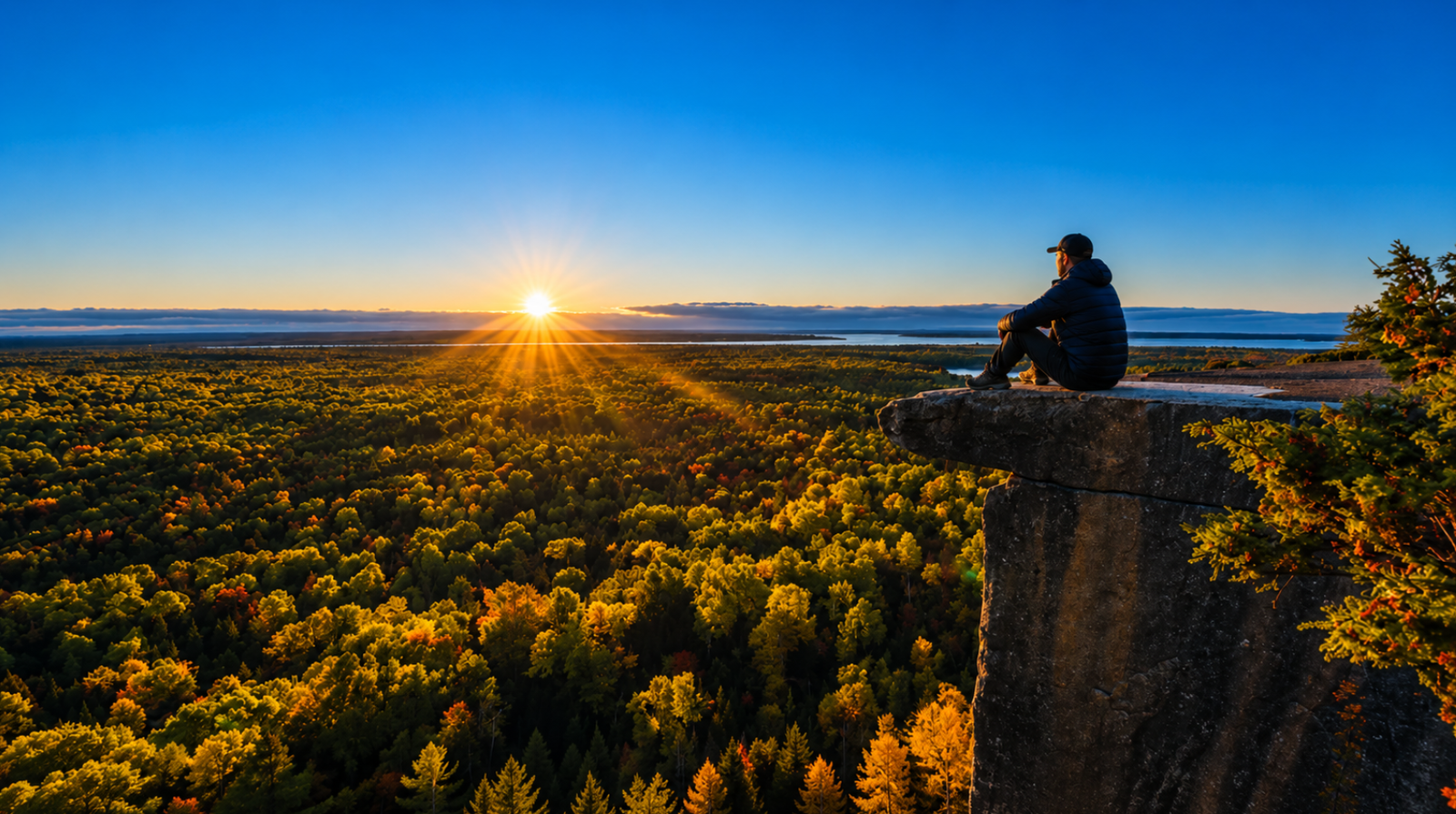
Named for its unique rock formations, the Cup and Saucer Trail is one of Ontario’s most iconic hikes. The path winds through deciduous forest, climbing steadily toward cliffs that tower 70 metres above the island. At the lookout, the world opens: panoramic views of Manitoulin, Lake Huron, and smaller inland lakes. The trail is both challenge and reward.
Muddy sections test your footing, rocky paths demand care, but the summit offers a perspective that lingers long after you descend. Hawks and eagles wheel overhead, woodpeckers drum in the trees, and the island stretches out in every direction. Families find adventure here, children scrambling over rocks, parents pausing to breathe in the vastness.
Bridal Veil Falls: Walking Behind the Cascade
Near Kagawong, Bridal Veil Falls tumbles 34 metres into a gorge, its sheet of water shimmering like a veil. A steel staircase leads down to the base, where families swim in the natural pool, water shoes protecting against sharp rocks. Trails circle the falls, offering views from every angle—even from behind the cascade itself. Photography here is irresistible.
Observation platforms frame the falls, while side trails reveal smaller cascades and wildflowers along the Kagawong River. Poison ivy lurks in places, a reminder to tread carefully. The river leads into Kagawong, “Ontario’s Prettiest Village,” where the Old Mill Heritage Centre tells stories of pulp mills and catalogues, now transformed into a museum and gallery. Exhibits are family‑friendly, donations welcome, and the village waterfront invites leisurely strolls.
Providence Bay Beach: Sand, Sun, and Sky
On the Lake Huron coast, Providence Bay Beach stretches for two kilometres, its white sand and clear waters drawing families to swim, play, and relax. The boardwalk spans the Mindemoya River, crossing dunes with elevated platforms that protect fragile ecosystems. Wheelchair‑accessible, it invites everyone to stroll, fish, and watch salmon run upstream.
Evenings bring sunsets that paint the sky in fire and gold. Live music drifts from nearby venues, fireworks light the horizon on Canada Day, and children play on the giant playground. Providence Bay is more than a beach—it is a gathering place, a celebration of summer.
Camping Under the Stars
Manitoulin offers countless camping options, from rustic sites to family‑friendly parks. Manitoulin Eco Park, a designated Dark Sky Preserve, is a favorite. Nestled in hardwood forest, it invites overnight stays beneath skies unspoiled by city lights. Stargazing here is profound—planets, constellations, and the Milky Way revealed in clarity.
Campfires crackle, stories are shared, and the night feels infinite. For families, it is both adventure and memory, a chance to sleep under stars and wake to birdsong.
Wildlife and Outdoor Adventures
Manitoulin’s landscapes are alive with creatures. Deer and moose move through forests, black bears roam quietly, and rivers teem with pike, bass, and salmon. Birdwatchers spot hawks, eagles, and songbirds along trails. Outdoor activities abound: canoeing the Kagawong River, biking quiet roads, fishing inland lakes, hiking cliffs and forests. Each experience is both recreation and connection, a way to step into the island’s rhythm.
Indigenous Culture and Heritage
Manitoulin is the traditional territory of the Anishinaabe, whose presence stretches back thousands of years. Visitors can learn at the Wikwemikong Heritage Centre and the M’Chigeeng First Nation’s Cultural Centre, where language, art, and history are preserved.
Powwows and cultural events throughout the year invite participation, offering glimpses into traditional crafts, songs, and dances. Respect is essential—travelers are guests on Spirit Island, welcomed into a living culture.
Kagawong and Beyond
Exploring Kagawong reveals more than waterfalls. The village waterfront is lined with shops and galleries, while the Old Mill Heritage Centre anchors history. From here, trails lead into forests, rivers, and hidden corners. Nearby, Providence Bay and Mindemoya offer beaches, boardwalks, and fishing platforms. Each community carries its own character, its own rhythm, its own invitation.
Practical Notes
Getting There: Two hours from Sudbury via Little Current Swing Bridge, or ferry from Tobermory.
Best Time to Visit: Summer, when waterfalls, beaches, and trails are most accessible.
Activities: Hiking, swimming, fishing, camping, photography, cultural exploration.
Highlights: Cup and Saucer Trail, Bridal Veil Falls, Providence Bay Beach, Manitoulin Eco Park.
Spirit Island
Manitoulin Island is more than the world’s largest freshwater island—it is a place where land, water, and culture converge. From waterfalls to beaches, trails to starlit skies, it offers families adventure and serenity in equal measure. It is Spirit Island, where rivers carry salmon, cliffs hold vistas, and communities share heritage. It is a place to hike, swim, camp, and learn. A place to slow down, to listen, to see.