
🌷Spring in the Netherlands is a season of anticipation. The skies soften, the winds carry a gentler chill, and the fields begin to stir with color. For centuries, tulips have been the country’s floral heartbeat, and nowhere is this more vividly celebrated than at Keukenhof Gardens.
Known as the Garden of Europe, Keukenhof is not simply a park—it is a fleeting spectacle, a living canvas that blooms for just eight weeks each year, and then disappears until the next spring.
A Seasonal Pilgrimage
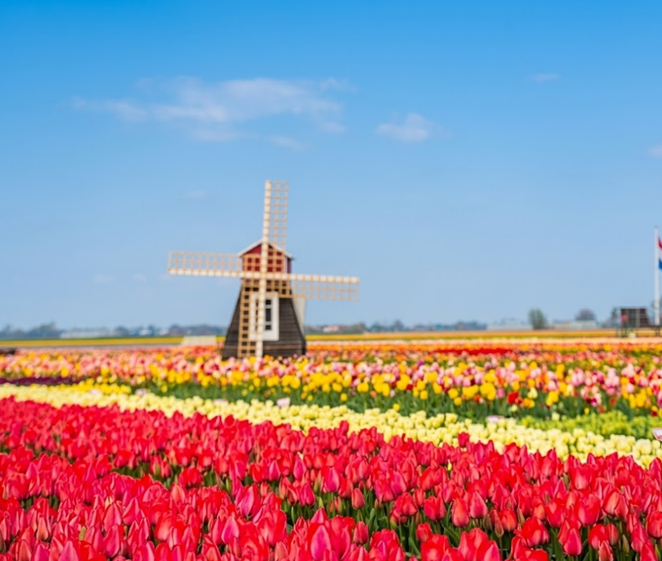
Keukenhof opens its gates in 2026 from Thursday, March 19 to Sunday, May 10. Every day, rain or shine, Easter or King’s Day, the gardens welcome visitors. More than one million people will pass through its entrance during this short window, drawn by the promise of seven million bulbs planted across 80 acres.
But timing matters. If you arrive in late March or early April, you’ll find crocuses, daffodils, hyacinths, and the first shy tulips. Beautiful, yes, but not yet the full symphony. The tulip crescendo comes in mid‑April through early May, when the iconic large tulips burst into bloom, painting the park in stripes of red, yellow, purple, and pink. This is the sweet spot, when Keukenhof becomes a kaleidoscope of color.
The First Impression
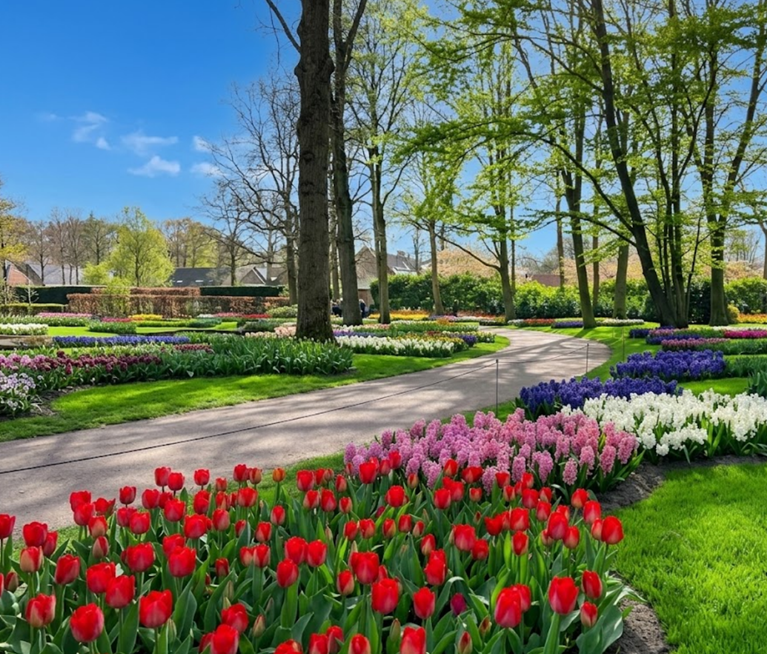
Walking into Keukenhof feels like stepping into a dream. The entrance, often crowded with tour buses, gives way to winding paths that lead into a world of blossoms. Suddenly, the noise fades, replaced by the rustle of leaves and the buzzing of bees.
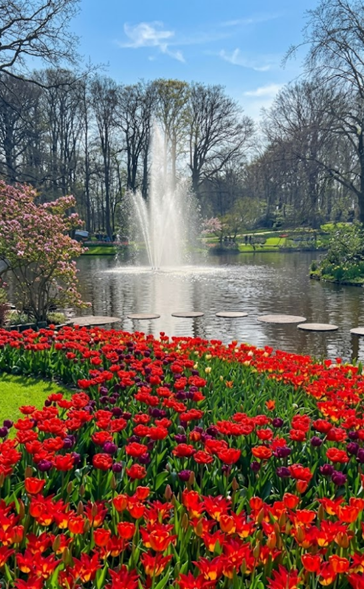
Everywhere you look, flowers spill across lawns and borders. Sculptures rise among the tulips, fountains sparkle in the sunlight, and pavilions invite you inside to see floral arrangements that rival art galleries. It is overwhelming at first—so much color, so much life—but soon you find yourself slowing down, breathing it in, letting the rhythm of the gardens guide you.
The Atmosphere
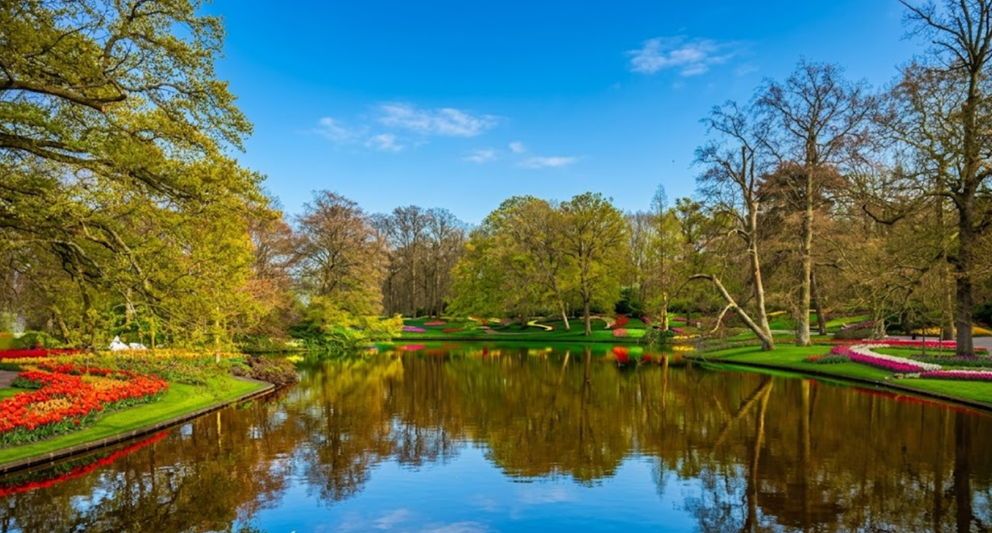
Keukenhof is vast, and yet intimate. Families push strollers along paved paths, children dart toward playgrounds and mazes, photographers crouch low to capture tulips against the sky. Couples linger by ponds, their reflections mingling with blossoms. The gardens are designed not just for looking, but for living.
There are benches tucked under trees, lawns perfect for picnics, and even a petting zoo where goats and rabbits delight younger visitors. It is a place where beauty meets play, where flowers are not distant exhibits but companions to your day.
The Whisper Boat
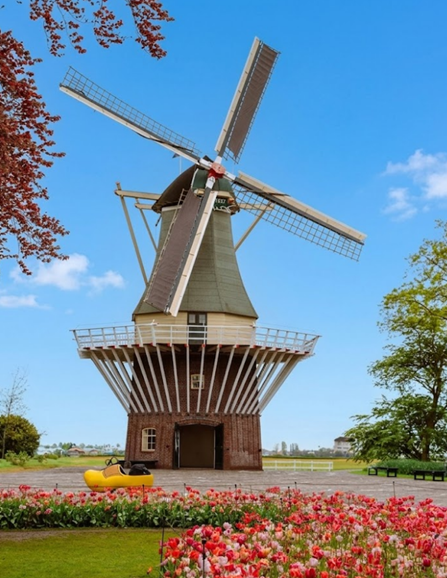
Near Keukenhof’s iconic windmill, you’ll find the dock for the Whisper Boat. This 45‑minute ride glides silently through the surrounding fields, powered by electricity. From the water, the tulip fields stretch endlessly, their colors mirrored in the canals.
It is a chance to see the flowers in their natural habitat, beyond the curated gardens, and to feel the Dutch landscape unfold around you. Tickets must be booked in advance, and punctuality matters—miss your slot, and you’re out of luck. But if you catch the boat, it becomes one of the highlights of the visit, a gentle journey through the countryside’s floral heartbeat.
Beyond the Gates
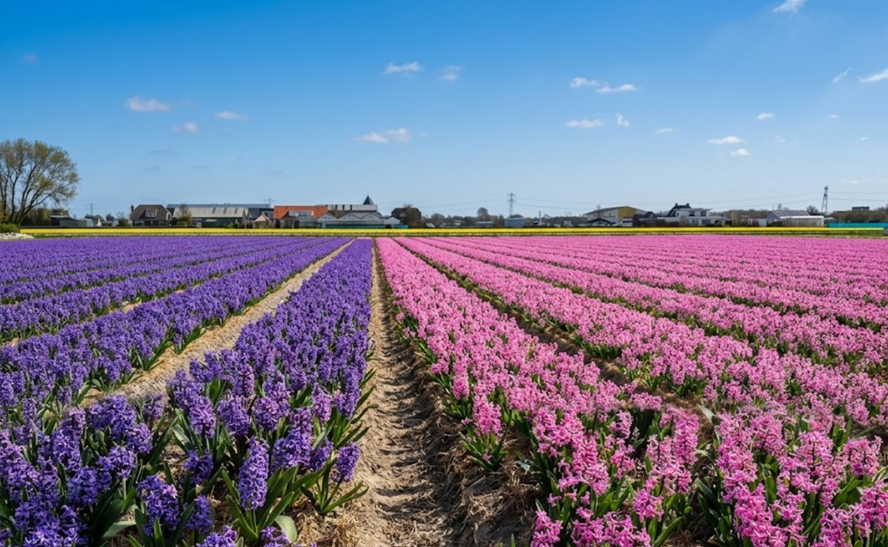
Keukenhof is spectacular, but the tulip fields outside the park are equally unforgettable. This is the Bollenstreek, the bulb‑growing region that stretches across Lisse and beyond. Rent a bike, and within minutes you’ll be pedaling past endless rows of tulips, daffodils, and hyacinths.
The fields are striped like rainbows, each row a different color, stretching toward the horizon. These are the photos you’ve seen on postcards—the wide Dutch skies above, the flowers below, and you in the middle, dwarfed by nature’s palette. It is here, outside the manicured paths of Keukenhof, that the tulip fields reveal their raw, breathtaking beauty.
Getting There
Keukenhof is about 30 minutes southwest of Amsterdam, and reaching it is easy:
Keukenhof Express Bus – Combo tickets include entry and round‑trip transport from Amsterdam Central, Schiphol Airport, Rotterdam, or A’dam Tower.
Driving: Parking costs €8 per car; buy your token with your ticket.
Cycling: Bike racks are plentiful at the entrance, and e‑bike charging is available.
Whether you arrive by bus, car, or bike, the journey itself feels like part of the experience, as the countryside begins to bloom around you.
Practical Tips
Arrive Early: The gardens get crowded, especially on weekends. Morning light is perfect for photos, and the paths are quieter.
Food & Breaks: Bring snacks for a picnic; there are plenty of benches and lawns.
Lockers: Free lockers at the entrance for small bags; larger luggage can be stored at the depot.
Dogs: Allowed on leash, one per person, but not inside pavilions.
Souvenirs: Tulip bulbs cleared for export are sold at Keukenhof and Schiphol Airport. Wooden tulips, clogs, and Delftware make charming keepsakes.
What to Wear
Spring in the Netherlands is beautiful but windy. Skip flimsy dresses. Avoid green—it blends into the scenery. Choose muted tones that let the flowers shine. Comfortable shoes are essential; you’ll walk miles on paved paths. Pack a light jacket for chilly breezes.
Family‑Friendly Features
Keukenhof is designed for families. Children can explore playgrounds, a maze, scavenger hunts, and interactive exhibits. The petting zoo offers a break from flower‑gazing, and the boat ride adds adventure. It’s not just a garden—it’s a hands‑on experience.
Parents appreciate the paved paths, perfect for strollers, and the abundance of rest areas. For children, the gardens become a playground of discovery, where flowers are not just admired but experienced.
The History
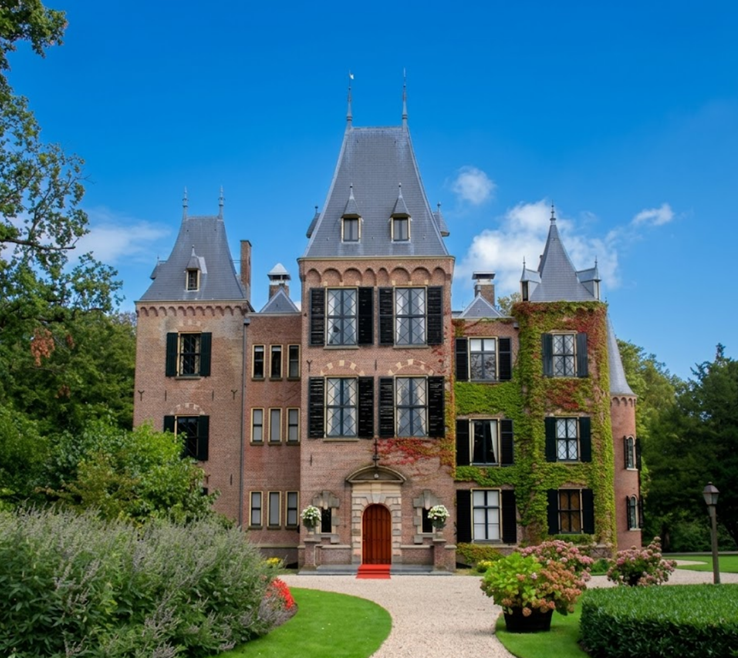
In the 19th century, landscape architects Jan David Zocher and his son redesigned the grounds in the English style, creating the foundation for today’s park. The modern Keukenhof opened in 1949, when a group of bulb growers decided to showcase their flowers. Since then, it has grown into one of the world’s largest flower gardens, a place where tradition and innovation bloom side by side.
The Tulip Mania Connection
Tulips are not just flowers in the Netherlands—they are history. In the 17th century, tulips sparked one of the world’s first economic bubbles. Prices soared, fortunes were made and lost, and when the bubble burst, tulips became a symbol of both beauty and folly. Keukenhof carries that legacy.
Each bulb planted here is a reminder of the flower’s place in Dutch culture, its role in shaping the country’s identity. Walking among the tulips, you feel that history beneath your feet, even as you marvel at their colors.
The Photographer’s Paradise
Keukenhof is a feast for photographers. Every turn reveals a new composition—rows of tulips leading into the distance, reflections in ponds, sculptures framed by blossoms. But patience is key. Popular photo spots often have lines, and the best shots come when you wait for the crowd to thin.
Early mornings and weekdays are ideal, when the light is soft and the paths are quieter. Remember to stay on the paths—stone walkways often run through flower beds, allowing you to step into the scene without damaging the blooms.
Souvenirs and Memories
Before you leave, consider picking up tulip bulbs or other souvenirs from the gift shops. Planting tulips at home can be a wonderful way to remember your visit for years to come. Wooden tulips, clogs, and Delftware carry the spirit of the Netherlands, while bulbs cleared for export ensure you can bring a piece of Keukenhof back with you.
And don’t forget the photos. Keukenhof is one of the most photographed places in Europe, and your images will become part of its story, a personal record of a fleeting season.
Final Thoughts
Keukenhof is more than a garden. It is a celebration of spring, a living canvas that blooms for just eight weeks and then disappears. It is history and beauty intertwined, a place where tulips tell stories of trade, tradition, and joy. Come for the flowers, stay for the atmosphere, and leave with memories that bloom long after the gates close in May.