
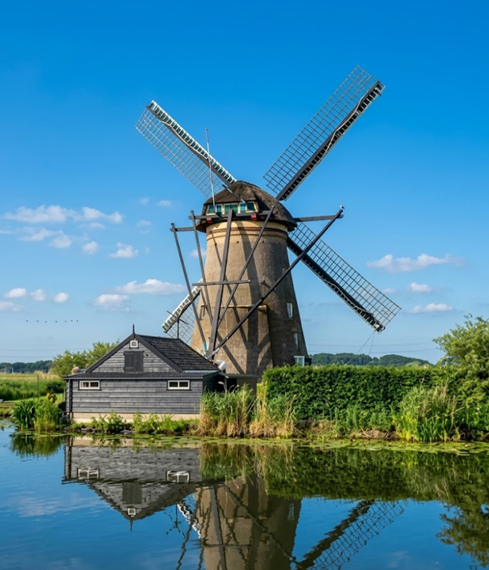
There are landscapes that tell stories, and then there are landscapes that are stories. Kinderdijk, a village just outside Rotterdam, is one of those places. Here, nineteen windmills rise above the canals, their sails sweeping slowly across the sky. They are not quaint ornaments or postcard props.
They are guardians, built to keep the land dry, to push water over dikes and into rivers, to make life possible in a country that lies largely below sea level. To walk among them is to step into the Dutch narrative of survival — a centuries-long battle against water, fought not with walls alone but with ingenuity, patience, and wind.
The Child’s DikeKinderdijk’s name carries a legend. In 1421, a devastating flood swept across the Netherlands, caused by a tidal surge from the North Sea. When the waters receded, survivors saw a cradle floating on the flood. A cat balanced on its edge, keeping it steady. Inside lay a baby, alive. The dike was named after this child — Kinderdijk, or “Child’s Dike.”
It is a story of resilience, of life carried forward against impossible odds. And it is fitting, for Kinderdijk itself embodies survival: a landscape engineered to resist the sea, a community built on the edge of water.
Windmills as Water Pumps
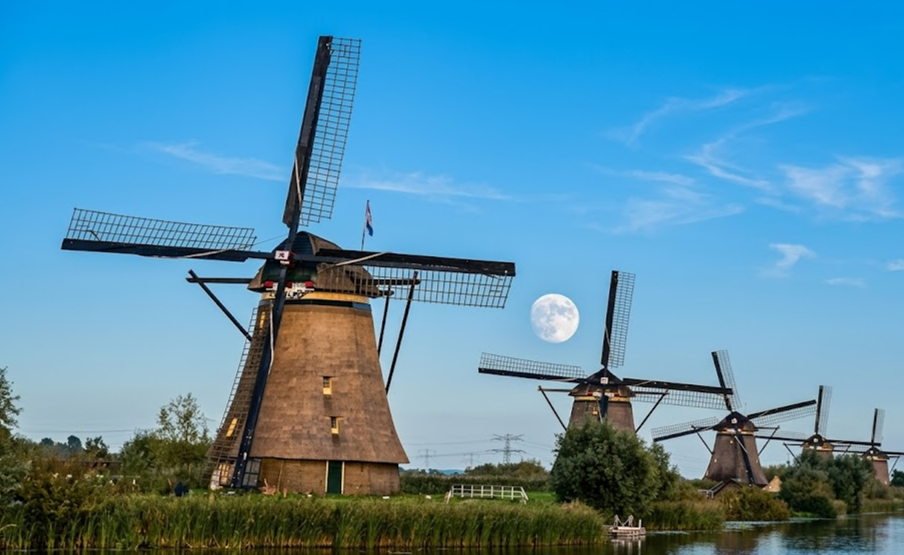
When most people think of windmills, they imagine grain being ground into flour. But the windmills of Kinderdijk had a different purpose. Built in 17th century, they were designed to pump water. Their task was monumental: to keep the Alblasserwaard polder dry, to push water into canals and rivers, and to make the land habitable.
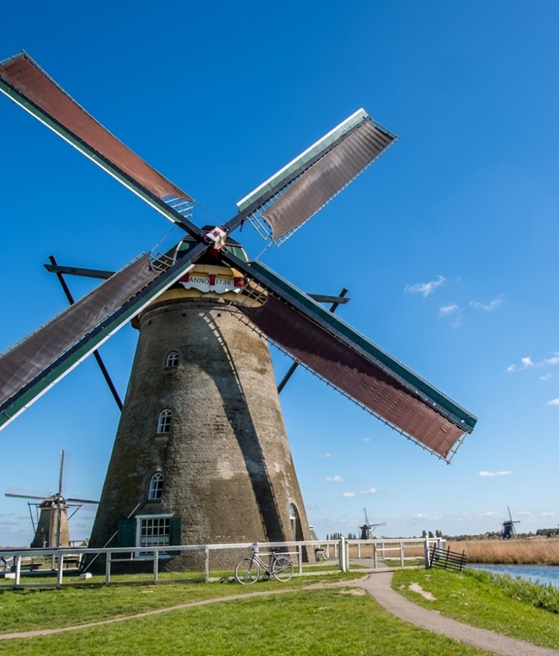
Arranged opposite each other along two canals, the mills form a striking pattern. Their sails turn slowly, harnessing the wind to drive pumps that lift water from lowlands into higher channels. Even today, they remain functional, though modern pumping stations now share the work.
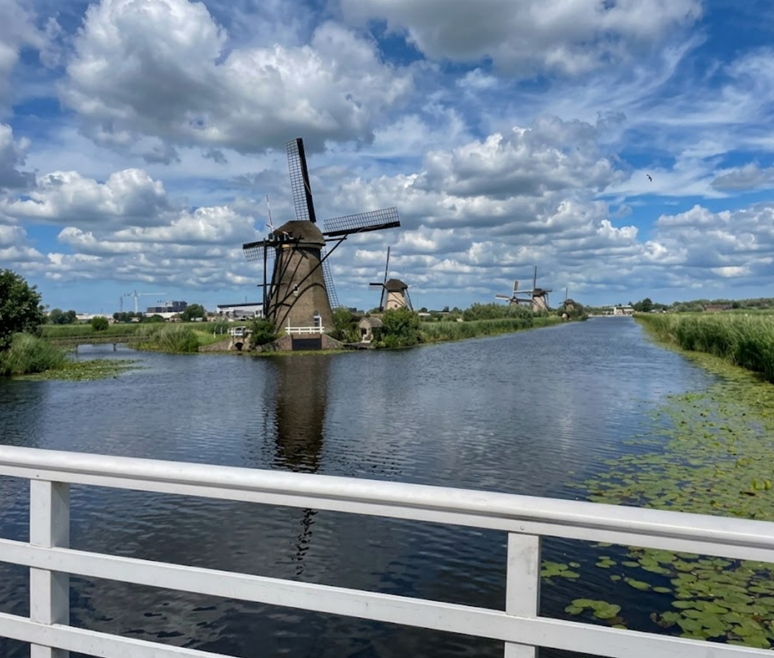
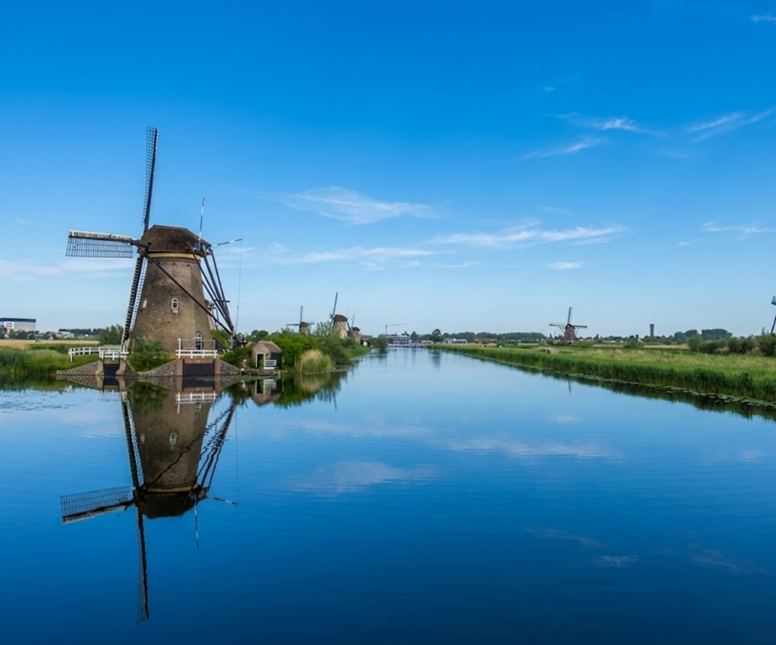
This is the largest collection of working windmills in the Netherlands, and perhaps the most iconic. Photographers flock here to capture their symmetry, their reflections shimmering in the water, their silhouettes rising against the sky.
Living Heritage
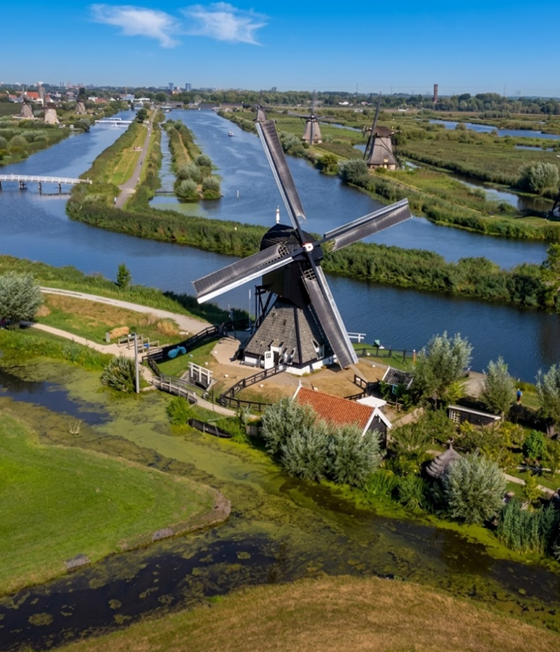
Most of the windmills are still homes. Families live inside, maintaining the mills and continuing traditions that stretch back centuries. This is not a museum frozen in time but a community, alive and functioning. Step inside one of the museum mills, and you glimpse life as it was. Narrow staircases, cramped rooms, the constant hum of machinery.
Furniture and photographs tell the story of families who lived here, balancing domestic life with the labor of keeping the land dry.
The Blokweer Museum Mill, built in 16th century, predates the others and offers a glimpse into an earlier era. The Nederwaard Museum Mill, constructed in 17th century, still works today, and inside you’ll find the belongings of the Hoek family who once lived there. These homes remind you that windmills were not just machines but dwellings, places where survival was lived daily.
Exploring Kinderdijk
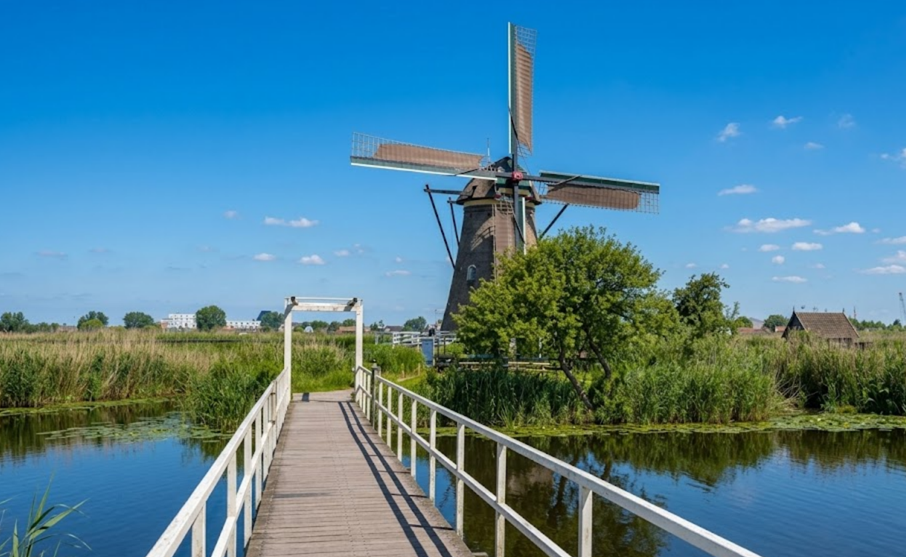
Entrance to Kinderdijk is free, and the site is open year-round. You can wander along the paths that run between the canals, admire the mills from the outside, and watch ducks and horses grazing nearby. But to truly experience Kinderdijk, you should step inside or take to the water.
Museum Mills: Three windmills are open to visitors, each offering a different perspective on life and work in Kinderdijk.
Wisboom Pumping Station: Built in 1868, this station shows the evolution of water management from wind to steam.
De Fabriek Auxiliary Pumping Station: Here, a multiscreen film tells the story of Kinderdijk, its history, and its name.
Boat Tours: For €5.50, you can glide along the canals, passing all nineteen mills. The ride lasts 25 minutes, leaving every half hour, and provides a perspective you cannot get from land.
Walking the path between the canals is equally rewarding. The canal bends halfway down, creating two long stretches of mills, their reflections shimmering in the water. Ducks paddle lazily, horses graze in the fields, and the air feels fresh and open.
Getting There
Kinderdijk lies just outside Rotterdam, about half an hour by car, and an hour and a half from Amsterdam. It is also accessible by bicycle, a scenic 15-kilometer ride from Rotterdam.The most atmospheric way to arrive is by waterbus. From the Erasmus Bridge in Rotterdam, line 202 runs four to five times a day between May and October, taking less than half an hour to reach Kinderdijk.
Tickets cost €2.73 with an OV chip card, or €4 in cash. The waterbus also departs from Dordrecht, and bicycles are carried free of charge.Public transport is straightforward: take a train to Rotterdam, then hop on the waterbus. Guided tours from Amsterdam or Rotterdam are also available, often combined with visits to The Hague or the Mauritshuis gallery.
The Magic of Sunrise and Sunset
Kinderdijk is beautiful at any hour, but sunrise and sunset transform it. At dawn, the canals are quiet, the water still, and the mills bathed in soft light. At sunset, the sky glows orange, the sails turn in silhouette, and the water mirrors the fading light.Ferries do not run at these times, so to see Kinderdijk at golden hour you must cycle or drive.
But the effort is rewarded with tranquility and beauty, a chance to experience the mills without crowds, to feel the landscape at its most magical.
Beyond Kinderdijk
The area around Kinderdijk is rich in nature and history. Nearby lies National Park De Biesbosch, a unique freshwater tidal area with remarkable flora and fauna. Dordrecht, the oldest city in the Netherlands, is close by, offering historic streets and museums.
Kinderdijk itself is small, but a day here can be full. Walk the paths, take a boat tour, visit the museum mills, watch the film, and enjoy a picnic of Dutch cheese and bread by the water. Rent a bicycle and explore the lowlands, or simply sit and watch the sails turn.
The Dutch Battle Against Water
Kinderdijk is more than a tourist destination. It is a symbol of the Dutch battle against water, a struggle that has defined the nation. Much of the Netherlands lies below sea level, and for centuries flooding was a constant threat. The windmills of Kinderdijk, along with drains, pumping stations, and waterways, represent the ingenuity that made survival possible.
This system was not only vital for the Netherlands but influential worldwide. Other countries replicated and adapted Dutch methods, and they remain in use today. Kinderdijk is thus both local and global, a heritage site that speaks to humanity’s relationship with water.
Practical Information
📍 Location: Kinderdijk, near Rotterdam and Dordrecht
⏰ Hours: Open year-round; museum mills and attractions have specific hours
🎟️ Tickets: Entrance free; boat tours €5.50; museum mills €8
🚗 Transport: 30 minutes by car from Rotterdam; 1.5 hours from Amsterdam; waterbus line 202 from Rotterdam or Dordrecht 🚲 Cycling: 15 km from Rotterdam, scenic and accessible.
Final Reflection
Kinderdijk is a place where wind and water meet, where history and engineering intertwine, where survival becomes beauty. To walk among the mills is to feel the heartbeat of Holland, to understand the genius of a people who turned wind into power and water into order.
It is crowded at times, yes, but never loses its magic. The sails turn, the water flows, the land remains dry — and you realize you are witnessing not just a tourist attraction but a living system, a heritage that continues to shape the Netherlands. Kinderdijk is not just worth visiting. It is essential. It is Holland’s story, told in wind and water, in mills and dikes, in resilience and ingenuity.