✈️ Amsterdam Airport Schiphol to Rotterdam
Landing at Amsterdam Airport Schiphol feels like stepping into a perfectly choreographed dance of efficiency. The airport itself is vast, modern, and surprisingly easy to navigate, but what makes it truly remarkable is the way it connects seamlessly to the Dutch rail system. Schiphol isn’t just an airport—it’s a gateway.
Locals call it “Schiphol,” a word that rolls off the tongue with a certain rhythm, while visitors often stick to “Amsterdam Airport.” Its call letters, AMS, are as easy to remember as the journey itself is to take. Once you’ve collected your luggage and followed the signs down into the underground station, you’ll find yourself at the crossroads of choice.
Two main routes connect Schiphol to Rotterdam: the Intercity Direct and the regular Intercity. The Direct is the sprinter of the Dutch rail world—sleek, fast, and efficient. It takes just 26 minutes station-to-station, stopping only once before Rotterdam Centraal. The catch is a small supplement, which you’ll need to add when buying your ticket.
At the yellow-and-blue ticket machines, tap “other products” and select “IC Direct” to secure your place on the faster train. The regular Intercity, meanwhile, takes about 50 minutes. It’s slower, yes, but it saves you a few euros and offers a more leisurely ride through the Dutch landscape. For some travelers, that extra time is part of the charm.
Watching the flat fields, windmills, and clusters of houses roll past the window is a reminder that travel isn’t always about speed—it’s about the journey itself. One important note: don’t accidentally board the Thalys. Its dark-red carriages are unmistakable, and while it’s perfect for Brussels or Paris, your NS ticket won’t be valid there.
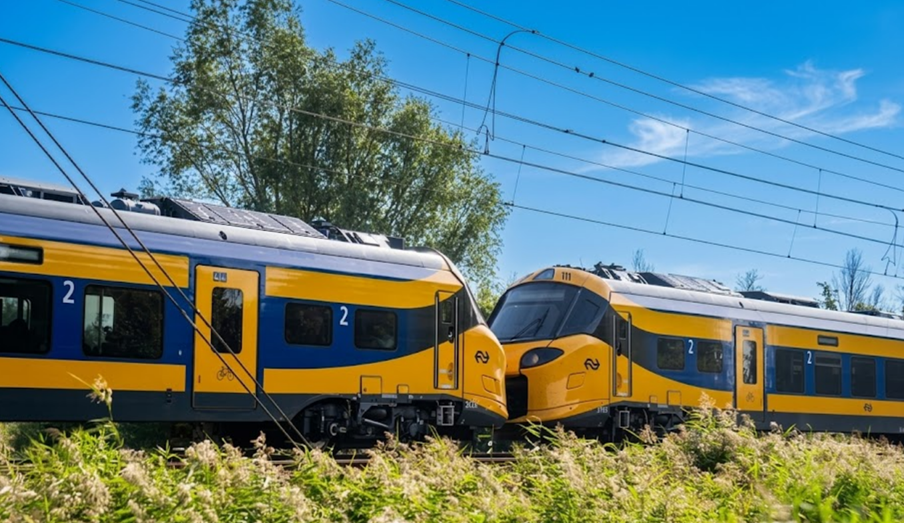
Stick to the NS trains, which are designed for domestic travel and priced accordingly. Buying tickets is refreshingly simple. You can tap in and out with your credit or debit card, just like the London Underground. You can use the official NS app to buy a digital ticket with a QR code.
Or, if you prefer something tangible, head to the staffed ticket desk or one of the many machines for a paper ticket. The system is designed to be intuitive, even for first-time visitors. On board, the trains are built for comfort. Expect free Wi-Fi, toilets, and even catering outside rush hours.
If you crave peace, head to the silence coupe, where phones and conversations are kept to a minimum. If you want more space, upgrade to business class. First class offers larger seats and quieter compartments—look for the number 1 on the outside of the train and red seats once you’re inside.
Second class, with its blue seats, is perfectly comfortable for most travelers. The beauty of traveling from Schiphol lies in its efficiency. You step off the plane, glide down to the platforms, and within half an hour you’re in Rotterdam, ready to dive into its architectural wonders and buzzing cultural scene. It’s a journey that feels effortless, a reminder of how well the Dutch have mastered the art of transport.
🚆 Amsterdam Central Station to Rotterdam
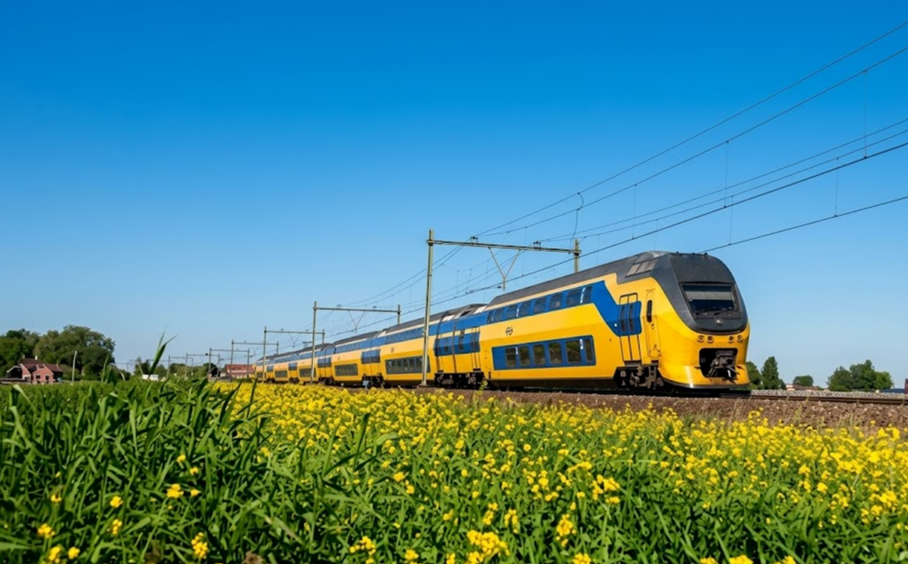
If Schiphol is the gateway, then Amsterdam Centraal is the beating heart of the Dutch rail system. The station itself is a marvel of design, with its grand façade facing the canals and its platforms stretching into the city’s core. From here, the fastest way to Rotterdam is the Intercity Direct, a sleek NS service that covers the distance in about 40 minutes.
It stops once at Schiphol before racing south to Rotterdam Centraal, making it the ideal choice for travelers who want to move quickly between the two cities. Tickets are straightforward. A one-way fare in second class is around €17.90, plus a €2.90 supplement for the Direct. First class, with its red seats and quieter compartments, adds about €14 more.
If you’re traveling during off-peak hours, consider the Dal Voordeel discount card—it can save you up to 40% on fares and is a smart option if you plan on regular train travel during your stay. Other options exist if you’re budget-conscious or simply curious to see more of the Dutch countryside.
The regular Intercity takes about 73 minutes, stopping at Haarlem, Leiden, and Den Haag before reaching Rotterdam. The Sprinter, ironically the slowest, makes 14 stops and takes 75 minutes. Both cost the same base fare as the Direct, but without the supplement.
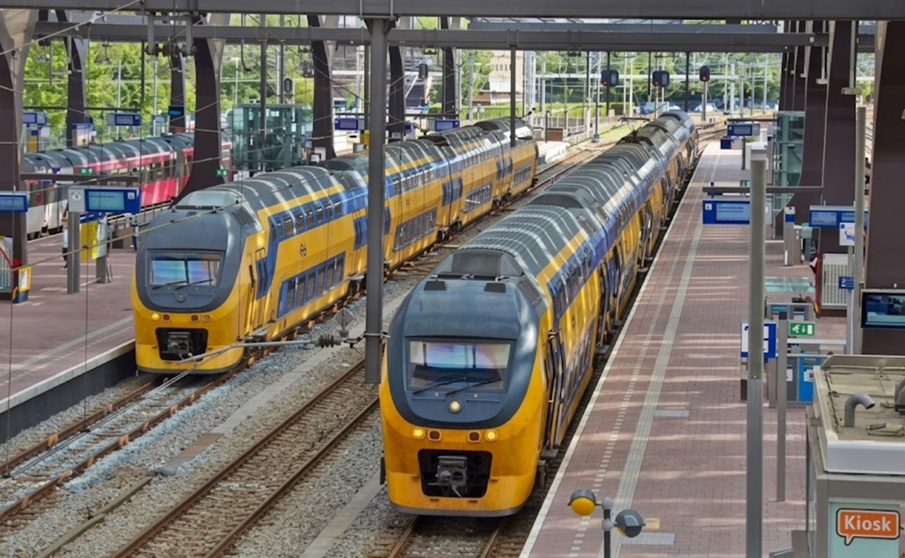
For some, these slower trains are part of the adventure, offering glimpses of smaller towns and a more relaxed pace. On board, Dutch trains are designed for comfort. Expect free Wi-Fi, toilets, and even catering outside rush hours. If you crave peace, head to the silence coupe; if you want more space, upgrade to business class.
The rhythm of the train offers a moment of calm between cities, a chance to catch your breath before diving into Rotterdam’s energy. With up to nine services an hour between Amsterdam and Rotterdam, you’re never far from a train. Whether you choose speed, savings, or scenery, the journey is smooth, reliable, and quintessentially Dutch. The trains run like clockwork, a testament to the country’s commitment to efficiency.
🌍 Why Train Travel Works in the Netherlands
The Dutch rail system is built for travelers. Trains are frequent, comfortable, and designed with modern conveniences. You’ll find free Wi-Fi across most services, toilets on board, catering outside rush hours, silence zones for those who want to work or rest, and business class for extra comfort. The efficiency of the system means you can plan your day with confidence.
Whether you’re heading to Rotterdam for business, culture, or simply curiosity, the trains make it easy. Traveling by train in the Netherlands isn’t just about getting from A to B—it’s about the journey itself. The carriages are clean, the seats comfortable, and the rhythm of the train offers a moment of calm between cities.
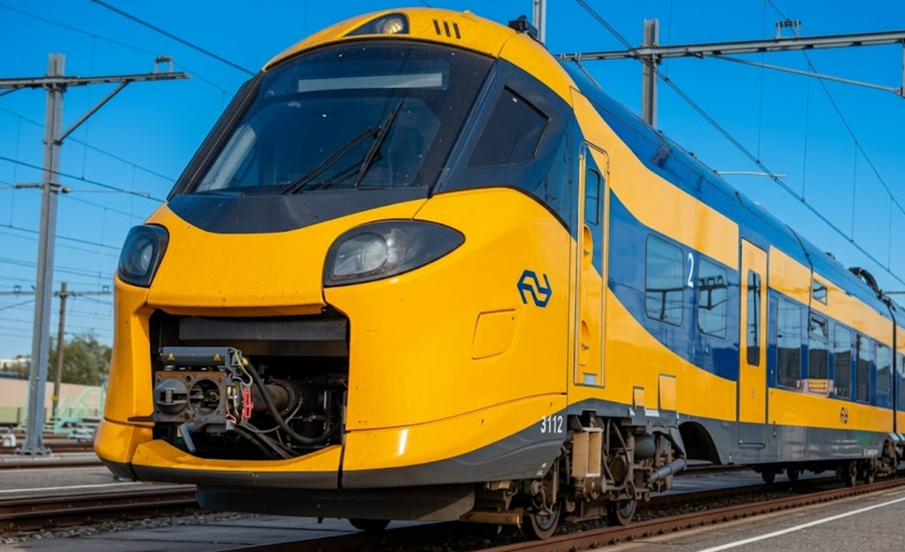
Watching the Dutch countryside roll past—flat fields, windmills, and clusters of houses—adds a scenic touch to the efficiency.Arriving in Rotterdam, you step into one of Europe’s most striking stations. Rotterdam Centraal is a modern architectural marvel, its angular roof pointing toward the city’s skyline.
From here, trams, buses, and metros fan out across the city, making onward travel simple. The station itself feels like a gateway to the future, a fitting introduction to a city known for its bold architecture and innovative spirit.
🧾 Ticket Buying Options
There are multiple ways to buy tickets in the Netherlands:
OV Pay contactless: Tap in and out with your card.
NS app: Buy tickets digitally with a QR code. Ticket machines: Yellow-and-blue machines at every station.
Staffed ticket desks: For those who prefer paper tickets. For visitors, the OV-chipcard isn’t worth the hassle. Stick to contactless or app-based tickets.
🧳 Final Thoughts
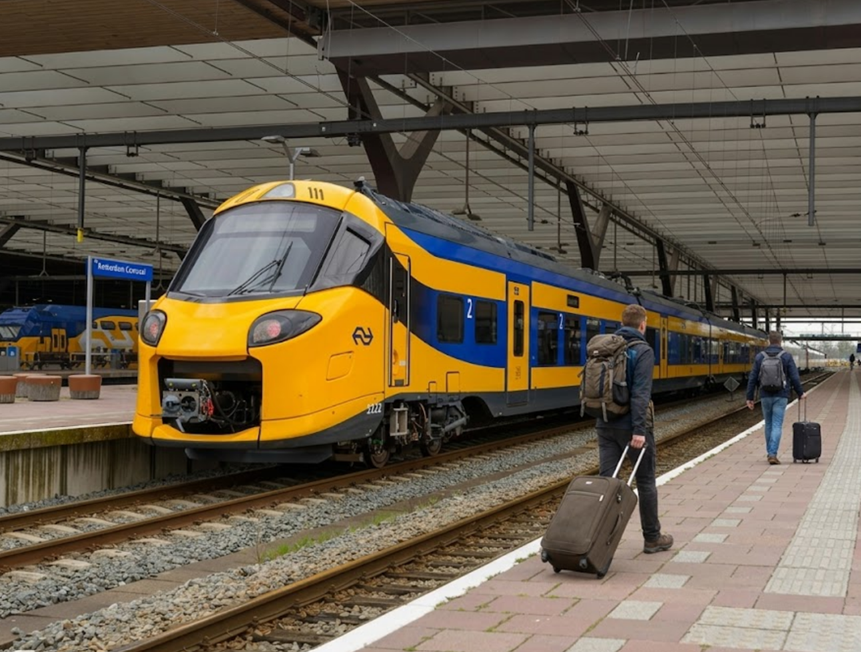
Whether you’re landing at Schiphol or starting from Amsterdam Centraal, the train to Rotterdam is the easiest, fastest, and most comfortable option. The choice comes down to speed versus savings: the Intercity Direct is the sprinter, while the regular Intercity and Sprinter offer slower but equally reliable journeys. For sheer convenience, the Direct wins.
But whichever you choose, you’ll find yourself in Rotterdam within an hour, ready to explore its bold architecture, vibrant food scene, and cultural treasures. The journey is part of the experience, a reminder that in the Netherlands, travel is designed to be as enjoyable as the destination itself.