
Autumn in De Hoge Veluwe National Park unfolds like a living canvas, painted in shades of amber, copper, and gold. The crisp air carries the scent of fallen leaves, and every path reveals a new landscape—sand dunes glowing under the sun, heathlands stretching wide, and forests whispering with the wind.
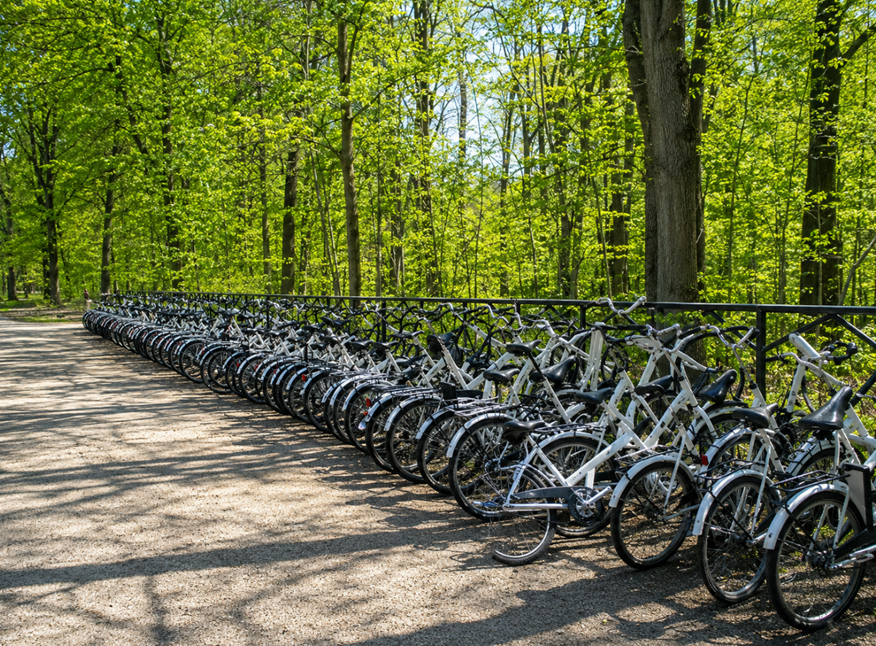
The famous White Bicycles stand ready at the entrances, inviting visitors to explore 40 kilometers of cycling routes that weave through this vast reserve of 5,400 hectares. This is not simply a park but a legacy, born from the vision of Anton and Helene Kröller-Müller, who dreamed of uniting art and nature.
Their dream lives on in the Kröller-Müller Museum, and in the Jachthuis Sint Hubertus, Berlage’s architectural jewel by the lake. Beneath the surface, the Museonder reveals hidden worlds of roots, stones, and ancient bones, reminding visitors that the land holds stories far older than memory.
De Hoge Veluwe is a place of contrasts—wildlife roaming freely, art standing quietly among trees, and landscapes shifting with every turn of the wheel. In autumn, with its fiery palette and crisp air, the park feels especially alive, offering not just a journey through nature but a passage through history, culture, and imagination.
The White Bicycles
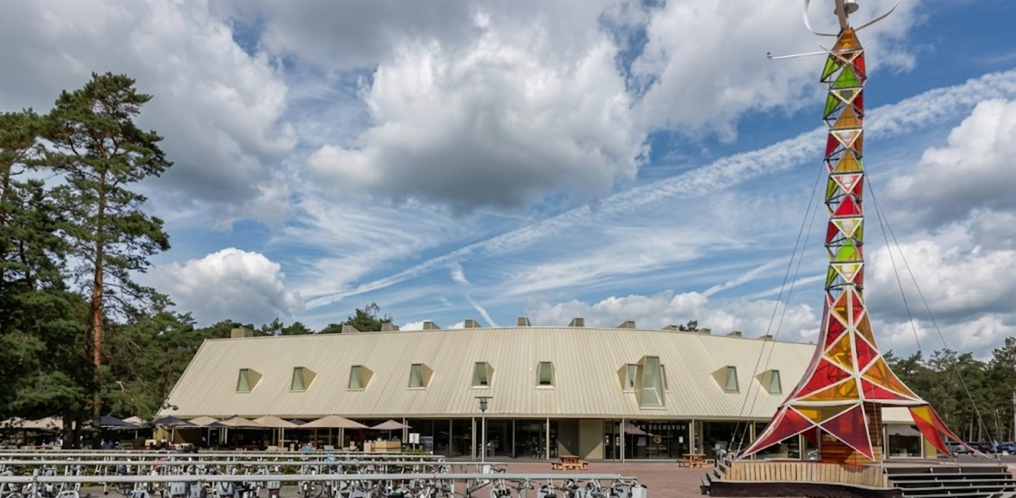
The White Bicycle system is one of the park’s most charming features. With 1,800 scattered across entrances, visitor centers, and museums, they are free to use, a gift from the park to its visitors. There is something liberating about hopping onto a bike without paperwork, without locks or fees, simply trusting that the next rider will do the same.
It feels communal, almost symbolic—a reminder that nature belongs to everyone. As the wheels turn, the paths stretch endlessly, 40 kilometers of paved routes winding through forests, heathlands, and sand drifts. The vibes of pedaling becomes meditative, the crunch of leaves beneath tires a soundtrack to the shifting scenery.
One moment the path glides through pine forests, their needles whispering in the wind, and the next it emerges into open sand dunes, golden under the autumn sun.
Landscapes in Motion
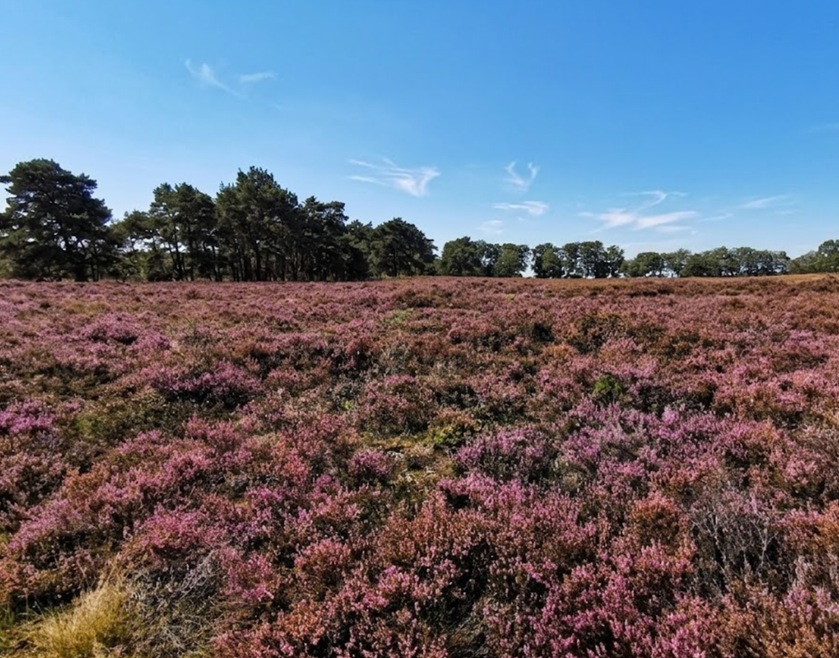
De Hoge Veluwe is a park of transitions. It is not one landscape but many, stitched together into a tapestry of contrasts. The heathlands stretch wide, purple in summer but now muted, their grasses swaying in the cool breeze. The sand drifts feel otherworldly, like miniature deserts, their dunes shifting with the wind.
Forests alternate between coniferous and deciduous, each offering its own palette—deep greens of pine, fiery oranges of oak, and the skeletal silhouettes of birch. Every turn of the path reveals something new. Ponds mirror the sky, fields open like savannas, and quiet groves shelter deer grazing unseen.
The park seems alive, not just with animals but with history, with the vision of Anton and Helene Kröller-Müller, who dreamed of uniting art and nature more than a century ago.
Wildlife Encounters
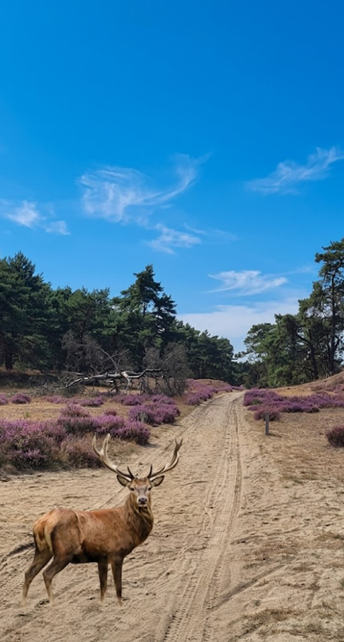
The park is home to red deer, roe deer, and mouflon sheep. Spotting them requires patience, but autumn afternoons are the best time. Observation posts south of the museum offer vantage points over meadows. Silence is broken only by birdsong, and then, suddenly, movement—a stag stepping cautiously into the clearing, antlers catching the light.
It is a moment of stillness, of awe. Watching animals in their natural habitat feels earned, a gift for those willing to wait. Wild boar rustle through undergrowth, their presence announced by snapping twigs. Birds, too, are everywhere—flocks rising suddenly from trees, wings painting the sky.
The Museonder
Curiosity leads underground to the Museonder, the world’s first subterranean museum. Descending into its dim corridors feels like entering another realm. Exhibits reveal the hidden life beneath the earth: the sprawling root system of a 135-year-old tree, stones whispering their geological origins, and bones of animals long extinct. It is both scientific and poetic, a reminder that the ground beneath holds stories older than memory.
The water laboratory fascinates—an exploration of how underground streams shape the land. For children, it feels like a secret adventure; for adults, it is a humbling glimpse into the unseen.
Art in the Heart of Nature
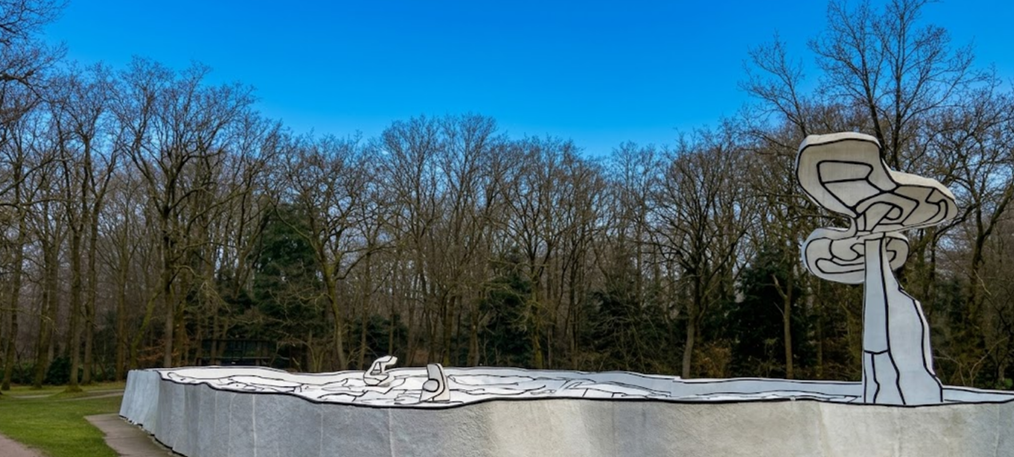
No visit to De Hoge Veluwe is complete without the Kröller-Müller Museum. Entering its galleries after hours of cycling feels like stepping into another dimension, where human creativity mirrors the beauty of the natural world outside.
Jachthuis Sint Hubertus
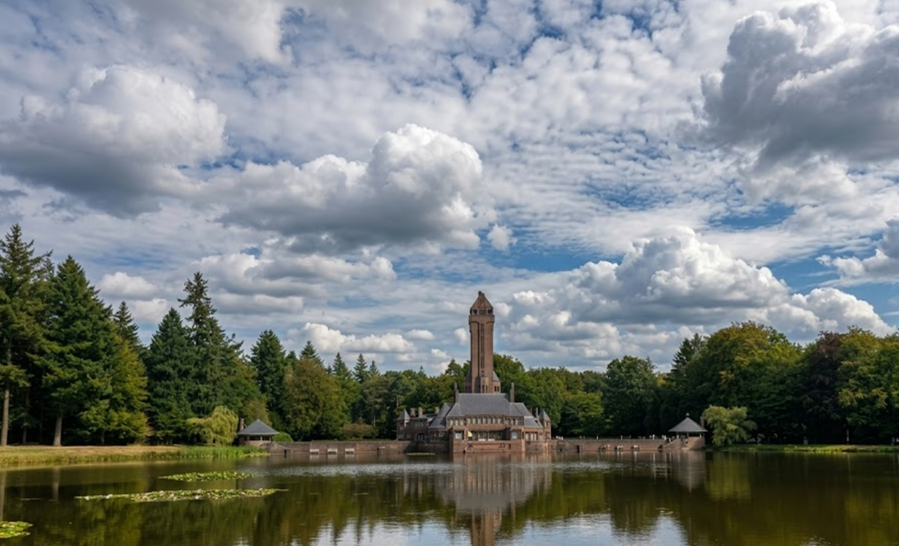
At the northern edge of the park lies the Jachthuis Sint Hubertus, the hunting lodge designed by architect H.P. Berlage. Rising beside a lake, its brickwork and towers evoke both grandeur and intimacy. Accessible only by guided tour, it is considered one of the Netherlands’ most important monuments.
The lodge is not merely a residence but a “total artwork,” where architecture, design, and landscape converge. Named after the patron saint of hunting, it nods to Anton’s passion, yet it also reflects Helene’s devotion to art. Together, they created a place where their dreams could live, and where visitors, a century later, can still wander.
A Park of Surprises
What makes De Hoge Veluwe extraordinary is not just its size—5,400 hectares of forest, heath, and sand—but its variety. It is a place where cycling through savannas, hiking across dunes, and stepping into a museum filled with masterpieces all belong to the same day. Children delight in safaris led by foresters, puppet shows, and workshops during nature weeks.
Adults find solace in guided walks, lectures, and markets celebrating Veluwe traditions. The park is recreational, educational, and deeply cultural. It is not just a reserve but a living classroom, a gallery, a sanctuary.
Autumn Reflections
As the day wanes, paths lead back toward Otterlo, the sun dipping low and casting long shadows across the land. The air grows colder, reminding of the season’s edge. Yet the chill only heightens the beauty—the orange trees glowing like embers, the sand dunes softening into twilight. Deer move silently across meadows, a closing chapter, a final gift from the park.
Cycling back, it becomes clear that De Hoge Veluwe is not just a destination but an experience, one that lingers long after departure.
Legacy of Visionaries
Anton and Helene Kröller-Müller dreamed of uniting art and nature, and their vision endures. The park is their legacy, a place where landscapes and masterpieces coexist, where bicycles carry visitors through worlds both natural and cultural. More than a century later, their dream feels alive, vibrant, and necessary.
In autumn, that legacy is painted in fire—trees ablaze, paths glowing, art illuminated by the fading sun. It is a season of endings, yet in De Hoge Veluwe, it feels like a beginning, a reminder that beauty is always waiting, just beyond the next turn of the path.