
Forest Retreats in France > Chemin des Cîmes Alsace
There are places where the forest feels like —where trunks rise like columns, light filters through branches like stained glass, and silence vibes with its own kind of music. The Vosges du Nord Regional Nature Park in Alsace is one of those places. Here, deer slip quietly through undergrowth, lynxes leave faint tracks in the peat bogs, and titmice flit between branches with a song that seems older than memory.
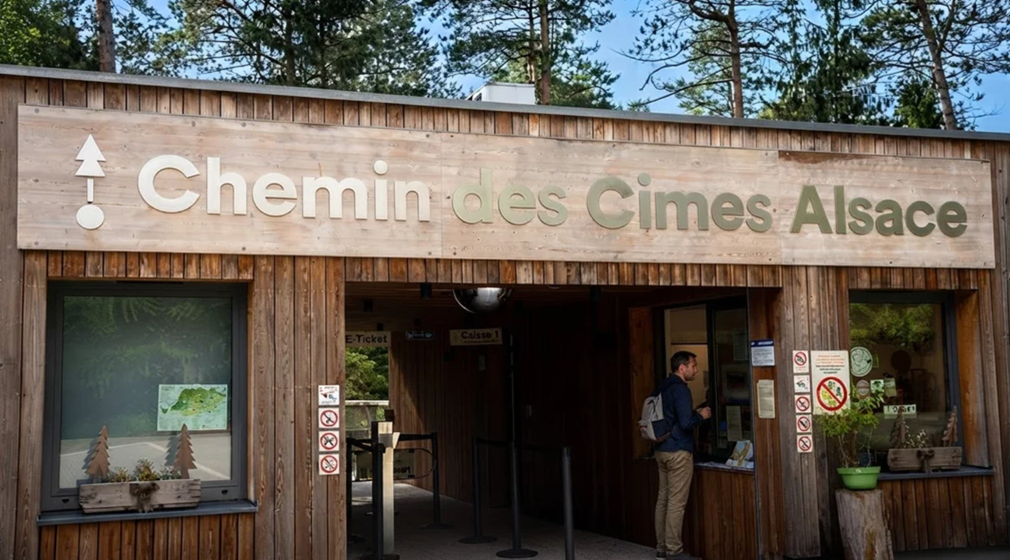
This is Alsace Verte, a land once fought over, where castle ruins and military bunkers still stand as silent witnesses. Today, it is a cultural and ecological treasure, and at its heart rises something unexpected: a wooden ribbon that lifts you into the canopy, the Chemin des Cîmes Alsace.
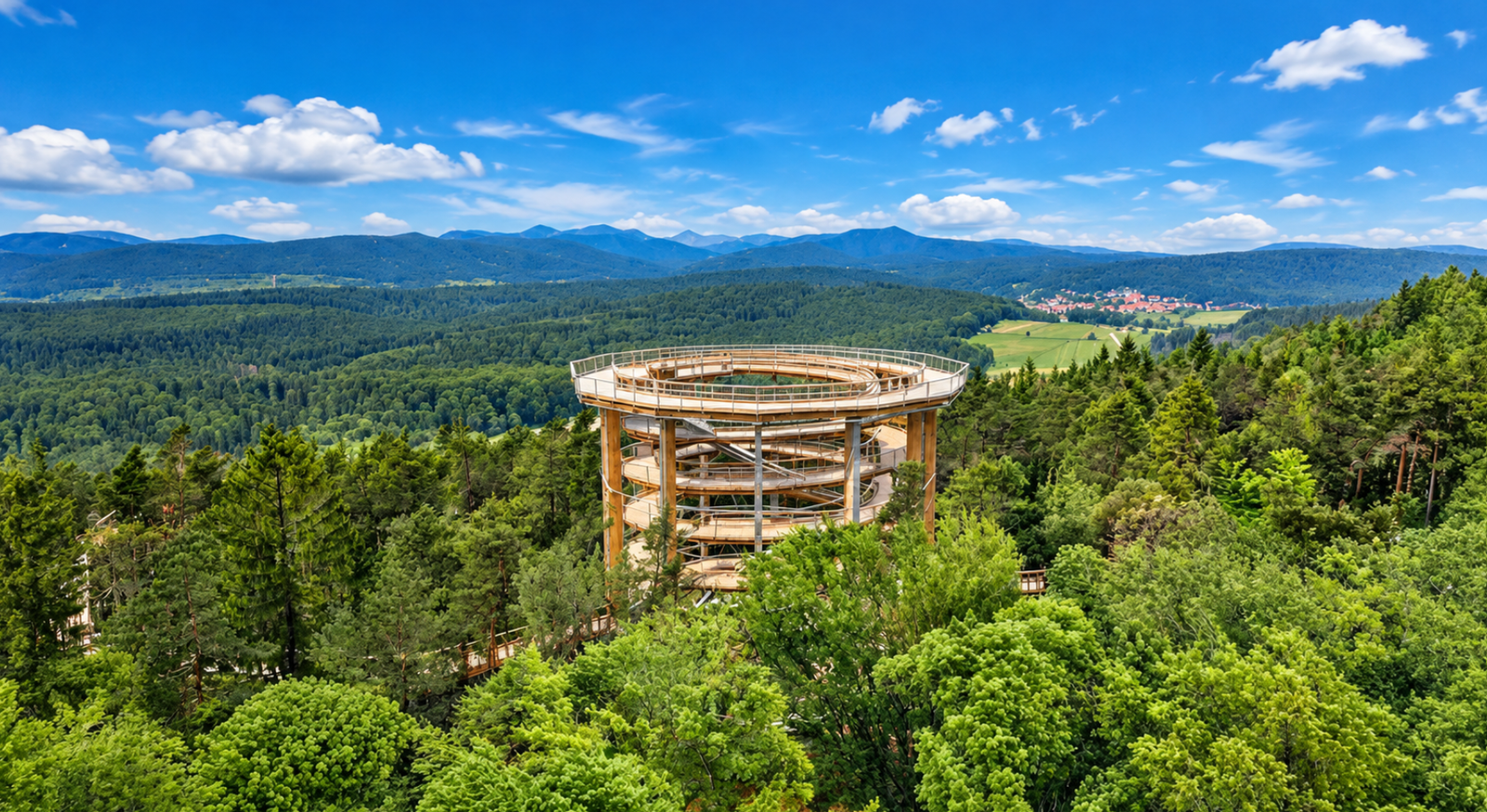
The Approach
The journey begins at the Drachenbronn forest, where a free car park waits at the base of the hill. From here, visitors choose their ascent. The adventurous take the one‑hour hiking trail, a path decorated with signs about local fauna and flora, benches tucked beneath trees, and the occasional table where families pause for a picnic.
The less energetic board a shuttle that winds gently up the forest road, a fifteen‑minute ride that feels like a prelude to something grand. Either way, the arrival is cinematic: the forest opens, and suddenly the observation tower stands before you, a spiral of timber reaching skyward, like a helix of possibility.
Walking Among the Trees
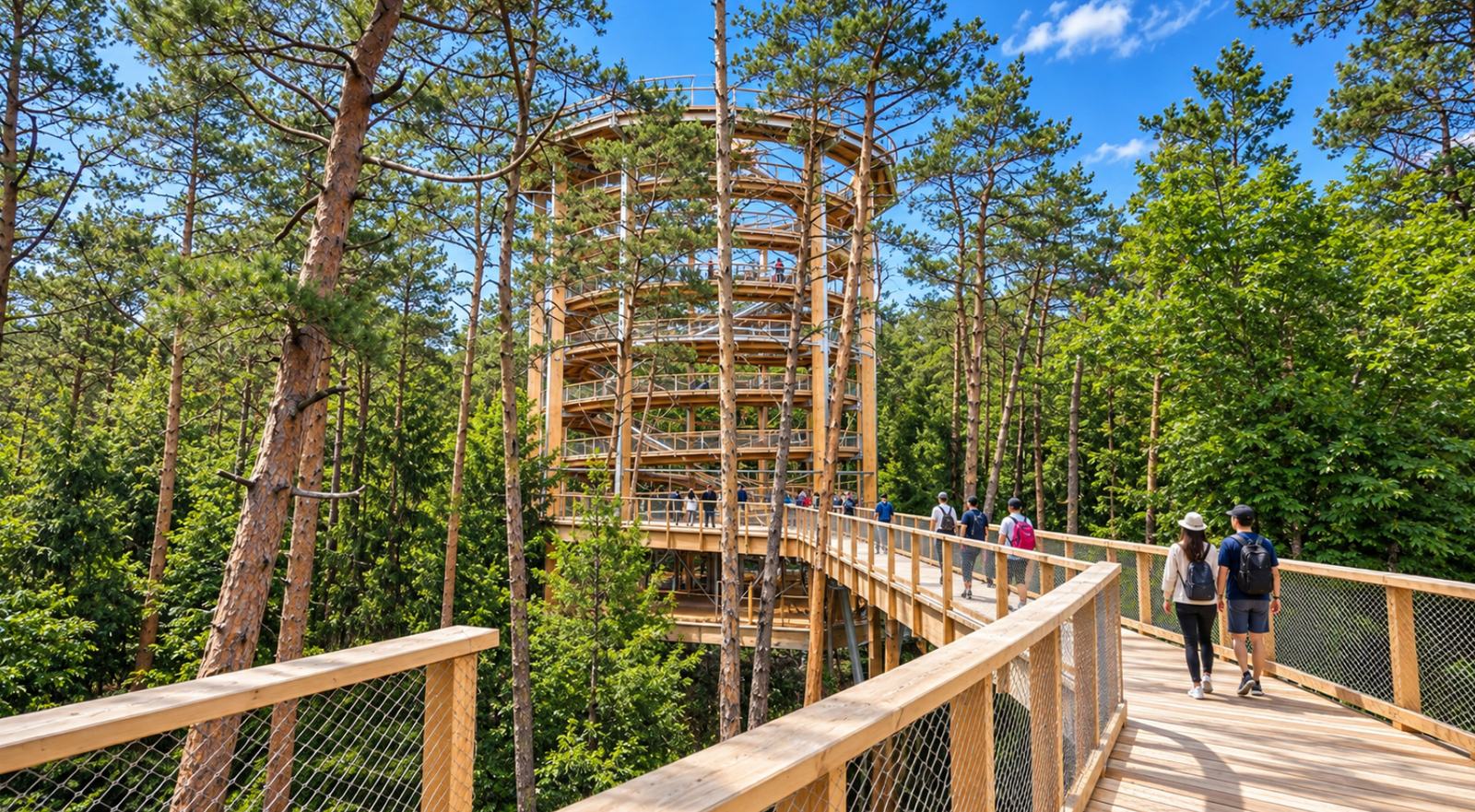
The walkway itself is deceptively simple: 625 meters of gentle incline, never more than a 6% gradient, winding through spruce and oak. It doesn’t rush you. Instead, it invites you to notice—the resin scent in the air, the flicker of a squirrel’s tail, the way sunlight filters through needles like stained glass.
Discovery stations punctuate the stroll: touch the bark of a silver fir, match birdcalls to their species, spin a dial to learn about the geology beneath your feet. Children linger here, but adults find themselves just as captivated, pretending not to be fascinated while secretly marveling at the details.
Every so often, small challenges appear: a net bridge with a gentle sway, a narrow beam that tests your balance, even a “virtual abyss” that toys with your instincts. It’s not an adrenaline park, but it does make you feel alive in a grounded way. The walkway is wide enough for strollers and wheelchairs, and benches appear just when you need them.
Accessibility here feels organic, not tacked on—ramps instead of stairs, space for everyone to look up together.
The Tower
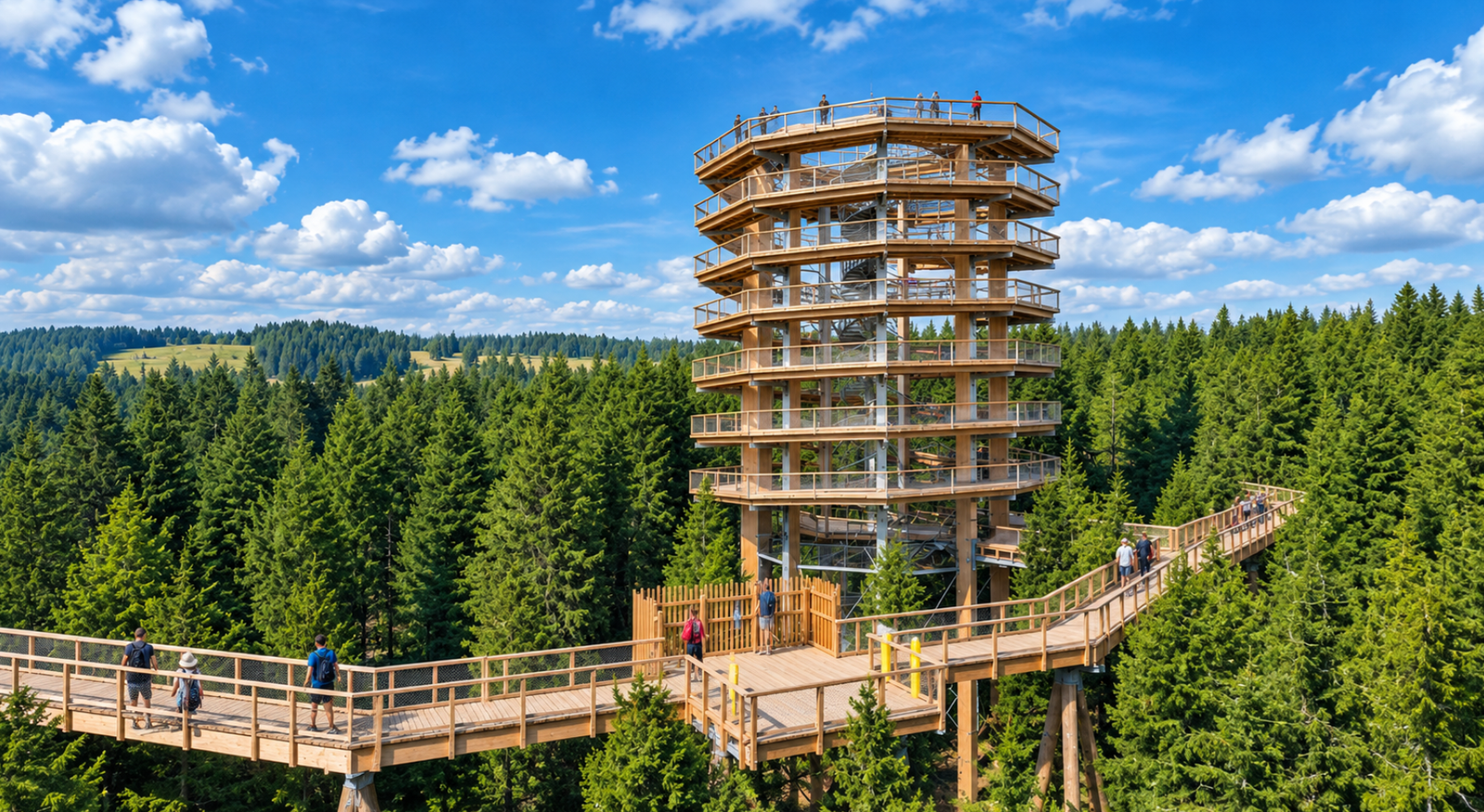
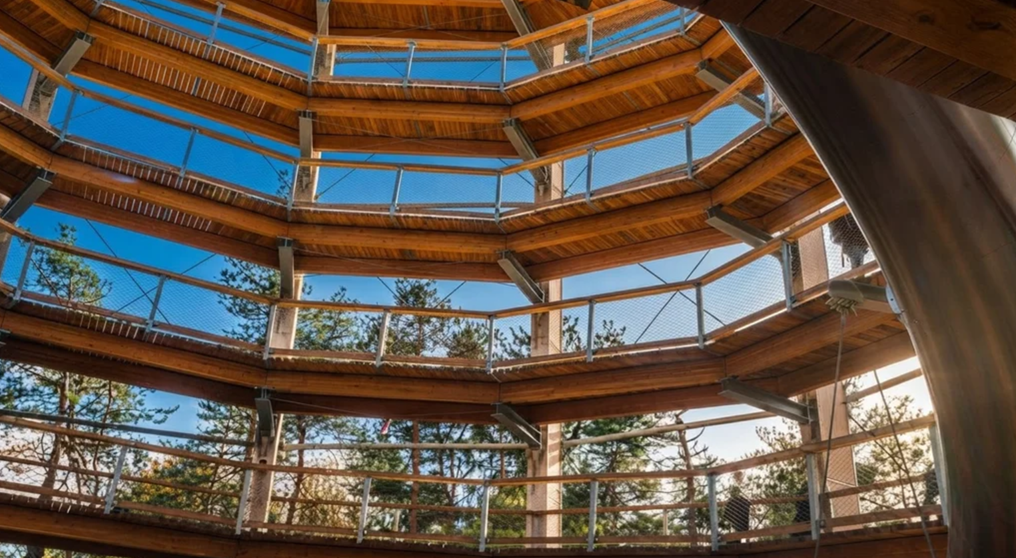
At the end of the path, the rhythm changes. The walkway coils upward into a 29‑meter tower, a spiral ramp wide enough for wheelchairs, strollers, or two friends walking side by side. Each loop expands the horizon: the Vosges rolling westward in shades of green and blue, the Rhine plain stretching east, the Black Forest rising beyond.
At the summit, the panorama is complete—a 360° sweep of landscapes that shift with the seasons, from summer’s lush greens to autumn’s fiery hues, winter’s crystalline silence, and spring’s tender renewal.
The Descent
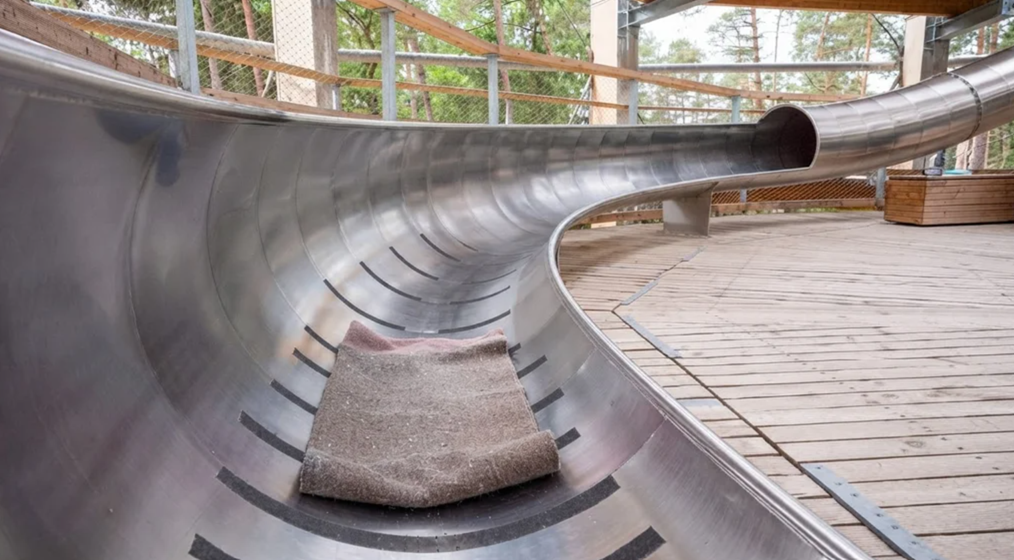
For the bold, the way down is not a ramp but a thrill: a 75‑meter slide spiraling through the tower’s core. Slide mats are provided, dignity optional. Laughter echoes as visitors emerge at the base, craning their necks to admire the tower’s all‑wooden structure—built from 80% renewable raw material, a testament to sustainability as much as design.
For those less adventurous, the ramp offers a slower return, with benches and viewpoints along the way. Either way, the descent feels like a release, a gentle return to earth after the exhilaration of the summit.
Extending the Adventure
Back at the car park, the Adventure Forest Alsace offers another layer of play: rope courses, trampolines, zip lines tucked beneath century‑old trees. For those who prefer a slower rhythm, the onsite restaurant serves Alsatian comfort food—tarte flambée blistered just right, beef stews simmered to tenderness, fruit tarts that taste like home.
Nearby inns, like the Ferme Auberge du Moulin des Sept Fontaines, provide rustic calm: wooden beams, meadow views, and hearty local dishes that restore tired legs. It’s the kind of place where evenings stretch long, and the hush of the forest lingers even indoors.
Practical Notes
Altitude: 342 m
Length: 1,050 m walkway + 29 m tower
Duration: 1–2 hours
Prices:
Adults €15,
Children €12,
Families €39,
Slide €2 per descent (from age 6)
Languages: French, German, Alsatian, English
Services: Terrace, toilets, shops, bicycle racks, electric car charging
Best Time to Visit
Summer Vosges: Warm days, expansive views (+15°/+27°)
Autumn vineyards: Fiery forests, wine‑country hues (+8°/+16°)
Winter quiet: Crisp horizons, occasional snow (−1°/+6°)
Spring bright: Mild air, fresh growth (+7°/+17°)
Beyond the Walk
Chemin des Cîmes is not an isolated attraction; it is a gateway. The Northern Vosges are dotted with castle ruins—Fleckenstein, Lichtenberg, and dozens more—each perched on rocky outcrops, each whispering stories of medieval battles and shifting borders.
Old bunkers from the Maginot Line remind visitors of more recent history, their concrete shells softened by moss and time. Crémant sparkling with Alsatian pride, and markets where local cheeses and charcuterie tempt even the most disciplined traveler.
Cycling routes wind through untouched forests, hiking trails lead to hidden viewpoints, and every path seems to promise a new discovery. Alsace is a region where culture and nature intertwine seamlessly, where every excursion feels both grounded and elevated.
The Spirit of the Place
What makes Chemin des Cîmes Alsace unforgettable is not just the view, or the slide, or the clever discovery stations. It is the way the experience unfolds gently, inviting you to slow down, to notice, to breathe. It is a place where children learn, grandparents linger, and everyone finds themselves smiling at nothing in particular.
The views fade when you leave, but somehow the hush of the forest stays.
Closing Thought
Chemin des Cîmes Alsace is more than a treetop walk. It is a gentle crescendo into wonder, a rehearsal for awe. Whether you come for the thrill of the slide, the hush of the forest, or the sweep of the panorama, you leave with something quieter: the memory of standing between earth and sky, suspended in possibility.