
There are places in the world that feel as though they’ve been painted by an artist rather than shaped by nature. Western Australia’s Coral Coast is full of them — limestone pinnacles rising from desert sands, gorges carved deep into ochre cliffs, beaches so white they dazzle the eye.
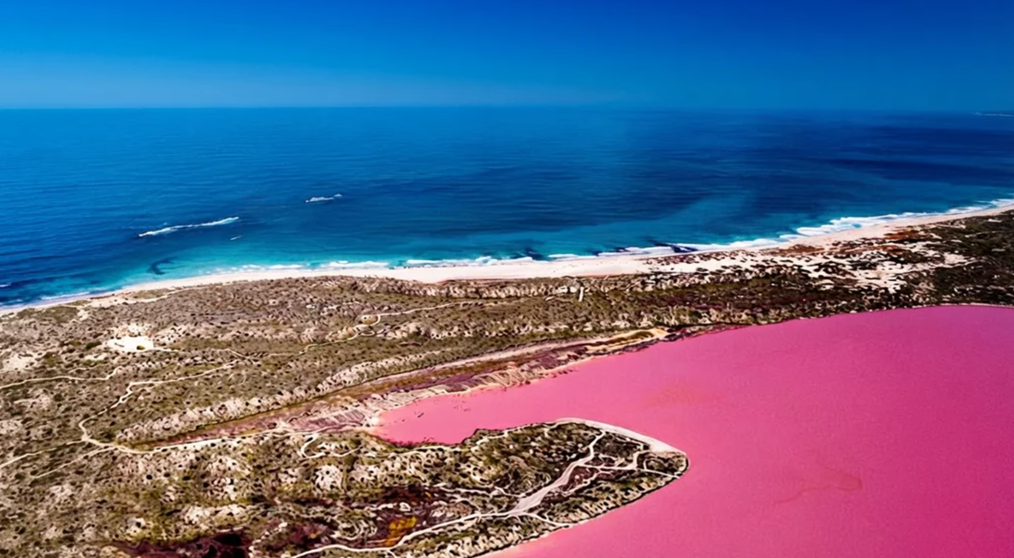
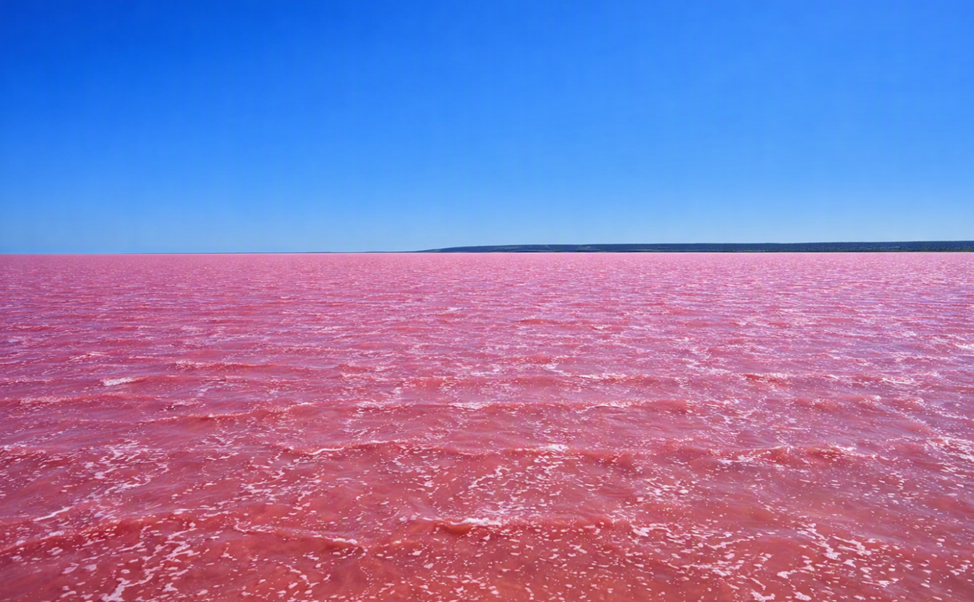
Yet tucked beside the tiny fishing village of Port Gregory lies a spectacle that outshines them all: a lake that blushes pink under the sun. Hutt Lagoon, often called the “Pink Lake of Kalbarri,” is one of those rare natural wonders that stops even seasoned travellers in their tracks. Drive along George Grey Drive and suddenly, through the trees, you’ll glimpse a body of water glowing like liquid bubblegum.
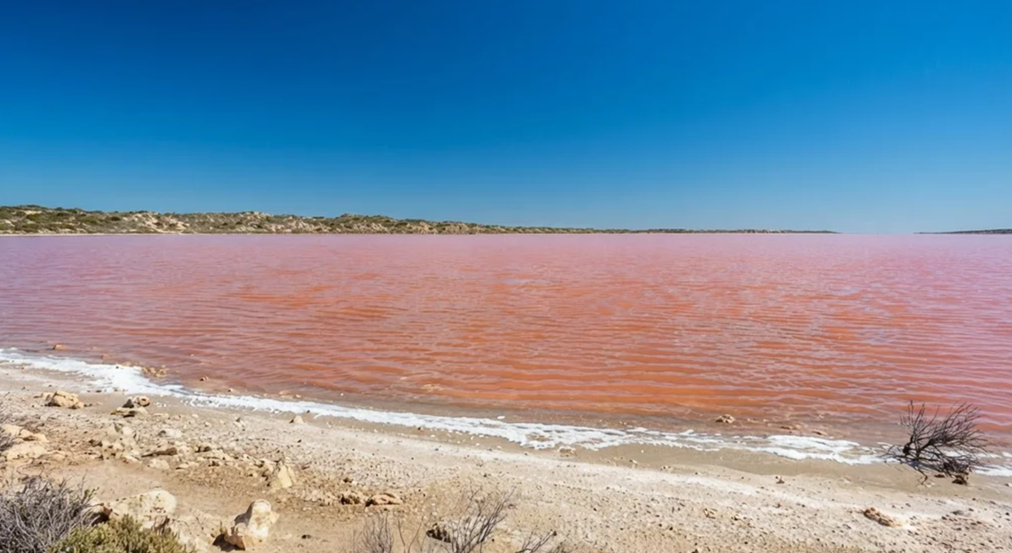
Pull over, step out, and you’ll find yourself staring at a lagoon that shifts colour with the light — sometimes strawberry pink, sometimes copper red, sometimes lavender‑grey. It’s surreal, it’s photogenic, and it’s become one of the most talked‑about attractions on Western Australia’s Coral Coast.
The Road North: Perth to Kalbarri
The journey to Hutt Lagoon is half the adventure. From Perth, the drive north takes around six to seven hours, depending on how many detours you allow yourself. And you should allow plenty. Heading out of the city, the road unfurls past wheatbelt towns and long stretches of bushland.
Hug the coast and you’ll be rewarded with glimpses of turquoise ocean, rolling dunes, and roadside wildflowers in spring. Stop at Cervantes to wander the Pinnacles Desert, where thousands of limestone spires rise from golden sand. Pause in Geraldton, a vibrant port city with beaches, museums, and a laid‑back surf vibe.
By the time you reach Kalbarri, you’ll already have a camera full of landscapes. But the pink lake, just thirty minutes south, is the jewel waiting at the end of the road.
Where Exactly Is the Pink Lake?
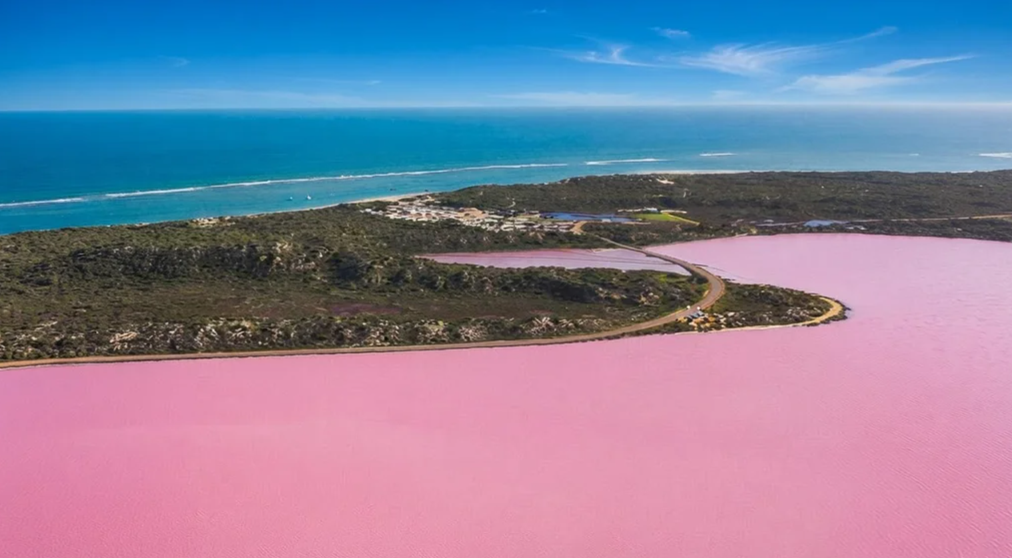
Hutt Lagoon stretches beside Port Gregory, a fishing village nestled between Kalbarri and Horrocks Beach. The lagoon itself covers a vast seventy square kilometres, its shoreline looping around the town like a pastel ribbon. Explorer George Grey camped here in 1839 and gave the lagoon its name.
Today, it’s famous not just for its colour but also for its role in industry — the lake hosts one of the world’s largest microalgae production plants, harvesting Dunaliella Salina for use in cosmetics and food colouring.
Why Is It Pink?
The science behind the spectacle is as fascinating as the view. The lake’s salty waters are home to Dunaliella Salina, a microalgae that thrives in extreme conditions. When exposed to sunlight, it produces beta‑carotene — the same pigment that makes carrots orange. In Hutt Lagoon, this pigment transforms the water into shades of pink, red, and purple.
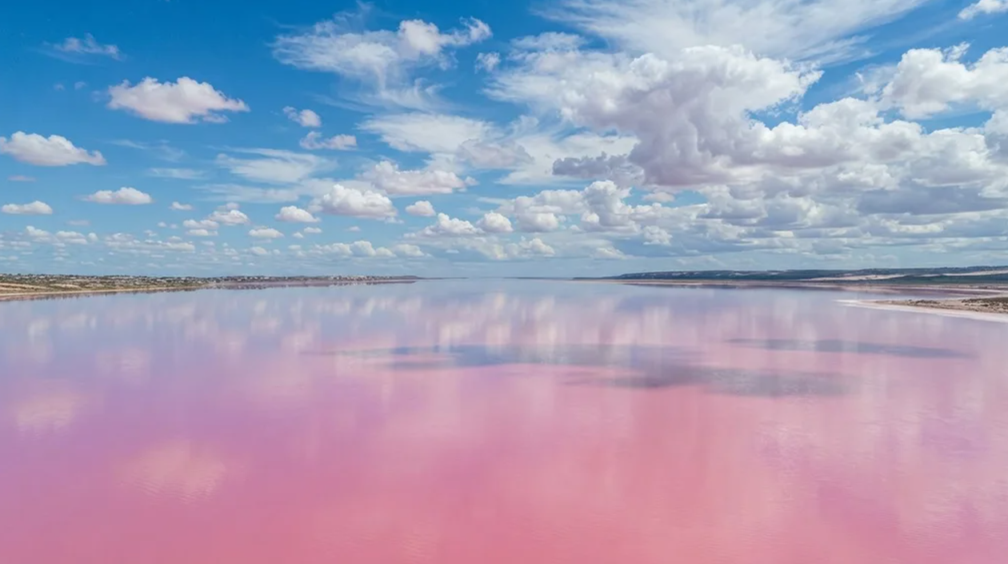
The intensity of the colour depends on the time of day, the season, and the weather. On a bright summer afternoon, the lagoon can glow neon pink. At sunset, it softens into lilac. On cloudy days, it may look silver‑grey, with the clouds themselves tinged pink by reflection.
Best Times to Visit
If you want the lagoon at its most vibrant, aim for late morning to early afternoon — between ten and two — on a sunny day. That’s when the algae are most active and the colours are boldest. But don’t dismiss sunrise or sunset. The softer light can create dreamy pastel tones, perfect for atmospheric photography.
Many travellers plan to visit twice: once in the morning for the bright pinks, and again at dusk for the lavender hues. Summer through autumn, from November to April, is the most reliable season, when evaporation is high and the sun is strong.
How to Experience Hutt Lagoon
There are many ways to see the pink lake, each offering a different perspective. The most popular is the self‑drive road trip, hugging the coast from Perth and stopping at dunes, beaches, and roadside lookouts. The Port Gregory loop road delivers lake views from multiple angles.
For a bird’s‑eye perspective, scenic flights reveal the lagoon as a surreal splash of colour across the landscape. Buggy tours bounce along sandy tracks with local guides, reaching hidden corners of the lake. Bring sunscreen, plenty of water, and if you have one — a drone. The bird’s‑eye view is unforgettable.
Photography Tips
Hutt Lagoon is a dream for photographers, but timing and positioning matter. Get close to the shoreline, because from the road the lake can look blue. Park and walk down to the water’s edge for the full effect. On calm days, the lake mirrors the sky, creating surreal double exposures.
A drone captures the vastness and the contrast between pink water, white salt crusts, and green bushland. Experiment with light: midday gives bold colours, sunrise and sunset give soft pastels. It’s no wonder the lagoon has been used in fashion shoots by brands like Lancôme.
Practical Details
Swimming is technically possible, but not advised. The water is extremely salty and harsh on skin. Avoid putting your head under. Camping is not allowed at the lake itself, but the nearest option is Port Gregory Caravan Park. Port Gregory offers basic amenities — fuel, food, and accommodation — while Kalbarri and Geraldton have more options.
Tours are available from Perth, Geraldton, and Kalbarri, including scenic flights, buggy tours, and multi‑day packages.
Nearby Attractions
Hutt Lagoon is just one highlight of the Coral Coast. Combine it with other natural wonders for a full itinerary. Kalbarri National Park is famous for Nature’s Window, Z‑Bend Gorge, and dramatic coastal cliffs. Horrocks Beach offers pristine sands and snorkeling.
Geraldton is a lively port city with museums, surf beaches, and the HMAS Sydney II Memorial. And the Pinnacles Desert showcases thousands of limestone spires rising from golden sands.
A Lake That Never Stops Surprising
Every time I drive past Hutt Lagoon, I’m struck by how alive it feels. The colours shift, the light changes, and the mood transforms. One day it’s a neon spectacle, the next it’s a soft pastel dream. That unpredictability is part of its magic. You never quite know what you’ll find — only that it will be beautiful.