
Into the Earth
There are places where time feels stretched, where the air itself seems to hold memory. Ngilgi Cave is one of those places. Formerly known as Yallingup Cave, it lies just outside the coastal town of Yallingup in Western Australia’s Margaret River region. To step inside is to enter a half‑million‑year‑old story written in limestone.
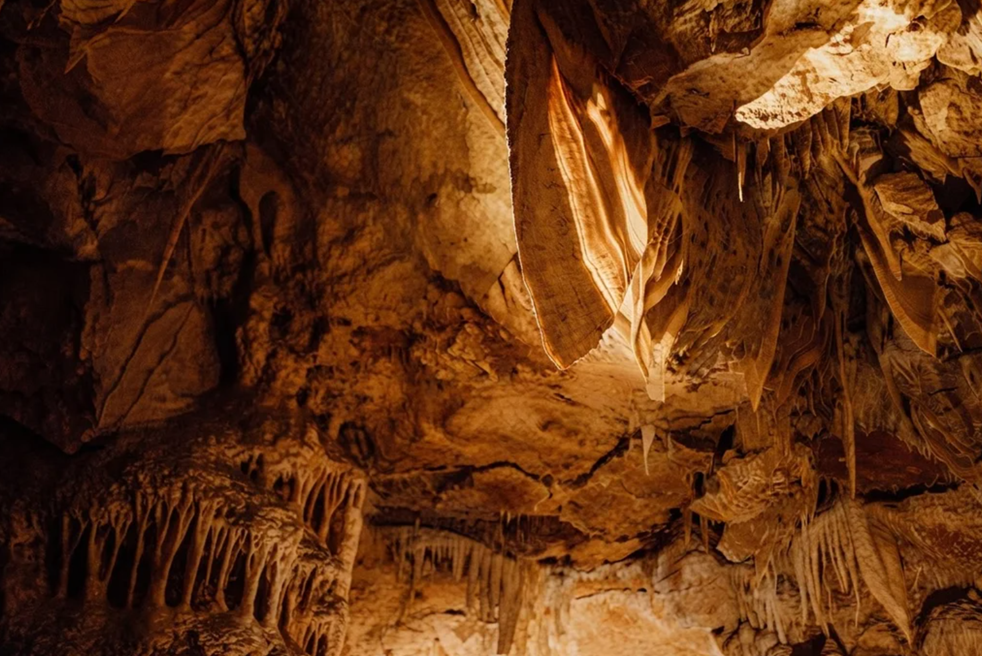
The cave is a karst system carved from ancient dunes, its chambers filled with stalactites, stalagmites, helictites, and delicate shawls that drape like fabric frozen in stone. The temperature is a steady 20 degrees year‑round, a constant that makes the cave feel timeless.But Ngilgi is more than geology.
Its name honours the Great Spirit of the Ocean, Ngilgi, from Wadandi mythology. The Wadandi people are custodians of this land, and their stories breathe through the cave as surely as the mineral veins that shape its walls.
The Ancient Lands Experience
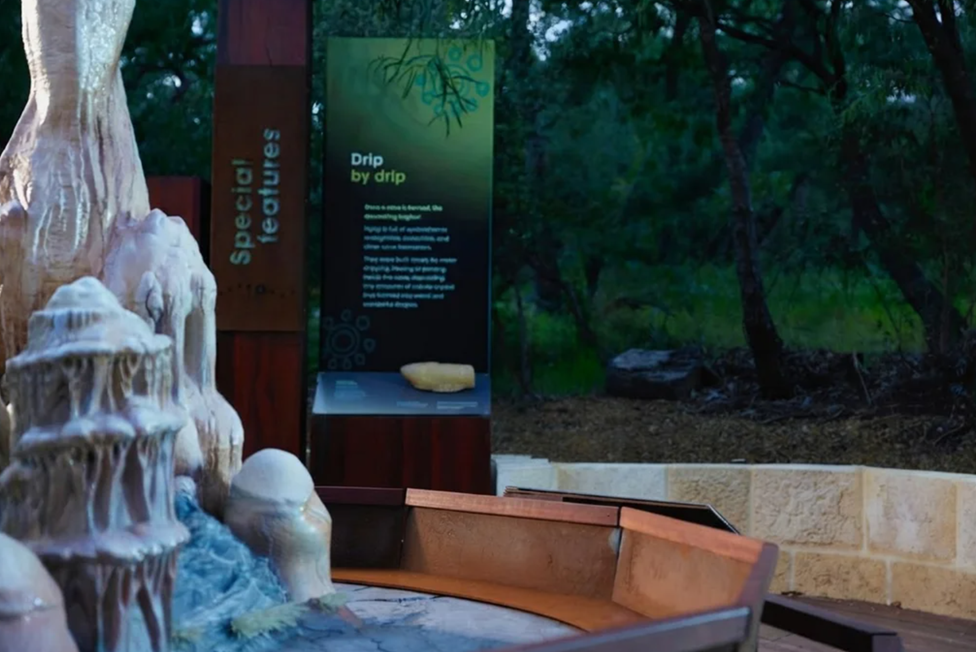
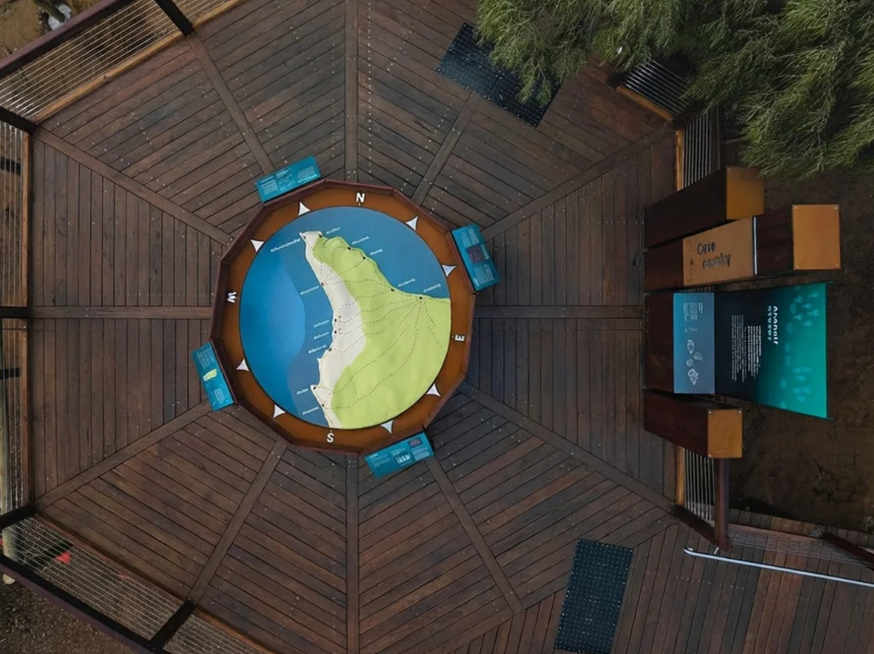
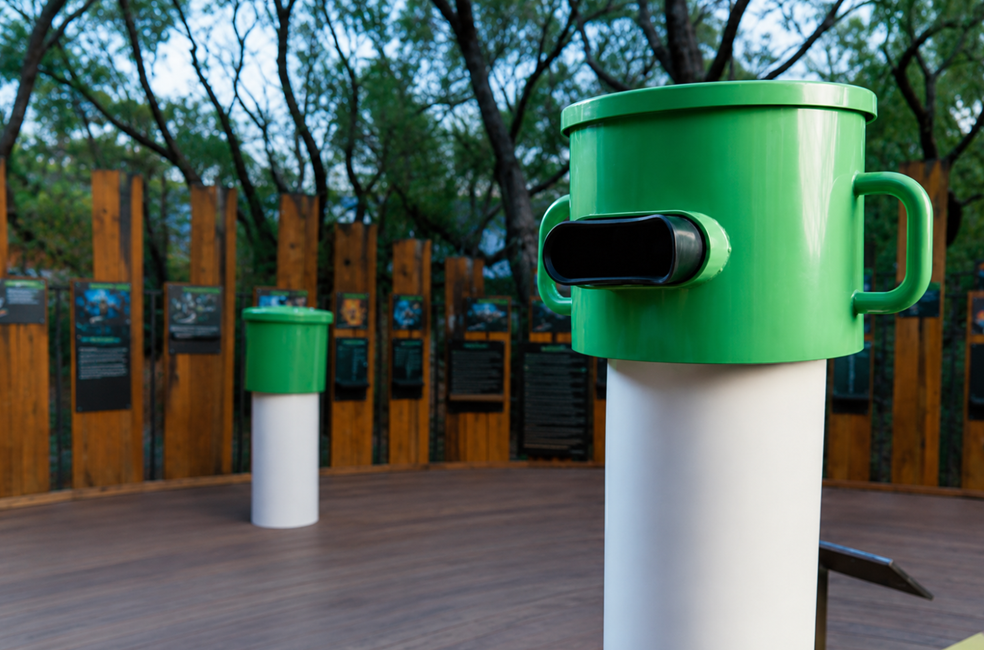
Before descending, visitors walk the Ancient Lands pathway — an elevated boardwalk through native bushland. Interpretive installations tell of shifting continents, ancient seas, and the six‑season Noongar calendar. Banksia and eucalyptus frame the path, and the air smells sharp and clean.It’s a thoughtful prelude.
You begin to see the cave not as an isolated wonder but as part of a living landscape. Children pause at interactive displays, pressing buttons to hear stories of flora and fauna. Adults linger over panels describing how dunes became stone, how oceans carved ridges, how mythology and geology intertwine.
The Amphitheatre
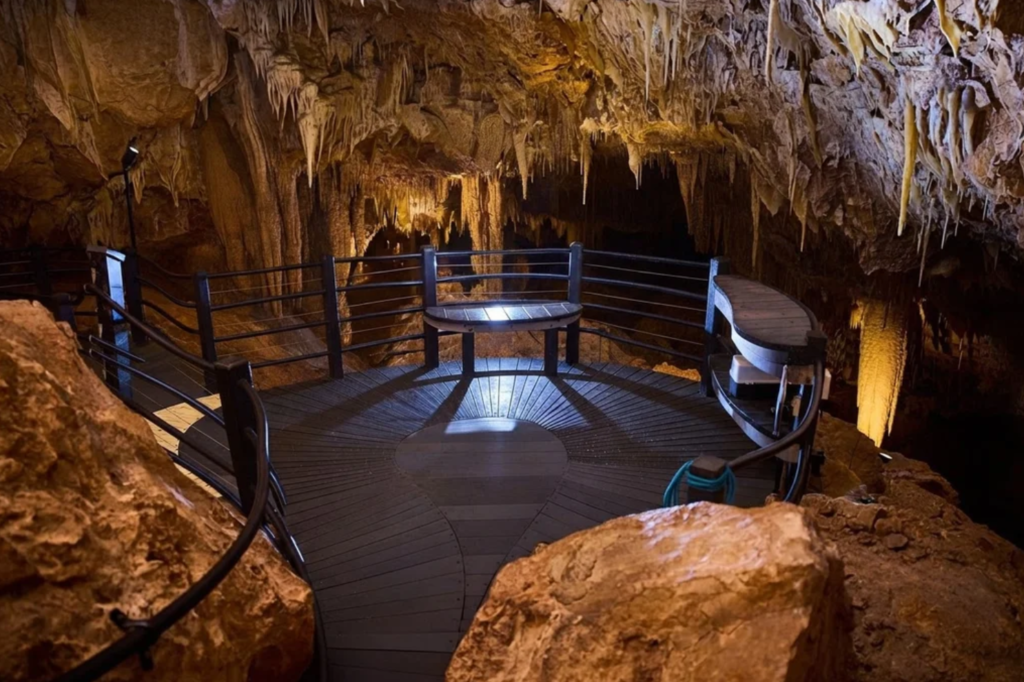
The first chamber is called the Amphitheatre, and it sets the tone. The ceiling is a canvas of mineral artistry, where stalactites drip like frozen music. Benches invite visitors to lie back and gaze upward. Children whisper secrets into the acoustics, their voices bouncing softly against stone. Adults trace shapes in the rock, seeing faces, rivers, galaxies.
It’s a place that invites imagination as much as observation. The cave is not silent — it hums with echoes, with the drip of water, with the shuffle of footsteps.
Exploration at Your Own Pace
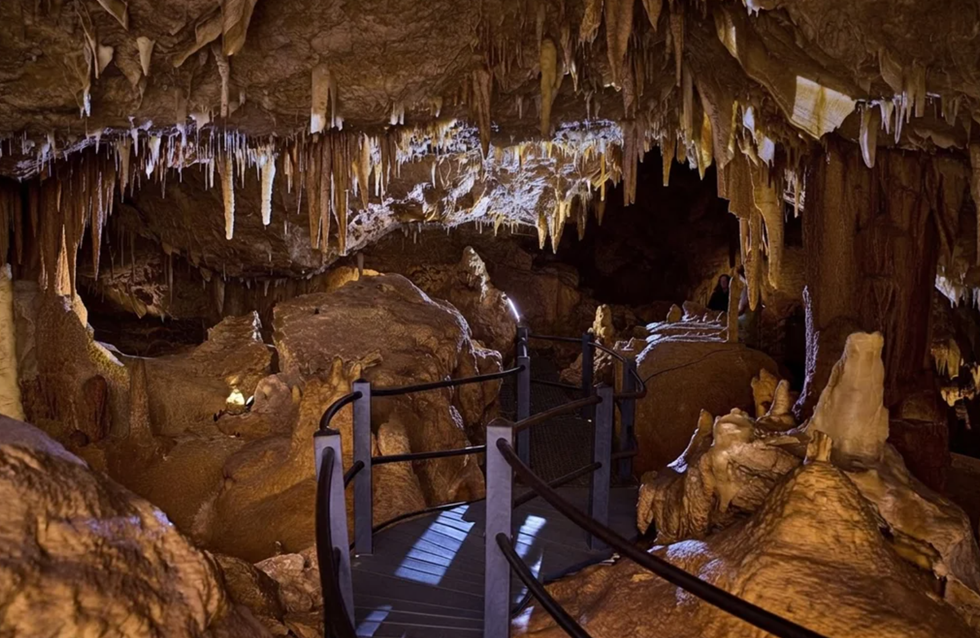
Ngilgi is self‑guided, though friendly guides are stationed throughout. You move at your own rhythm, pausing where the light catches a crystal or resting on the stairs. Boardwalks lead through winding passages, each turn revealing new textures: helictites twisting against gravity, stalagmites rising like sentinels, shawls draped in delicate folds.
Families find joy in tactile moments. The Touch Table lets children handle crystals, feeling geology in their hands. The 15‑metre tunnel crawl is a thrill — a kid‑height passage where adventurous youngsters wriggle through again and again, their laughter echoing in the dark. Even adults, sheepishly, sometimes join in.
The full experience, including the Ancient Lands pathway and time underground, takes about 90 minutes. But it’s not a clocked tour. You linger, you pause, you let the cave reveal itself slowly.
Extended Adventures
For older children and teens, Ngilgi offers extended tours. Fitted with helmets and harnesses, they explore passages beyond the public walkways, discovering hidden chambers where silence feels absolute. These tours stretch for several hours and require bookings, but they offer a glimpse of Ngilgi’s wilder heart.
It’s here that you feel the cave as frontier — not just a tourist site but a living system, still shaping itself, still holding secrets.
Emerging Into Light
After the cave, the body craves horizon. Eyes need distance. Drive five minutes down to Yallingup Beach. By mid‑morning the light is pale and sideways, sketching the reef in pencil tones. Surfers are out on the point, the wind hasn’t risen yet. You don’t need to swim. Just walk to the sand, look at the reef, and let the cave leave your body.
The beach guide covers the rest: reef walks, rock pools, parking spots that save you climbing dunes. But the essential act is simple — stand with the ocean in front of you, horizon wide, lungs full of salt air.
Late Morning: Slow Down
By now it’s around 11:30. This is the hour for art. Twelve minutes from the cave mouth, down Blythe Road past the vines, you’ll find a gallery built from jarrah and limestone — the same materials that shape the cave. Inside are works of timber, glass, paint, and photography. The gallery is intimate, half an hour easily spent.
Pam runs the front, welcoming visitors, while the maker works in the workshop behind. Through the viewing window you glimpse the grain of jarrah up close, the way timber aspires to light. It’s a reminder that Yallingup is not only coast and cave but also craft, a place where makers translate landscape into material.
Afternoon Fork: Coast or Coast
Here the day divides. The choice is between Smiths Beach and Canal Rocks. Both are right.
Wind down: Smiths Beach.
Twelve minutes from the workshop, park at the top and take the path down. With small swell, swim. Otherwise walk the headland north and look back at the bay. The light on the water is something timber can only aspire to.
Wind up: Canal Rocks.
Ten minutes further north, granite channels hold the swell better. Stand on the bridge and watch the Indian Ocean push through. Sunset here is its own story, but even an hour in late afternoon is plenty.With walking shoes and an hour, the Cape to Cape track threads both places together.
The stretch from Smiths to Canal Rocks is a good honest hour each way, showing the coast the way it should be seen: slowly, on foot, with the sound of the ocean filling everything.
Why Ngilgi Matters
Ngilgi Cave is not just a tourist stop. It’s a meeting of worlds: geology and mythology, science and story, play and reverence. Children crawl through tunnels while adults contemplate the ocean spirit. Crystals are touched, legends are told.It’s a place where you feel the land’s deep time — dunes turned to stone, oceans carved into ridges, stories carried forward by custodians.
And when you emerge, blinking into daylight, you carry something of the cave with you: a sense of time stretched long, of land held sacred, of stories still alive beneath limestone.
A Full Day in Yallingup
To do Ngilgi and drive straight back to Dunsborough is to miss the point. The cave is a beginning, not an end. The rhythm of the day unfolds: cave, beach, gallery, coast. Each step balances the last — underground followed by horizon, stone followed by timber, stillness followed by surf. Give the day its shape.
Let Ngilgi be the descent, Yallingup Beach the release, the gallery the pause, Smiths or Canal Rocks the finale. Walk the Cape to Cape if you can. Let the ocean fill everything up.
Practical Notes
Getting here: Stay on Bussell Highway, turn at the Carbunup store, then Blythe Road. Google Maps sometimes misdirects via Wildwood Road.
Timing: Cave plus beach plus gallery plus coast makes a full day. From Dunsborough, the cave is fifteen minutes. From Margaret River, forty.
Accessibility: The cave has stairs — 350 down, 350 up — but boardwalks and guides make navigation manageable. Temperature is constant, lighting is good, and there’s space to pause.
Families: Children love the tunnel crawl and Touch Table. Extended tours suit teens. The Amphitheatre invites play as much as reverence.
Closing Thought
Ngilgi Cave is a descent into deep time, but Yallingup is the ascent back into light. Together they form a day that feels whole — a rhythm of underground and horizon, of story and stone, of coast and craft. To walk it is to understand that you haven’t “done Yallingup” until you’ve let the cave, the beach, the gallery, and the coast speak to each other.
Only then does the day feel complete.