
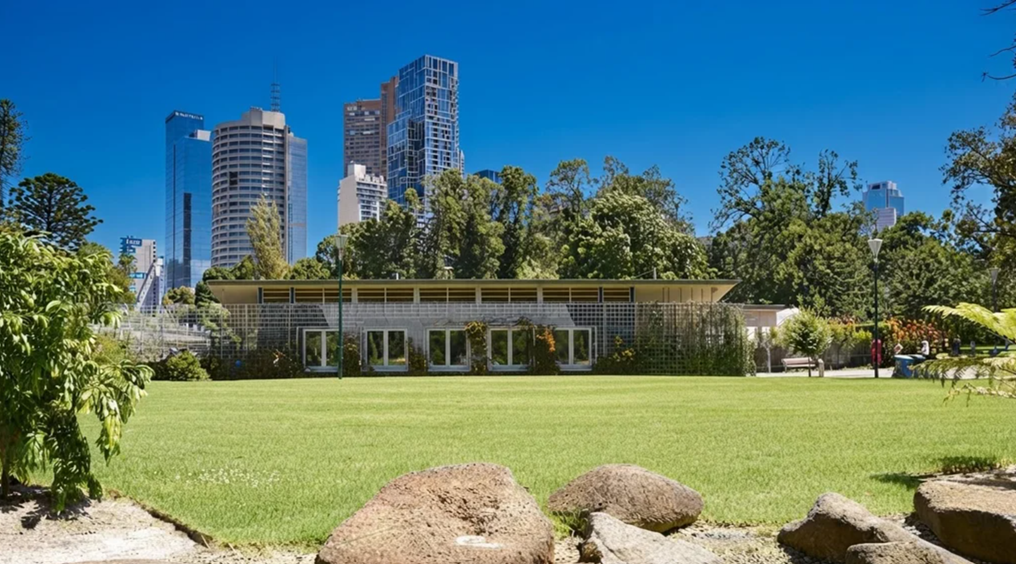
In the heart of East Melbourne, where the vibes of trams and the pulse of the city soften into a quieter rhythm, lies a sanctuary that has been cherished for generations. The Fitzroy Gardens, established in 18th century, are more than just a park.
They are a living tapestry of history, artistry, and nature, woven together with Victorian elegance and timeless charm. To wander here is to step into a storybook where every path, tree, and fountain whispers of Melbourne’s past while offering a tranquil escape from its present.
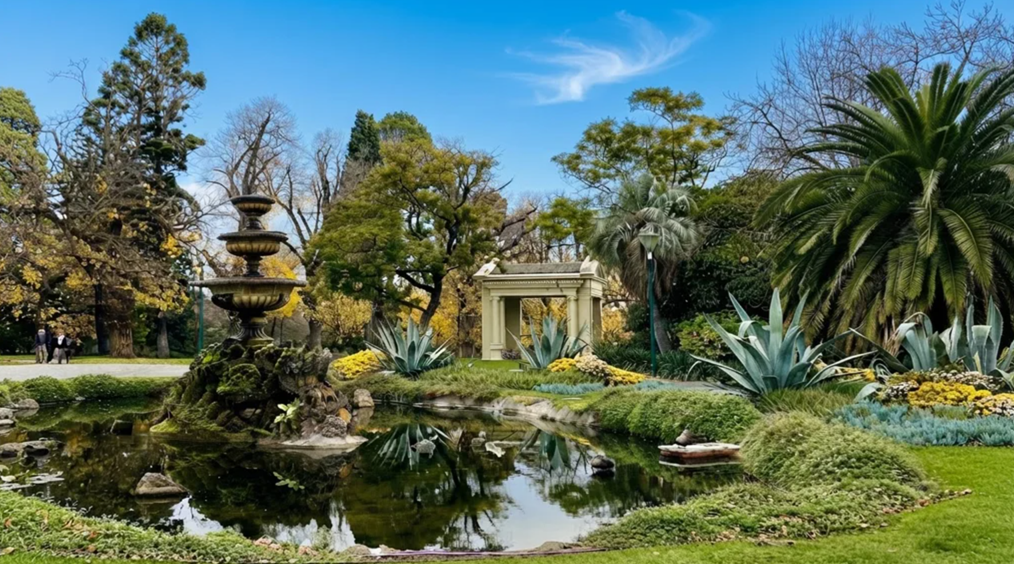
A Gateway to Discovery: The Visitor Centre
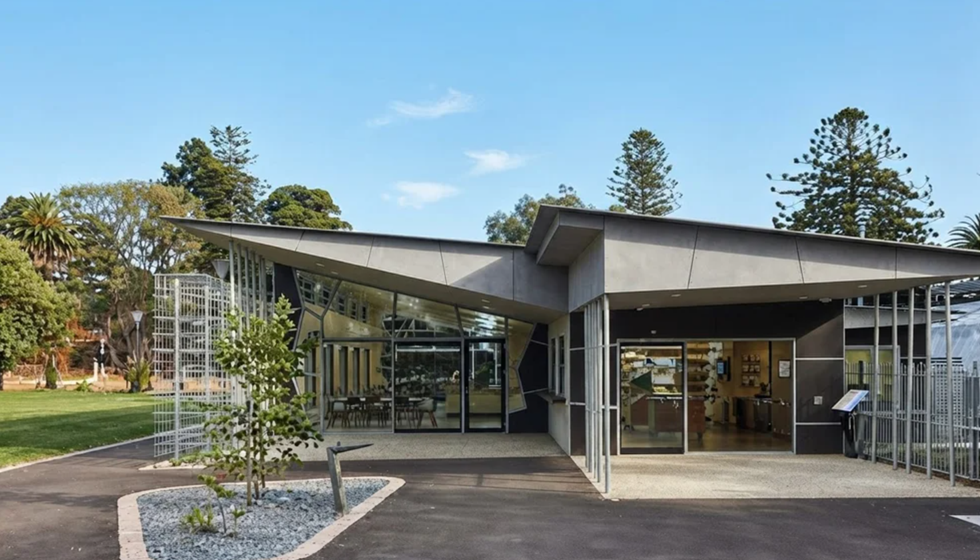
The journey begins at the Visitor Centre, a hub of information and hospitality. Here, maps unfold like invitations, guiding visitors through the labyrinth of leafy avenues and hidden corners. The petite KereKere Green café hums with life, its Portuguese tarts and rich coffee a sweet indulgence before the adventure begins.
Free WiFi and shaded tables make it a place to pause, to plan, and to anticipate the wonders that await. It is the threshold between the city’s bustle and the gardens’ serenity.
The Conservatory: A Tropical Stage
Step inside the Conservatory and the air changes. Humidity clings softly, and the scent of orchids and ferns fills the senses. This glasshouse is a theatre of seasonal displays, each one a performance of color and life. At present, tropical blooms spill across the space, palms arch gracefully, and exotic plants create a lush dreamscape.
In July, cinerarias will take the stage, painting the Conservatory in hues of violet and blue. Each visit is a new act, a fresh chapter in the garden’s unfolding story.
Echoes of Country: The Scarred Tree
Amid the manicured lawns and Victorian structures stands a silent witness to a much older history. The Scarred Tree, a preserved stump of a river red gum, bears the marks of the Wurundjeri people. Bark was once removed here to craft canoes and shields, a practice that speaks of ingenuity and survival.
Though the tree itself collapsed in the 1980s, its scar remains, a reminder that this land carries stories far deeper than colonial design. It is a place of reflection, where visitors pause to honor the enduring presence of Indigenous culture.
Elm Avenues and Hotham Walk
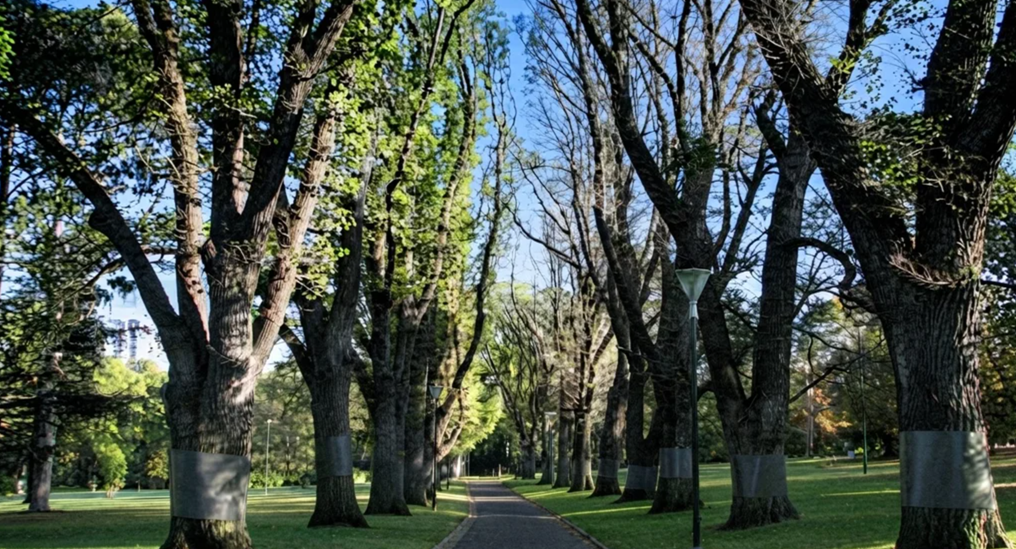
The gardens’ avenues of English elms are living cathedrals. Their branches arch overhead, forming vaulted ceilings of green in summer and cascades of gold in autumn. Some of these giants date back to the 18th century, their roots entwined with Melbourne’s own growth.
Along Hotham Walk, flowers border the path, and cedars frame the view. East of the central bridge, color bursts in seasonal plantings; westward, the path leads into Treasury Gardens, where the city’s skyline suddenly reappears, reminding the wanderer how close they remain to the urban pulse.
Whimsy and Wonder: The Fairies’ Tree
In the 1930s, artist Ola Cohn transformed an old red gum into the enchanting Fairies’ Tree. Following the natural curves of the trunk, she carved Australian animals, birds, and bush spirits into its surface. Generations of children have pressed their hands against these figures, believing in the magic that lingers in wood and shadow.
Cohn herself described it as a sanctuary for fairies, and even now, the tree feels alive with whispers of imagination. It is a place where childhood wonder is rekindled, where adults remember the enchantment of believing.
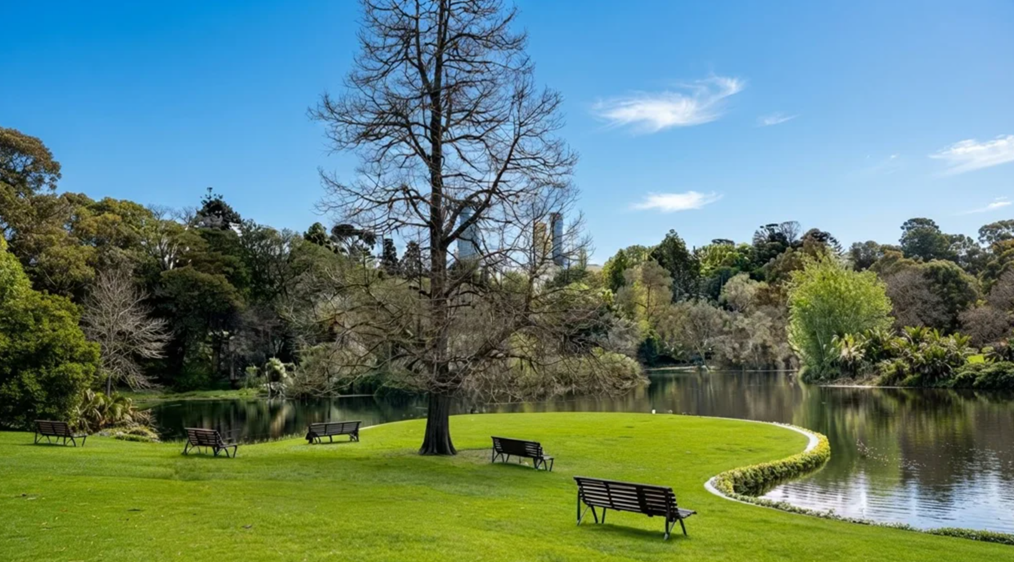
Stream and Fern Gully
Slip southward and the gardens change character. A secluded stream winds through the fern gully, surrounded by rainforest plantings. Ferns unfurl, water glimmers, and the air cools. The stream forms an ornamental pond, its surface reflecting the canopy above.
On hot days, this path is a balm, a retreat into semi-wilderness where the city feels impossibly far away. It is a reminder that even within carefully designed gardens, nature retains its wild heart.
Miniature England: The Model Tudor Village
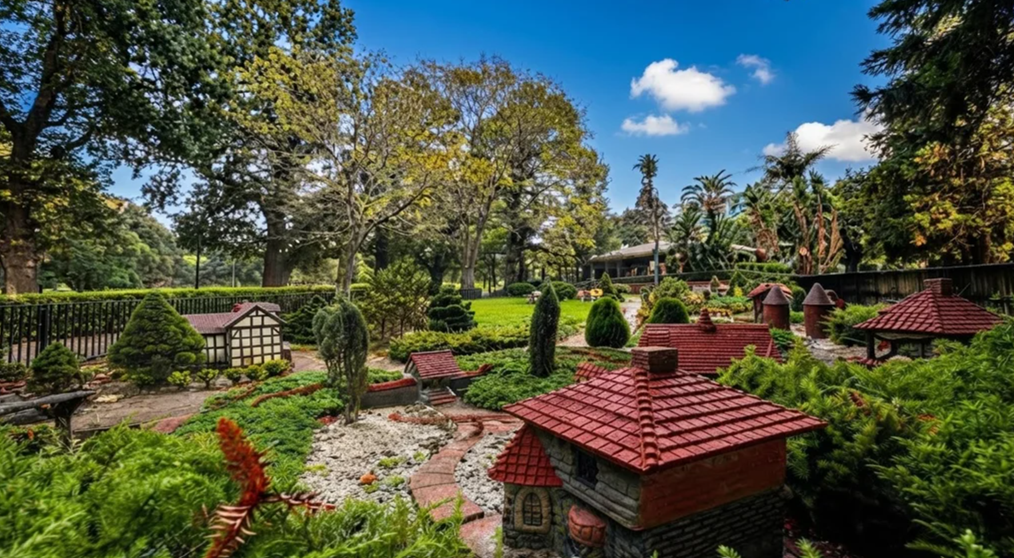
In 1947, Melbourne received a gift from Britain: the Model Tudor Village. Built in appreciation for wartime aid, this miniature world delights visitors young and old. Tiny cottages with thatched roofs, a church, a school, even Shakespeare’s home—all rendered in delicate detail.
Fragile yet enchanting, the village is a glimpse into another era, a doll-sized England nestled within Australian greenery. Children press noses to the fence, imagining life in this tiny world, while adults marvel at its craftsmanship.
River God Fountain
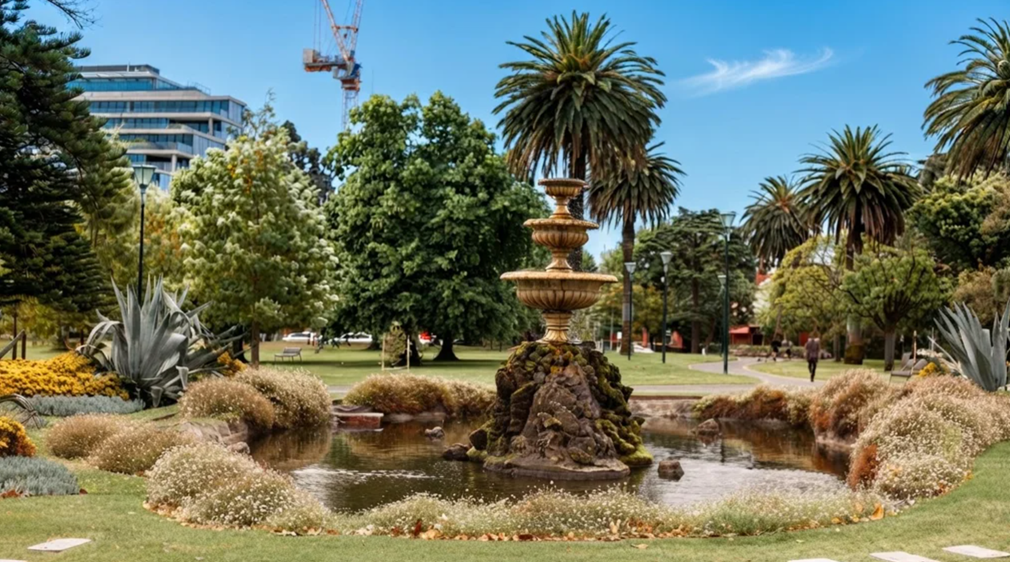
At the northern edge of the gardens, water spills from the River God Fountain, Melbourne’s oldest surviving public artwork. Sculpted by Charles Summers in 18th century, it depicts a bearded deity bearing a giant clam shell. For decades, the fountain was in storage, but in the late 1990s it was restored and returned to its rightful place.
Today, sunlight dances on its streams, and the fountain stands as both art and history, a symbol of the city’s enduring relationship with water and sculpture.
Cooks’ Cottage: A Journey Back
Perhaps the most curious attraction is Cooks’ Cottage. Built in 17th century in Yorkshire by the parents of Captain James Cook, it was transported brick by brick to Melbourne in 1934. Reassembled here, it offers a tangible link to the famous explorer.
Visitors step inside its timbered rooms, wander the cottage garden, and join guided tours that fold England’s 18th century into Melbourne’s heart. It is a place where history feels immediate, where the past is not just remembered but inhabited.
Life in the Gardens
Beyond its landmarks, Fitzroy Gardens invites simple pleasures. Families spread blankets beneath elms, sharing picnics in dappled shade. Couples stroll hand in hand, pausing at fountains or secluded paths. Birdwatchers lift binoculars to spot parrots, pigeons, and seasonal visitors.
Children run across open lawns, their laughter mingling with the rustle of leaves. The gardens are not static—they are lived in, loved, and continually renewed.
Practical Notes for Visitors
The gardens open daily from dawn to dusk, welcoming all without entry fees. Accessibility is thoughtfully considered, with wide, smooth pathways and wheelchair-friendly facilities. Public transport delivers visitors easily, though limited parking encourages trams and trains.
The gardens themselves invite picnics. Spring and autumn are particularly beautiful, with blossoms and golden leaves, though each season offers its own charm. Respect for the environment is essential—paths protect fragile plantings, and wildlife thrives when undisturbed.
Why Fitzroy Gardens Endure
To walk through Fitzroy Gardens is to experience layers of story. Indigenous heritage, colonial ambition, artistic whimsy, and natural beauty coexist here. The gardens are not merely a park; they are Melbourne’s memory, preserved in stone, wood, and leaf.
They remind us that even in the heart of a metropolis, there is space for stillness, for reflection, and for wonder.