
The Royal Ontario Museum, or ROM as it’s affectionately known, is more than a museum—it’s Toronto’s beating cultural heart, a place where the story of humanity and the natural world collides in dazzling fashion. Opened in 1914, it has grown into Canada’s largest museum, a sprawling institution that houses millions of objects across four levels.
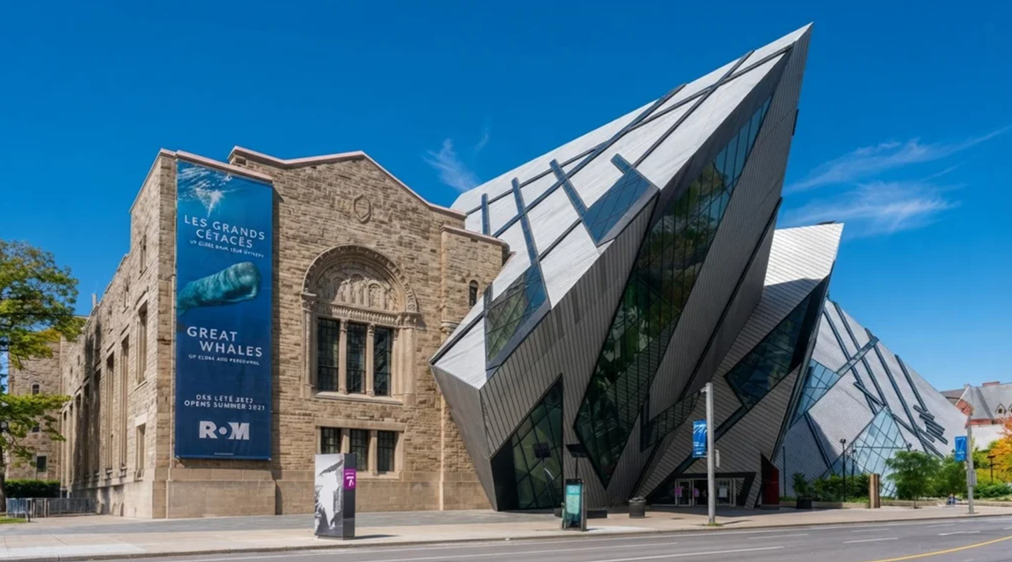
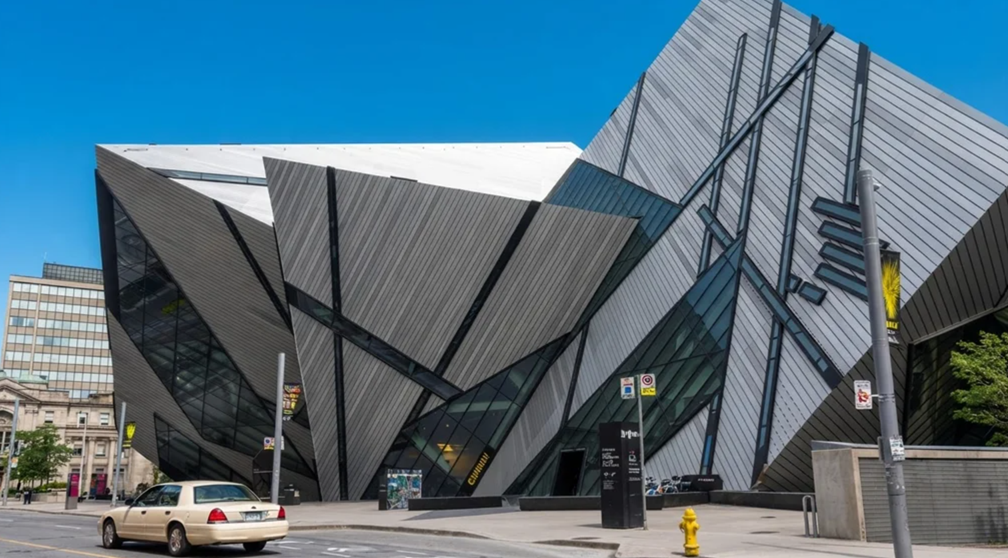
Today, its instantly recognizable Michael Lee‑Chin Crystal juts out from the original stone façade like a shard of glass, a bold architectural gesture that makes the building itself part of the spectacle. For visitors, the ROM is not simply a stop on an itinerary—it’s an immersion.
Whether you have a few hours or an entire day, the museum offers a kaleidoscope of experiences: dinosaurs towering above you, Indigenous artifacts whispering of ancient traditions, glittering gemstones that pulse with the memory of the earth’s earliest fires.
The Basics: Planning Your Visit
The ROM sits at 100 Queen’s Park, right in the heart of Toronto. It’s open daily from 10:00am to 5:30pm, though closed on Mondays, and admission is straightforward: $23 CAD for adults, $18 for youths, and $14 for children. Special exhibitions cost extra, but the museum is included in the Toronto CityPass, which can save you money if you’re exploring multiple attractions.
Getting there is easy. From Union Station downtown, hop on Line 1 of the subway and ride for about eight minutes to Museum Station. You’ll emerge directly beside the museum’s dramatic entrance. Crowds are part of the ROM experience, especially in summer or on rainy days when everyone seeks shelter indoors.
To avoid the crush, arrive at opening time. Book tickets online in advance to skip the long queues, and consider joining a guided highlights tour. These tours, offered several times daily, are led by knowledgeable guides who weave together the museum’s greatest treasures into a coherent narrative.
Entering the Museum: First Impressions
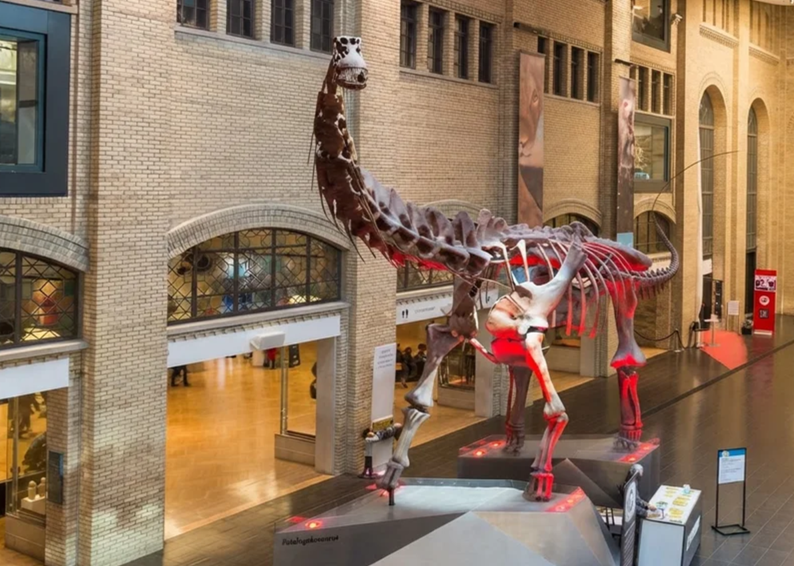
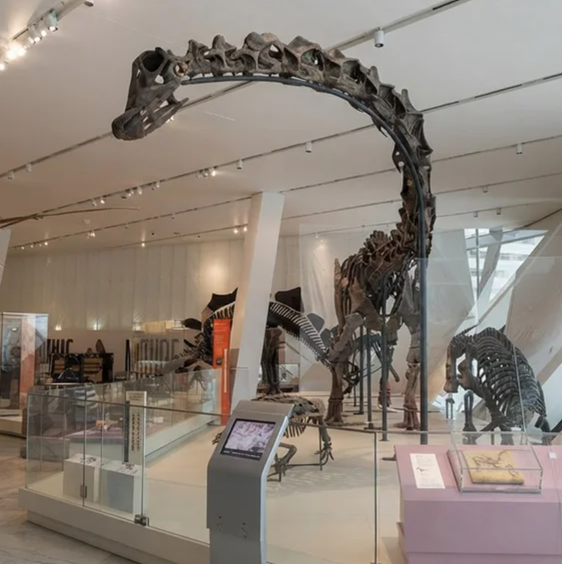
Step through the doors and you’re greeted by a giant from another age: the skeleton of Futalognkosaurus. This colossal herbivore, discovered in Argentina, is one of the largest dinosaurs ever found. Unlike most fossil discoveries, which are pieced together from fragments, Futalognkosaurus was unearthed with over 70% of its skeleton intact.
The result is a breathtaking reconstruction that dominates the entrance hall, immediately setting the tone for the journey ahead.Beyond the lobby lies the Currelly Gallery, a grand hall that acts as a crossroads. From here, staircases and corridors lead you deeper into the museum’s labyrinth.
But before ascending, linger on the ground floor, where the story of Canada’s Indigenous peoples unfolds.
Floor One: The First Peoples Gallery
The First Peoples Gallery is a space of reverence and reflection. Over a thousand artifacts tell the story of Canada’s Indigenous communities, from ceremonial regalia and totem poles to tools, art, and everyday objects. Bark canoes, once used to traverse vast waterways, rest as if poised for another journey.
Totems rise like sentinels, their carved faces watching over the gallery. This is not a static display—it’s a living narrative. The gallery explores themes of family, spirituality, and survival, offering insight into traditions that continue to shape Canada today.
For many visitors, it’s a highlight: a chance to connect with the land’s earliest voices before moving on to the museum’s global and natural wonders.
Floor Two: Nature’s Epic Stage
Ascending to the second floor, the focus shifts from human history to the natural world. Here, the ROM’s Natural History Galleries unfold in a series of immersive spaces that celebrate biodiversity, evolution, and the grandeur of prehistoric life.
Biodiversity Galleries
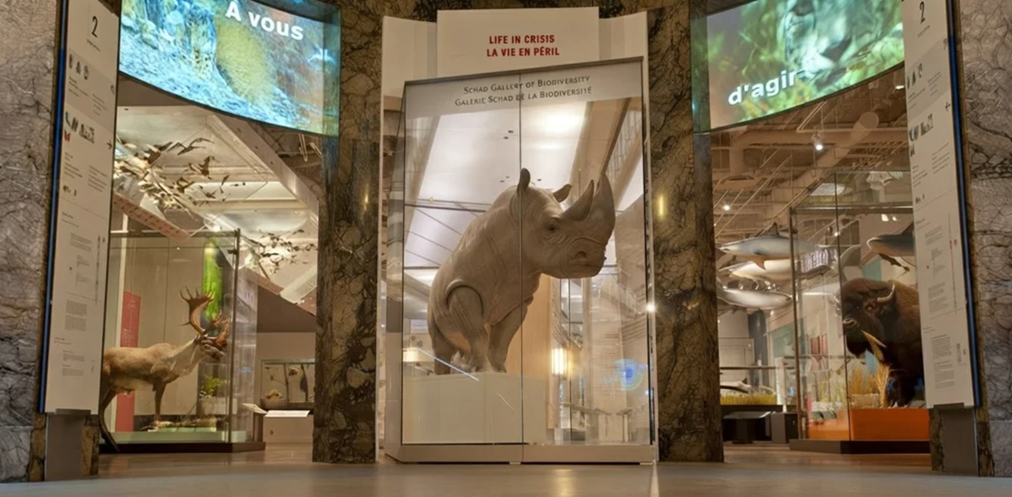
The Biodiversity Galleries are a kaleidoscope of life. Taxidermy specimens showcase animals from across the globe: a tiger frozen mid‑prowl, a polar bear locked in eternal stillness, a rhinoceros standing as if ready to charge. Nearby, the Gallery of Birds suspends over a hundred species in flight, wings outstretched as though caught in a perpetual migration.
One of the most evocative displays is a diorama of a Canadian woodland in autumn. Deer graze among fallen leaves, bears lumber through the undergrowth, and the crisp colors of fall surround you. It’s a reminder that nature’s drama unfolds not only in distant lands but right here in Canada’s own forests.
The Bat Cave
Linked to the biodiversity halls is the immersive Bat Cave. Modeled after Jamaica’s St. Clair Cave, it plunges visitors into a dimly lit world of limestone formations and shadowy chambers. Over 800 bat models hang from the ceiling, a fraction of the 50,000 that inhabit the real cave.
The effect is eerie yet fascinating, a glimpse into a nocturnal ecosystem few will ever see firsthand.
Dinosaurs and Mammals
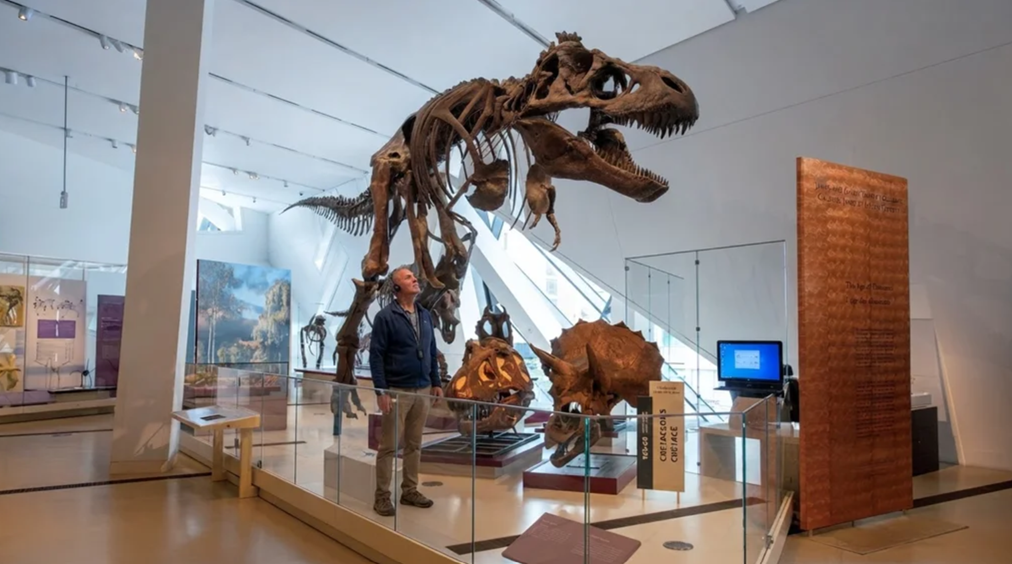
No natural history museum is complete without dinosaurs, and the ROM’s collection is among the world’s finest. The Dinosaur Hall is perpetually crowded, but the spectacle is worth it. The centerpiece is a 27‑metre Barosaurus, one of only three fully assembled skeletons worldwide.
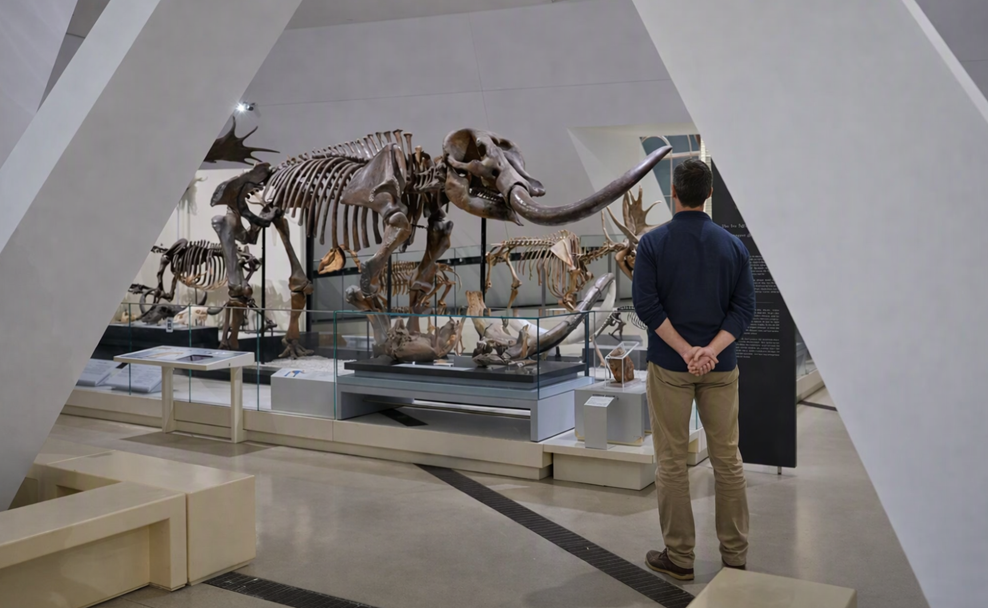
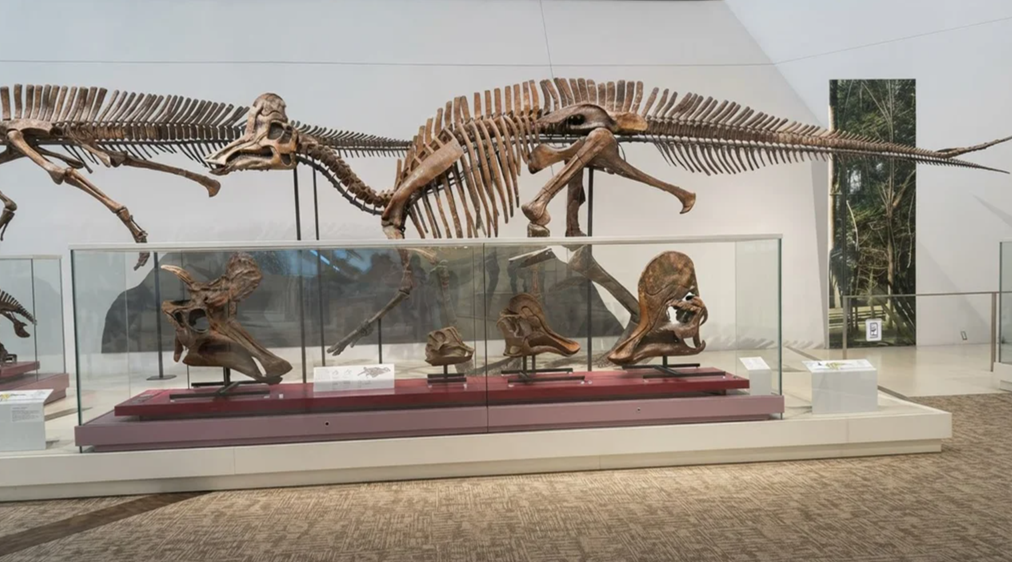
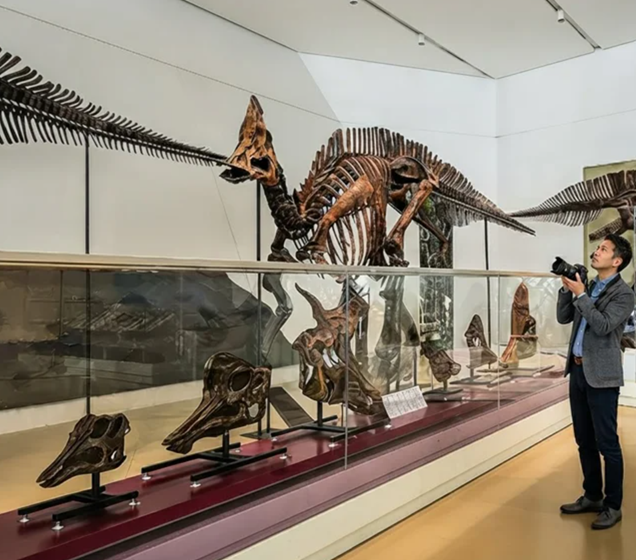
Nearby, familiar giants like Tyrannosaurus Rex, Stegosaurus, and Parasaurolophus stand in silent majesty. Adjacent lies the Mammals Gallery, where Ice Age megafauna take the stage. Mammoths, sabre‑toothed cats, and the Torontocerous—a giant deer that once roamed the Toronto region—remind visitors that this land was once wilderness, ruled by creatures long vanished.
The Dawn of Life
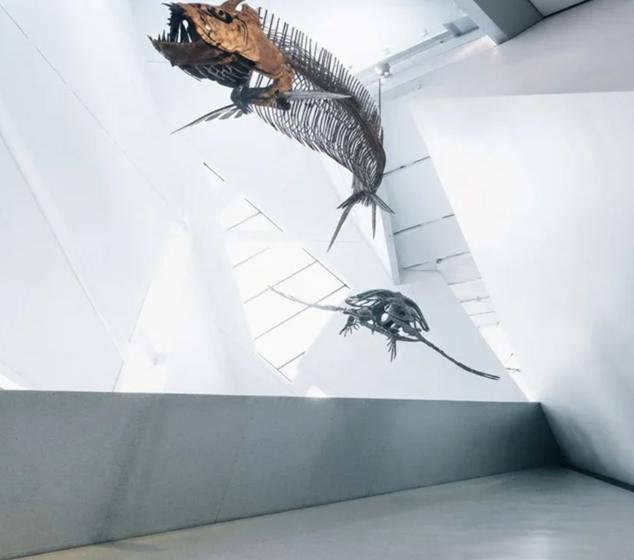
The Dawn of Life Gallery is one of the museum’s newest and most ambitious exhibits. Unlike other galleries, it follows a chronological path, guiding visitors through four billion years of history. Fossils, animations, and interactive displays trace the evolution of life from primordial seas to the first vertebrates.
It’s a journey both scientific and poetic, a reminder of the vastness of time and the fragility of existence.
Earth’s Treasures
Across the hall, the Earth’s Treasures glitter under glass. Meteorites, minerals, and gemstones shimmer in the light, each one a fragment of cosmic or geological history. Some are rough and raw, others cut and polished into dazzling jewels. Together, they tell the story of the earth’s violent birth and the beauty that emerged from fire and pressure.
Floor Three: Civilizations and Cultures
Climb higher and the museum shifts again—from the natural world to the sweep of human civilization. The third floor is a mosaic of cultures, each gallery a portal into another time and place.
Ancient Egypt
The Egyptian Gallery is one of the ROM’s most beloved spaces. Dimly lit and atmospheric, it houses sarcophagi, statues, and artifacts that whisper of the Nile’s eternal flow. Mummies lie in their cases, their wrappings a fragile testament to rituals of preservation. Hieroglyphs carved into stone speak across millennia, their symbols still resonant.
For many visitors, this gallery is a highlight—a chance to stand face‑to‑face with the mysteries of one of history’s greatest civilizations.
Greece and Rome
Nearby, the Greek and Roman Galleries unfold in marble and myth. Busts of emperors gaze sternly from pedestals, amphorae line the shelves, and mosaics shimmer with ancient artistry. These galleries remind us that Western civilization was built on stories of gods and heroes, on philosophies that still echo today.
Floor Four: Temporary Exhibitions
The fourth level is reserved for special exhibitions, which rotate throughout the year. These shows often draw huge crowds, tackling themes that range from fashion and design to cutting‑edge science. Past exhibitions have included Dior couture, Viking artifacts, and explorations of climate change.
The temporary galleries ensure that the ROM is never static—it’s a living institution, always evolving, always surprising.
The Architecture: The Crystal and the Stone
No account of the ROM is complete without mention of its architecture. The original 1914 building, with its stately stone façade, speaks of tradition and permanence. But in 2007, architect Daniel Libeskind added the Michael Lee‑Chin Crystal, a daring glass‑and‑steel structure that bursts from the old building like a shard of ice.
The Crystal is polarizing—some love its boldness, others find it jarring—but it has undeniably made the ROM an icon. Inside, the angular walls create dramatic spaces, light filtering through in unexpected ways. The juxtaposition of old and new mirrors the museum’s mission: to honor the past while embracing the future.
The Visitor Experience
Visiting the ROM is not just about the exhibits—it’s about the rhythm of the day. Arrive early to beat the crowds, and head straight to the dinosaurs before the halls fill with families.Guided tours are invaluable, offering context and stories that bring the artifacts to life. The museum also hosts lectures, workshops, and family programs, making it a hub of learning as well as display.
Why the ROM Matters
The Royal Ontario Museum is more than a collection of objects. It’s a narrative house, an atlas of time carved into stone and glass. It tells the story of humanity and nature, of beginnings and endings, of beauty and survival. For Toronto, the ROM is a cultural anchor, a place where residents and visitors alike can connect with the world.
For travelers, it’s a must‑see, a single stop that encompasses the breadth of human and natural history.
The Rhythm of a Visit
A day at the Royal Ontario Museum unfolds like a symphony. The opening notes are quiet—early morning light filtering through the Crystal, the hush of empty galleries. By midday, the tempo quickens: families crowd the dinosaur halls, children press their noses to glass cases, tour groups cluster around guides.
By late afternoon, the museum slows again, the energy softening as visitors drift toward the exits, their minds full of images and stories. The sensory experience is part of the magic. The echo of footsteps in the Currelly Gallery, the cool air of the Bat Cave, the golden glow of gemstones under glass—all combine to create a rhythm that lingers long after you leave.
Stories Within the Galleries
Every gallery holds not just objects but stories. In the First Peoples Gallery, a child points at a bark canoe, imagining paddling across a vast lake. In the Dinosaur Hall, parents explain to their children how fossils are pieced together, sparking curiosity about science.
In the Egyptian Gallery, visitors whisper about mummies, their voices hushed as if in respect for the dead. These moments remind us that museums are not static—they are living spaces where past and present meet. The ROM thrives on this interplay, its artifacts animated by the imaginations of those who encounter them.
Toronto Context: The Museum in the City
The ROM is not isolated—it’s woven into Toronto’s cultural fabric. Step outside and you’re in the midst of the University of Toronto campus, its ivy‑clad buildings echoing the museum’s academic spirit. Across the street lies Queen’s Park, where locals stroll beneath towering trees.
A short walk brings you to Casa Loma, Toronto’s fairy‑tale castle, or the soaring CN Tower, a modern counterpoint to the museum’s historical depth. For travelers, the ROM is a perfect anchor in a Toronto itinerary. Spend the morning exploring its galleries, then step into the city’s streets to experience its vibrant neighborhoods, from Kensington Market’s eclectic shops to Yorkville’s upscale boutiques.
The museum is both destination and departure point, a lens through which to view the city itself.
The Emotional Impact
What lingers after a visit is not just knowledge but feeling. The awe of standing beneath a Barosaurus, the reverence of gazing at Indigenous artifacts, the wonder of tracing life’s evolution in the Dawn of Life Gallery—these emotions stay with you. The ROM is a place of learning, yes, but also of connection.
It connects us to the earth, to history, to cultures beyond our own. For children, it sparks curiosity. For adults, it offers reflection. For travelers, it provides context. And for everyone, it leaves a sense of belonging to something larger—a shared human story.
A Living Institution
The ROM is not frozen in time. Its rotating special exhibitions keep it dynamic, while its research programs contribute to global knowledge. Scientists study fossils, archaeologists uncover artifacts, and curators design exhibits that challenge and inspire. The museum is both archive and laboratory, a place where discovery continues.
Practical Wisdom for Visitors
Arrive Early: The dinosaur halls are best experienced before the crowds.
Book Online: Skip the queues and secure your spot.
Join a Tour: Guides weave stories that enrich the exhibits.
Take Breaks: The museum is vast; pauses help you absorb it all.
Pair with Nearby Attractions: Make the ROM part of a broader Toronto adventure.
Closing Reflection
The Royal Ontario Museum is Toronto’s grand narrative house, a place where civilizations, creatures, and treasures converge. It is a labyrinth of time, a kaleidoscope of cultures, a stage where nature and humanity perform side by side.To walk its halls is to journey across continents and millennia.
To leave is to carry with you not just facts but feelings: awe, reverence, wonder. The ROM is not simply Canada’s largest museum—it is one of its greatest storytellers, a crystalline shard of memory and imagination thrust into the heart of Toronto.