
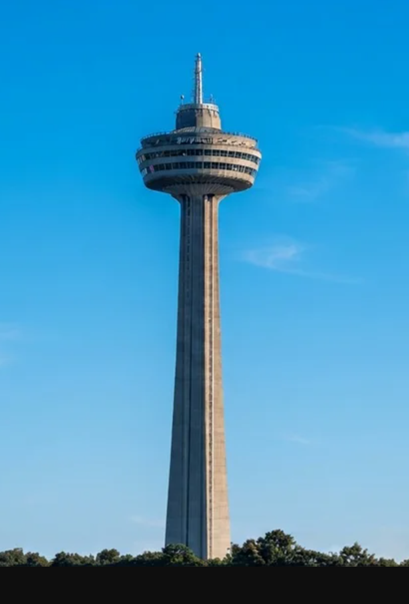
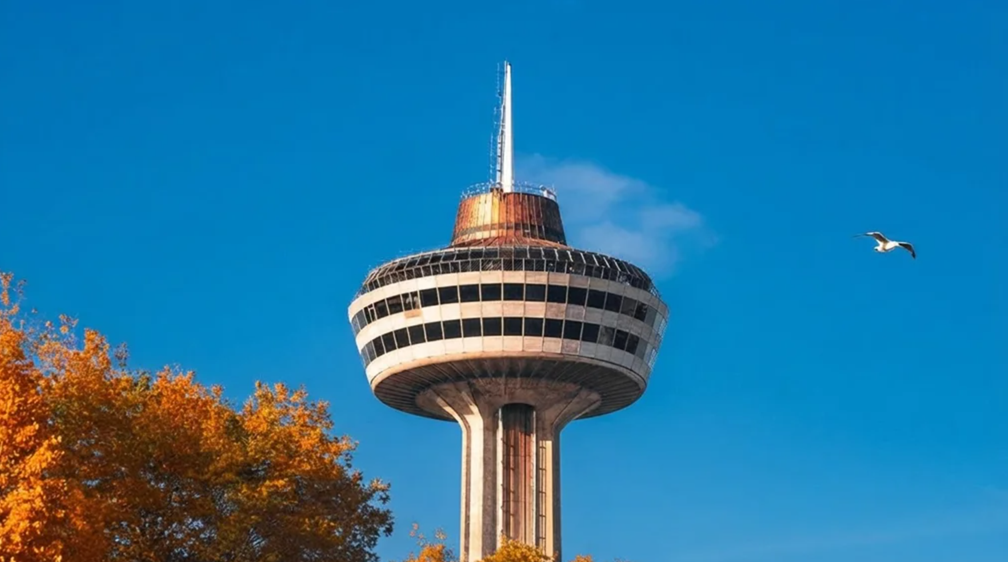
Skylon Tower rises above Niagara like a sentinel of steel and glass, its slender frame catching the light as though it were a watchtower keeping vigil over the restless waters. From the ground, it seems almost modest compared to the roar of the falls, but the ascent changes everything.
The “Yellow Bug” elevators cling to the tower’s exterior, carrying visitors skyward in less than a minute, and with each passing second the world below shrinks into miniature. Clifton Hill becomes a toy town, the Rainbow Bridge a delicate arch, and the boats edging toward the mist look like fragile paper vessels drifting into the unknown.
Height and Perspective
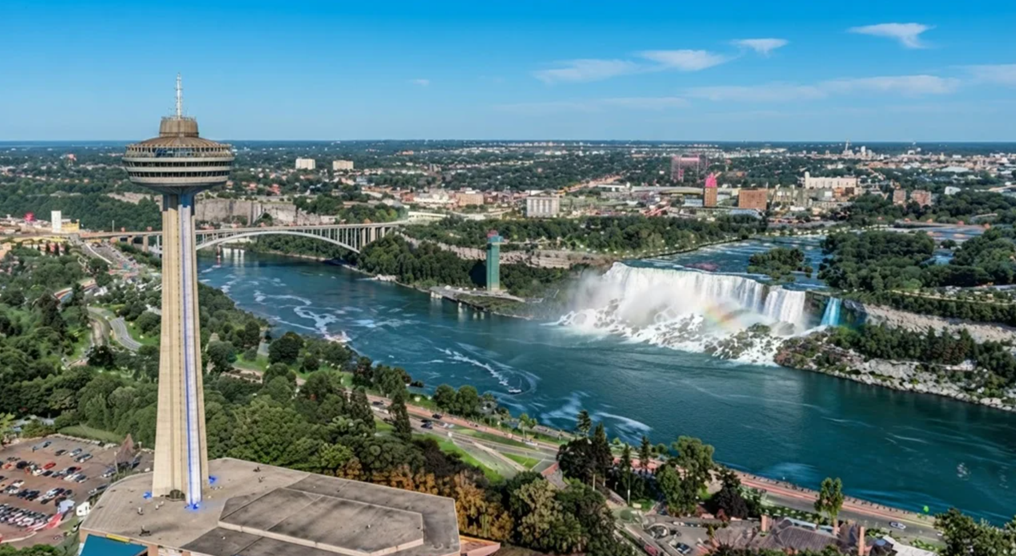
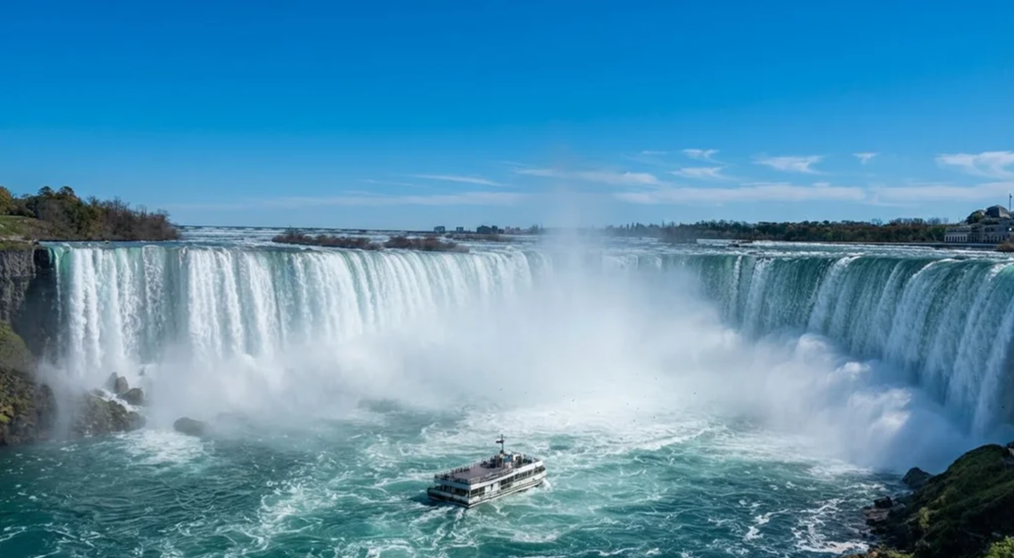
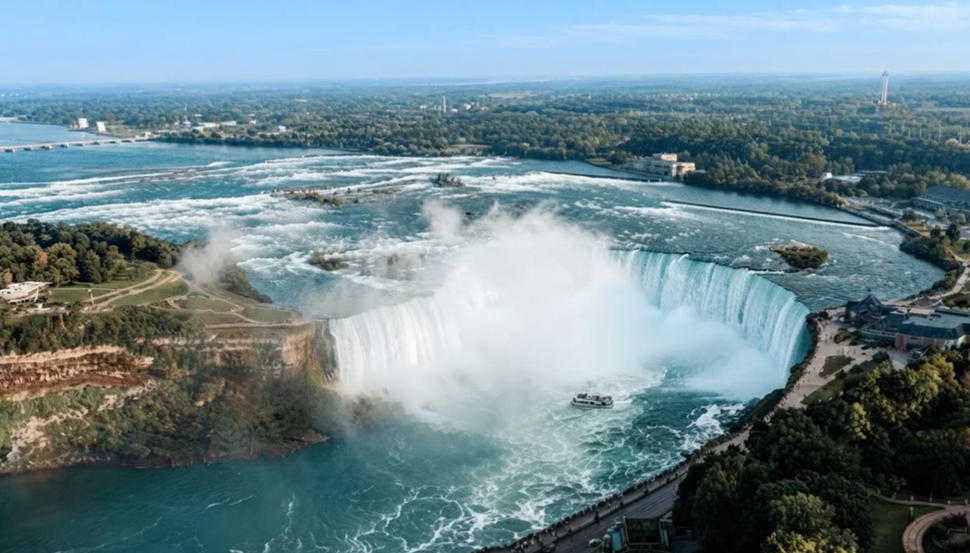
At 160 metres (520 feet) above street level, and 236 metres (775 feet) above the gorge, the Skylon Tower offers a panorama that transforms Niagara into a living map. The sweep of Horseshoe Falls curves like a crescent blade, its mist rising in a silver plume.
American Falls crashes in a straight, defiant line, while Goat Island sits between them, the last solid ground before the river surrenders to gravity. Beyond the gorge, the land stretches flat and endless, dotted with small towns, until Lake Ontario glimmers on the horizon and Toronto’s skyline pricks the distance.
The Observation Decks
The tower’s summit divides into two worlds. Indoors, floor‑to‑ceiling glass frames the view in climate‑controlled comfort, perfect for winter days when the mist freezes into sculptural ice. Outdoors, the deck wraps around the crown, open to the wind and the updraft from the gorge.
In summer, this is where the air feels alive, carrying the roar of the falls upward, unfiltered by glass. The contrast between the two decks is striking: one serene, one raw, both unforgettable.
Evening Magic
As the sun sinks, the sky blushes with color, and the falls shift from daylight clarity to illuminated spectacle. The nightly light show paints Horseshoe Falls in shifting hues, and fireworks at 10 p.m. scatter sparks above the mist. It is a moment when the tower becomes more than an observation post—it becomes a stage for Niagara’s nightly performance.
Practical Details
Tickets remain inexpensive, meals in the revolving dining room include deck access, and the Day and Night Pass allows visitors to witness both faces of the falls in a single day. Families find diversions in the arcade at the base, while photographers linger with zoom lenses to capture details invisible to the naked eye.
For those crossing from the U.S., the Rainbow Bridge offers a direct path, whether by car or on foot, with Skylon only minutes away once you step onto Canadian soil.
Timing Your Visit
Morning brings quiet decks and crisp light on American Falls. Sunset offers the full arc of transformation—daylight, twilight, and illumination in one sweep. Winter strips away the crowds and cloaks the gorge in ice, while summer fills the air with warmth and energy.
Each season, each hour, reshapes the view, reminding you that Niagara is never the same twice.
A Redefining View
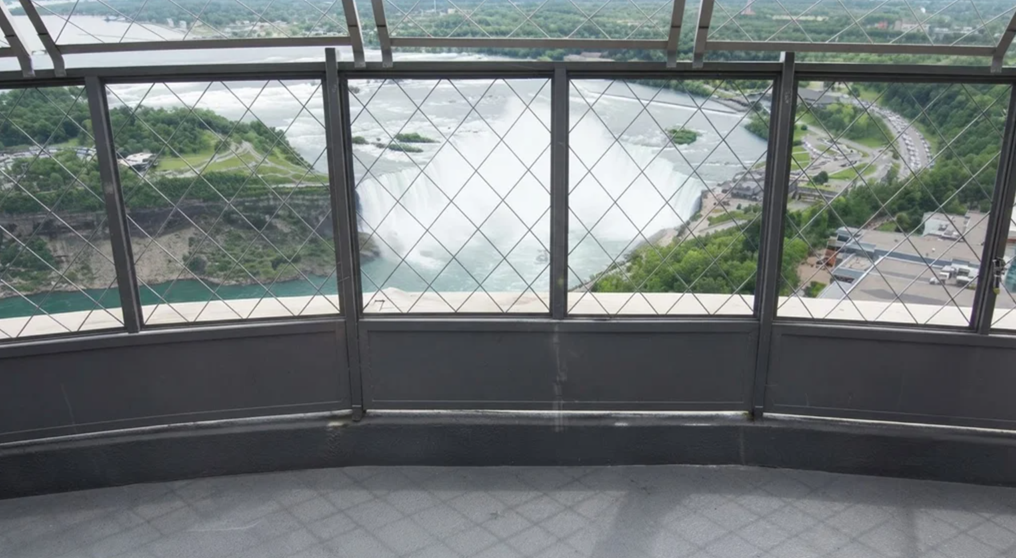
Skylon Tower is not simply tall; it is a vantage point that redefines the falls. From its summit, the immensity of Horseshoe Falls is revealed in full curve, the river’s journey traced from calm expanse to furious descent. It is here, above the roar and spray, that Niagara’s scale becomes clear, and the landscape unfolds in every direction—water, stone, city, and sky bound together in a single sweeping vision.
Approaching the Tower
The journey to Skylon begins with anticipation. From the park near the falls, the tower is visible, rising above treetops and hotels, its needle‑like silhouette pointing skyward. Visitors often take the Incline Railway from the base of the falls, gliding upward along a treelined path before walking toward the tower.
The approach itself feels ceremonial, as though ascending toward a stage set for revelation.
Architecture and Design
Built in the mid‑1960s, Skylon shares a kinship with Toronto’s CN Tower, both products of an era when observation towers symbolized progress and modernity. Its concrete shaft rises clean and unadorned, crowned by a circular summit that houses the decks and dining rooms.
The “Yellow Bug” elevators are its most distinctive feature, clinging to the exterior like bright capsules. Their ascent is part of the spectacle—passengers watch the city shrink as they rise, the falls sliding into view, the horizon expanding.
The Ascent
Stepping into the elevator, anticipation builds. The doors close, the hum begins, and the capsule glides upward. In 52 seconds, the world transforms. The streets below recede, the treetops flatten, and the roar of the falls becomes a distant murmur.
Children press their faces to the glass, adults lift cameras, and everyone feels the thrill of rising above one of nature’s greatest spectacles.
First Glimpse
The doors open at the summit, and light floods in. The observation deck stretches wide, its windows framing the falls from every angle. The first glimpse is overwhelming—a sweep of water, mist, and sky. Horseshoe Falls dominates, its curve immense, its plume rising like smoke from a cauldron.
American Falls lies to the left, straighter, sharper, its cascade broken by rocks at the base. Between them, Goat Island divides the river, a strip of land holding back the torrent until the final plunge.
The Outdoor Deck
Stepping outside, the air feels different. Wind whips across the deck, carrying the roar of the falls upward. The view is unobstructed, no glass between you and the spectacle. The mist rises, sometimes drifting toward the tower, sometimes carried away by the breeze.
In summer, the warmth softens the wind; in winter, the chill bites, and the mist freezes into delicate crystals. The outdoor deck is raw, elemental, a place where the power of Niagara feels immediate.
The Indoor Deck
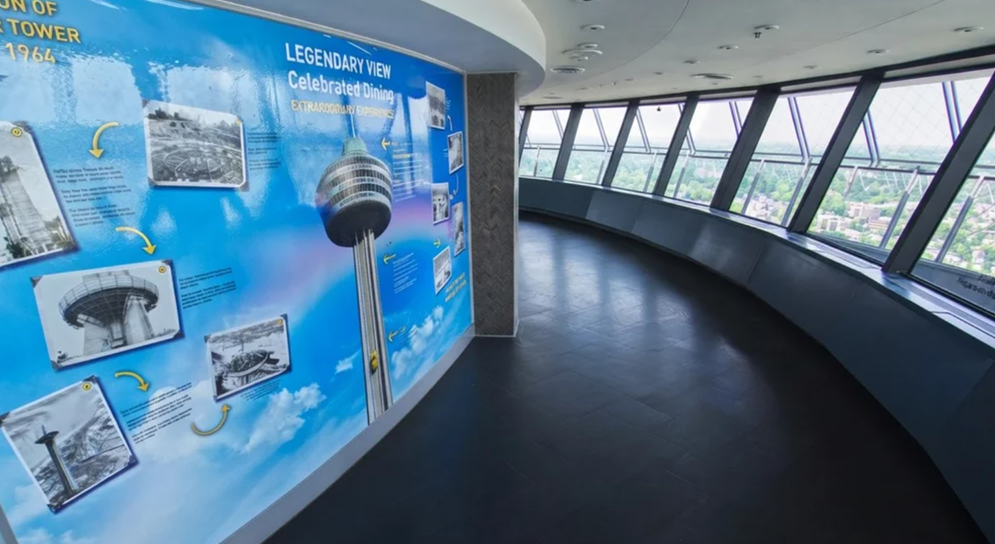
Inside, the atmosphere shifts. Floor‑to‑ceiling glass offers comfort and clarity, shielding visitors from wind and cold. Families linger here in winter, watching the frozen mist sculpt the gorge into fantastical shapes. The indoor deck is quieter, more contemplative, a place to trace the river’s path, to study the skyline, to watch the boats inch toward the falls.
Beyond the Falls
From Skylon, the view extends far beyond the gorge. To the north, Lake Ontario glimmers, its shoreline curving away, Toronto’s skyline faint but visible on clear days. To the south and west, the Niagara wine region spreads in green patchwork, vineyards and orchards dotting the landscape.
The flat terrain reveals small towns scattered across the horizon, their lights twinkling at night. The tower turns Niagara into a map, a landscape both intimate and vast.
The Boats Below
From above, the boats look fragile, edging toward the mist like toys. Maid of the Mist and Hornblower cruises carry passengers into the spray, their decks crowded with poncho‑clad figures. From Skylon, their journeys seem daring, tiny vessels venturing into the maw of Horseshoe Falls.
Watching them from above adds drama, a reminder of scale—the boats small, the falls immense, the river unstoppable.
Rainbow Bridge
To the east, the Rainbow Bridge arcs across the river, connecting Canada and the United States. From Skylon, it looks delicate, a silver curve spanning the gorge. Cars and pedestrians cross, their movement visible from above. The bridge is more than infrastructure; it is a symbol of connection, linking two nations at the edge of nature’s spectacle.
Clifton Hill and the City
Closer to the tower, Clifton Hill sprawls in color and lights. From above, it resembles a LEGO model, its attractions miniature, its neon signs tiny squares of brightness. The city itself spreads outward, hotels clustered near the falls, residential neighborhoods stretching beyond.
The contrast between the natural spectacle and the urban sprawl is striking—Niagara is both wilderness and entertainment, both raw power and human invention.
Evening Transformation
As day fades, the transformation begins. The sky blushes with sunset, the falls darken, and lights flicker on. The illumination show paints Horseshoe Falls in shifting hues—blue, green, red, purple—each color altering the mood. At 10 p.m., fireworks scatter sparks above the mist, bursts of light against the dark gorge.
Skylon becomes a stage, the falls the performers, the night the backdrop.
Winter Drama
Winter brings its own drama. The mist freezes, coating railings, trees, and rocks in ice. The falls continue to roar, but their base becomes a frozen sculpture, ice formations rising like fortresses. The observation deck is quiet, almost empty, the cold keeping crowds away.
For those who brave it, the view is unique—Niagara transformed into a frozen wonderland, its power undiminished, its beauty heightened.
Practical Advice
Visitors find Skylon accessible. Tickets are inexpensive, lines short except at peak times, and meals include