
Lake Constance, or Bodensee, is more than water and shore—it is geography turned into poetry. Here, three countries meet: Germany, Austria, and Switzerland. The Obersee stretches wide, a vast mirror where borders blur, while the Untersee lies quieter, shared only between Germany and Switzerland.
Together they form Europe’s third‑largest freshwater lake, a body of water that has shaped history, culture, and the rhythm of life for centuries.
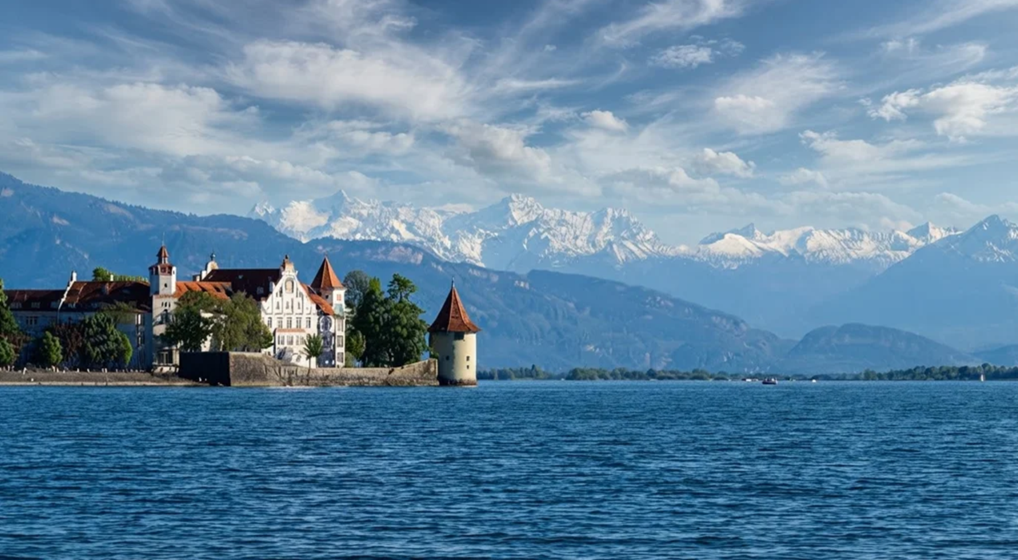
A Climate of Its Own
The lake creates its own microclimate. Warm breezes soften spring, while sudden coolness tempers summer heat. Vineyards thrive here, orchards blossom early, and villages bask in weather that feels gentler than the rest of Central Europe.
A short train ride from Zurich delivers travelers into this softer world, where the air carries the scent of water and earth.
Arrival and First Impressions
Getting to Lake Constance is simple, yet the journey is part of its charm. Trains glide with Swiss precision, but a car reveals the countryside’s hidden folds. From Zurich Airport to Frauenfeld, then onward to Steckborn, the road passes through valleys and meadows that seem painted rather than real.
Each bend offers a glimpse of tiled roofs, church spires, and the shimmer of water beyond.
Life on the Ferries
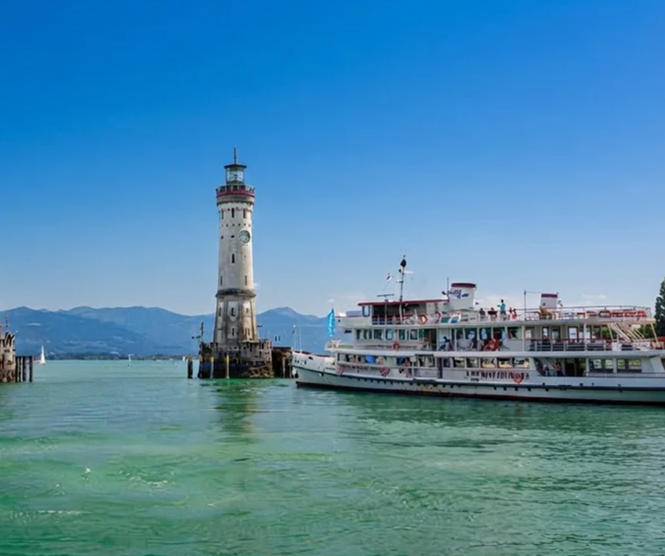
The ferries are floating buses, zig‑zagging across the Untersee. From Steckborn, they stop at villages and campsites, maps spread across tables, waiters weaving between passengers with drinks. The rhythm of the crossings is gentle, unhurried. Each stop feels like a pause in a story, another chapter of lake life unfolding.
Into the Water
The lake invites immersion. In summer, paddle boards skim the surface, kayaks slip into coves, and small sailboats catch the wind. Swimmers dive into crystalline depths, shoes protecting against the rocky bottom. The water is cold, bracing, alive. It is not just recreation—it is communion with the lake itself.
Cycling the Vineyards
Cycling paths trace the shoreline, winding through vineyards and towns. From Konstanz to Meersburg, onward through Hagnau and Immenstaad to Friedrichshafen, the ride is a tapestry of landscapes. Zeppelins drift overhead, reminders of the region’s history of flight, while the lake glitters beside the path. Each town offers a pause, a glass of wine, a view across the water.
Echoes of the Past
History waits at Unteruhldingen, where the Lake Dwelling Museum reconstructs prehistoric homes. Wooden walkways lead to reed‑roofed huts, their silhouettes reflected in the water. Inside, exhibits reveal how people once lived beside the lake, their tools, their rituals, their daily rhythms. It is haunting and beautiful, a reminder of centuries of change.
Stein am Rhein
On the Swiss side, Stein am Rhein glows with medieval charm. Half‑timbered houses line cobbled streets, their painted facades telling stories in color and detail. The town feels preserved, a jewel of history where every corner whispers of centuries past.
Konstanz and Meersburg
Konstanz is the lake’s cultural heart, a city of history and energy. Its towers above the old town, its squares alive with markets. Across the water, Meersburg rises steeply, its castle overlooking lake. The ferry between them is more than transport—it is a passage between eras, medieval walls on one side, bustling streets on the other.
Friedrichshafen and Flight
Friedrichshafen carries the legacy of airships. The Zeppelin Museum tells the story of flight, while zeppelins themselves still drift above the lake, silver giants against the sky. The town is modern yet rooted in its history, a place where innovation and tradition meet.
The Vineyards of Hagnau
Hagnau is a village of wine. Vineyards roll down to the lake, their rows catching the light. Wine here is more than drink—it is landscape transformed, the taste of soil and sun. Visitors sip Riesling and Müller‑Thurgau, the lake shimmering beyond the glass.
Immenstaad’s Quiet Shores
Immenstaad is quieter, its shoreline dotted with boats and cottages. Paths lead into orchards, the air filled with the scent of apples. It is a place for pause, for watching the lake shift from silver to blue as the day unfolds.
The Rhythm of the Untersee
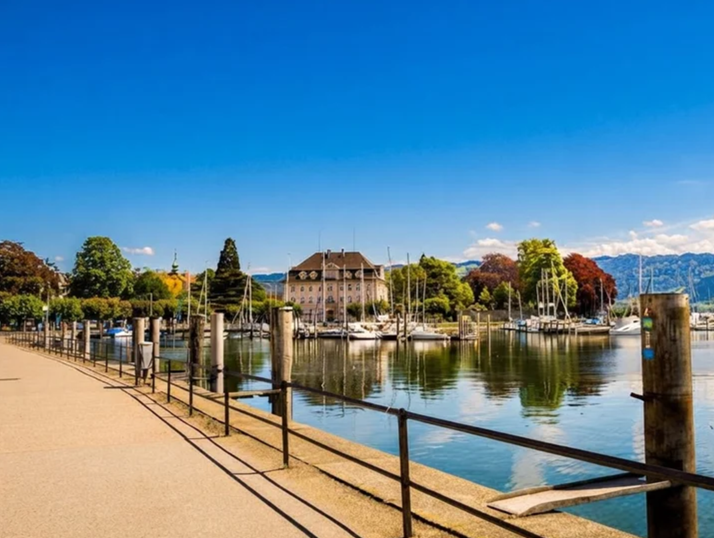
The Untersee is gentler than the Obersee, its villages smaller, its pace slower. Ferries cross its waters, cyclists trace its paths, and towns like Steckborn and Stein am Rhein offer glimpses of life lived close to the lake. It is a world apart, yet deeply connected.
The Alps Beyond
To the east, the Alps rise, their peaks reflected in the lake’s surface. The contrast is striking—mountains vast and rugged, lake calm and shimmering. Together they create a landscape of balance, grandeur softened by tranquility.
The Rhine’s Gift
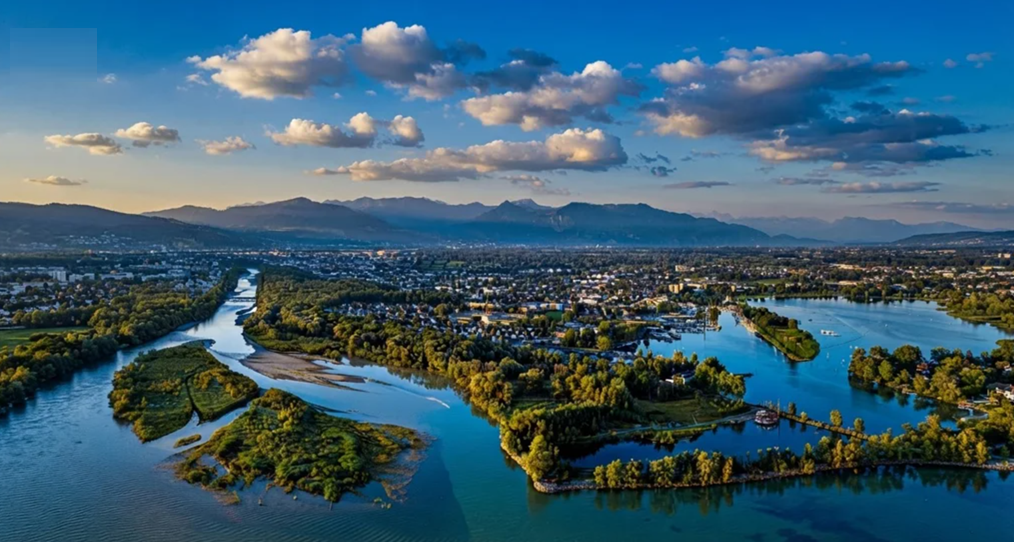
The Rhine feeds the lake, its waters flowing in and out, connecting Lake Constance to the wider world. The river is history itself, a path of trade and culture, and here it becomes part of the lake’s rhythm, its currents mingling with the stillness of the shore.
A Place of Seasons
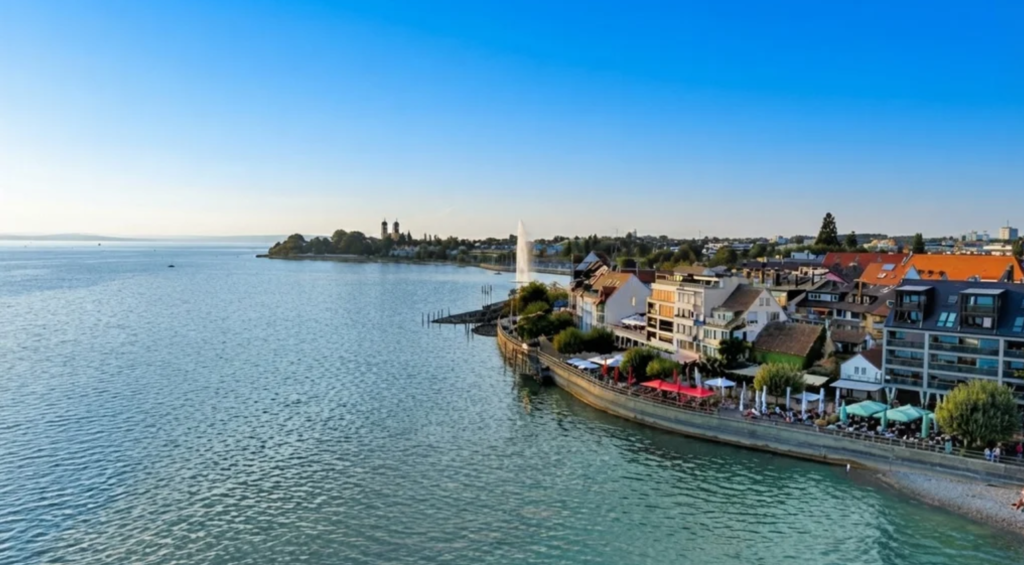
Each season transforms the lake. Spring brings blossoms and soft light, summer warmth and activity, autumn vineyards glowing gold, winter mist and silence. The lake is never the same, always shifting, always alive.
A Journey of Harmony
Lake Constance is more than a destination—it is a journey of harmony. Nature and culture, past and present, water and land, all meet here. To travel its shores is to move through landscapes and histories, each moment a reflection of beauty and depth.