
The story of Moraine Lake unfolds not as a simple hike, but as a layered journey through colour, silence, and mountain air.
Arrival at Moraine Lake
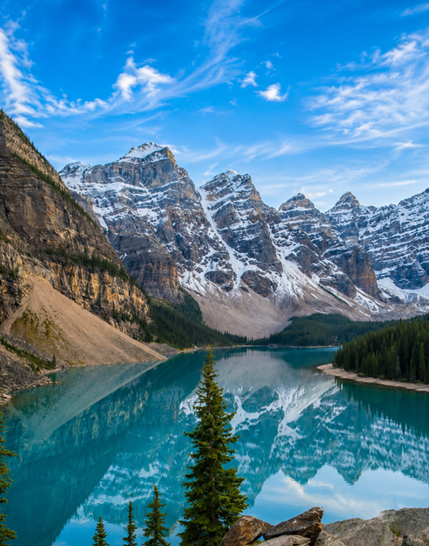
The first glimpse of Moraine Lake is always a shock of colour. The glacier‑fed waters glow turquoise, framed by the jagged Valley of the Ten Peaks. The air is crisp, scented faintly of pine and stone. Here, the journey begins not with a rush but with a pause—boots tightening, bear spray clipped to the belt, eyes adjusting to the immensity of the scene.
The lake is more than a destination; it is a threshold into alpine wilderness.
The Rockpile and the “Twenty Dollar View”
The Rockpile Trail is short, almost casual, yet it delivers one of Canada’s most famous vistas. Stone steps climb to a lookout where the Ten Peaks rise like a procession of giants. The lake below gleams impossibly blue, a colour so vivid it once graced the Canadian twenty‑dollar bill.
Chipmunks dart between rocks, pikas whistle from hidden crevices, and the view feels both eternal and fleeting. This is the postcard moment, the image that lingers long after the hike is done.
Consolation Lakes: A Quiet Retreat
Beyond the crowds, the Consolation Lakes trail winds through boulders and forest. The path is gentle, leading to two alpine lakes where silence reigns. The Lower Lake reflects Babel Mountain and the Quadra Glacier, its surface broken only by the ripple of wind.
Continue farther and the Upper Lake reveals marmots sunning on rocks. Here, the wilderness feels intimate—less spectacle, more conversation between hiker and landscape.
Eiffel Lake: A Hidden Balcony
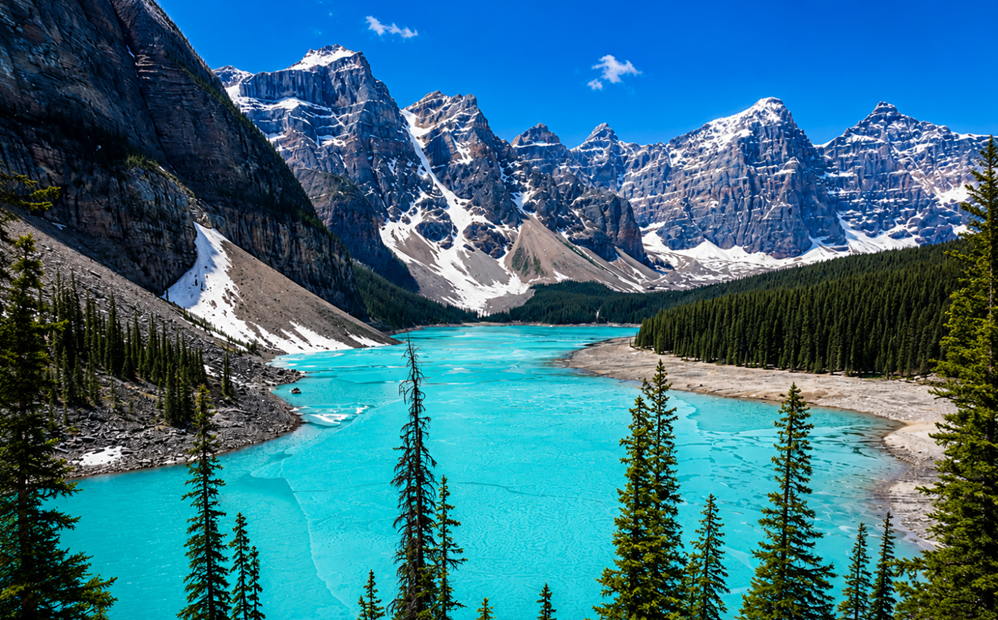
The climb to Eiffel Lake is steeper, switchbacks carving into the slope. The effort is rewarded with solitude and sweeping views. Moraine Lake appears in glimpses, a turquoise jewel framed by dark forest. The Ten Peaks dominate the horizon, their ridges sharp against the sky.
At the lake itself, serenity prevails. Small, shadowed by glaciers, Eiffel Lake is a balcony onto grandeur, a place where stillness magnifies the scale of the mountains.
Larch Valley: The Golden Season
The Larch Valley trail is a pilgrimage in autumn. Switchbacks rise through dense forest until suddenly the trees change—larches glowing gold against the green. The valley opens wide, a meadow threaded with a silver stream, the Ten Peaks standing sentinel above. In September, the needles shimmer like fire, turning the landscape into a living painting.
Minnestima Lakes lie farther on, small tarns reflecting sky and colour. This is the heart of Moraine Lake hiking, where the season itself becomes the spectacle.
Sentinel Pass: Crossing into the Heights
For those who push beyond, Sentinel Pass is the climax. The trail climbs steeply from Larch Valley, switchbacks narrowing, terrain rugged. At the ridge, the world divides: Paradise Valley stretches north, the Ten Peaks dominate the south. The view is panoramic, dizzying, a sweep of alpine wilderness that humbles and exhilarates.
Lunch on the ridge tastes different—bread and cheese against a backdrop of glaciers and sky. The descent retraces the path, but the memory of the pass lingers like a summit reached in spirit.
Wildlife Encounters
Moraine Lake is alive with creatures. Pikas whistle from talus slopes, chipmunks scurry across trails, marmots bask in sunlit meadows. Yet it is the presence of grizzly bears that shapes the rules of hiking here. Trails often require groups of four, bear spray is mandatory, and vigilance is part of the rhythm.
The wilderness is not a backdrop but a living system, and hikers are guests moving through its domain.
Seasons of Moraine Lake
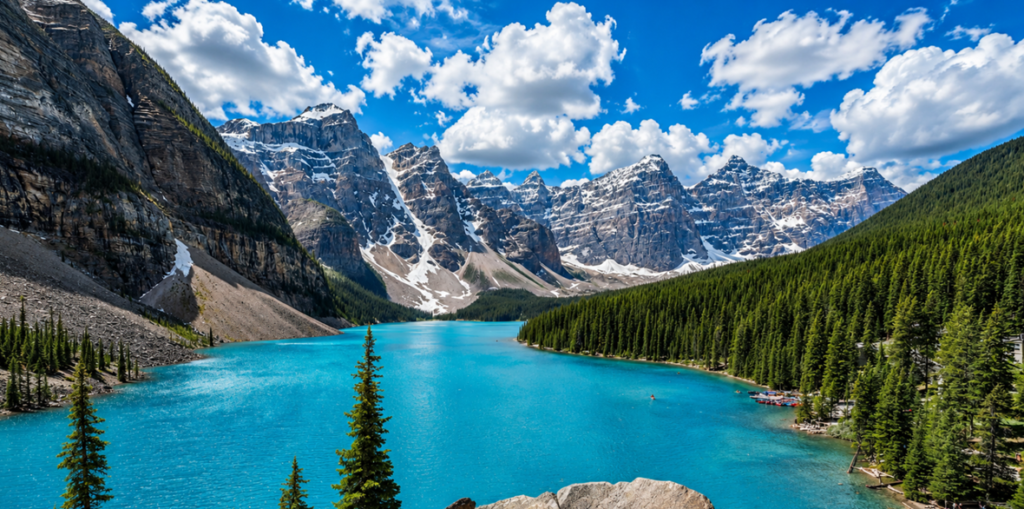
Each month rewrites the landscape. June brings snow‑capped peaks and cool air, July and August scatter wildflowers across meadows, September ignites the larches in gold. By October, frost edges the mornings, and the trails grow quiet. Hiking here is not a single experience but a cycle, each season offering a different chapter in the story of the lake.
Getting There
Access to Moraine Lake is controlled. The road is closed to personal vehicles, shuttles and guided tours provide entry. Early morning buses deliver hikers for sunrise, bicycles trace the 28‑kilometre route from Lake Louise. The journey itself is part of the ritual—planning, booking, preparing. The remoteness preserves the wilderness, ensuring that arrival feels earned.
Preparing for the Hike
Moraine Lake is backcountry. There is no cell service, no Wi‑Fi, only the essentials carried in a pack: layers for shifting weather, food and water, bear spray, maps. Parks Canada bulletins guide the day, warnings of closures or wildlife activity. To hike here is to step into self‑reliance, to carry what you need and respect the land that hosts you.
Hiking Companions
On the trail to Larch Valley, strangers become companions. German backpackers join at the trailhead, conversation flows with the rhythm of footsteps. Shared effort builds camaraderie—stories exchanged, laughter rising between switchbacks. The wilderness encourages connection, reminding hikers that solitude and fellowship can coexist in the same journey.
The Atmosphere of the Valley
At last, the valley itself. Golden larches shimmer, peaks rise snow‑capped, a river threads silver through meadow. The air is luminous, the silence profound. It is a place that feels composed, as if nature arranged every element—the colour, the light, the scale—for this moment.
Standing there, hikers understand why Moraine Lake is more than a destination. It is a revelation, a reminder of beauty that endures beyond words.
Leaving Moraine Lake
The descent is quieter. The colours fade into forest green, the chatter of companions softens. At the lakeshore, the turquoise water waits, unchanged, eternal. Departure carries a weight—the knowledge that the valley will remain, burning gold each autumn, while hikers return to their own lives.
Moraine Lake is not left behind; it is carried within, a memory that glows like larch needles in sunlight.