
The Road Into Yoho
Driving west from Calgary, the landscape begins to shift almost imperceptibly. Rolling foothills give way to jagged peaks, and the horizon becomes a wall of stone and snow. By the time you reach the Continental Divide, the Rockies have swallowed the sky.
Yoho National Park lies just beyond, a quieter neighbor to Banff, and it is here that Takakkaw Falls waits — hidden until the last moment, revealed only when the forest parts and the mountain face opens like a curtain. The approach itself is an adventure. The Yoho Valley Road twists through dense forest, climbing steadily until it confronts you with a series of hairpin switchbacks so tight they feel like puzzles.
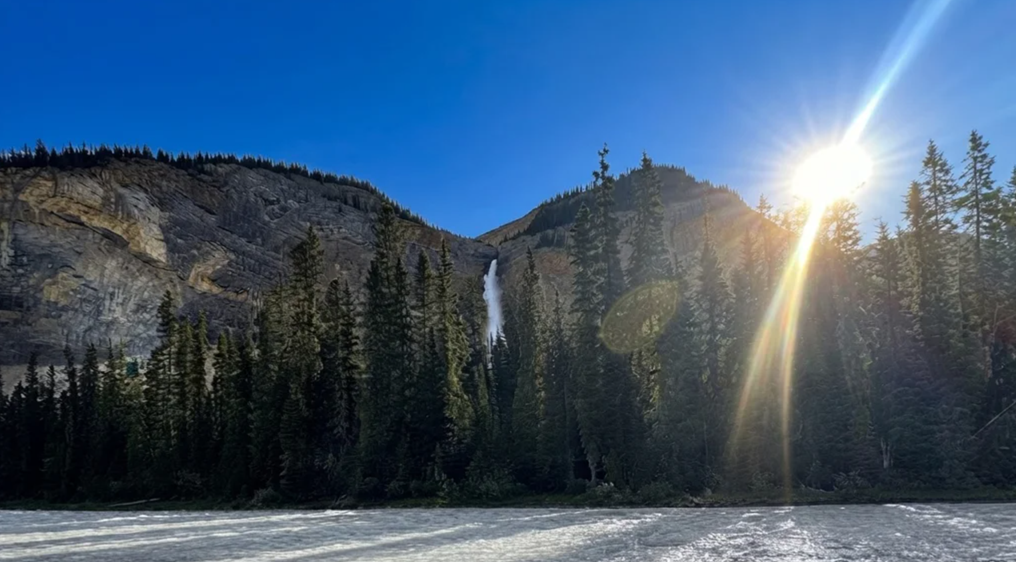
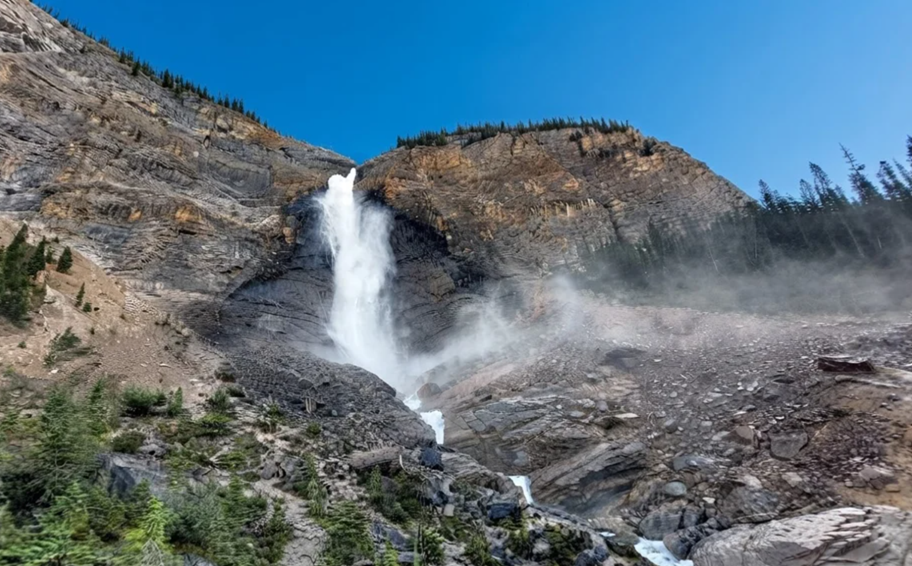
Each turn brings a new perspective: towering cliffs, glimpses of glaciers, and the promise of something extraordinary just ahead. And then, suddenly, there it is — Takakkaw Falls, cascading in a silver ribbon down the cliffside, visible even before you’ve parked the car.
The Meaning of Takakkaw
The name itself is a gift from the Cree language: Takakkaw means “it is wonderful.” Few words could capture the sensation better. Standing at the base of the falls, the roar fills your chest, the spray dampens your skin, and the sheer scale leaves you momentarily speechless.
Yoho, too, is a Cree expression — a cry of amazement, wonder, awe. Together, the names remind you that this land has inspired generations long before it became a national park, and that its beauty is not just scenic but spiritual.
The Magnificent Drop
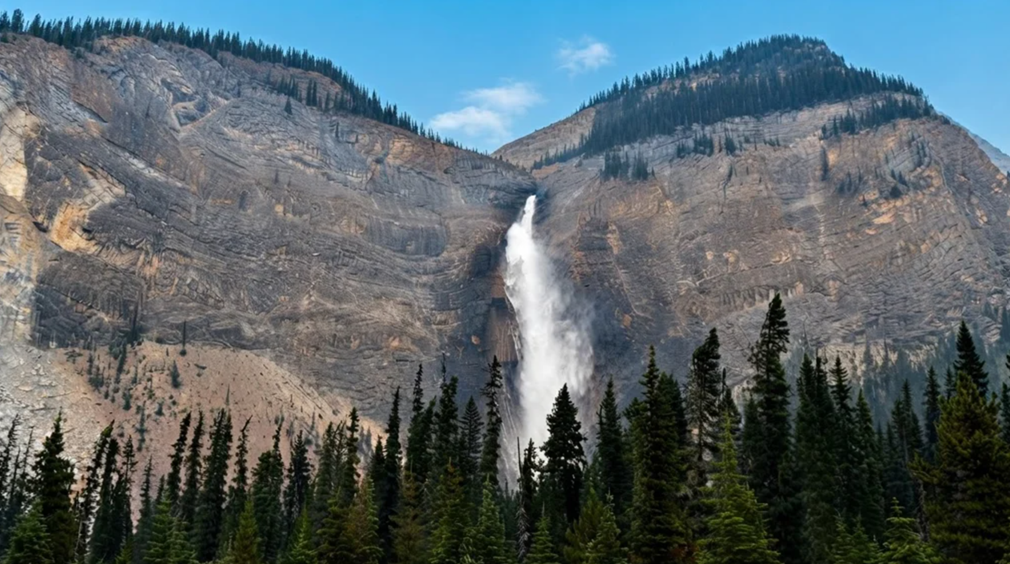
Takakkaw Falls is Canada’s second-highest waterfall, plunging a total of 373 meters, with its largest single drop measuring 254 meters. Fed by the Daly Glacier, part of the vast Waputik Icefield, the falls are most powerful in early summer when snowmelt surges.
Near the crest, a natural groove acts like a waterwheel, shooting the torrent upward before it crashes down in a spectacular spray. The effect is theatrical, as if the mountain itself is performing for its audience. On rainy days, the falls rage with even greater force, their voice echoing through the valley.
In spring, when the glacier melt is at its peak, Takakkaw becomes a living thunderstorm of water and mist, a reminder of the raw power that shapes the Rockies.
The Short Walk Into Mist
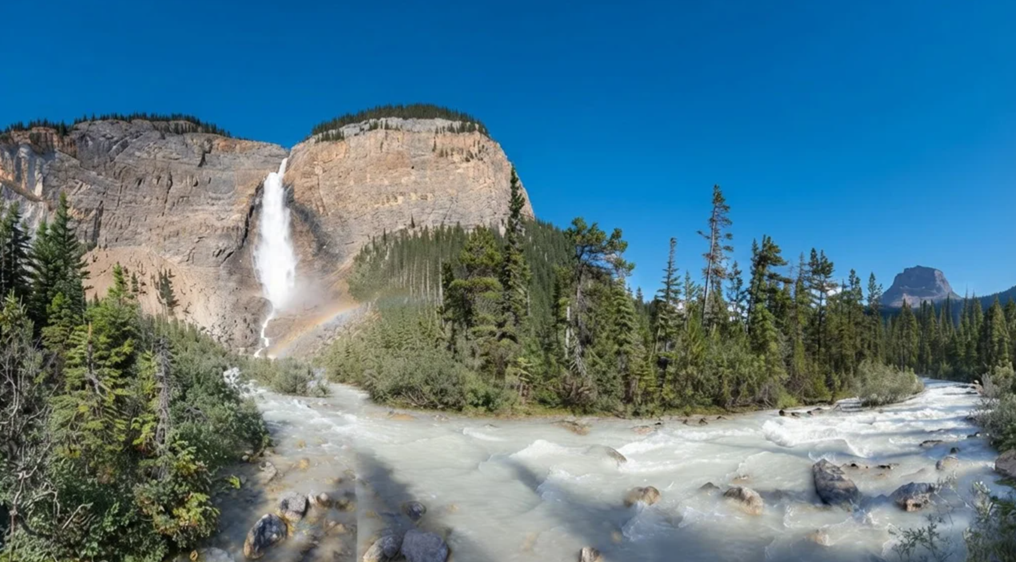
From the parking lot, the trail is little more than a gentle stroll — 600 meters each way, flat and well maintained. Yet the experience is anything but ordinary. Each step brings new angles of the falls, until you’re standing in the splash zone, mist clinging to your skin, the roar filling your ears.
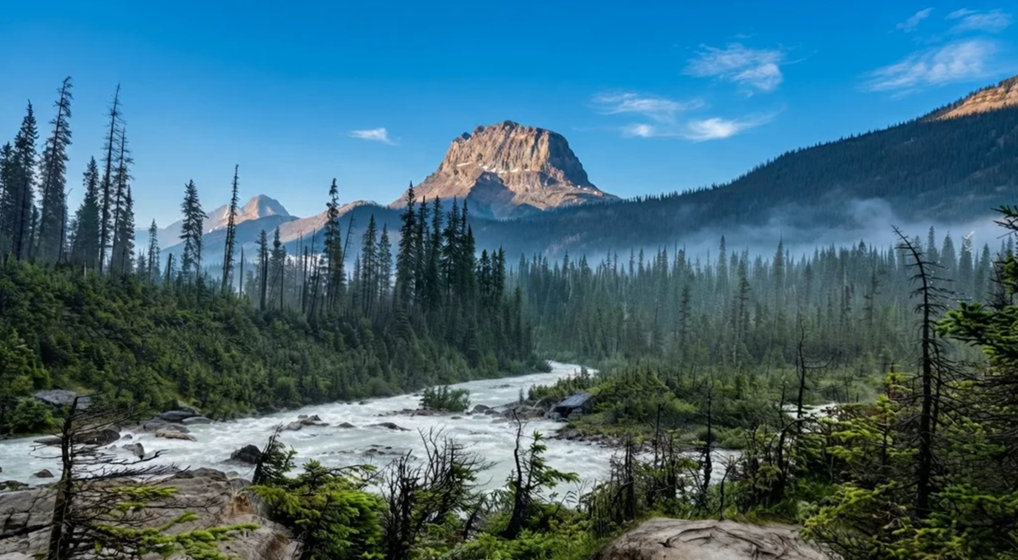
It’s less a hike than an immersion, suitable for all ages, and perfect for families. Children laugh at the spray, dogs tug at their leashes, and photographers linger, waiting for the light to shift. The Yoho River and Takakkaw Creek accompany you along the way, their waters rushing with the same glacial energy.
Together, they frame the falls as part of a larger story — a network of rivers, icefields, and valleys that define this corner of the Rockies.
The Rainbow Hour
Late afternoon is the magic window. As the sun angles across the valley, it catches the mist and paints a permanent rainbow at the base of the falls. It’s a fleeting spectacle that feels eternal, a prism of color hovering in the spray. For many, this is the moment that defines Takakkaw — the photograph that lingers long after the trip is over.
Morning offers solitude, with fewer crowds and a quieter trail. Afternoon offers spectacle, with the rainbow shimmering in the mist. Either way, the falls reward you with something unforgettable.
Practical Notes
Access: The road to Takakkaw Falls is open mid-June to mid-October, closed in winter due to snow.
Facilities: Toilets near the trailhead, picnic spots, and a nearby campground.
Passes: Entry requires a Parks Canada Discovery Pass, but no extra parking fees.
Dogs: Welcome on leash.
Time Needed: 60–90 minutes is plenty for the falls themselves, though nearby trails tempt longer stays.
The Drive From Banff
Many visitors come to Yoho as a detour from Banff National Park. The drive takes about an hour, but the experience feels like a journey into another world. Banff dazzles with its crowds and iconic lakes, but Yoho offers intimacy — fewer people, quieter trails, and landscapes that feel untouched.
Renting a car is the best option, as shuttles are limited and the freedom to explore places like Peyto Lake or Bow Lake along the Icefields Parkway is worth every kilometer. Rental cars are in high demand during summer, so booking early is essential.
The reward is independence: the ability to linger at viewpoints, chase sunsets, and discover corners of the Rockies that tour buses skip.
The Best Season
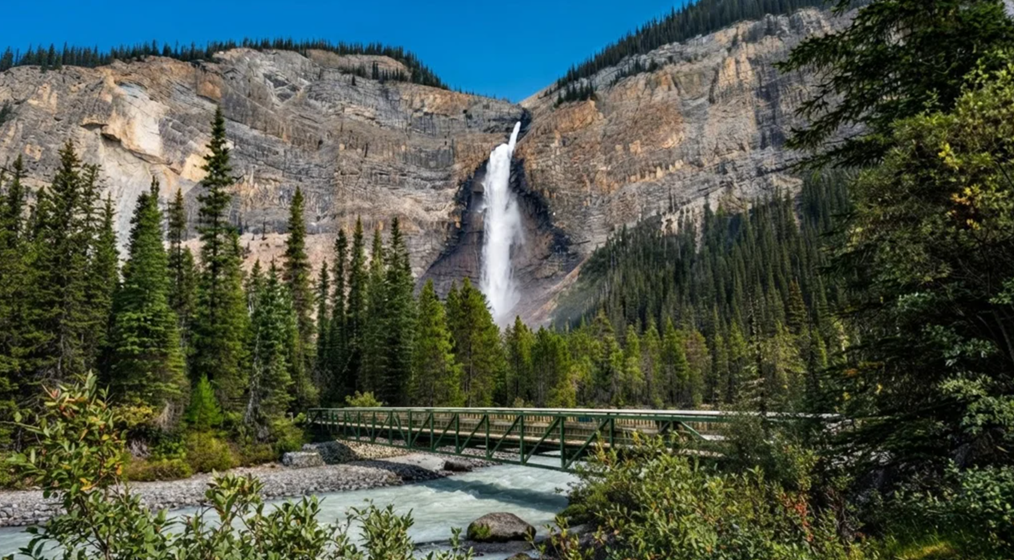
Summer offers long days and clear trails, but early September is the sweet spot. The crowds thin as schools resume, yet the weather remains warm enough for comfortable hiking. The Rockies feel quieter, more intimate, as if the wilderness is reclaiming its rhythm.
It’s the perfect time to linger at Takakkaw Falls, to watch the rainbow fade into dusk, and to let the sound of rushing water carry you into memory. Winter transforms Yoho into a frozen cathedral, though the road to Takakkaw is closed. Spring brings torrents of meltwater, autumn brings golden larches, and summer brings wildflowers. Each season offers its own version of wonder.
A Gateway to Adventure
Takakkaw is not just a destination but a gateway. Trails radiate from this point into Yoho’s backcountry, leading to alpine meadows, glacier-fed lakes, and rugged ridgelines. The Laughing Falls Trail begins here, winding deeper into the valley. The Little Yoho Valley Trail leads to alpine huts and panoramic views.
For those with time, Takakkaw is the starting point of journeys that reveal the park’s hidden treasures. Even if Banff is your primary goal, Yoho deserves at least a detour. The drive from Calgary takes 2.5 hours, and from Banff, barely one. To skip Takakkaw is to miss one of the Rockies’ most magnificent spectacles.
The Human Connection
Standing at the base of Takakkaw Falls, you feel small — but not insignificant. The Cree names remind you that this land has always been a place of wonder, long before it was mapped or photographed. The falls are not just a geological feature but a cultural landmark, a reminder of the deep relationship between people and place.
Yoho’s landscapes inspire awe, but they also invite reflection. The roar of the falls is a voice from the glacier, a reminder of the forces that shape the earth. The rainbow in the mist is a fleeting miracle, a reminder of the beauty that emerges when light meets water. Together, they create an experience that is both physical and spiritual.
The Essentials at a Glance
Takakkaw Falls – Canada’s second-highest waterfall, 373m tall
Yoho National Park – Neighbor to Banff, quieter and more intimate
Trail – 600m each way, flat and easy
Best Time – Late afternoon for rainbow, September for fewer crowds
Facilities – Toilets, picnic spots, nearby campground
Access – Road open mid-June to mid-October
Final Reflections
Takakkaw Falls is less a hike than a revelation — a place where the Cree word for magnificence finds its truest expression. Whether you stop for half an hour or stay for the afternoon, it’s a reminder that sometimes the most extraordinary wonders are the ones you can almost drive right up to.
The spray on your skin, the rainbow in the mist, the roar in your chest — these are the memories that linger. Takakkaw is not just a waterfall; it is a moment of wonder, a cry of amazement, a gift from the Rockies to anyone willing to make the journey.