
Victoria, perched on the southern tip of Vancouver Island, is a city that whispers of old-world charm. Its harbor bustles with ferries and seaplanes, its streets lined with heritage buildings and flower baskets that spill color into the air. Yet just beyond the city, about 20 kilometers away, lies a sanctuary that feels like stepping into another realm entirely.
The Butchart Gardens are not simply gardens—they are a century-old story of transformation, where industry gave way to artistry, and a limestone quarry blossomed into one of Canada’s most enchanting landscapes. Walking through the Butchart Gardens is like moving through chapters of a living fairytale.
Each garden has its own personality, its own rhythm, its own way of drawing you in. Together, they form a mosaic of cultures and colors, a place where history and horticulture intertwine.
Arrival and First Impressions
The journey begins at Waterwheel Square, the welcoming hub of the gardens. Here, a rustic waterwheel turns beside a statue of a boy fishing, while visitors pause to take photos beneath the iconic “Welcome to the Butchart Gardens” sign. The square is practical—housing the visitor center, gift shop, and restrooms—but it also sets the tone.
There’s a sense of anticipation, of stepping into something larger than life. From here, paths branch out like veins, leading toward the five distinct gardens: the Sunken Garden, Rose Garden, Japanese Garden, Italian Garden, and Mediterranean Garden. Each promises something different, and together they create a journey that is both diverse and deeply cohesive.
The Sunken Garden: From Quarry to Kingdom
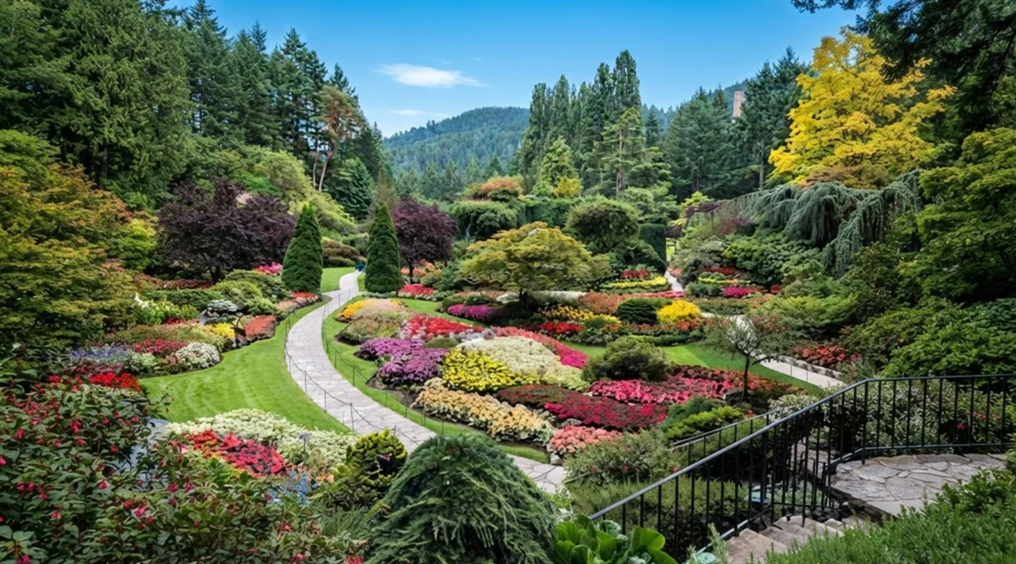
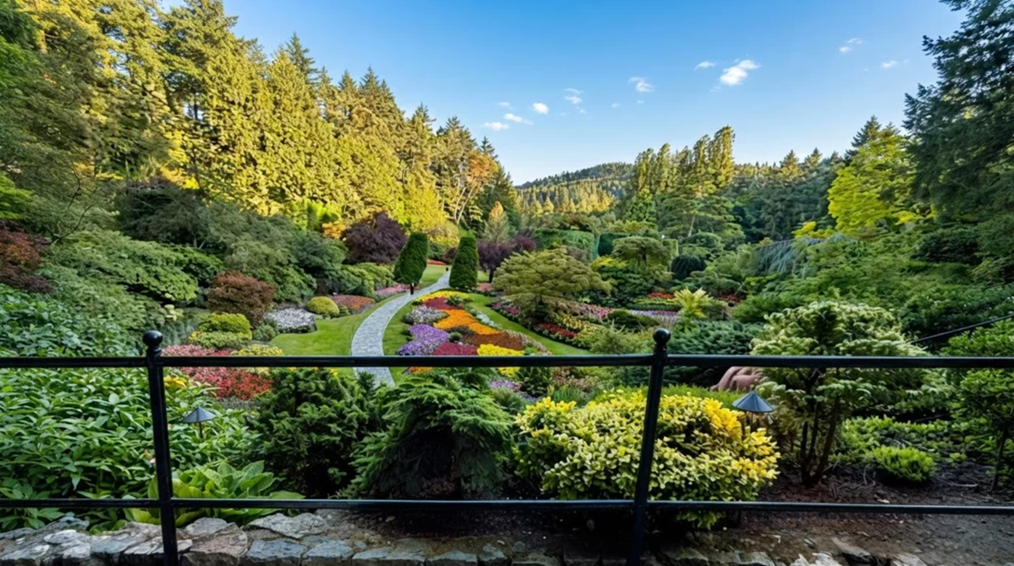
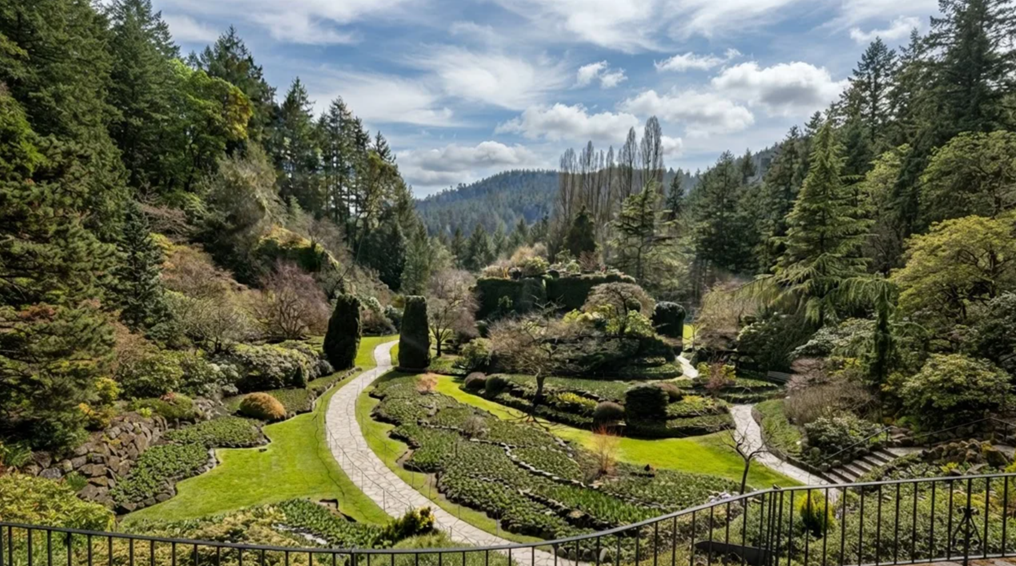
The Sunken Garden is the soul of Butchart. Once a barren limestone quarry, it has been transformed into a lush amphitheater of blooms. Descending the winding path, you’re greeted by beds of vivid flowers, moss-draped stone, and the towering kiln stack—an industrial relic softened by nature’s embrace.
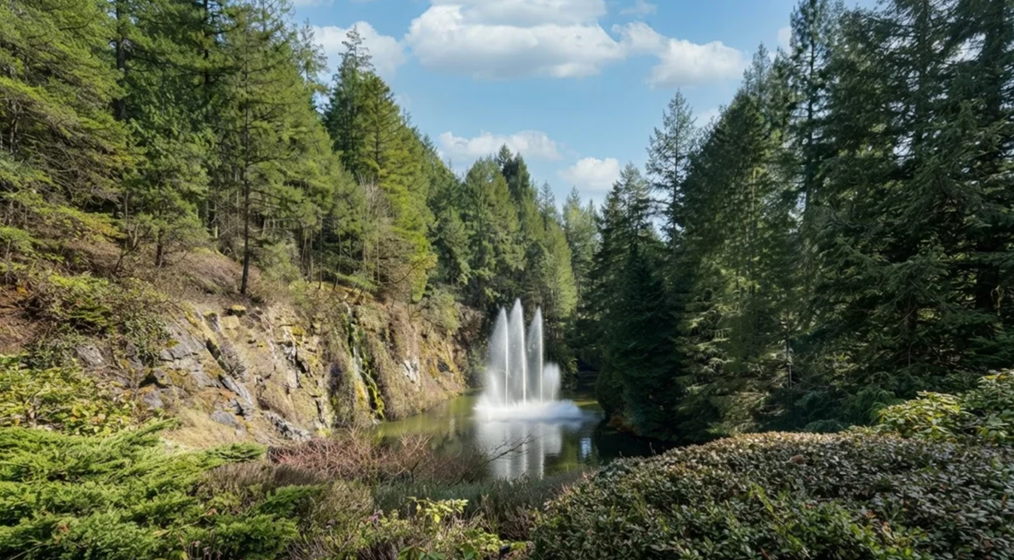
From the staircase atop the kiln, the view stretches in every direction: a tapestry of color, ponds, and pathways that feels like a secret kingdom. At its center, the Ross Fountain bursts into life, its jets dancing against the forest backdrop. Installed in 1964 to commemorate the gardens’ 60th anniversary, the fountain is framed by trees and quarry walls, a shimmering tribute to renewal.
Beyond the fountain lies the Bog Garden, shaded beneath the forest canopy. Here, indigenous plants thrive in quiet mystery. It feels more intimate, more contemplative—a reminder that beauty can be both grand and subtle.
The Rose Garden: Romance in Bloom
If the Sunken Garden is history reborn, the Rose Garden is pure romance. With 280 varieties and 2,500 rose plants, it’s a place where petals unfurl like poetry. Archways heavy with blossoms create tunnels of fragrance, and each rose is carefully labeled, inviting you to linger and learn their names.
In summer and early autumn, the garden is at its peak—roses in every shade imaginable, from delicate blush to deep crimson. Couples stroll hand in hand beneath the arches, children laugh nearby at the Rose Carousel, and photographers capture the kaleidoscope of colors. It feels timeless, a place where romance and joy intertwine.
The Japanese Garden: Harmony and Reflection
Stepping into the Japanese Garden is like crossing into another realm. Shaded paths wind beneath maples and bamboo, leading to quiet streams and stone lanterns. Every detail—bridges, water, foliage—has been composed with harmony in mind. The hush here is profound, broken only by the rustle of leaves or the ripple of koi in the pond.
It’s a place of reflection, where the pace slows and the mind quiets. The cultural influence is unmistakable, yet it blends seamlessly into the broader narrative of Butchart, reminding visitors that beauty transcends borders.
The Italian and Mediterranean Gardens: Elegance and Warmth
The Italian Garden offers symmetry and elegance, with fountains and manicured hedges that recall Renaissance courtyards. It feels formal, structured, a contrast to the wild abundance of the Sunken Garden.
Meanwhile, the Mediterranean Garden bursts with warmth—olive trees, citrus scents, and sunlit terraces that transport you straight to Europe. Together, these gardens showcase the diversity of cultures woven into Butchart’s design, each corner a different chapter in the story of beauty.
Family-Friendly Magic
For children, the gardens are a wonderland. Paths twist like secret trails, sculptures peek from shaded corners, and the carousel spins with painted horses. It feels like a fairytale brought to life, where imagination runs free among blooms and fountains.
History and Legacy
More than 100 years ago, Jennie Butchart envisioned beauty where industry had left scars. Today, the gardens stand as a National Historic Site of Canada, welcoming over a million visitors each year. Walking here is not just about flowers—it’s about witnessing resilience, creativity, and the enduring power of nature to heal and inspire.
Practical Notes
Driving: Just 20 kilometers from downtown Victoria, the gardens are an easy 25–40 minute drive, with free parking on arrival.
Bus Shuttle: For $50 CAD return, frequent shuttles whisk visitors from the city center, offering flexibility and independence.
Guided Tours: Combo tours include city highlights and skip-the-line admission, perfect for those short on time.
From Vancouver: Day trips are possible, with tours covering ferry tickets and admission, though expect a long but rewarding 13-hour journey.
Seasonal Beauty
No two visits are ever the same. With over 900 plant species rotated seasonally, the gardens transform throughout the year.
Spring: Tulips and daffodils burst into bloom, the air fresh with renewal.
Summer: Roses and fountains dazzle, the gardens at their most vibrant.
Autumn: Fiery foliage glows, paths carpeted with leaves.
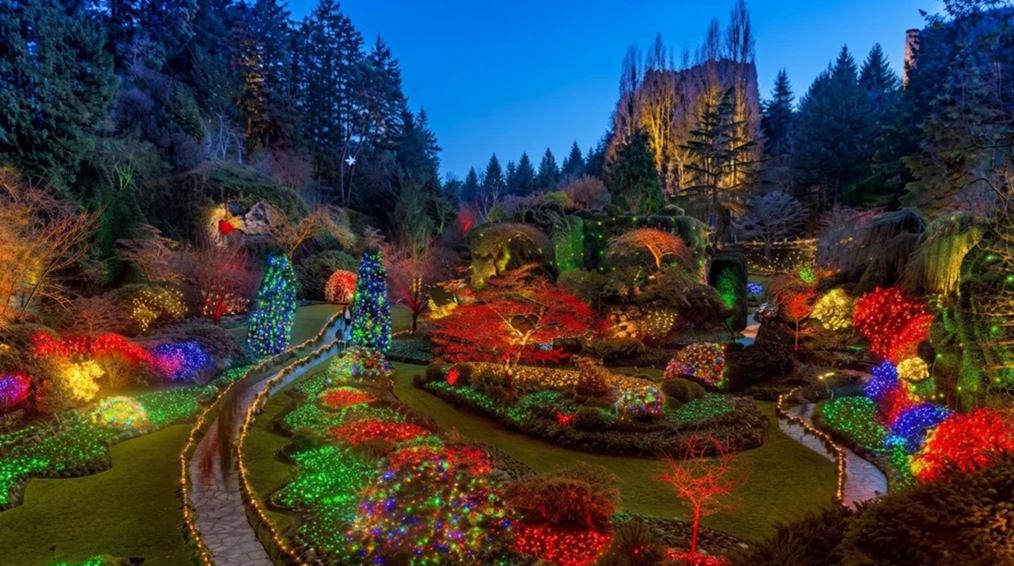
Winter: Snowdrops and evergreens thrive, and the holiday light show turns the gardens into a sparkling wonderland.
The Experience of Time
The Butchart Gardens are not a quick stop. To truly experience them, you need at least 3–4 hours, though many visitors spend the entire day. Each garden invites lingering, each path offers new discoveries. It’s a place to slow down, to breathe deeply, to let yourself be transported.
Why It Matters
The Butchart Gardens are more than a destination; they are a living canvas of history, culture, and nature. Whether you wander alone, stroll with loved ones, or bring children to marvel at the carousel, the gardens remind you of the joy found in beauty. It’s not just about photographs or Instagram moments—it’s about connection.
To the past, to the present, to the simple act of walking among flowers and fountains. It’s about remembering that even in a world of speed and noise, there are places where time slows, where beauty endures, where imagination blooms.