
Fraser Valley and Fraser Canyon: Exploring Rivers, Farmland, and History
The Fraser Valley is one of British Columbia’s most defining regions, stretching eastward from Metro Vancouver to the Cascade Mountains. It is a place where fertile farmland meets dense forests, where rivers carve through plains, and where communities thrive alongside natural ecosystems.
For visitors, the valley offers a chance to experience the province’s agricultural heartland, cultural diversity, and geographical richness without straying far from Vancouver. Within this larger valley lies the dramatic Fraser Canyon, a corridor of cliffs and currents that adds adventure and history to any journey.
Together, the valley and canyon form a loop that combines natural beauty, cultural heritage, and accessible attractions.
Geography of the Fraser Valley
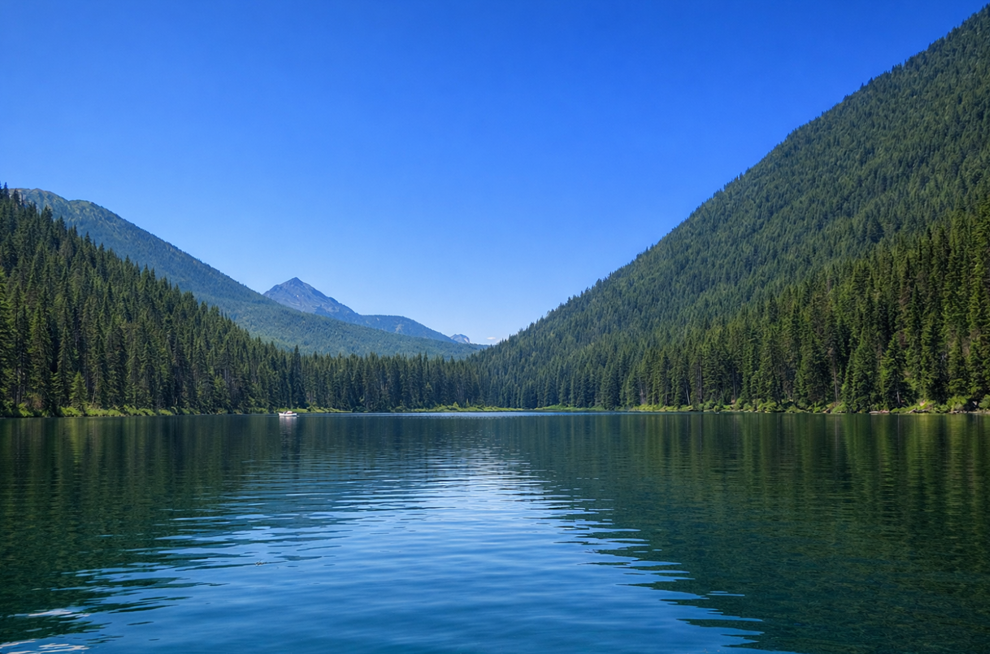
The Fraser Valley is shaped by the Fraser River, which begins high in the Rockies and flows westward until it meets the Pacific Ocean. The valley is wide and fertile, bordered by the Coast Mountains to the north and the Cascade Mountains to the east.
Its geography is a study in contrasts: flat farmland lies beside steep forested slopes, and urban centers are interspersed with rivers, lakes, and wetlands. This diversity creates a landscape that is both cultivated and wild. The farmland supports dairy, poultry, and berry production, while the forests provide habitat for wildlife and recreational opportunities.
The river itself is central, carrying salmon runs that have sustained Indigenous communities for thousands of years and continuing to shape the valley’s ecology and economy.
Fraser Canyon: The Narrowing of the River
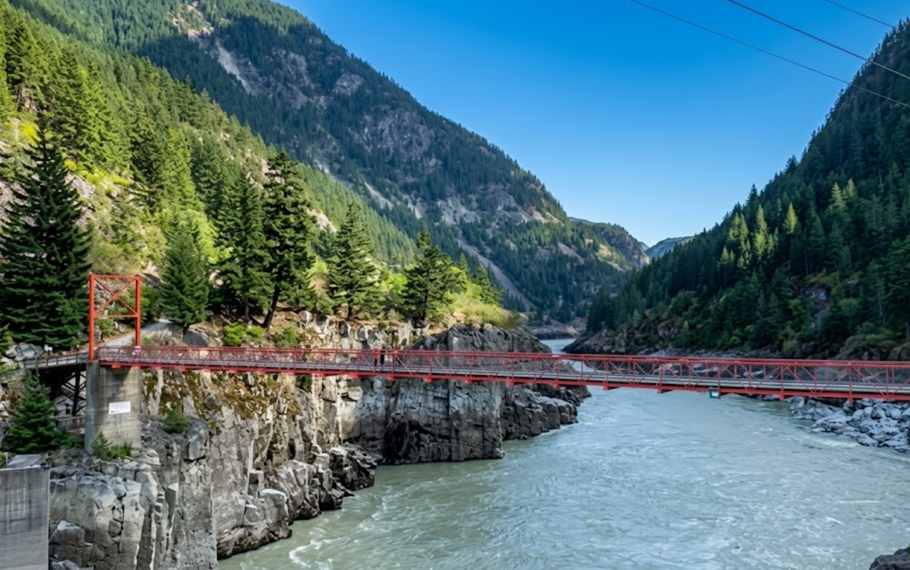
Past Hope, the highway bends northward into the Fraser Canyon, where the river churns with a force that seems eternal. At Hell’s Gate, the canyon tightens to its most dramatic point. The river, vast upstream, is forced into a channel barely 35 metres wide.
Visitors can cross a suspension bridge with a grated floor that reveals the torrent below, or ride the airtram that glides down from the highway into the heart of the canyon. The site combines natural spectacle with engineering achievement, offering views of cliffs, rail lines, and surging water. Hell’s Gate has long been more than scenery.
For Indigenous communities, it was a vital fishing ground. Later, miners scrambled along its edges during the gold rush, and in the late 1800s the Canadian Pacific Railway carved its line against the canyon wall. A rockslide in the early 1900s devastated salmon habitat, reshaping the ecology of the river.
Today, fishways assist salmon migration, and exhibits tell stories of the canyon’s layered past. While some displays remain outdated, the site continues to attract thousands of visitors each summer. For travelers, Hell’s Gate is both a dramatic natural phenomenon and a historical landmark, making it one of the most popular stops in the canyon.
Historical Foundations
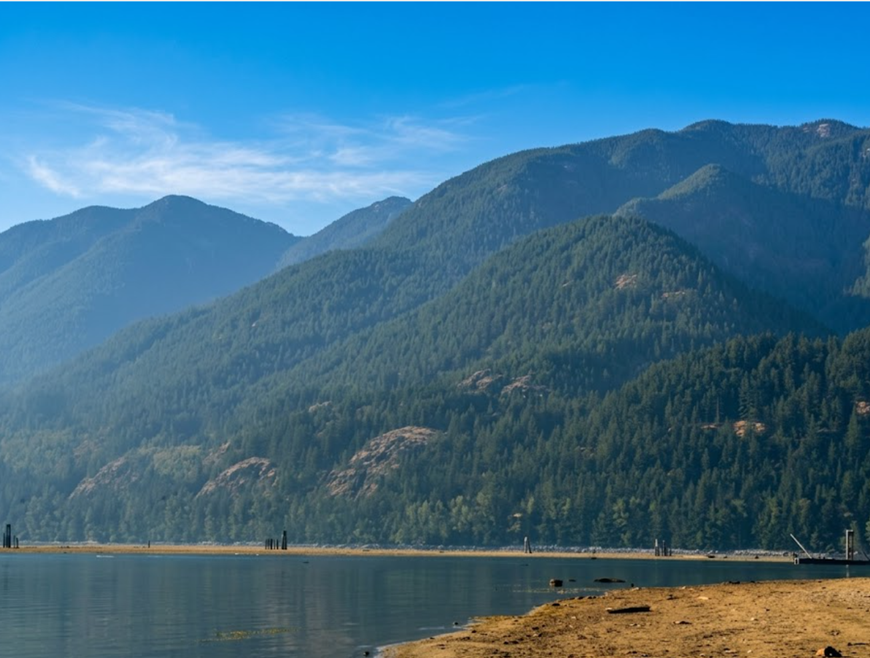
The Fraser Valley has been home to Indigenous peoples for millennia. The Stó:lō Nation, whose name means “People of the River,” lived in deep relationship with the Fraser River. Salmon was not only a food source but a cultural cornerstone, and the valley’s forests and meadows provided medicine, shelter, and stories. The arrival of settlers during the Fraser River Gold Rush in the mid-1800s disrupted this balance.
Towns such as Yale and Hope became gateways to the interior, and conflicts reshaped the cultural fabric of the valley. Today, heritage sites and oral traditions preserve these histories, reminding visitors that the valley is not just scenery but a place layered with memory. The Fraser Canyon adds further depth to this history.
Alexandra Bridge Provincial Park, located north of Hell’s Gate, is a quieter site where history lingers in suspension. The bridge, first constructed in 1861, once carried the Anderson Brigade Trail across the Fraser. Today, it is a roadside stop with a short trail leading down to the suspension bridge.
The crossing enters Nlaka’pamux land and recalls the fur trade routes that once connected the region. The walk is easy, the climb back steady, and the experience offers a glimpse of history in the midst of travel. Together, these sites highlight the importance of the river as both a natural resource and a cultural pathway.
Natural Identity
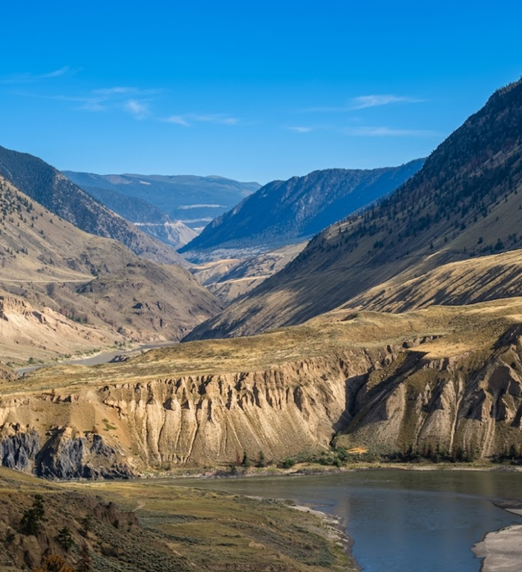
The Fraser Valley’s natural environment is inseparable from its identity. The Fraser River is its spine, supporting ecosystems and communities. Forests of cedar and fir dominate, creating dense canopies that filter light into green shadow. Wildlife such as eagles, salmon, and bears are part of the valley’s ecological rhythm.
Nature here is not backdrop but foundation. It shapes both culture and economy, influencing farming practices, recreational activities, and community traditions. For visitors, the valley’s natural beauty is a constant presence, whether seen in mist rising from fields at dawn or sunsets painting farmland gold.In the canyon, nature takes on a more dramatic form.
The cliffs rise sheer, the river surges with power, and the trails wind through landscapes that feel untamed. Sites like Hell’s Gate and Alexandra Bridge showcase how natural forces have shaped human history, while roadside stops such as Bridal Veil Falls offer quieter moments of beauty.
The falls cascade from Cheam Peak, accessible by a short trail and picnic area, making them a popular stop for families and travelers. Together, the valley and canyon present a spectrum of natural experiences, from tranquil farmland to roaring rivers.
Road Trip Perspective
Experiencing the Fraser Valley by road trip allows visitors to witness its transitions. Leaving Vancouver, the urban sprawl gives way to farmland. Bridges carry you across rivers, and highways thread through mountain passes. Each curve reveals a new layer—town, field, forest, peak.
The loop itself—eastward along Highway 7, returning westward along Highway 1—mirrors the valley’s dual character. One side is quieter, more rural; the other busier, more industrial. Together, they form a complete portrait of the valley, showing its contrasts and connections.
Adding the Fraser Canyon into this loop provides adventure and history, balancing the agricultural heartland with rugged cliffs and roaring waters. Travelers can plan a day trip that combines both regions. A morning drive through farmland might include stops at berry farms or local markets, followed by an afternoon exploring Hell’s Gate or Alexandra Bridge.
Ending the day at Bridal Veil Falls offers a gentle finale, with the sound of water providing a counterpoint to the canyon’s earlier roar. This combination of experiences makes the Fraser Valley and Canyon accessible to a wide range of visitors, from families seeking roadside attractions to adventurers drawn to rafting and hiking.
Parks and Protected Areas
While the Fraser Valley is known for its farmland and communities, its parks and protected areas are equally important. They preserve ecosystems, provide recreational opportunities, and connect visitors to the valley’s natural heritage. Parks such as Golden Ears, Rolley Lake, and Sasquatch are not isolated attractions but part of the valley’s broader system, where conservation and recreation coexist with agriculture and industry.
In the canyon, sites like Hell’s Gate and Alexandra Bridge add cultural and historical depth to the natural experience. Together, these parks and sites ensure that the valley remains a place where nature and culture are preserved for future generations.
Why the Valley and Canyon Matter
The Fraser Valley and Fraser Canyon together offer a complete journey through British Columbia’s landscapes and histories. The valley is fertile and diverse, alive with farming and community traditions. The canyon is dramatic and layered, alive with stories of Indigenous fishing grounds, gold rush trails, and railway scars.
To travel here is to understand a microcosm of the province itself: diverse, fertile, and alive with natural and cultural richness. Whether you are crossing suspension bridges, tasting local berries, or watching salmon fight their way upstream, the region insists upon being felt. It is not only a destination but a reminder — of the power of rivers, the endurance of stone, and the persistence of memory.