
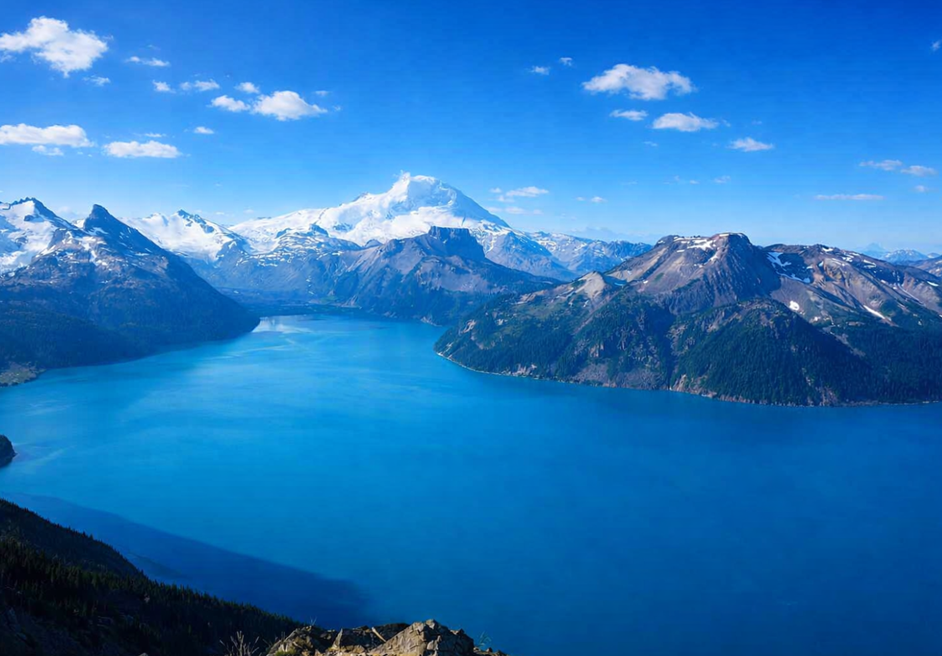
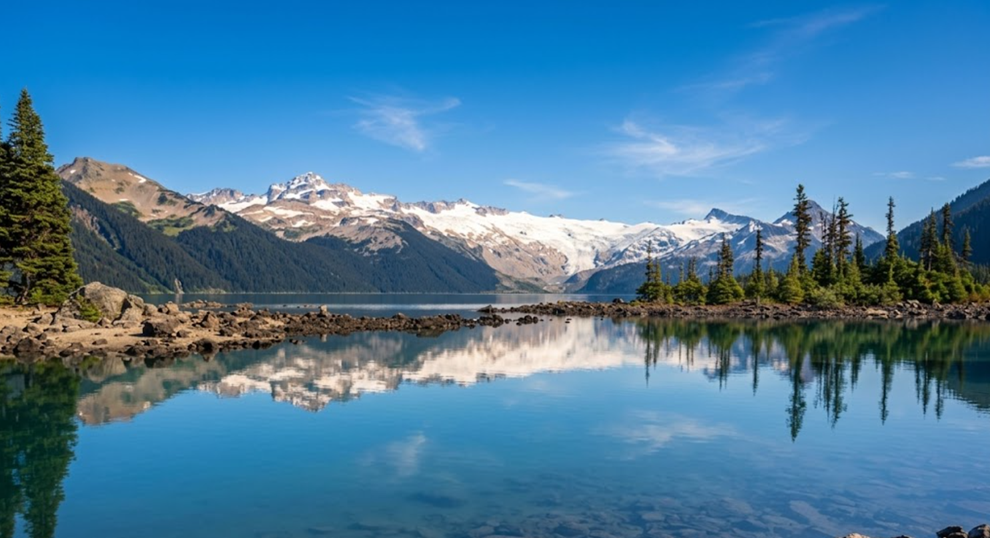
Garibaldi Lake is one of the most recognized alpine destinations in British Columbia. Situated within Garibaldi Provincial Park, north of Squamish, it attracts thousands of hikers each year. The lake is famous for its turquoise color, created by glacial meltwater suspended with fine rock flour.
Surrounded by snow‑capped peaks and volcanic features, it offers both a rewarding day hike and extended alpine routes for experienced adventurers.
Access and Transportation
The starting point for the Garibaldi Lake hike is the Rubble Creek trailhead. This location is accessible only by car, with no public transportation available. Driving times are approximately 80 minutes from Vancouver, 30 minutes from Squamish, and 25 minutes from Whistler. The road is paved and well‑maintained, making it suitable for most vehicles.
During the summer months, Garibaldi Provincial Park requires hikers to obtain a day‑use permit. These permits must be booked in advance online, as the park limits the number of visitors to protect the environment and manage crowding. Weekdays are generally less busy, while weekends can see high demand.
Trail Overview
The Garibaldi Lake trail is 19 kilometers return when completed via Taylor Meadows. The elevation gain is 900 meters, making it a strenuous hike for those unaccustomed to long climbs. Most hikers complete the route in six to eight hours, depending on pace and time spent at the lake.
The trail is well‑marked and maintained, often described as a “highway” compared to more rugged routes in the region. Despite its popularity, preparation is essential. The length and elevation require stamina, and weather conditions can change quickly in the alpine.
The Initial Ascent
The first section of the trail consists of approximately six kilometers of switchbacks. These carry hikers steadily upward through dense forest dominated by Douglas fir and hemlock. The gradient is moderate but continuous, and this portion of the hike is often the most physically demanding.
Shade from the trees provides relief during hot weather, but the climb can feel relentless. Many hikers pause at the midpoint plateau, where views open across forested slopes. This is a good location for rest, snacks, and hydration before continuing upward.
Mid‑Trail Features
Beyond the plateau, the trail passes a small dark green lake and a waterfall. The waterfall is a popular spot to refill water bottles, though purification is necessary. The sound of rushing water and glimpses of alpine terrain signal that the destination is near. The path then descends slightly, offering the first glimpses of Garibaldi Lake through the trees.
These flashes of aquamarine build anticipation before the full view is revealed.
Arrival at Garibaldi Lake
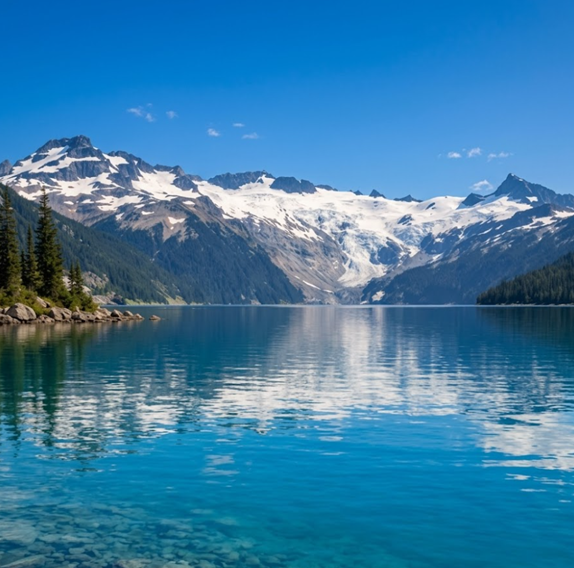
The trail reaches a wooden bridge crossing the river that drains the lake. From this point, the entire expanse of Garibaldi Lake comes into view. The color is striking, a vivid turquoise framed by glaciers and peaks. The lake is large, stretching across the valley, and its backdrop includes snow‑capped mountains and the Sphinx Glacier.
The shoreline provides numerous spots for rest and lunch. Many hikers choose to swim, though the water is extremely cold due to glacial input. Swimming is safe but brief, as temperatures are near freezing. The experience of immersion in such a setting is memorable, combining physical challenge with natural beauty.
Taylor Meadows Detour
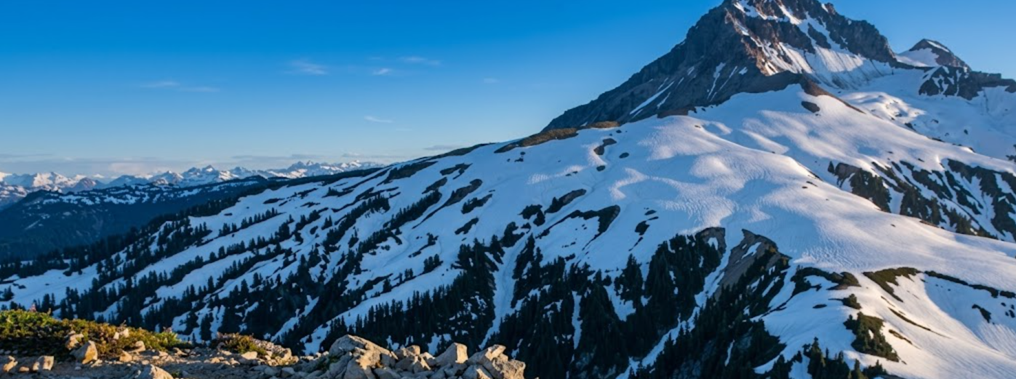
On the return journey, many hikers choose to detour through Taylor Meadows. This area is known for wildflowers, alpine grasses, and expansive views. It also contains a designated campground for overnight stays. The meadows resemble alpine pastures found in Europe, with long grasses and colorful flowers set against mountain ridges.
In summer, the area is vibrant but can also be crowded. Insects such as flies and mosquitoes are common, so preparation is advised. The final three kilometers of descent are often the most tiring. Knees and feet bear the strain of the long day, and fatigue sets in. Some hikers switch to lighter footwear for comfort, though caution is needed on gravel paths.
Hiking Experience
The Garibaldi Lake hike is considered intermediate to difficult. The distance and elevation require preparation, but the trail itself is straightforward and well‑maintained. Hikers with moderate fitness can complete it with determination, while experienced hikers may find it manageable but long. The satisfaction of reaching the lake is significant.
The effort required creates a sense of accomplishment, and the scenery provides a strong reward. The combination of forest, alpine meadows, waterfalls, and glacial lake makes the hike one of the most diverse in the region.
Equipment and Preparation
Proper equipment is essential for safety and comfort. Hiking boots are recommended over trainers, as they provide grip and ankle support. Trekking poles reduce strain on knees during descent and are particularly useful for those prone to joint pain. Hydration is critical.
Carrying a water purifier allows hikers to refill at streams and waterfalls, reducing the need to carry large volumes. Hydration packs such as CamelBak systems make drinking on the move easier. Clothing should include a rain jacket, as weather can change quickly in the mountains. Thermal base layers are useful in cooler conditions.
A lightweight day pack is sufficient for carrying food, water, and extra clothing.
Extended Routes: Circumnavigation
For experienced hikers, Garibaldi Lake offers an extended circumnavigation route. This journey covers 28 miles with 10,600 feet of elevation gain and requires approximately 13 hours. It is suitable only for those with strong fitness and route‑finding skills.
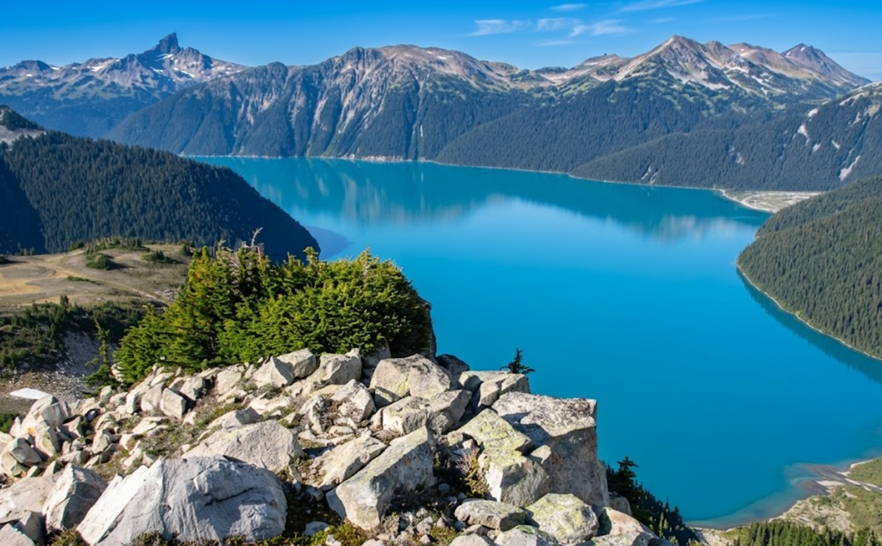
The circumnavigation includes Panorama Ridge, Black Tusk, Sphinx Bay, and the Table. Each feature adds geological and scenic interest, creating a comprehensive exploration of the park.
Panorama Ridge
Panorama Ridge is one of the most famous viewpoints in British Columbia. The climb is eight miles with 5,000 feet of elevation gain. From the summit, Garibaldi Lake spreads below in vivid turquoise, surrounded by glaciers and ridges. The view is expansive and often photographed, making it a highlight of the circumnavigation.
Black Tusk
Black Tusk is a volcanic spire rising stark against the sky. Its origins are uncertain, but it is a striking landmark visible from multiple points along the route. The spire is composed of volcanic rock and serves as a reminder of the fiery forces that shaped the region.
Sphinx Bay
Descending toward Sphinx Bay, hikers encounter steeper forest terrain with occasional blowdowns. Mosquitoes are common, but the reward is a river crossing. The crossing is typically knee‑deep in summer, manageable but requiring caution. The bay offers views of glaciers and alpine terrain, adding variety to the route.
The Table
The Table is a subglacial volcano with steep sides and a flat summit. It formed beneath ice, creating a unique shape. The feature is geologically significant and visually striking, standing as a monument to volcanic activity during the last ice age.
Return via Mt. Price
The final descent follows the Mt. Price trail. This section is challenging, with boulder fields and brush created by ancient lava flows. Fatigue is common at this stage, but the sight of Garibaldi Lake at the end provides relief.
Geological Background
Garibaldi Lake differs from most alpine lakes, which are typically formed by glacial moraines. Instead, it was created by volcanic activity. Around 11,000 years ago, lava flows from Mt. Price poured into the valley, over a thousand feet thick, damming the outflow and forming the lake.
The surrounding region contains multiple volcanic features, including Black Tusk and the Table. This combination of volcanic geology and glacial activity makes Garibaldi Provincial Park one of the most geologically interesting areas in the Pacific Northwest.
Conclusion
Garibaldi Lake is more than a hiking destination. It combines volcanic history, alpine silence, and striking natural beauty. The standard day hike offers turquoise waters and alpine meadows, while extended routes provide challenging circumnavigation opportunities with volcanic and glacial features.
Preparation, proper equipment, and awareness of trail demands are essential. The reward is a landscape that remains etched in memory as both challenge and gift. Garibaldi Lake endures as a symbol of British Columbia’s alpine wilderness, offering experiences that range from accessible day hikes to demanding alpine expeditions.