
Entering the Realm of Water and Stone
Maligne Lake is not simply a destination; it is an unfolding story written in turquoise water and granite peaks. To stand at its shore is to feel the immensity of Jasper National Park distilled into one place. The lake stretches long and narrow, a ribbon of glacial melt framed by forests and mountains.
Its beauty is not loud but patient, waiting for you to notice the way light shifts across its surface, the way silence deepens as you move further from the townsite.
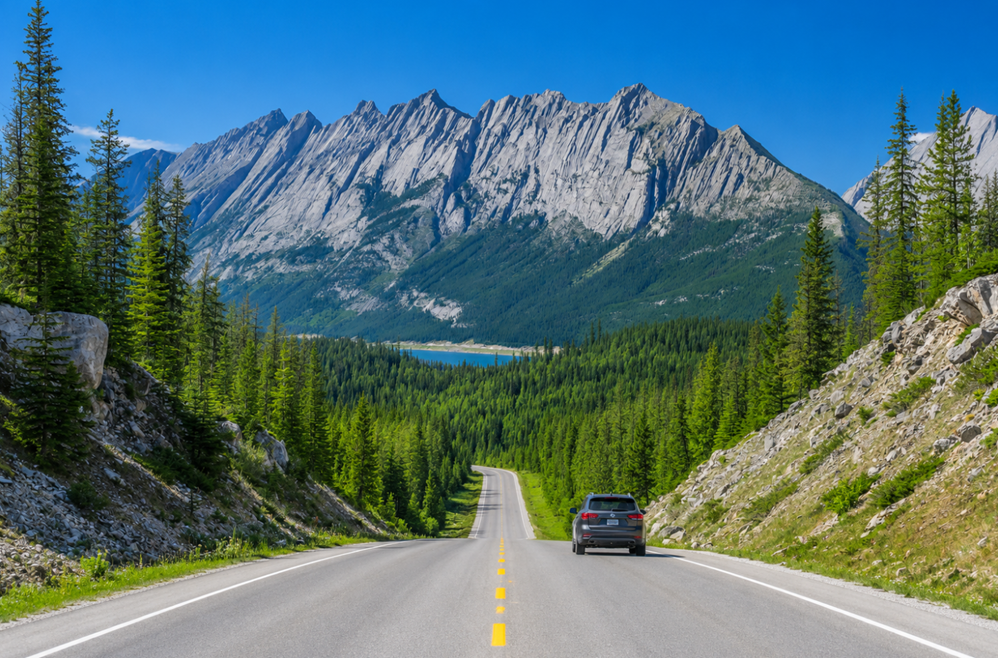
Geography and Origins – Sculpted by Ice
Maligne Lake owes its existence to glaciers that carved the valley thousands of years ago. At 22 km long, it is the largest natural lake in Jasper National Park, yet its narrow shape makes it feel intimate, almost secretive. The Queen Elizabeth Ranges rise sharply on one side, rugged and jagged, while the Bald Hills roll more gently on the other.
This duality—harsh and soft, jagged and smooth—defines the lake’s character. The valley itself tells a story of collapse and renewal. Glacial ice once filled this corridor, grinding rock into silt that now gives the lake its colour. When the ice retreated, it left behind a basin that filled with meltwater, creating the long, sinuous lake we see today.
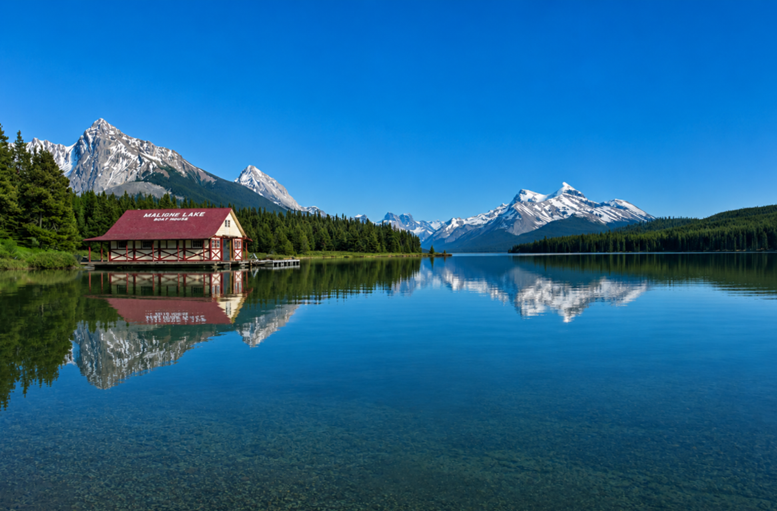
Colours and Atmosphere – A Palette of Change
The water shifts colour depending on season, light, and depth. Near the boathouse, it appears a deep blue, but as you travel further, it transforms into shades of turquoise and jade. These hues come from glacial silt suspended in the water, scattering sunlight in ways that feel almost magical.
On calm days, the lake becomes a mirror, reflecting peaks and clouds so perfectly that you lose track of where water ends and sky begins. In autumn, golden larch trees add warmth to the shoreline. In winter, the lake freezes into silence, its turquoise hidden beneath snow and ice. Spring brings meltwater rushing in, renewing the colours, while summer offers the most vibrant palette.
Wildlife and Ecology – Life Along the Shore
Maligne Lake is alive with creatures that thrive in its alpine environment. Loons call across the water, their haunting cries echoing against the mountains. Ospreys dive for fish, while elk graze in meadows nearby. Bears sometimes wander the road leading to the lake, reminding visitors that this is still wilderness.
The shoreline forests are dense with spruce and pine, their scent sharp and grounding. Wildflowers bloom in meadows, adding splashes of colour to the green. Beneath the surface, trout swim in cold, clear water. Every ripple, every birdcall, every rustle of leaves contributes to the lake’s symphony.
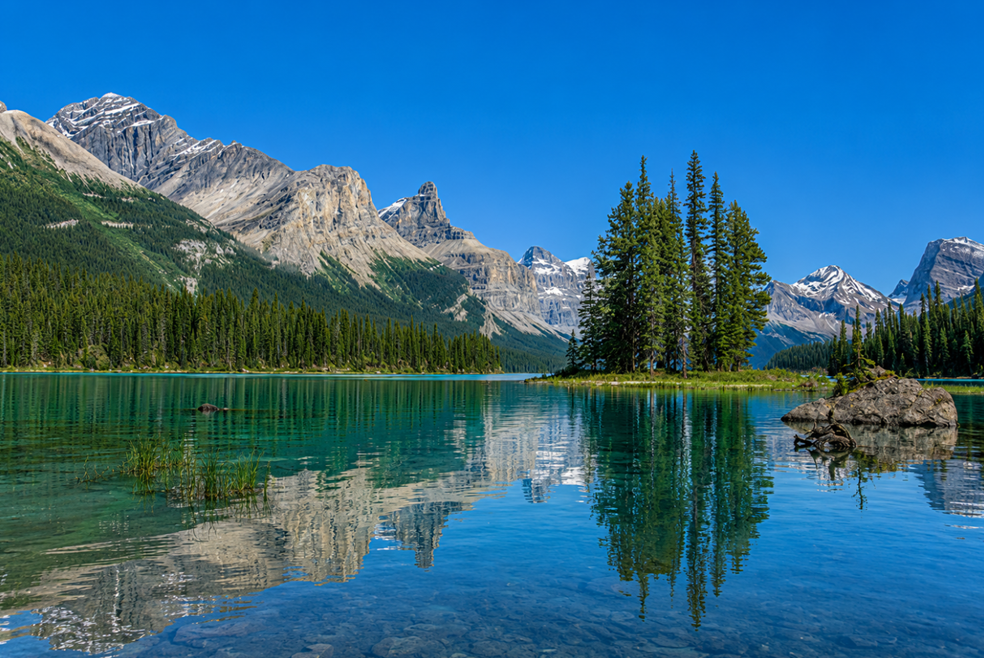
Human History – Maps and Memory
The story of Maligne Lake is also human. Mary Schäffer, an explorer in the early 1900s, followed a hand‑drawn map given to her by Samson Beaver, a Stoney tribesman. His knowledge led her to the lake, and her writings introduced it to the wider world. Indigenous peoples had known this place long before, weaving it into their stories and traditions.
Later, peaks were named for royalty, like the Queen Elizabeth Ranges, tying the lake to global history while it remained rooted in local memory. Fossilized coral reefs found nearby remind us that this land was once an ancient sea, long before glaciers carved it into mountains and valleys.
Cruising the Lake – Moving Through Story
Boarding a boat at Home Bay feels like stepping into a narrative. The guide’s voice blends with the hum of the engine, pointing out landmarks, telling stories of climbers and explorers, explaining how glaciers shaped the valley. As the boat glides into Samson Narrows, the scenery tightens, mountains pressing closer, water narrowing into a corridor of beauty.
It is here that anticipation builds—Spirit Island lies ahead.
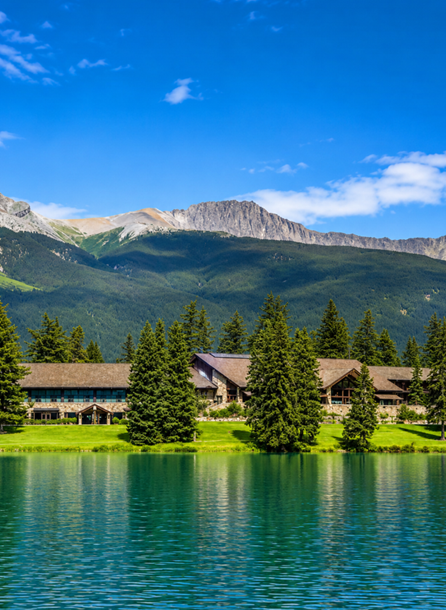
Spirit Island – Icon and Emotion
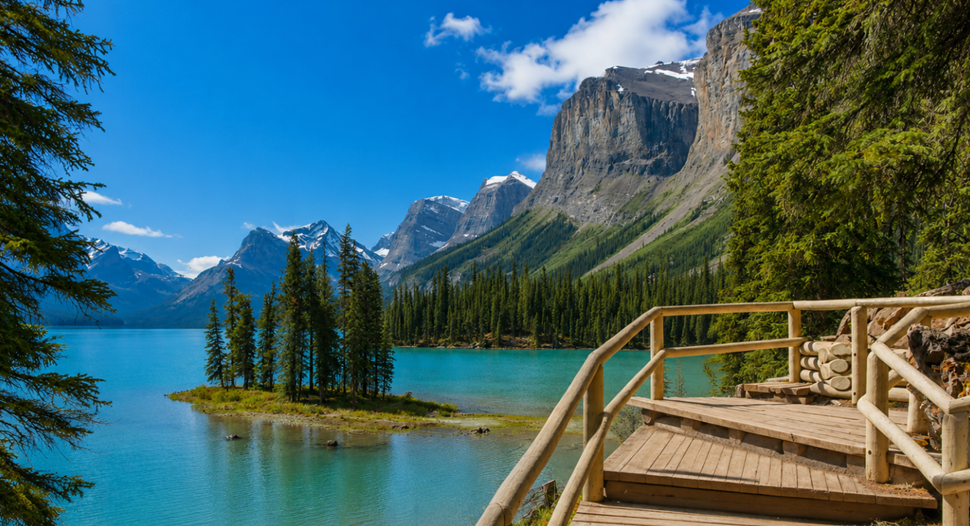
Spirit Island is the lake’s most famous symbol, a small peninsula that appears as an island when water levels rise. A cluster of trees stands defiantly against the turquoise, framed by peaks that seem to lean in protectively. Visitors cannot set foot on the island itself—it is sacred—but a short trail across the water offers a perfect vantage point.
To see Spirit Island is to feel awe sharpened into silence. Photographs capture its outline, but only presence captures its soul. Fifteen minutes at the viewpoint feels fleeting, yet perhaps that brevity makes the experience sharper, more precious.
Other Ways to Experience Maligne Lake
Not everyone chooses the cruise. Canoeing or kayaking offers a slower, more intimate journey, though the 28 km round trip to Spirit Island is ambitious. Hiking trails like Bald Hills or Opal Hills provide elevated views, showing the lake from above, its length stretching into the horizon.
Picnics along the shore, quiet moments at viewpoints, or simply watching wildlife along Maligne Lake Road—all are ways to experience the lake’s spirit without needing to reach its most famous landmark.
Photography and Light – Chasing the Perfect Glow
Photographers chase the late afternoon light, when the sun softens and Spirit Island glows. Early morning brings mist, a veil that makes the lake feel ethereal. Each season changes the palette—autumn adds gold to the shoreline, winter freezes the lake into silence, summer brings vibrant turquoise.
Yet even the best photograph cannot replicate the lived experience. The air, the silence, the shifting light—all resist capture, reminding us that beauty is meant to be felt, not owned.
Practical Information – Preparing for the Journey
Maligne Lake lies 50 minutes from Jasper townsite, at the end of Maligne Lake Road. The road itself is a journey, offering wildlife sightings and scenic viewpoints. At the lake, services include a gift shop, and canoe rentals. Cruises run from late May to early October, depending on ice conditions.
The classic cruise lasts 90 minutes, while the premium option extends to 2 hours with more time at Spirit Island. Tickets should be booked in advance, especially in July and August. Alberta residents may find discounted rates.
Reflections – The Legacy of Maligne Lake
Maligne Lake endures because it is more than scenery. It is a place where geology, ecology, and human history converge. It is a reminder that beauty can be both fragile and eternal, fleeting and lasting. Spirit Island may be the highlight, but the lake itself is the true masterpiece.
To leave Maligne Lake is to carry a memory that feels less like a photograph and more like a story whispered by water and stone.