
A City Defined by Flavor
Montréal is a city that eats with conviction. Its streets hum with the scent of poutine, steamies, and fine Québécois terroir transformed into haute cuisine. Yet one dish rises above them all, anchoring Montréal’s place on the world’s food map: smoked meat. This is not simply a sandwich. It is a ritual, a heritage, and a taste of Montréal’s soul.
Origins of Smoked Meat
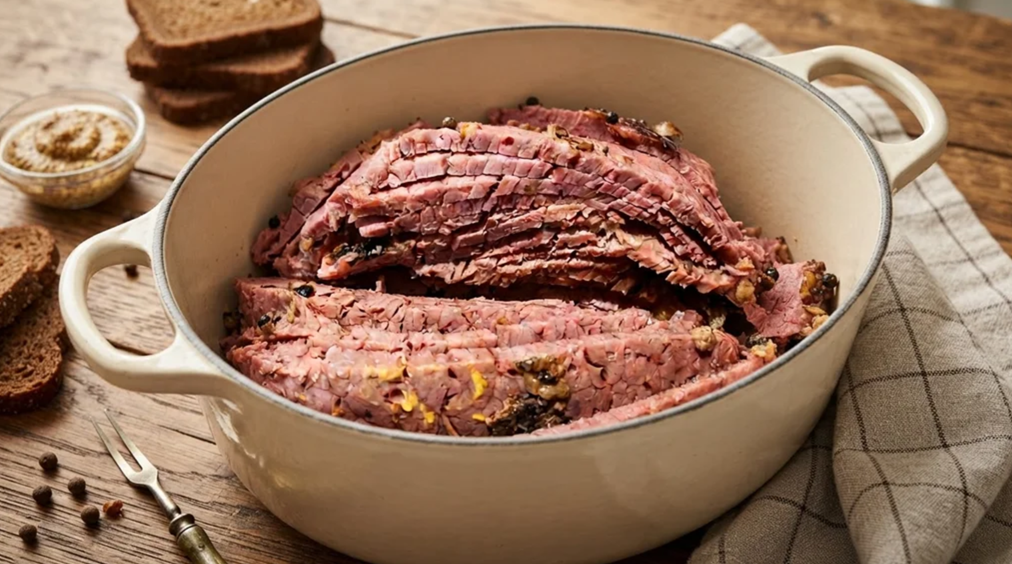
Smoked meat begins with brisket, a cut that carries both lean restraint and fatty indulgence. In the early days, slabs of beef were dry‑cured and buried in barrels, marinating in their own juices for weeks before being smoked for hours. This was preservation born of necessity, but it became flavor born of tradition.
Modern brines shorten the process, but the essence remains: peppercorns, coriander, mustard seed, garlic, and patience. Unlike New York pastrami, Montréal smoked meat embraces the whole brisket, offering diners a choice between lean, medium, or old‑fashioned slices—each bite a different balance of tenderness and flavor.
The Sandwich Tradition
A true Montréal smoked meat sandwich is piled high on rye bread, brushed with yellow mustard, and served with reverence.
Lean – drier, less flavorful, cut from the flat.
Medium – the perfect balance, juicy with both lean and fat.
Old‑Fashioned – thicker slices, rich and indulgent.
Add a half‑sour pickle, fries, and cherry cola, and you have Montréal’s answer to pastrami. But here, no one bothers with the word “sandwich.” It is simply smoked meat.
Schwartz’s: The Pilgrimage
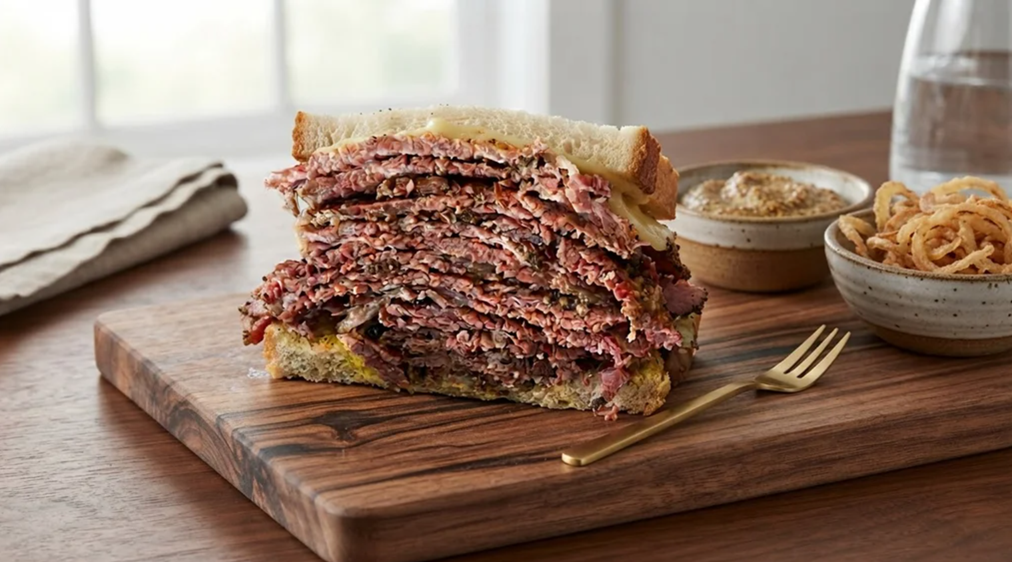
Every Montréal food story eventually leads to Schwartz’s Deli. Crowds spill onto the sidewalk, waiting for towers of ruby‑red brisket layered between rye. The first bite is revelation: salty, smoky, peppered with garlic and spice. It is meat that needs no adornment beyond mustard.
This is where smoked meat transcends food—it becomes memory. For many, their first taste at Schwartz’s is the moment Montréal imprints itself forever.
The Craft of Making Smoked Meat at Home
Smoked meat is not for the impatient. It demands days of curing, hours of smoking, and a final steaming that coaxes tenderness from dense connective tissue.
Curing
Salt and pink curing salt (Prague Powder #1) penetrate the brisket, firming its texture and preserving its rosy hue. Seven days in the fridge, flipped daily, ensures the cure reaches every fiber.
Soaking
After curing, the brisket must soak—an act of balance, drawing out excess salt so the meat sings with flavor rather than overwhelms.
The Rub
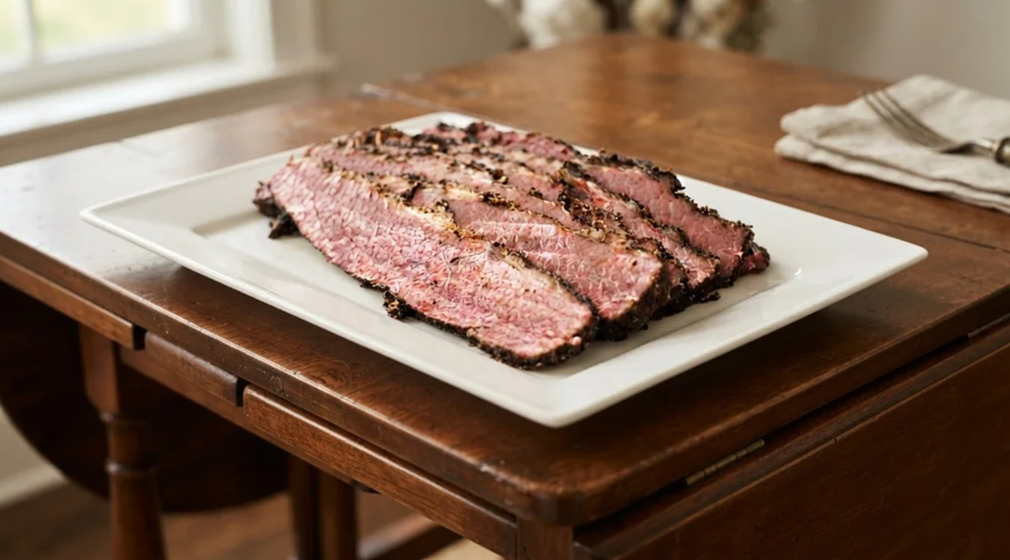
Nine spices—black pepper, coriander, paprika, garlic, onion, dill, mustard, celery seed, red pepper flakes—form a rub that is bold, aromatic, and unapologetically Montréal.
Smoking
Low and slow, the brisket transforms. Smoke threads through its fibers, marrying spice and meat into something greater than both.
Steaming
Wrapped tightly, the brisket finishes in steam. This final step softens, tenderizes, and readies the meat for slicing—thin, generous, and destined for rye.
Montréal’s Answer to Pastrami
Smoked meat may resemble pastrami, but it is not the same. Pastrami leans on the navel cut and a simpler rub. Montréal smoked meat, with its whole brisket and complex seasoning, offers choice, depth, and a flavor that lingers long after the last bite.It is not just food. It is Montréal’s culinary identity, preserved in smoke and spice.
The Atmosphere of the Delis
Step inside a smoked meat deli and you enter a world of clatter and rhythm. Plates slam onto tables, waiters weave through narrow aisles, and the air carries the perfume of spice and smoke. Conversations rise and fall, punctuated by laughter and the scrape of forks against plates.
The sandwich arrives not delicately but defiantly—meat stacked high, mustard gleaming, rye bread barely containing the tower. It is a meal that commands attention, a dish that insists you pause and savor.
Cultural Significance
Smoked meat is more than sustenance. It is Montréal’s culinary ambassador, a dish that bridges cultures and generations. Immigrants brought the tradition, locals embraced it, and now it stands as a symbol of the city’s openness and appetite.To eat smoked meat is to participate in Montréal’s story—a narrative of preservation, adaptation, and celebration.
The Science Behind the Flavor
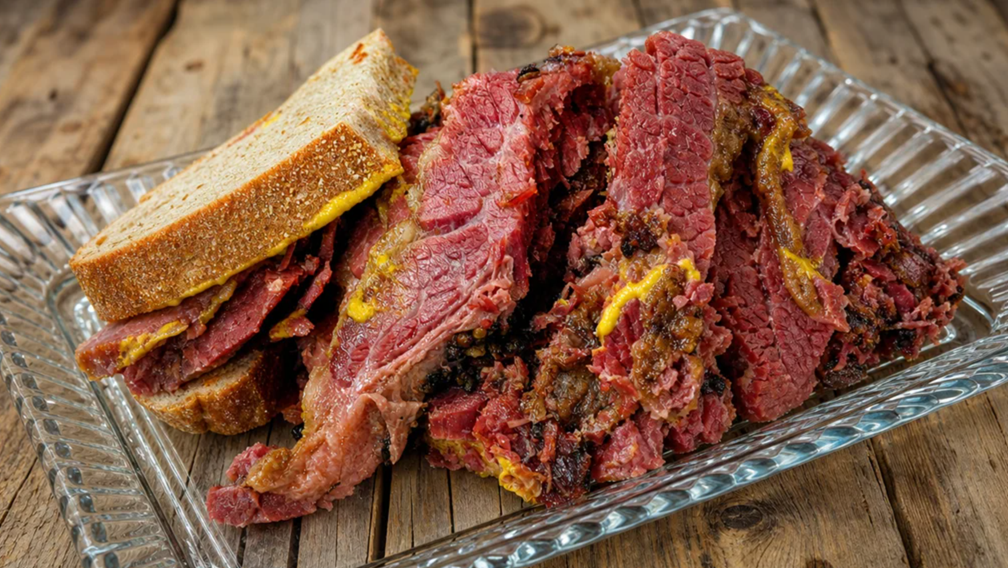
Salt draws moisture from the brisket, tightening proteins and creating a firmer texture. Nitrates preserve the rosy hue, while smoke infuses layers of complexity. The rub’s spices bloom during cooking, their oils released into the meat’s fibers.The result is a harmony of chemistry and craft: savory, smoky, peppered, and unforgettable.
Beyond the Sandwich
Though the sandwich reigns supreme, smoked meat finds its way into other dishes: poutine crowned with brisket, omelets folded with smoky slices, even pasta tossed with shredded meat. Yet purists insist the sandwich is the true form, the one that honors tradition.
A Taste That Endures
Smoked meat is not fleeting. It lingers—on the palate, in memory, in Montréal’s identity. It is a dish that defines a city, a flavor that endures across generations.For travelers, it is a rite of passage. For locals, it is comfort. For Montréal, it is pride.