
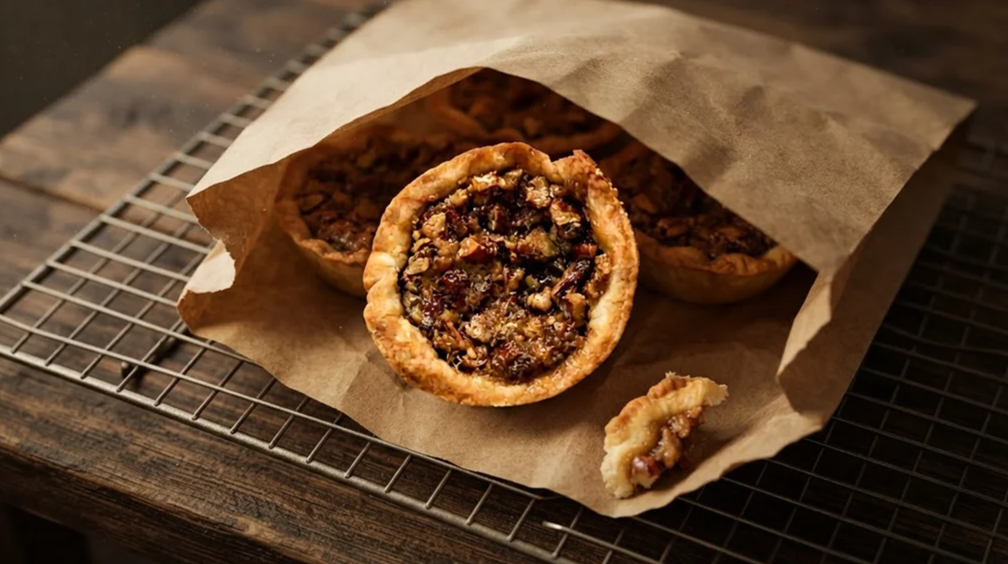
Walk into a Canadian bakery, grocery store, or farmstand, and you’ll almost certainly find them waiting in the pastry case—small, golden, and unapologetically rustic. Butter tarts are not desserts that rely on decoration. Their appeal lies in the contrast: a flaky all‑butter crust that cradles a filling of brown sugar, butter, and eggs, baked into a gooey center that tastes of butterscotch and caramel.
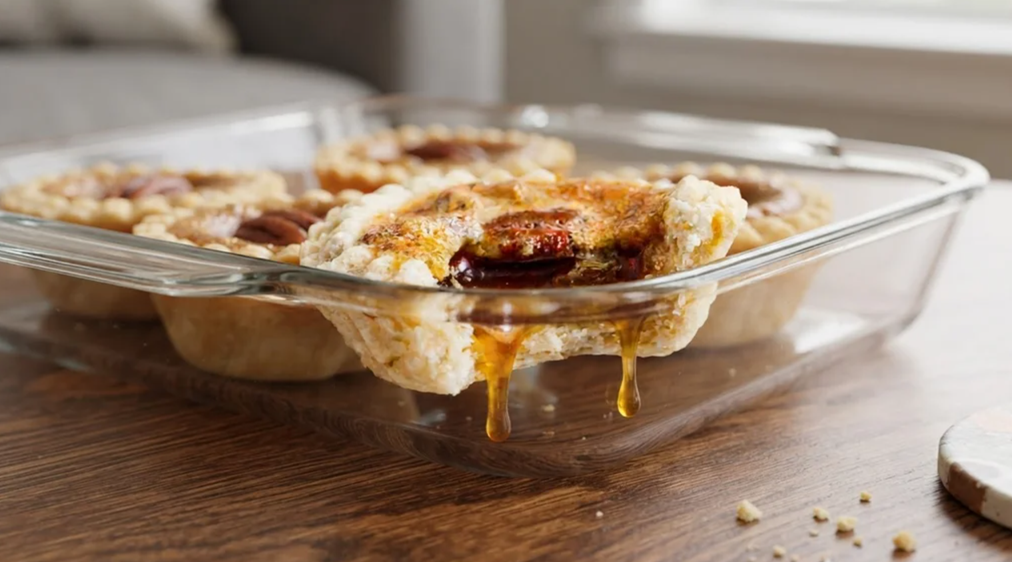
Bite into one and the filling oozes, sticky and indulgent, demanding you lick your fingers clean. They may not be the most photogenic pastry, but they are beloved. So beloved, in fact, that Canada Post issued a stamp in their honor in 2019. A poster from a 2005 Library and Archives Canada exhibit declared: “Forget the beaver, forget the glorious maple leaf, forget the majestic and haunting loon… the butter tart is the most important contribution to our identity as a nation.”
A Festival of Flavour
Midland, Ontario claims the tart as its own. Each summer, the town hosts the Best Butter Tart Festival, drawing more than 50,000 visitors. Streets fill with stalls offering endless variations: fillings that run molten or set custard‑like, crusts made with butter or lard, tarts studded with raisins, currants, or pecans.
The debates are endless, but the joy is universal. No one truly knows when or how the butter tart came to be. Its origins are hazy, perhaps linked to pioneer kitchens or French Canadian sugar pies. What matters is its endurance. The butter tart has slipped seamlessly into Canadian life, from cottage kitchens to holiday tables.
The Great Debate
Ask any Canadian and you’ll hear an opinion. Should the filling be runny, dripping down your fingers, or softly gelled, holding its shape? Are raisins essential, or an intrusion? Is the crust best with butter? These loyalties are formed in childhood kitchens.
A memory lingers of tarts cooling on a grandmother’s counter at the cottage—soft centers, never runny, heavy with caramel and molasses notes. They were kept in the freezer, ready to thaw for company, and it became clear early on that a chilled butter tart offers a chewy, irresistible bite.
Baking Traditions
The secret lies in the pastry. Chill the crust after pressing it into the tin, letting the gluten relax and the butter stay cold. As the tart bakes, the butter melts into pockets of steam, crisping into flaky layers. The filling bubbles and rises, sometimes spilling over the edge, leaving caramelized traces on the pan.
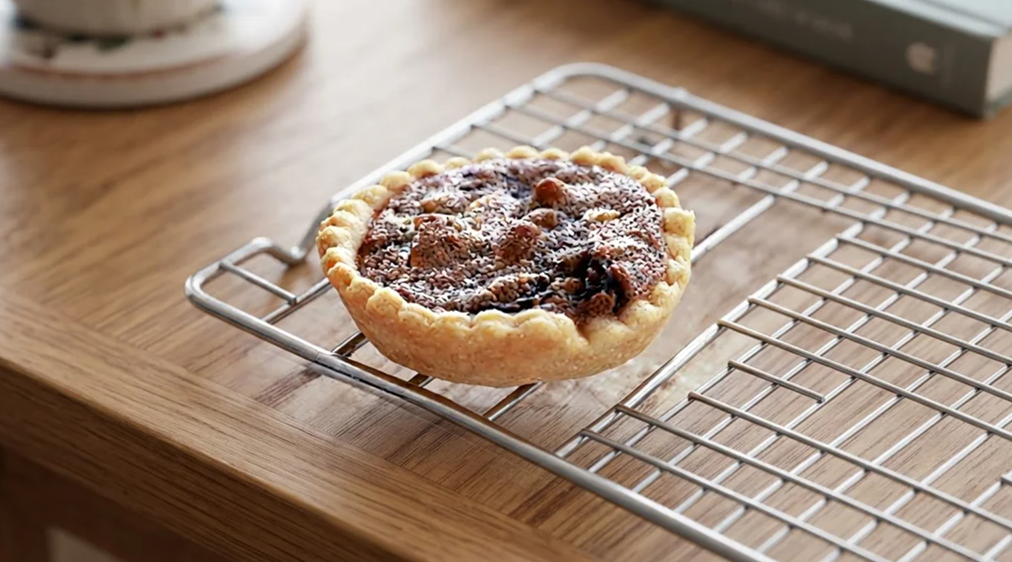
Imperfection is part of the charm. Butter tarts are meant to look rustic. Pleated edges, uneven tops, a filling that settles as it cools—these are not flaws but signatures of authenticity.
Everyday Indulgence
Butter tarts are versatile. Serve them with afternoon tea, tuck them beside a morning coffee, or bring them out as dessert at a holiday table. They freeze beautifully, ready to be reheated or enjoyed cold. Whether plain, studded with raisins, or kissed with maple syrup, they are endlessly adaptable.
At their heart, butter tarts remain simple: a flaky crust, a gooey filling, and a taste that is unmistakably Canadian. They are the country’s sweet shorthand, a bite‑sized emblem of comfort and tradition.
Regional Variations
Across Canada, butter tarts take on regional accents. In Ontario, they are often runny, with fillings that drip down your fingers. In the Prairies, they lean toward custard‑like solidity, sometimes enriched with corn syrup. In Quebec, the influence of sugar pie is clear, with maple syrup folded into the filling.
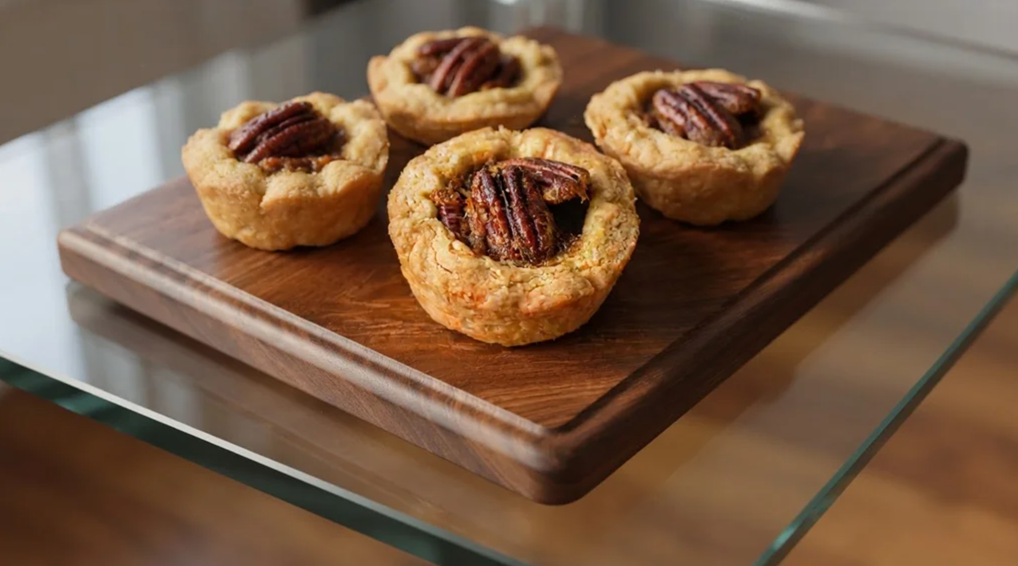
Some bakers add pecans, borrowing from American pecan pie. Others insist on raisins or currants, while purists argue for plain. The diversity reflects Canada itself: a patchwork of traditions, each claiming authenticity.
Butter Tarts and Identity
Food often becomes shorthand for national identity, and butter tarts have stepped into that role. They are not grand or elaborate, but they are deeply Canadian. They embody the rustic, resourceful spirit of pioneer kitchens, the sweetness of maple and brown sugar, the comfort of butter and eggs.
They are also democratic. You can find them in high‑end patisseries and roadside diners and in farm kitchens. They belong to everyone, and everyone has an opinion.
Holiday Tables
Butter tarts shine at holidays. They offer an alternative to pecan pie, especially for families with nut allergies. They appear alongside shortbread and Nanaimo bars. Their small size makes them easy to share, and their gooey filling makes them irresistible. They are the dessert that disappears first, the one guests ask about, the one children sneak from the platter.
The Craft of Pastry
The pastry is the foundation. It must be butter pastry—no shortening. Because pastry has so few ingredients, the quality of butter matters. European cultured butter, with its higher butterfat and slight tang, offers depth of flavor. The filling is simple: brown sugar, butter, eggs, sometimes corn syrup or maple syrup.
It bubbles in the oven, rising before settling as it cools. The texture depends on timing: bake longer for a set filling, shorter for a runny one.
Rustic Charm
Butter tarts are not meant to be perfect. Their edges pleat in the muffin cups, their filling spills over, their tops crack and settle. This rustic charm is part of their appeal. They give permission to the baker to be less than perfect, to embrace the messiness of butter and sugar. They are desserts that invite play.
Fill the crust cups with raisins, currants, or pecans before pouring in the filling. Bake some longer, some shorter. Serve some warm, some chilled. Each batch can be a mix of textures and flavors.
Butter Tarts in Memory
For many Canadians, butter tarts are tied to memory. They recall cottages by the lake, grandmothers’ kitchens, holiday tables, roadside stops. They are desserts that carry nostalgia, that taste of childhood and family. They are also desserts that travel well.
Wrapped in wax paper, tucked into lunch boxes, carried to picnics, they hold their shape and their flavor. They are portable comfort, ready to be shared.
Conclusion: A Sweet Emblem
Butter tarts are more than a dessert. They are a cultural emblem, a culinary shorthand, a taste of Canada. They embody rustic charm, democratic accessibility, and endless debate. They are gooey, flaky, sweet, and irresistible. Whether runny or set, with raisins or plain, they are beloved.
They are the dessert that unites Canadians in passion and opinion, the sweet that appears at festivals and holidays, the pastry that carries memory and identity. In the end, butter tarts remind us that the simplest things often carry the deepest meaning.
A crust of butter, a filling of sugar and eggs, a bite that drips down your fingers—this is Canada, distilled into dessert.