
A Cheese Born of the Mountains
In the canton of Valais, where the Matterhorn pierces the sky and the Aletsch Glacier winds its frozen path, raclette was born. It is not merely a cheese but a reflection of the land itself. The cows graze on alpine herbs, wildflowers, and mineral‑rich grasses, and their milk carries the essence of the high pastures.
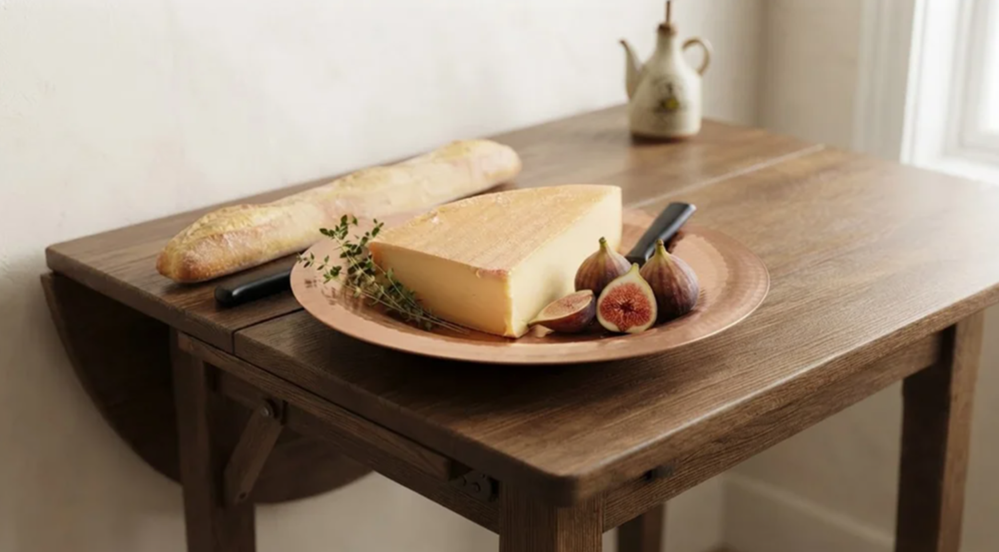
From this milk comes raclette, a semihard wheel with ivory‑yellow flesh and a rind that speaks of pine shelves. Its name, from the French racler—to scrape—captures the ritual of drawing molten cheese across bread or potatoes, a gesture that has become synonymous with Swiss conviviality.
The Protected Tradition
True Raclette du Valais AOP is bound by ancestral methods. Farmers heat raw milk to 90°F, add rennet and cultures, and allow the curds to form. Cut fine with a cheese harp, the curds are warmed, pressed, and bathed in brine. The wheels rest on red pine benches, brushed daily until maturity.
This process, lasting three to six months, creates a cheese that melts into a smooth, creamy layer without turning greasy. The designation of origin ensures authenticity.
The Flavor of Altitude
Raclette’s taste is inseparable from altitude. The cows wander within a range of eleven miles, climbing to 7,000 feet in summer. The alpine grazing season—known as désalpe—lasts about 100 days, and the milk produced during this time is extraordinary. It carries floral notes, a tang of herbs, and a richness that cannot be replicated elsewhere.
When melted, raclette becomes a velvety blanket of flavor: nutty, fruity, milky, with a whisper of spice. Swiss raclette often leans floral and pungent, while French raclette from Savoie is smoother, buttery, and mild.
From Shepherds to Modern Tables
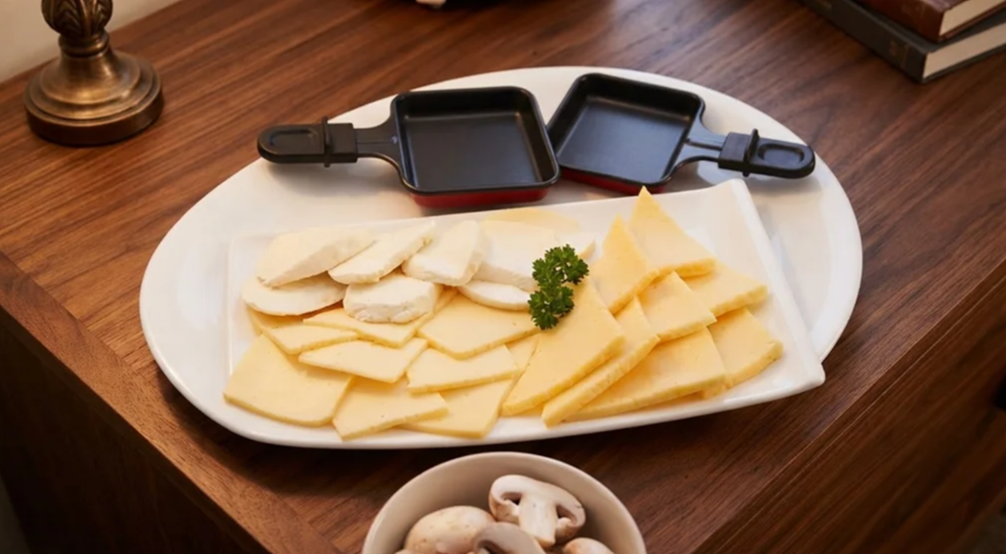
The origins of raclette as a dish are humble. Alpine shepherds placed half‑wheels near the fire, scraping the bubbling surface onto bread or potatoes. That rustic act became a national ritual. Today, raclette is enjoyed in homes and restaurants, often with modern appliances like the raclonette, a tabletop grill that makes the tradition accessible year‑round. Yet the essence remains unchanged: cheese, heat, scrape, share.
The Social Heart of Switzerland
For many Swiss natives, fondue may be the national dish, but raclette holds the heart of the Alps. It is food as fellowship, a shared table where friends gather around fire or grill. Raclette is not just nourishment—it is hospitality, tradition, and memory.
The Tradition of Melting
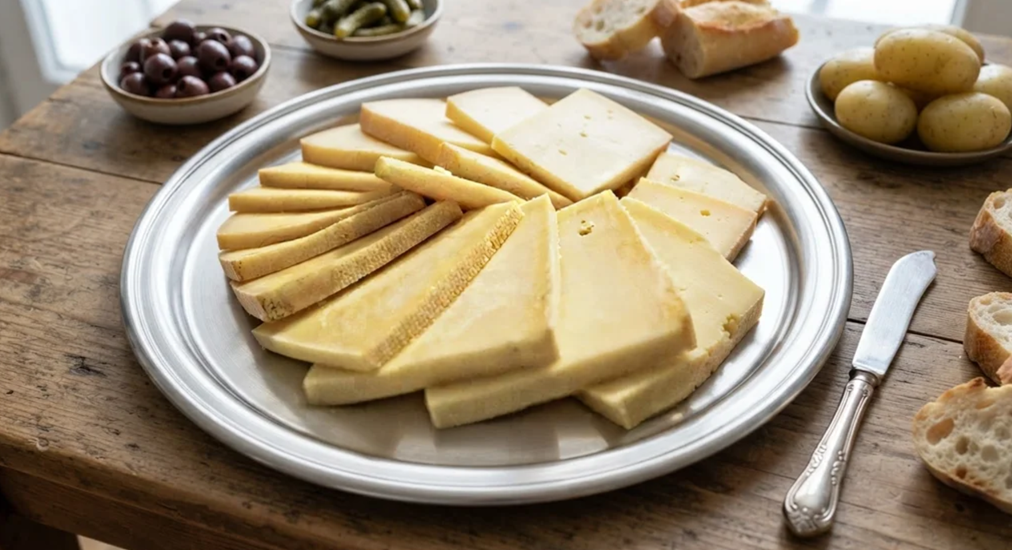
Raclette melts at 104°F, reaching peak creaminess between 122–140°F. Too much heat, and the fat separates; just enough, and the cheese bubbles into perfection. The tradition is simple: boil potatoes, cornichons, and pickled onions, then scrape the molten layer onto each plate. The act of scraping is as important as the taste—it is the gesture that binds the meal together.
The smell of raclette can be strong, even off‑putting to tourists. But for those raised in the Alps, it evokes nostalgia: winters by the fire, gatherings in mountain huts, the descent of cows after summer grazing. It is the scent of heritage, inseparable from memory.
While Switzerland produces 80 percent of raclette, France also contributes, particularly in Savoie. In the U.S., raclette appears in specialty stores, often imported or produced domestically with similar methods. Substitutes like asiago or fontina can mimic its melting properties, but gourmets insist that authentic raclette carries the taste of the mountains.
Culinary Versatility
Though raclette is most famous as a melted dish, its uses extend further. It enriches sandwiches, quiches, and melts. Some drape it over veal schnitzel for comfort food; others pair it with raw pear slices to balance richness with freshness. Its mild, creamy texture makes it adaptable, yet its alpine character always shines through.
Raclette requires careful storage. Wrapped in waxed paper and sealed in a container, it can last five weeks in the refrigerator. Mold can be cut away, and the cheese remains safe. It can also be frozen for three months, grated or in blocks, with minimal loss of flavor.
These practical steps ensure that raclette can be enjoyed long after purchase, though purists argue that fresh raclette, scraped straight from the wheel, is incomparable.
The Symbol of Conviviality
Raclette “a symbol of Swiss conviviality and rural heritage.” It represents the link between agriculture, tradition, and hospitality. Around a raclette table, the act of scraping and sharing becomes a ritual of community. It is food that insists on togetherness.
Traditionally, raclette is eaten in colder months, when fires burn and snow falls. Its warmth suits winter evenings. Yet modern appliances have extended its season, allowing raclette to appear even in summer kitchens. Still, many Swiss hold to tradition, reserving raclette for the time when the mountains are cloaked in snow.
The Global Journey
Raclette has traveled far from Valais. It appears in supermarkets, roadside vending machines, and even tiny fridges outside mountain huts. Abroad, it has become a centerpiece of dinner parties, a novelty at winter gatherings, and a comfort food for those seeking alpine authenticity. Its adaptability ensures its survival, but its roots remain firmly in the Alps.
The Taste of the Alps
To eat raclette is to taste the mountains. The herbs, flowers, and grasses consumed by cows at high altitude infuse the milk with flavors that no factory can replicate. The cheese carries those notes, and when melted, they bloom into a rich, aromatic experience. It is a flavor that cannot be faked, a direct connection to the land.
Despite modernization, raclette remains true to its origins. The scraping, the sharing, the communal table—all endure. It is a dish that has resisted change, holding fast to its heritage while embracing new methods of preparation. In this balance lies its charm: ancient yet modern, rustic yet refined.
Raclette is both cheese and dish, but more importantly, it is a tradition. It is the Alps distilled into flavor, a tradition that has endured centuries, and a reminder that the simplest meals can be the most profound. Whether scraped by firelight in Valais or melted on a raclonette in a city apartment, raclette carries with it the essence of the mountains and the spirit of conviviality.