
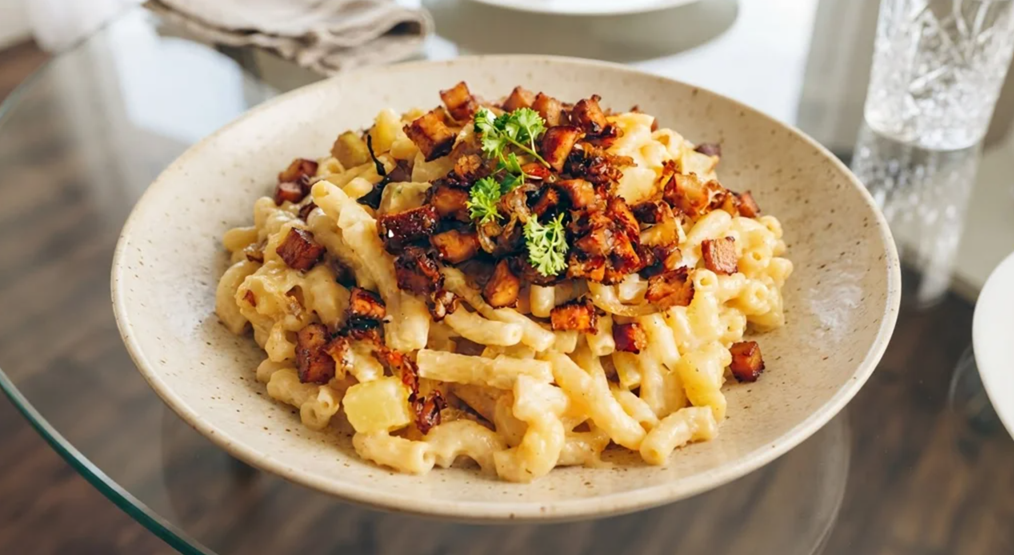
There are meals that feel like they carry the weight of history, and Älplermagronen—literally “Alpine herder’s macaroni”—is one of them. It is rustic, hearty, and deeply tied to the rhythms of mountain life. Today, it is celebrated as one of Switzerland’s most beloved comfort foods, but its story is layered with migration, adaptation, and alpine ingenuity.
The Origins of Alpine Macaroni
The roots of Älplermagronen lie in practicality. Alpine herders needed meals that were filling, easy to prepare, and made from ingredients that could survive long stays in mountain huts. Pasta, potatoes, cheese, and cream became the backbone of this dish.
Pasta itself arrived in Switzerland with Italian workers in the late 19th century, particularly during the construction of the Gotthard Tunnel. Yet macaroni was far too expensive for everyday workers at the time. It wasn’t until the 1930s, when pasta became affordable, that herders began folding it into their daily fare.
Potatoes, heavy to transport, were added later when the dish migrated from alpine pastures to the Swiss Plateau.
The Swiss Twist: Applesauce on the Side
What makes Älplermagronen uniquely Swiss is its pairing with applesauce. Sweet, tangy, and bright, it cuts through the richness of the cheese and cream, creating a balance that feels both surprising and inevitable. Caramelized onions crown the dish, adding depth and a whisper of sweetness.
This contrast—savory pasta and potatoes against the brightness of applesauce—is what elevates Älplermagronen from simple sustenance to cultural icon.
Comfort Food Across Borders
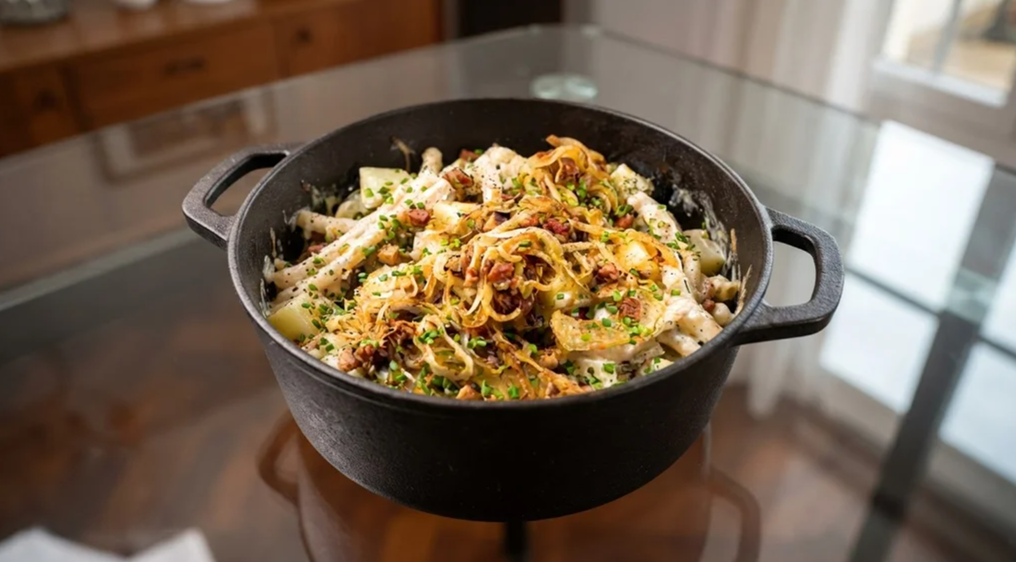
It’s tempting to call Älplermagronen the Swiss cousin of Mac ’n’ Cheese. Both are pasta-and-cheese comfort staples, but their stories diverge. Älplermagronen didn’t appear until the 20th century. The Swiss dish is more layered—pasta plus potatoes, cream, onions, and applesauce—a reflection of alpine practicality and ingenuity. Where Mac ’n’ Cheese is indulgent simplicity, Älplermagronen is rustic complexity.
The Ingredients That Matter
Macaroni: Hörnli or älpler-magronä, tubular and sturdy, perfect for holding sauce.
Potatoes: Waxy varieties like Yukon Gold, diced to hold their shape.
Cheese: Gruyère is the star—nutty, rich, and quintessentially Swiss.
Onions: Fried crisp in oil.
Applesauce: Plain or spiced, always served alongside.
Cooking in the Alpine Tradition
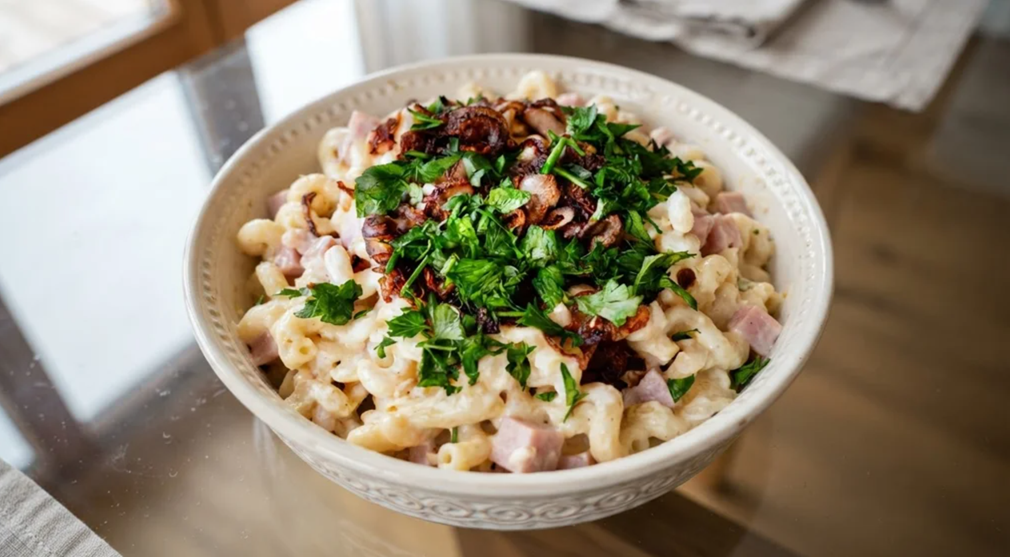
Imagine a freezing evening in a timber hut, the fire crackling, snow pressing against the windows. On the table: a steaming bowl of macaroni and potatoes, cloaked in Gruyère’s nutty melt, onions crisped to gold, and a side of applesauce glowing like amber. It’s not elegant—it’s elemental.
A dish that says: you’ve worked hard, now eat well. Cooking methods vary. Some fry onions with bacon and garlic, others shallow-fry them in oil for crispness. Pasta and potatoes can be cooked together, though timing must be watched carefully. Cream may be added directly, though some cooks risk burning it if not careful. The dish is forgiving, but it rewards attention.
Why We Love It
Because it is more than food—it is a story of migration, adaptation, and alpine resilience. It is the taste of Switzerland’s mountains, a dish that turns humble staples into something unforgettable. Every bite is a reminder that comfort doesn’t need extravagance; it needs warmth, balance, and tradition.
Älplermagronen is not just a recipe—it is a cultural touchstone. It embodies the Swiss ability to make something extraordinary out of the ordinary, to transform necessity into comfort.