
Toronto > Malls in Toronto > CF Toronto Eaton Centre
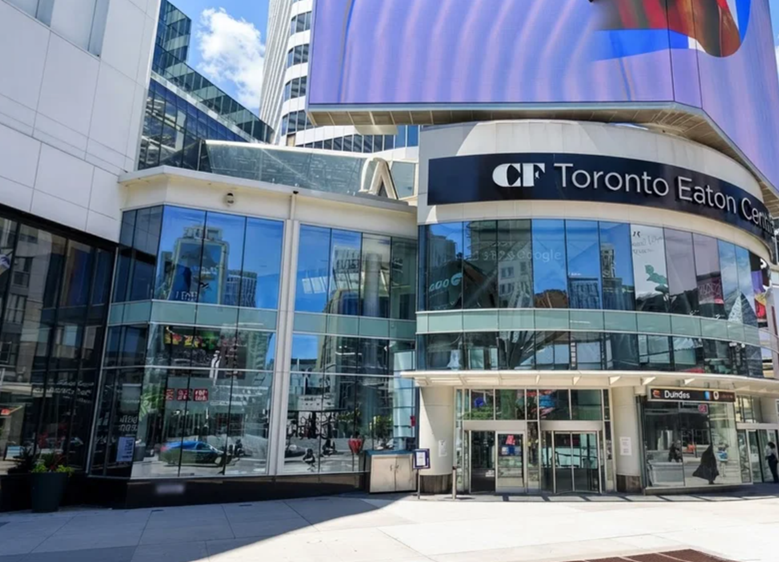
In the heart of Toronto’s downtown core, where Yonge Street vibes with the rhythm of traffic and pedestrians, the CF Toronto Eaton Centre rises as a beacon of glass and steel. It is not merely a shopping mall but a metropolitan landmark, a place where the city gathers, disperses, and pauses.
Just steps from the CN Tower and other downtown attractions, the Eaton Centre has become a natural starting point for exploring Toronto’s centre. Its presence is both practical and symbolic: practical because it offers everything from fashion to groceries, symbolic because it represents the city’s evolution from a retail empire into a modern urban hub.
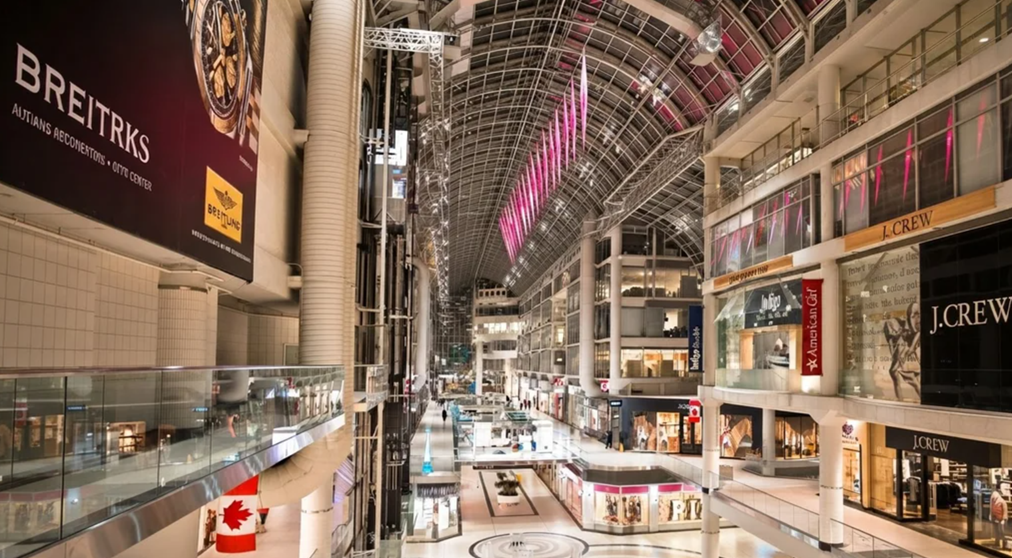
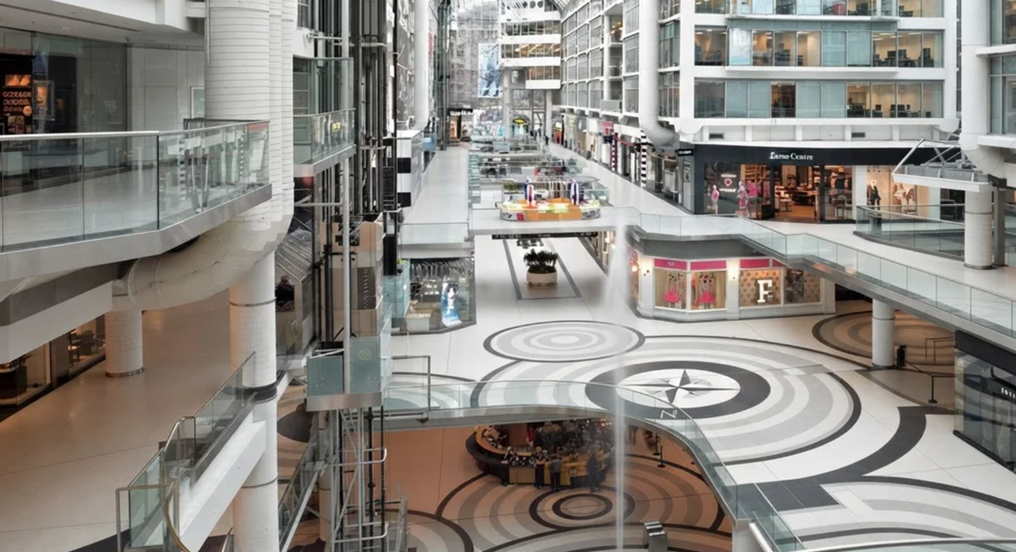
Walking through its doors, visitors are immediately struck by the scale. Skylights stretch overhead, flooding the concourses with natural light. The architecture feels open yet bustling, a paradox of space and crowd. It is here that Toronto’s pulse is most visible, a constant stream of locals, tourists, and commuters weaving through its corridors.
Shopping Spectrum
The Eaton Centre’s reputation rests on its sheer variety. With more than 230 retailers, restaurants, and services, it is a universe contained within a single structure. Canada’s flagship H&M dominates with its sprawling fast‑fashion displays, while Nordstrom and Saks Fifth Avenue provide a luxury counterpoint.
The Apple Store gleams with minimalist precision, its glass walls and sleek tables inviting visitors to test the latest devices. Sephora vibes with colour and fragrance, a sensory experience that draws beauty enthusiasts from across the city. Indigo Books offers a quieter refuge, its shelves stacked with novels, records, and gifts.
Specialty stores like Canada Goose and Massimo Dutti add depth to the mix, ensuring that every taste and budget finds a home here. The Eaton Centre is not just about shopping—it is about spectacle. To wander its halls is to witness the choreography of commerce, a dance of displays, promotions, and crowds.
Even those who come with no intention of buying often find themselves lingering, drawn into the rhythm of the place.
Architectural Atmosphere
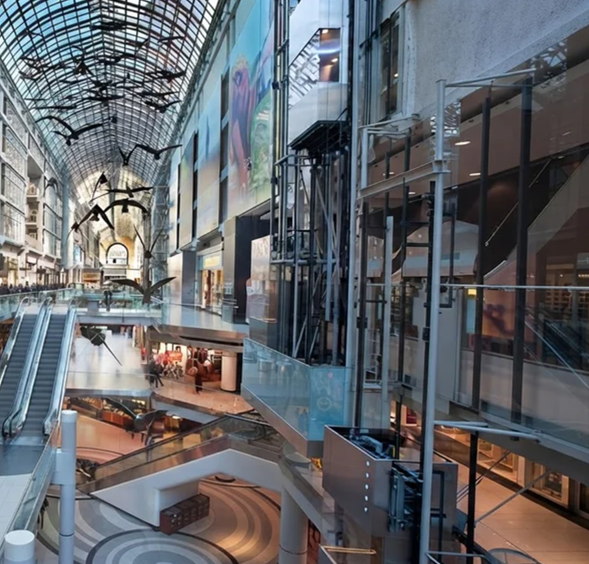
Look up, and the Eaton Centre reveals its artistry. Suspended from the ceiling are Michael Snow’s fibreglass geese, frozen mid‑flight in perpetual migration. This installation, titled Flight Stop, has become one of the mall’s most recognizable features. The geese soar above shoppers, a reminder that art and commerce can coexist in unexpected harmony.
The skylight itself is a marvel, a vaulted glass canopy that frames the sky above. On bright days, sunlight pours into the concourses, illuminating storefronts and casting reflections across polished floors. On stormy afternoons, the ceiling becomes a theatre of weather, with rain streaks and shifting clouds visible overhead.
The architecture ensures that the Eaton Centre is never sealed off from the city—it remains connected, porous, alive.
Experiential Stores
Beyond traditional retail, the Eaton Centre embraces experience. Other flagship stores adopt similar approaches, blending retail with entertainment. The result is a mall that feels dynamic, constantly evolving, and always more than the sum of its parts. Eaton Centre is not simply a place to purchase—it is a place to participate.
Fun Facts and Records
The Eaton Centre holds distinctions that elevate it beyond ordinary malls. It is the busiest shopping centre in North America, surpassing even the Mall of America and Toronto Pearson International Airport in foot traffic. In a single year, it has welcomed 48 million visitors, a staggering figure that underscores its role as both commercial hub and tourist destination.
That innovation set a precedent for entertainment within retail spaces, a trend that has since spread globally. The Eaton Centre continues to embody that spirit of scale and ambition. Free Wi‑Fi throughout the mall ensures that visitors remain connected, a modern convenience that reflects the Eaton Centre’s commitment to accessibility.
Accessibility and Arrival
Part of the Eaton Centre’s success lies in its accessibility. Two subway stations—Queen and Dundas—sit directly beneath the mall, making it a seamless stop for commuters. Streetcars glide past its doors, with the 501 stopping at Yonge and Queen and the 505 at Dundas Station.
For drivers, the Gardiner Expressway and Don Valley Parkway provide direct routes, with parking available in the mall’s parkades, including electric vehicle charging stations. This ease of arrival makes the Eaton Centre one of the most accessible shopping destinations in North America. It is stitched into Toronto’s urban fabric, not isolated but integrated, a natural extension of the city’s streetscape.
Eaton Centre vs. Yorkdale
Comparisons with Yorkdale Mall are inevitable. Eaton Centre spans 201,320 square metres, larger than Yorkdale’s 171,473. Yet size alone does not determine superiority. Eaton Centre thrives on its downtown location, its integration with transit, and its role as a tourist destination.
Yorkdale, by contrast, offers a suburban luxury experience, with high‑end brands and spacious layouts. Each serves a distinct purpose, catering to different audiences and moods. For travellers, Eaton Centre is often the more convenient choice, situated within walking distance of Toronto’s landmarks.
For locals seeking a curated luxury experience, Yorkdale may hold greater appeal. Together, they represent the diversity of Toronto’s retail landscape.
Historical Transformation
The Eaton Centre’s story is rooted in history. Before it became Canada’s busiest mall, the site was dominated by the Eaton’s department store empire. Eaton’s revolutionized Canadian retail, introducing innovations such as fixed pricing and mail‑order catalogues.
The proposal to build a massive shopping centre in downtown Toronto sparked controversy, with critics fearing the destruction of historic streetscapes. Yet the project moved forward, blending architectural innovation with urban renewal. The result was transformative.
The Eaton Centre reshaped Toronto’s downtown, creating a modern retail hub that redefined the city’s identity. Its construction marked a turning point, symbolizing both the decline of the old department store model and the rise of the new urban mall.
Cultural Significance
Today, the Eaton Centre is more than a place to shop—it is a cultural landmark. It hosts art installations, flagship experiences, and seasonal events that draw crowds beyond retail. During holidays, its decorations become a spectacle, with towering trees and elaborate displays filling the concourses.
It is also a place of memory. Generations of Torontonians recall visits to the Eaton Centre, whether for back‑to‑school shopping, holiday outings, or casual afternoons. Tourists, too, carry impressions of its scale and energy, often ranking it among the highlights of their Toronto experience.
Eaton Centre as Urban Theatre
To walk through the Eaton Centre is to witness a theatre of urban life. Crowds ebb and flow, storefronts shift with seasons, and skylights frame the sky above. It is a place where commerce, culture, and architecture converge, creating an atmosphere that is uniquely Toronto.
The geese continue their flight overhead, a reminder that even in the busiest mall in North America, art has a place. The Eaton Centre is not static—it is alive, evolving, and always ready to welcome the next wave of visitors.