
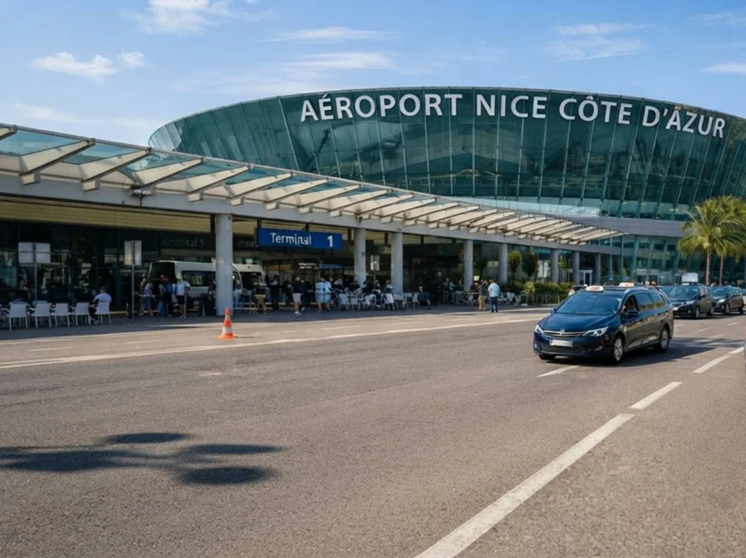
The Private Arrival into Nice
Stepping out of Nice Côte d’Azur Airport, you are immediately enveloped by the Mediterranean air—warm, salt‑tinged, and alive with the promise of the Riviera. The airport itself is perched against the sea, a gateway where the mechanical vibes of aviation gives way to the languid rhythm of coastal life.
For many travellers, the choice of how to reach the city centre defines the tone of their arrival. The tram vibes with modern efficiency, the bus meanders with scenic patience, but the taxi and ride‑share offer something different: privacy, directness, and the quiet assurance of being carried door‑to‑door.
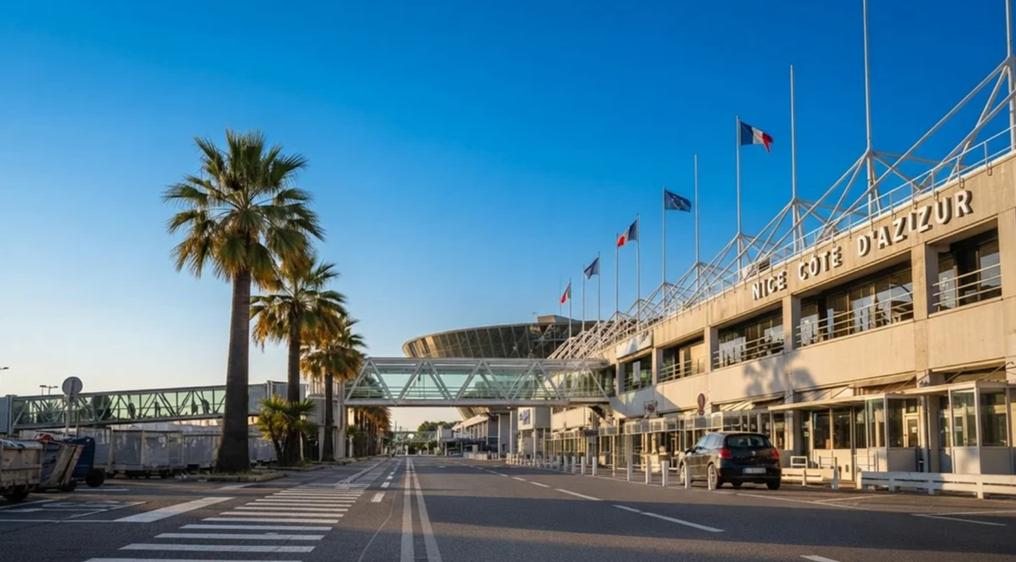
The Taxi Stand: Tradition and Assurance
The official taxis wait outside both terminals, lined in orderly rows, their presence steady and predictable. There is comfort in their formality: no need to search, no need to negotiate. You step into a cab, and the city begins to unfold through the windshield. The journey takes between fifteen and forty minutes, depending on traffic.
The cost is fixed, ranging from €32 to €55 , sparing you the anxiety of a ticking meter. For late‑night arrivals, when the tram has ceased its rhythm and buses have gone quiet, the taxi becomes the most reliable passage. For travellers burdened with heavy luggage, it is a relief to be carried directly to a hotel door without the strain of transfers.
The taxi promises comfort and assurance, though not immunity from the city’s traffic. Nice’s boulevards can swell unpredictably, turning a short ride into a longer crawl. Yet even in delay, the taxi remains private, a cocoon against the bustle outside.
Uber and VTC: Digital Convenience
Modern travellers often turn to Uber or VTC services, their apps glowing on phone screens as they step into the arrivals hall. These ride‑shares mirror the taxi in many ways: the journey time is the same, the cost similar—€35 to €55 euros. The difference lies in predictability.
With ride‑shares, you see the fare before you ride, you track the car as it approaches, and you avoid the uncertainty of negotiation. There is ease in this digital convenience. Payment is cashless, the process streamlined, the experience familiar to those accustomed to app‑based travel.
Sometimes, off‑peak, ride‑shares are cheaper than taxis, a small reward for flexibility. Yet ride‑shares carry their own risk: surge pricing. At peak hours, when demand outpaces supply, fares climb sharply. The comfort of predictability is undone by the volatility of the market.
The ride‑share is a hybrid of tradition and technology, offering the same cocoon as the taxi but with digital transparency.
Atmosphere of Arrival
There is intimacy in the taxi or ride‑share. Unlike the tram’s crowded carriages or the bus’s communal vibes, the car is private. The driver’s radio plays softly, the city lights flicker across the dashboard, and you sink into the seat as Nice approaches. The journey becomes less about efficiency and more about atmosphere.
It is not the cheapest choice, nor the fastest, but it is the most personal. For some, that privacy is worth the premium. For others, it is a luxury too easily undone by traffic. The taxi and ride‑share are not about speed—they are about comfort, assurance, and the quiet pleasure of being delivered directly to your door.
Practical Ease
The taxi and ride‑share are practical in ways that matter. Heavy luggage is easily accommodated, families find relief in the privacy of a car, and late‑night arrivals discover reliability when public transport has ceased. Payment is straightforward: taxis accept cards and cash, ride‑shares are cashless and app‑based. The choice is not about efficiency but about ease.
The Balance of Choice
The taxi embodies tradition and assurance, offering fixed rates and predictable service, but vulnerable to traffic. The ride‑share embodies digital convenience, offering visible fares and cashless payment, but subject to surge pricing. Both options cost significantly more than the tram or bus.
Both carry the risk of delay. Yet both offer privacy and comfort, qualities that matter when fatigue and luggage weigh heavily.
The Emotional Dimension
There is an emotional dimension to choosing a taxi or ride‑share. It is not only about convenience—it is about how you want to feel as you arrive. The tram offers efficiency, but it is communal, crowded, and impersonal. The bus offers scenery, but it is slower, subject to traffic, and shared with strangers.
The taxi and ride‑share offer privacy, a chance to breathe, to reflect, to arrive quietly. For some, this privacy is essential. After hours in airports and planes, the cocoon of a car feels like a sanctuary. For others, it is indulgence, a luxury chosen for comfort rather than necessity. Yet in both cases, the choice shapes the arrival, turning it into a moment of calm, of intimacy, of personal rhythm.
Conclusion: The Luxury of Intimacy
The taxi and ride‑share are not the fastest way into Nice, nor the cheapest. But they are the most personal. They offer privacy, comfort, and assurance. They shield you from the bustle of public transport, delivering you directly into the city’s embrace.