
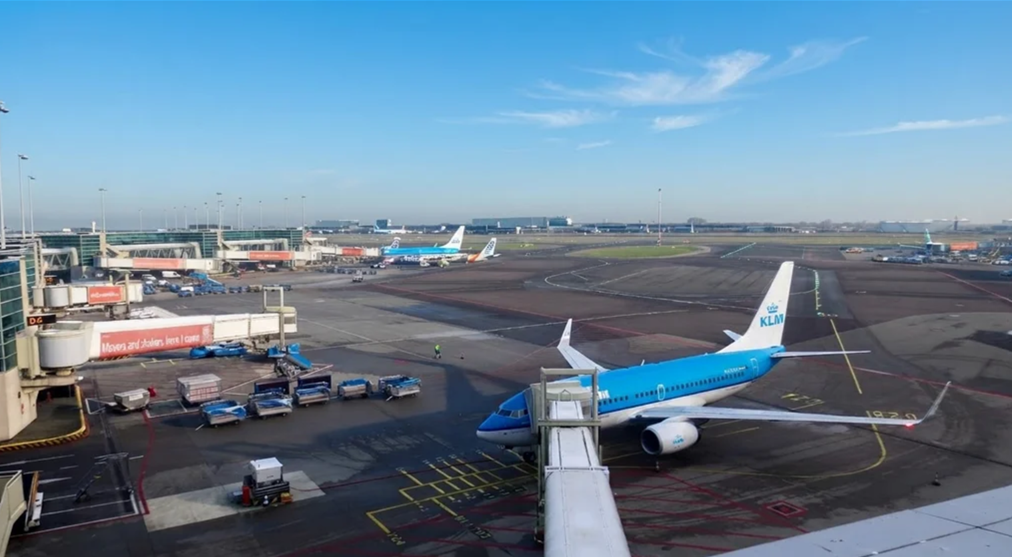
Beneath the Plaza: The Hidden Station
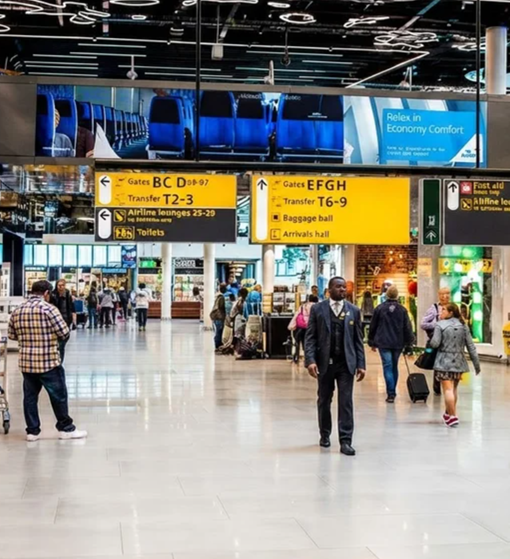
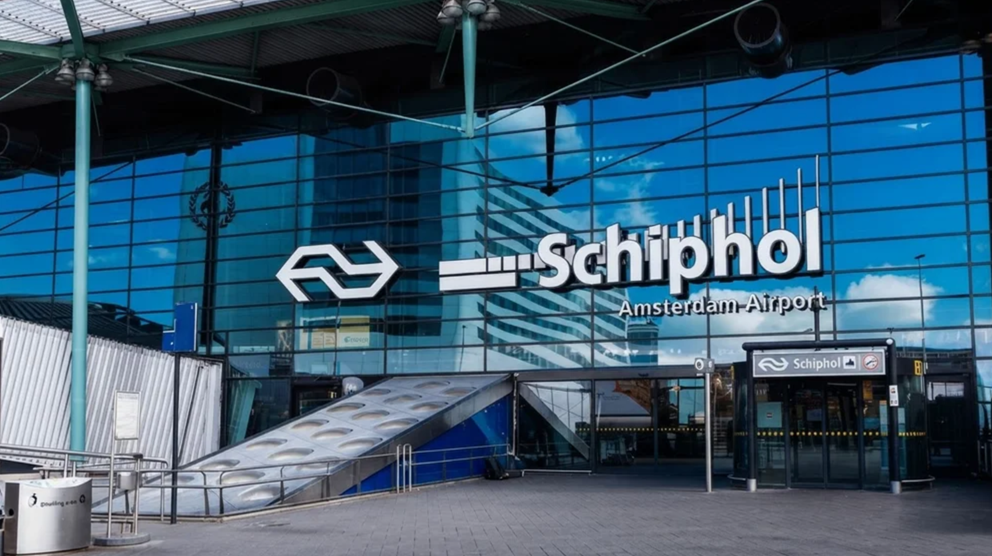
Schiphol Airport is a city in itself, a place of glass concourses and endless movement. Yet beneath its polished plaza lies a quieter artery: the train station. You descend escalators from the terminal into a world of tiled platforms and yellow NS signs, where the vibes of luggage wheels gives way to the rhythm of trains.
It feels like a secret passageway, a subterranean gateway that connects the airport’s global pulse to the intimate streets of Amsterdam. Here, the journey begins not with ceremony but with simplicity. No shuttle buses, no winding transfers — just a direct line waiting beneath your feet.
The station is part of Schiphol’s design philosophy: efficiency woven into architecture, travel made seamless.
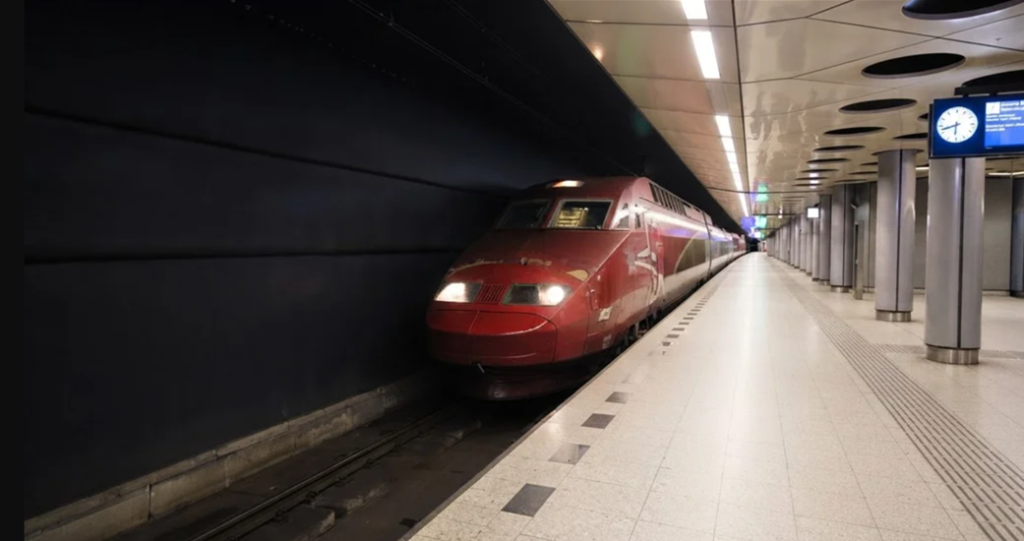
The Journey: 15 Minutes of Transition
The train ride itself is brief, almost startling in its efficiency. 15 minutes if the schedule aligns, 17 minutes if you catch a slower service. In that short span, the landscape shifts from airport periphery to the edges of the city. Flat fields, industrial warehouses, and the occasional canal slide past the window.
It is not a scenic journey in the traditional sense, but it carries a quiet poetry: the transition from international arrival to local immersion. For many travellers, this ride is their first encounter with Dutch rail. The trains are clean, punctual, and understated.
They do not announce themselves with grandeur; they simply deliver you, swiftly and without fuss, to the heart of Amsterdam.
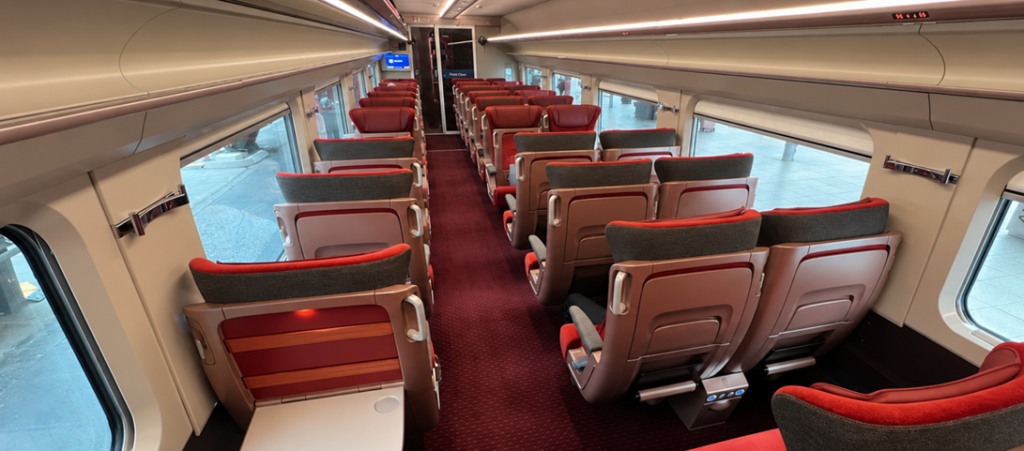
The Cost of Simplicity
Tickets are uncomplicated. For €5.90 – €7, you tap your contactless card or phone at the OVpay gates. No need for paper tickets, no fumbling with machines. The Dutch have embraced the idea that travel should be frictionless, and the system reflects it. This small act — tapping in and out — is part of the rhythm of daily life here.
Commuters glide through gates with practiced ease, and visitors quickly learn the ritual. It is a democratic gesture: the same system serves locals heading to work and travellers stepping into the city for the first time.
Frequency and Reliability
Trains depart every few minutes during the day, a steady stream of carriages flowing toward Centraal. Even at night, when the airport quiets and the city sleeps, hourly services continue. This reliability is part of the Dutch ethos: infrastructure as a promise kept.
For the weary traveller, it means reassurance. No matter when you land, the train will be waiting. It is a rhythm you can trust, a cadence that makes Amsterdam feel accessible at all hours.
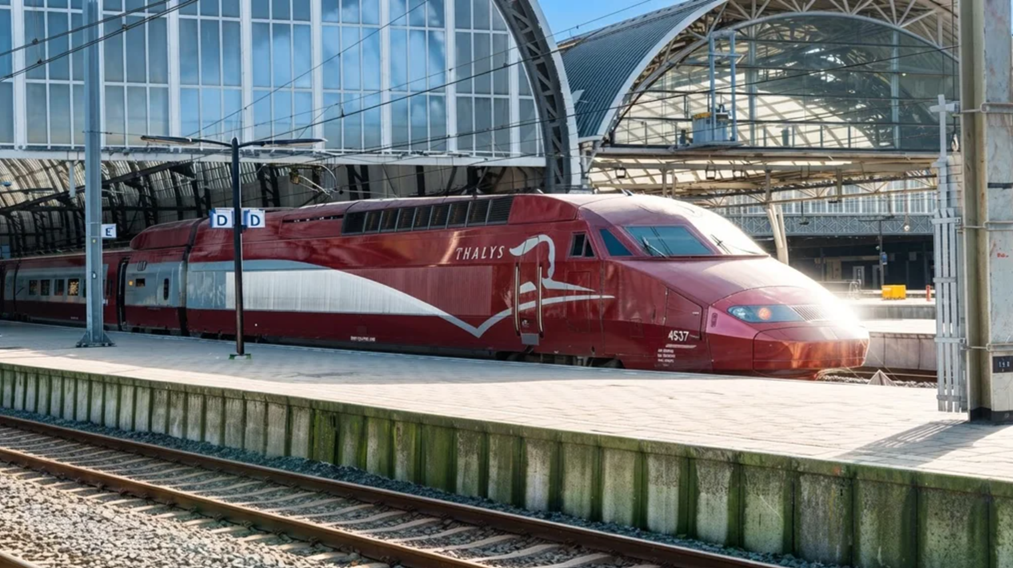
Centraal Station: The Grand Arrival
Amsterdam Centraal is more than a terminus; it is a statement. Designed by Pierre Cuypers, the same architect behind the Rijksmuseum, the station is a neo‑Renaissance masterpiece of spires and red brick. Arriving here feels ceremonial. You step from the train into a hall of arches and ironwork, where history and modernity coexist.
Outside, the city unfurls immediately. Trams rattle past, cyclists weave through crowds, and the canals glimmer just beyond the square. It is a sensory of immersion: the noise, the movement, the sudden intimacy of Amsterdam after the anonymity of the airport. For most visitors, this is the moment the city begins — the first breath of its atmosphere, the first glimpse of its rhythm.
Amsterdam Zuid: A Quieter Alternative
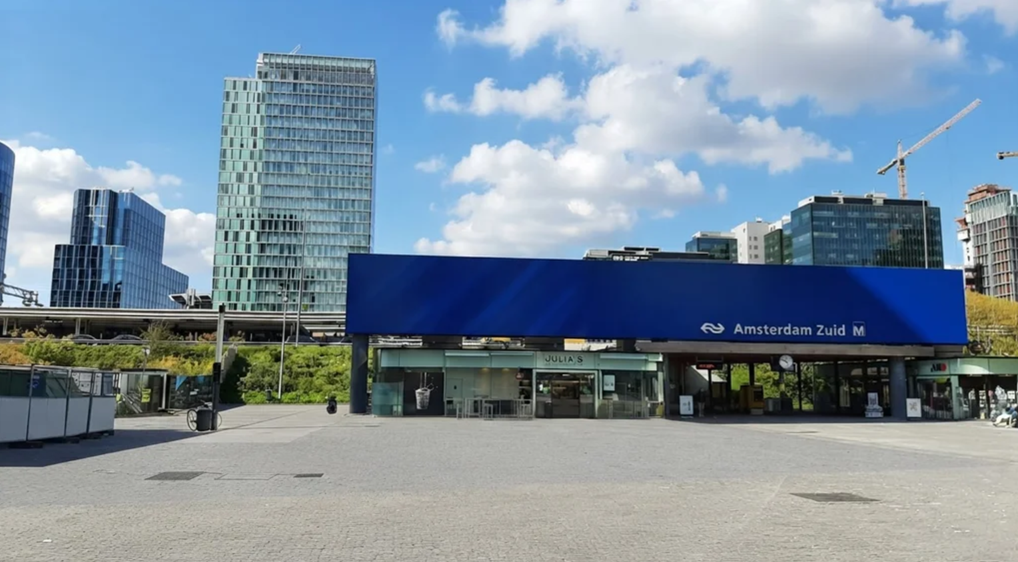
Yet not all journeys end at Centraal. For those bound for the Museum Quarter or the sleek towers of Zuidas, Amsterdam Zuid offers a quieter arrival. The station is modern, efficient, and closer to galleries, hotels, and business districts. Stepping off here spares you the bustle of Centraal.
Instead of crowds and trams, you find yourself in a district of glass facades and leafy boulevards. It is a different Amsterdam: less historic, more contemporary, yet equally compelling. For travellers seeking convenience, Zuid is a subtle but valuable choice.
The Atmosphere of Arrival
What makes the Schiphol train remarkable is not its speed alone, but the atmosphere it creates. In less than twenty minutes, you move from the global anonymity of an airport to the intimate specificity of a city. The transition is almost cinematic: luggage wheels on polished floors, escalators descending, the vibes of a train, and then the sudden burst of bicycles and canals.
It is a reminder that travel is not only about destinations but about thresholds. The train is a threshold — a passage that transforms the traveller from outsider to participant.
Practical Notes for Travellers
Payment: Always tap in and out with the same card or device.
Peak Hours: Expect crowds between 7–9 AM and 5–7 PM.
Late Night: Services run hourly; taxis and buses fill the gaps.
Luggage: Trains are spacious, but avoid rush hour if carrying large bags.
These notes are not mere logistics; they are part of the choreography of arrival. To understand them is to move gracefully through the system, to blend into the rhythm of Dutch travel.
The Symbolism of Speed
15 minutes may seem trivial, but it carries symbolic weight. In that brief span, the Netherlands demonstrates its philosophy: efficiency without spectacle, accessibility without compromise. The train embodies the Dutch approach to infrastructure — practical, democratic, and quietly elegant.
For the traveller, it means freedom. You are not bound by schedules or burdened by cost. You step off a plane and into a city with minimal friction. It is a gift, one that shapes the way Amsterdam is experienced.